Skip to content

In the first episode of our STRIVE series on digital sovereignty, Commvault’s Alex Zinin and Osmium Data Group’s Max Mortillaro challenged one of the biggest misconceptions in the industry: Digital sovereignty isn’t a feature you buy – it’s a business problem you have to understand before you can solve.

This conversation picks up where that one left off. This time, I sat down with Thomas Maurer, EMEA Global Black Belt for Sovereign Cloud at Microsoft, to explore what happens after an organization decides sovereignty matters. How do executive teams move from broad concerns about regulation, jurisdiction, or geopolitical uncertainty into practical architectural decisions?

The answer, it turns out, is rarely as straightforward as choosing a cloud provider or selecting the right deployment model. It’s about asking better questions before making technical decisions.

Watch the full episode.

Key Takeaways

  • Every organization defines digital sovereignty differently – and that’s exactly where the conversation should begin.
  • Sovereignty isn’t solved by technology alone. Legal, operational, architectural, and business considerations all shape the outcome.
  • Cloud and on-premises aren’t competing strategies. For many organizations, the future is a carefully designed combination of both.
  • Risk management – not fear – should drive sovereignty decisions.
  • Good architecture starts with understanding business requirements, not choosing infrastructure.

Sovereignty Means Different Things to Different Organizations

One of the first observations Thomas made was also one of the most important.

There is no universal definition for digital sovereignty. For one organization, it may simply mean meeting regulatory requirements or keeping data within a specific geography. For another, it may involve operational independence, business continuity, or preparing for geopolitical disruption. That difference matters because it changes the conversation entirely.

Too often, organizations assume there’s a standard sovereignty blueprint waiting to be implemented. In reality, the first challenge isn’t selecting technology – it’s understanding what problem the organization is actually trying to solve.

Only then does architecture begin to make sense.

Technology Should Follow Strategy

One theme that kept surfacing throughout our discussion was the temptation to jump straight into technical design.

It’s understandable. Architects naturally think about infrastructure, workloads, connectivity, and deployment models. But Thomas emphasized that the most successful projects begin somewhere else.

They begin by listening.

What concerns are driving the initiative? Is the objective regulatory compliance? Business continuity? Data residency? Operational control? Protection against geopolitical disruption?

Different answers lead to different architectures.

That may sound obvious, but it’s surprising how often organizations begin evaluating solutions before they’ve aligned on the business outcome they’re trying to achieve.

Sneak Peek: Start With Risk, Not Assumptions

One of the most practical moments in our conversation comes when Thomas and I discuss why sovereignty initiatives should begin with a risk assessment – not an architectural diagram.

Every organization has a different risk appetite. A Formula 1 team, a government agency, and a global manufacturer won’t make the same decisions, nor should they. The key is understanding which risks matter most to your business, what trade-offs you’re willing to make, and then designing an architecture that supports those decisions.

As Thomas points out, there is no perfect solution – only informed trade-offs. The earlier organizations adopt that mindset, the stronger their sovereignty strategy will be.

‘Cloud or On-Premises?’ Is the Wrong Question to Ask

One of the more interesting parts of the conversation challenged another common assumption – that organizations must choose between public cloud and private infrastructure.

Thomas described a very different reality.

Many organizations aren’t replacing one with the other. They’re designing environments where workloads can move between them based on business need, regulatory requirements, or resilience considerations.

That flexibility changes how we should think about architecture. Instead of asking whether cloud or on-premises is better, the more useful question becomes:

“Where does this workload belong today – and could that answer change tomorrow?”

When sovereignty becomes part of the design process, workload mobility becomes just as important as workload placement.

Architecture Is Only Part of the Equation

Another takeaway I appreciate is Thomas’s reminder that architecture alone doesn’t solve sovereignty.

  • Contracts matter.
  • Legal frameworks matter.
  • Operational processes matter.
  • The people responsible for running the environment matter.

None of those disciplines can operate in isolation. Sovereignty requires legal, security, compliance, and infrastructure teams to work together from the beginning – not hand projects off to one another after decisions have already been made.

That’s a familiar pattern for anyone working in cyber resilience. The strongest outcomes rarely come from individual teams. They come from coordinated ones.

Risk Should Drive Every Decision

Toward the end of our discussion, the conversation naturally shifted toward risk. For me, this is where sovereignty starts to feel much more familiar. Every resilience project begins by asking what the organization is trying to protect, what threats matter most, and how much risk it’s willing to accept.

Digital sovereignty is no different.

Rather than searching for a perfect solution, organizations need to identify the specific sovereignty scenarios they’re concerned about and then determine which architectural, operational, or contractual controls best address those risks.

That shift – from feature comparison to risk management – is what ultimately leads to better decisions.

Why This Conversation Matters

Digital sovereignty continues to evolve rapidly. New regulations will emerge. Technology will change. Geopolitical realities will continue to shift.

That means sovereignty isn’t something organizations solve once. It’s something they regularly evaluate as business priorities and external risks evolve.

The organizations that succeed won’t necessarily have the most restrictive architectures. They’ll have the clearest understanding of their business objectives, the discipline to assess risk thoughtfully, and the flexibility to adapt as those risks change.

Ultimately, digital sovereignty isn’t something organizations can buy off a shelf. It’s an exercise in understanding risk, managing dependencies, and making informed trade-offs long before those decisions are tested.

Watch the Full Episode

In this STRIVE episode, Thomas and I discuss:

  • Why sovereignty means different things to different organizations.
  • How executives should approach sovereignty strategy.
  • Public cloud versus private cloud – and why it’s often not an either/or decision.
  • Why risk management should guide architectural choices.
  • The role of resilience in modern sovereignty planning.

Watch now.

FAQs

Q: Does digital sovereignty mean keeping everything on-premises?

A: No. Many organizations adopt hybrid approaches that balance cloud capabilities with specific sovereignty requirements.

Q: Where should sovereignty projects begin?

A: Start by defining the business problem and understanding the risks you’re trying to mitigate before evaluating technology.

Q: Is sovereignty purely a technical issue?

A: No. It requires collaboration between legal, compliance, security, operations, and architecture teams.

Q: How does sovereignty relate to resilience?

A: Both disciplines focus on maintaining operational continuity by reducing exposure to risks that could disrupt the business.

Q: What’s one big mistake organizations make in regard to digital sovereignty?

A: Jumping into architectural decisions before agreeing on what sovereignty means for their organization.

Q: What should executives ask first in terms of planning for digital sovereignty?

A: “What problem are we trying to solve?” Everything else follows from that answer.

Darren Thomson is Vice President and Chief Technology Officer, EMEA, at Commvault.

More related posts


Thumbnail_Blog-What-is-Resops-2026

What Is ResOps – and Why Cyber Resilience Needs It

Read more about What Is ResOps – and Why Cyber Resilience Needs It
Thumbnail_Blog-Playbook-2026

Prove It Before You Need It: The Playbook I Wish I’d Had 10 Years Ago

Read more about Prove It Before You Need It: The Playbook I Wish I’d Had 10 Years Ago
Thumbnail_Blog-Medusa-is-Evolving-2026

Medusa Is Evolving. Cyber Resilience, Cyber Recovery, and ResOps Matter More Than Ever.

Read more about Medusa Is Evolving. Cyber Resilience, Cyber Recovery, and ResOps Matter More Than Ever.

Key Takeaways

  • Terraform manages desired state – it provisions and configures infrastructure from code.
  • Cloud Rewind captures actual deployed state – it helps restore environments to a known-good point in time.
  • Terraform state files and Git history are not recovery tools; they do not capture what was actually running.
  • Cloud Rewind helps recover infrastructure whether changes were made via IaC, the console, or manual intervention.
  • Together, Terraform and Cloud Rewind help give teams a complete cloud operations strategy: Build fast, recover faster.

If your team runs Terraform, you already know how powerful IaC can be. You define what you want, apply it, and your cloud environment materializes. Change management becomes repeatable. Provisioning becomes predictable.

But there is a gap between provisioning infrastructure and recovering it – and it matters most when something goes wrong at 2 a.m.

Terraform and Cloud Rewind address different parts of the cloud lifecycle. Understanding the difference helps you avoid a dangerous assumption: that your IaC tooling doubles as a recovery plan.

How Terraform and Cloud Rewind Differ

Terraform is a provisioning tool. It defines and manages desired state. When you revert a Terraform change, you are re-applying a previous desired configuration – not restoring the actual deployed environment that was running before the incident.

That distinction matters. Terraform state is not a historical recovery snapshot.

Cloud Rewind captures actual cloud configuration state and stores point-in-time snapshots. When something breaks, you do not rebuild from code and hope the environment comes back intact. You restore a known-good environment – the one that was actually running – regardless of how the change that caused the problem was introduced.

Terraform Design  Cloud Rewind Design 
Desired state management  Actual state recovery 
Infrastructure provisioning  Infrastructure recovery 
Applies changes  Rewinds changes 
Source of truth = code  Source of truth = deployed environment 
Forward-looking  Backward-looking 
Build and update  Recover and rebuild 
Helps recover desired configuration  Helps restore deployed state from a captured point in time 

Where Terraform Reaches its Limit

Even the most mature IaC environments encounter recovery scenarios where rebuilding from code is not enough. Consider:

  • A failed infrastructure change already deployed to production.
  • Accidental deletion of cloud resources.
  • Infrastructure drift caused by manual or out-of-band changes.
  • Changes made outside Terraform that are not reflected in code or state.
  • A need to restore infrastructure to exactly where it was at a specific point in time.
Terraform does not maintain historical cloud state. It re-applies a desired configuration – it does not restore what was actually deployed and running. “Rewind to 2:15 PM yesterday” is not a Terraform feature. It is a Cloud Rewind feature.

Recovery that depends on Terraform code, state files, and version history being available, accurate, and complete is recovery that carries real risk. In a real incident, those conditions are not guaranteed.

Two Tools, One Complete Strategy

Terraform helps you automate infrastructure creation and change management. Cloud Rewind helps you recover infrastructure quickly and consistently when deployments fail, resources are deleted, infrastructure drifts, or your team needs to restore a known-good environment.

They complement each other. Terraform is designed to make your cloud environment repeatable. Cloud Rewind is designed to make it recoverable.

Build with Terraform. Recover with Cloud Rewind.

FAQs

Q: Does Terraform provide point-in-time recovery?

A: No. Terraform re-applies a desired configuration from code. It does not maintain historical snapshots of your deployed cloud environment. If the change that caused an incident is not captured in your Terraform state or Git history – for example, a console change or infrastructure drift – Terraform cannot help you restore it.

Q: What happens when changes are made outside Terraform?

A: Console changes, manual interventions, and out-of-band configurations are common in real environments. Terraform does not track them. Cloud Rewind captures actual deployed state – regardless of how a change was introduced – so you can restore a known-good environment even when your IaC does not reflect what was running.

Q: Is Cloud Rewind a replacement for Terraform?

A: No. They solve different problems. Terraform is your provisioning and change management tool. Cloud Rewind is your recovery tool. Most teams that use one can benefit from both – they cover different parts of the cloud operations lifecycle.

Q: What kinds of incidents does Cloud Rewind address?

A: Cloud Rewind is designed for scenarios where rebuilding from code is not enough: failed deployments already in production, accidental resource deletion, infrastructure drift, and cases where teams need to restore an environment to a specific historical point in time.

Q: Does Cloud Rewind require teams to stop using Terraform?

A: No. Cloud Rewind works alongside your existing IaC workflows. Teams continue to use Terraform for provisioning and change management and use Cloud Rewind when they need to recover from a real incident.

Cailin Pitcher is Senior Portfolio Marketing Manager at Commvault.

More related posts


Thumbnail_Blog-What-is-Resops-2026

What Is ResOps – and Why Cyber Resilience Needs It

Read more about What Is ResOps – and Why Cyber Resilience Needs It
Thumbnail_Blog-Playbook-2026

Prove It Before You Need It: The Playbook I Wish I’d Had 10 Years Ago

Read more about Prove It Before You Need It: The Playbook I Wish I’d Had 10 Years Ago
Thumbnail_Blog-Medusa-is-Evolving-2026

Medusa Is Evolving. Cyber Resilience, Cyber Recovery, and ResOps Matter More Than Ever.

Read more about Medusa Is Evolving. Cyber Resilience, Cyber Recovery, and ResOps Matter More Than Ever.

Key Takeaways 
  • Commvault integrates frontier AI vulnerability discovery into its risk-based security program rather than relying on AI as a standalone solution.
  • Every AI-generated finding is reviewed and validated by humans before remediation decisions are made.
  • Frontier AI complements established security practices such as static analysis, dynamic analysis, and penetration testing by expanding code coverage and identifying more complex exploit scenarios.
  • Commvault maintains strict governance over source code, vendor access, and vulnerability handling.
  • Commvault is investing in scalable vulnerability management processes in order to respond efficiently as AI increases the volume of potential security findings.

Across the security industry, AI and large language models are being applied to vulnerability discovery – helping teams evaluate more code, explore more attack paths, and identify exploitable conditions faster than manual review alone.  

This is not a niche experiment. It is a shift in how thorough a security evaluation can be, and it is changing what customers reasonably expect from their software vendors. 

Customers are regularly asking their software vendors: Do you test your own products against the same methods a threat actor might use? Are the processes behind that testing rigorous enough to keep pace? These are the right questions to ask. 

Our Approach: Strong Processes, no Single Tool

Commvault’s security posture is built on strong, repeatable processes rather than dependence on any single tool, model, or vendor.  

Vulnerability management follows an established, risk-based framework: Findings are assessed for practical exploitability, prioritized by severity and exposure, and remediated through our standard development lifecycle. That framework applies the same way regardless of whether a finding comes from a penetration test, an external researcher, or AI. 

AI vulnerability discovery is integrated into this framework as an additional capability, not a separate program running on its own rules. Candidate findings generated through AI methods are treated as inputs that require human confirmation of exploitability before any remediation action is taken. That step helps prevent two failure modes at once: under-prioritizing genuine risk and burning cycles on false positives. 

AI Alongside Established Security Practices

AI methods do not replace the disciplines that have always defined responsible vulnerability management. Static analysis, dynamic analysis, penetration testing, and established scanning tools remain essential parts of our program.  

What AI adds is coverage depth: the ability to evaluate a broader set of code paths, model more complex exploit conditions, and surface findings that require contextual understanding rather than simple pattern matching. 

Our vulnerability program is tool-agnostic and model-agnostic by design. We are not dependent on any single vendor or model, and new approaches can be added as they prove out, without re-architecting how findings are governed or remediated. The advantage isn’t which model we use but whether the process behind it is disciplined enough to act on what that model finds. 

Governance and Controls

Every AI scan we run operates under the same governance principles: 

  • AI models are vetted before used. Any vendor and tooling access is governed by formal NDA and engagement terms.
  • Findings are processed through the same security engineering review pipeline used for every other vulnerability source.
  • No AI-generated finding is acted upon without human triage and exploitability confirmation.
From Candidate Finding to Confirmed Fix

Findings generated through AI are treated as candidates, not confirmed vulnerabilities. Each one is assessed by engineers and product security experts for practical exploitability in realistic customer environments.  

Severity ratings are assigned based on exposure, exploitability, and impact – not on how the finding was discovered. Confirmed vulnerabilities move through the same remediation timelines and escalation paths as any other source, with priority set by severity and exposure. 

First Patch Tuesday Disclosures – August 2026

Our inaugural Patch Tuesday, published August 11, 2026, includes the following disclosures: 

CVE ID  Severity  Summary 
CVE-2026-13737  Critical  CommServe contained an allowlist bypass affecting command execution authorization.  
CVE-2026-13738  Critical  CommServe contained an authorization bypass affecting a limited set of command execution operations.  
CVE-2026-13739  High  A legacy endpoint in Command Center contained an unauthenticated server-side request forgery (SSRF) related to the handling of arbitrary target URLs. 


Full technical advisories, including affected versions and remediation guidance, are available on our Security Advisories page. Read more about the move to a monthly cadence in Bringing  Trust to CVE Disclosures 

Why Operational Readiness Matters More Than Any Single Tool

As AI vulnerability discovery becomes standard practice across the industry, the volume of potential findings that security teams need to evaluate will keep rising. The question that matters for any enterprise software vendor isn’t which AI model they use. It’s whether their vulnerability management process is mature enough, and scalable enough, to handle that throughput without creating a backlog that increases customer exposure. 

We pair our investment in AI with an equal investment in the process infrastructure needed to act on what it finds: triage capacity, severity prioritization, remediation tracking, and coordinated disclosure practices. Our investment is only as valuable as the response capability behind it. 

FAQs

Q: What is Commvault doing with frontier AI security testing? 

A: We actively evaluate our products using AI methods as part of our structured security engineering program. We are being thoughtful about testing different models and harnesses so that we find any potential vulnerabilities previously undiscovered by humans and or existing testing. That work follows the same vulnerability management process as every other form of testing. This is underway today – it isn’t a roadmap item. 

Q: How is Commvault preparing for AI vulnerability discovery? 

A: We built a program that is model-agnostic and tool-agnostic by design. Our goal is to make sure our security engineering practice can incorporate the best available methods across a range of AI tooling, inside one consistent governance and risk management framework. 

Q: Is Commvault using these models safely? 

A: Yes. All AI scans are thoroughly vetted. Any vendor and tool access is governed by formal NDA and engagement terms, and every AI-generated finding requires human confirmation of exploitability before any remediation action is taken. 

Q: How is Commvault scaling vulnerability management for the AI era? 

A: Our focus is on making sure the response process scales with discovery volume and discovery pace. As AI increases the number of potential findings our teams need to review, we’re investing in risk-based triage, consistent remediation service level agreements, and the operational infrastructure needed to act on higher discovery throughput within accelerated timeframes to decrease exposure for customers. 

Bill O’Connell is Chief Security Officer at Commvault. 

More related posts


Thumbnail_Blog-What-is-Resops-2026

What Is ResOps – and Why Cyber Resilience Needs It

Read more about What Is ResOps – and Why Cyber Resilience Needs It
Thumbnail_Blog-Playbook-2026

Prove It Before You Need It: The Playbook I Wish I’d Had 10 Years Ago

Read more about Prove It Before You Need It: The Playbook I Wish I’d Had 10 Years Ago
Thumbnail_Blog-Medusa-is-Evolving-2026

Medusa Is Evolving. Cyber Resilience, Cyber Recovery, and ResOps Matter More Than Ever.

Read more about Medusa Is Evolving. Cyber Resilience, Cyber Recovery, and ResOps Matter More Than Ever.

When frontier AI models started making headlines, most of the discussion centered on one question: What happens when attackers gain access to them? 

It’s a fair question.  

Models capable of discovering vulnerabilities faster, chaining exploits together, and operating at unprecedented speed naturally raise concerns for every CISO.  

But after spending time talking with customers over the past several months – and in my conversation with Tim Zonca, Commvault’s VP of Portfolio Marketing, in this episode of STRIVE – I think there’s an even more important question emerging. 

What happens to resilience itself? 

Because while frontier AI will undoubtedly accelerate cyber threats, it’s also accelerating something else: Enterprise complexity. 

Watch the full episode. 

 Key Takeaways 

  • Frontier AI isn’t just accelerating cyberattacks – it’s accelerating enterprise complexity.  
  • Vulnerability management isn’t disappearing, but the speed and scale of discovery are changing dramatically.  
  • AI systems introduce entirely new recovery dependencies, including agents, vector databases, embeddings, and distributed state.  
  • Organizations need a coherent understanding of their environments before they can recover them.  
  • The next generation of resilience will depend on trusted systems of record that explain what happened, why it happened, and how to recover confidently.  
The Conversation Has Changed 

One thing Tim and I discuss early in the episode is how differently organizations are reacting to frontier AI. 

  • Some see an entirely new class of cybersecurity challenge. 
  • Others view it as simply the next evolution of vulnerability management. 

What’s interesting is that neither perspective is necessarily wrong. 

The processes organizations use to identify, prioritize, and remediate vulnerabilities remain familiar. But the pace at which AI can discover those vulnerabilities – and uncover entirely new chains of attack – is unlike anything we’ve seen before.  

That’s the shift. 

The work isn’t fundamentally different. The speed is. 

When AI Changes the Shape of Recovery 

Most conversations about AI focus on security and prevention: 

  • How do we secure models? 
  • How do we protect prompts? 
  • How do we defend against AI-assisted attacks? 

Those are important questions. But resilience introduces a different one: What exactly are we recovering? 

Traditional enterprise applications already involve complicated relationships between infrastructure, applications, and data. AI expands that picture considerably. Now there are agents operating across multiple systems. Vector databases. Embeddings. Models interacting with different data sources simultaneously. It’s become far more than a traditional application stack.  

Recovery is no longer about restoring an application. It’s about restoring an ecosystem. 

Sneak Peek: Check This Out 

In this moment from our STRIVE discussion, Tim and I discuss the growing complexity of AI stacks, what coherent recovery is (and why it matters), and how Commvault is helping our customers with full AI-stack recovery. 

Why Coherency Matters 

One idea that keeps surfacing throughout our conversation is coherence. 

For years, organizations have worked to map application dependencies, understand infrastructure relationships, and identify critical services. AI makes that challenge significantly more difficult. 

Applications no longer interact with a single database or service. They may depend on multiple models, agents, data stores, and orchestration layers – all changing dynamically. 

Understanding those relationships isn’t just an architectural exercise anymore. 

It’s a recovery requirement. 

Because if you don’t understand what makes up the system, it’s difficult to know whether you’ve actually recovered it. 

A New System of Record 

Another concept from Tim that I found compelling is the idea of a system of record for the AI era. Historically, systems of record gave organizations confidence in business data. Customer records lived in CRM platforms. Financial records lived in ERP systems. 

AI changes that expectation. 

Organizations increasingly need trusted visibility into how data is used, what agents interact with it, why decisions are made, and whether restored environments represent a known-good state.  

That doesn’t replace resilience. It strengthens it. Because confidence in recovery depends on confidence in what you’re recovering. 

AI Can Also Help Solve the Problem 

As organizations struggle to understand increasingly distributed environments, AI becomes a powerful tool for discovery, classification, and policy recommendation.  

Rather than manually identifying relationships across sprawling environments, organizations can use AI to help identify dependencies, recommend protection policies, and continuously update those relationships as environments evolve. 

That’s an important shift. 

The same technology that’s adding to organizational complexity may also become one of the best tools for managing it. 

Why This Conversation Matters 

Frontier AI isn’t simply introducing another cybersecurity challenge. It’s forcing organizations to rethink resilience itself. 

Recovery is becoming less about individual systems and more about restoring trusted business operations across increasingly intelligent environments. That means resilience strategies must evolve alongside the technologies they’re protecting. 

Organizations that prepare for that shift won’t just recover faster. They’ll recover with greater confidence. 

Watch the Full Episode 

In this conversation, Tim and I explore: 

  • How frontier AI is changing enterprise risk.  
  • Why vulnerability management is entering a new phase.  
  • What AI means for modern recovery architectures.  
  • The role of coherent recovery across AI-enabled environments.  
  • Why trusted systems of record will become increasingly important.  

Watch now. 


FAQs 

Q: What are frontier AI models? 

A: Frontier AI models are the latest generation of highly capable AI systems designed to solve increasingly complex reasoning and cybersecurity tasks. 

Q: Why are organizations concerned about them? 

A: They dramatically accelerate vulnerability discovery, exploit chaining, and security research, increasing both defensive and offensive capabilities. 

Q: How does AI change cyber resilience? 

A: AI introduces new dependencies – including agents, models, vector databases, and distributed states – that make recovery more complex. 

Q: What is a coherent recovery strategy? 

A: It’s an approach that restores not only data, but also the applications, infrastructure, dependencies, and AI components required for trusted business operations. 

Q: What is a system of record in the AI era? 

A: It’s a trusted source that helps organizations understand what happened, why it happened, and whether recovered systems represent a known-good state. 

Q: What should organizations do now? 

A: Begin mapping AI dependencies, understand how AI changes recovery requirements, and develop resilience strategies that account for increasingly intelligent application environments. 

Chris Mierzwa is Senior Director of Portfolio Marketing at Commvault. 

More related posts


Thumbnail_Blog-What-is-Resops-2026

What Is ResOps – and Why Cyber Resilience Needs It

Read more about What Is ResOps – and Why Cyber Resilience Needs It
Thumbnail_Blog-Playbook-2026

Prove It Before You Need It: The Playbook I Wish I’d Had 10 Years Ago

Read more about Prove It Before You Need It: The Playbook I Wish I’d Had 10 Years Ago
Thumbnail_Blog-Medusa-is-Evolving-2026

Medusa Is Evolving. Cyber Resilience, Cyber Recovery, and ResOps Matter More Than Ever.

Read more about Medusa Is Evolving. Cyber Resilience, Cyber Recovery, and ResOps Matter More Than Ever.

Unified Data Protection | Ransomware Recovery | Cleanroom Recovery | Hybrid Workloads

How to Unify Data Protection Across Every Hybrid Workload

Commvault® Cloud helps organizations discover, govern, and unify workload protection, allowing teams to rebuild critical services quickly after a cyber incident.


You’re the VP of IT Operations. It’s 2:00 a.m. on a Saturday. Your SecOps team just confirmed ransomware has encrypted files across three regions. Your last backup job completed successfully – but when your team attempts to restore the ERP system, the application fails to start.

The backup was marked successful. The data was present. But the dependencies, transaction logs, and service relationships were never captured in a consistent, recoverable state. Recovery isn’t just about data – it’s about rebuilding services.

This scenario plays out across hybrid environments every day. Modern enterprises run on interconnected cloud-native services, Kubernetes clusters, hybrid databases, and SaaS platforms – none of which recover cleanly from a simple file restore. Fragmented protection strategies designed for a simpler era leave organizations exposed at exactly the moment resilience matters most.

Commvault Cloud is an AI-enabled platform designed to help organizations discover, govern, and unify data protection across cloud-native, hybrid, and on-premises workloads – from a single control plane. Capabilities such as AI-enabled workload discovery, Cleanroom Recovery, Cleanpoint Identification, Threat Scan, and Command Center orchestration help teams validate recovery readiness and rebuild critical services in a controlled sequence after a cyber incident. 

45%

of organizations are repeat ransomware victims – meaning fast recovery without clean validation reinfects as often as it restores. 
ESG Research — Zero Trust and Ransomware Protection Report 

What Is Unified Data Protection – and Why Does It Matter? 

Unified data protection is a backup and recovery approach that helps organizations govern the broadest range of workloads – including cloud databases, Kubernetes, SaaS, hypervisors, and on-premises systems – from a single control plane, rather than managing separate tools and policies for each environment.Commvault Cloud Unity is designed to support this approach, helping teams reduce operational complexity and maintain consistent protection across hybrid and multi-cloud environments.

Fragmented data protection strategies can create invisible gaps: inconsistent policies across environments, coverage blind spots that surface only during recovery, and manual overhead that scales poorly as workloads diversify. When ransomware strikes or an outage occurs, teams may discover too late that critical workloads were not protected consistently. A unified approach is designed to help address this by bringing all workloads under a centralized policy engine – so protection status, retention schedules, and recovery workflows are governed from one place.

  • Commvault Cloud workload coverage: Unified protection across cloud databases (AWS RDS, Azure SQL, SAP HANA, Oracle), hypervisors (VMware, Hyper-V), Kubernetes (AKS, EKS, GKE), SaaS (Microsoft 365, Salesforce, Google Workspace), and on-premises infrastructure.
  • Unified control plane: All workloads managed from a single AI-enabled Command Center –helping reduce fragmented policy sets and manual operational overhead.
  • AI-enabled discovery and tagging: Automated workload inventory and classification can help teams identify coverage gaps and bring unprotected resources under policy.
  • TCO analysis: Real-time visibility into protected status and cost drivers can support budget governance across cloud, hybrid, and on-premises environments.

How Does Commvault Cloud Help You Discover and Govern Workload Protection?

Effective data protection depends on knowing what you have before an incident occurs – not discovering gaps during recovery. Commvault Cloud is designed to help organizations continuously discover, classify, and apply backup policies across hybrid and multi-cloud assets, so coverage stays current as environments change.

Commvault Cloud begins with AI-enabled discovery –automatically inventorying cloud-native and hybrid assets, identifying resources without policy coverage, and bringing workloads under centralized governance in Command Center. Policies can be applied consistently across accounts, regions, and clouds, with real-time visibility into protected status and cost. Because environments change continuously – new workloads deployed, configurations updated, cloud resources spun up – discovery is designed to run as an ongoing process rather than a one-time assessment, helping teams maintain accurate coverage without manual audits.

  • AI-enabled discovery: Continuously inventories cloud-native and hybrid assets, identifies coverage gaps, and brings new workloads under centralized policies.
  • Centralized policy engine: Command Center applies consistent retention schedules, backup frequency, and copy policies across multi-cloud, hybrid, and on-premises workloads from a single interface.
  • Commvault Threat Scan: Continuously monitors backup data for anomalies, encryption activity, and malware indicators so security teams can act before recovery begins.
  • Cross-region and cross-cloud copies: Backup copies can be created across regions and cloud providers to support compliance, data residency requirements, and resilience posture.

Why Do Fragmented Tools Fail at Recovery Time?

89% of organizations operate in environments environments with more than one cloud, including hybrid cloud and multi-cloud set ups, yet most recovery failures don’t stem from a lack of backup jobs – they stem from protection that wasn’t built for the environment being recovered. Workloads spread across cloud databases, SaaS platforms, Kubernetes clusters, and on-premises systems each have different backup requirements, and point tools designed for one environment rarely translate cleanly to another.Workloads spread across cloud databases, SaaS platforms, Kubernetes clusters, and on-premises systems each have different backup requirements, and point tools designed for one environment rarely translate cleanly to another.

Recovery failures surface the gap between a backup that ran and a service that actually restarts. Crash-consistent snapshots may restore raw data while leaving transaction logs, service dependencies, and cluster configurations in an inconsistent state – meaning the application cannot start even when the data is present. Unified data protection can help address this by ensuring workloads are protected in a way that reflects how they operate, and by validating recovery readiness before an incident forces the question.

Commvault Cloud supports security leaders who require audit-ready recoverability, IT teams managing hybrid and multi-cloud environments, and cloud and compliance stakeholders responsible for protecting and validating critical workloads. Commvault was recognized in the IDC MarketScape: Worldwide Cyber-Recovery 2025 Vendor Assessment for strengths in cyber recovery architecture, security ecosystem integration, and workload breadth.

  • Continuous backup monitoring: Threat Scan monitors backup data for malware indicators, encryption activity, and anomalous behavior –with alerts integrated into SIEM and SOC tools for coordinated incident response.
  • Commvault Cleanroom Recovery: Designed to stage restoration in an isolated environment so teams can validate data integrity and confirm systems are threat-free before returning to production – reducing reinfection risk.
  • Cleanpoint Identification: Designed to help pinpoint when data may have become compromised, providing more precise selection of a verified recovery point and supporting minimization of data loss.
  • Orchestrated service recovery: Command Center workflows can restore dependent services in sequence – helping reduce the manual coordination burden during high-pressure recovery events.
  • Scalable on-premises protection: HyperScale supports on-premises protection for hybrid environments, with streamlined onboarding and management through Command Center.

Microsoft Azure (Cloud)

Discovery, classification, and application-aware backup across Azure SQL, Azure VMs, Azure Blob, and Azure-hosted workloads.

Microsoft Entra ID (Identity)

Identity-based access governance integration – connects classification-based controls to Entra ID-managed users and AI service principals for policy enforcement.

AWS (Cloud)

Application-aware protection across AWS-hosted workloads including RDS, EC2, and EKS – via native API integrations.

Okta (Identity)

Identity-based access policy integration –connects Commvault access governance to Okta-managed identities for role-based enforcement.

Google Cloud (Cloud)

Discovery and application-aware backup across Google Cloud Storage, GKE (Google Kubernetes Engine), and connected workloads.

ServiceNow (ITSM)

Integration for incident and audit workflows – connects Commvault threat scan events and recovery actions to ServiceNow ticketing for compliance reporting.

How It Works


Discover and protect

AI-enabled discovery inventories cloud-native, hybrid, and on-premises assets to identify unprotected workloads. Command Center applies centralized policies – including backup frequency and retention – across environments, with cross-region and cross-cloud copies to support resilience and compliance. 


Monitor and detect

Threat Scan monitors backup data for anomalies, encryption activity, and malware indicators. Alerts integrate with SIEM and SOC tools, helping teams isolate affected data and plan a response before recovery begins. 


Validate and recover

Cleanpoint Identification helps pinpoint when data may have been compromised and surfaces viable recovery points. Cleanroom Recovery stages restoration in an isolated environment for validation before production restore, while Command Center orchestrates service recovery in the correct sequence to support controlled, reinfection-resistant recovery.


Before unified data protection, the most dangerous moment in incident response was often the restore itself – when teams discovered coverage gaps they didn’t know existed. With Commvault Cloud, teams can move from reactive gap discovery to proactive governance: understanding which workloads are protected, at what policy level, and whether recovery points have been validated. That shift – from hoping a backup worked to demonstrating that it can – can make the difference between a measured recovery and an extended outage.

Ready to Unify Protection Across Every Hybrid Workload?

See how Commvault Cloud can help your team discover, govern, and recover every workload cleanly.

Frequently Asked Questions

What is unified data protection?

Unified data protection is an approach to managing backup and recovery across cloud-native, multi-cloud, and on-premises workloads from a single control plane. Commvault Cloud supports this by applying consistent policies and coverage across environments – helping teams reduce operational complexity and maintain visibility into protection status.

Why do fragmented backup strategies fail at recovery time?

Fragmented backup strategies can create inconsistent policies, hidden coverage gaps, and manual overhead that scales poorly across hybrid environments.

Commvault® Cloud addresses this with a unified control plane, centralized policies, and AI-enabled discovery – helping organizations identify and close gaps before they impact recovery.

How does Commvault Cloud support data protection for hybrid workloads?

Commvault Cloud delivers unified data protection across cloud, SaaS, Kubernetes, and on-premises environments through a single AI-enabled platform. The Command Center, AI-enabled discovery, and Cleanroom Recovery work together to centralize policies, identify coverage gaps, and help validate data before production restoration –supporting a more controlled recovery process.

What is Cleanroom Recovery and how does it work?

Cleanroom Recovery delivers an isolated environment to safely restore and validate data before production use. By combining threat scanning with application-level validation, it helps your team reduce reinfection risk and recover with greater control after a cyber incident.

How does unified data protection support RTO and RPO requirements?

Commvault Cloud helps align data protection with business priorities and supports RTO and RPO objectives. Orchestrated recovery workflows in Command Center and Cleanpoint Identification, combined with a unified control plane, help reduce downtime, improve consistency, and enable teams to monitor protection status and address gaps proactively.

What integrations does Commvault Cloud support for threat response?

Commvault Cloud integrates natively with Microsoft Azure, Entra ID, AWS, Google Cloud, Okta, and ServiceNow. Threat Scan signals are routed to SIEM and SOC tooling, and recovery actions connect to ITSM platforms like ServiceNow for incident tracking and audit reporting.

Related resources

Solution Brief

Secure, Resilient Data Protection

Explore how modern data protection combines immutable backups, ransomware resilience, and rapid recovery for business operations.
Read the brief about Secure, Resilient Data Protection
eBook

5 Questions Most Data Protection Providers Won’t Answer

Discover the critical questions to ask during vendor evaluations to uncover hidden costs and validate real recovery capabilities.
Get the eBook about 5 Questions Most Data Protection Providers Won’t Answer

For years, cyber resilience has been defined by technology – security controls, sophisticated detection capabilities, and increasingly robust backup strategies designed to prevent attacks or recover more quickly. Those investments remain essential, but they are no longer enough. 

AI has fundamentally changed the nature of cyberattacks, which now move at a speed that challenges even mature organizations. As the window between compromise and business disruption continues to shrink, resilience is becoming less about preventing every attack and more about keeping the enterprise running when prevention inevitably falls short. 

That shift is at the heart of IDC’s new report, Resilience Operations: The Discipline that Makes Readiness Provable. Based on a survey of more than 500 North American organizations, the report argues that resilience is evolving into a cross-functional operating discipline that connects business priorities with cybersecurity, ITOps, and disaster recovery. More importantly, it reveals several gaps that suggest many organizations are still preparing for a threat landscape that no longer exists. 

Here are the insights that stood out. 

Recovery should begin with business outcomes – not technical ones.

Historically, recovery planning has focused on restoring infrastructure as quickly as possible, with success judged by recovery time objectives, backup completion rates, and application availability. While those measures remain valuable, they don’t necessarily answer the question executives care about most: When can we get the business back online? 

IDC argues that resilience should be anchored to business outcomes rather than technical milestones – restoring the capabilities that allow the organization to serve customers, generate revenue, and meet its obligations. That may sound like semantics, but it changes how recovery priorities are established. Technology becomes the means to an end rather than the end itself. 

Most organizations still haven’t defined what matters most.

Nearly 6 in 10 organizations have not fully defined their minimum viable business (MVB) – the smallest set of functions, systems, processes, and data required to continue operating after a disruption. 

Without a shared understanding of what the business truly depends on, every movement during recovery becomes reactive. By defining your MVB before a crisis, you’ll enable faster decisions, better coordination during recovery, and ultimately a more resilient organization. 

Automation is becoming the dividing line between resilience and recovery debt.

While attackers increasingly automate reconnaissance, exploitation, and lateral movement, many organizations still rely on manual recovery processes. 

That imbalance is becoming increasingly difficult to ignore. AI is compressing attack timelines, but recovery timelines have not kept pace. Organizations that fail to automate these recovery tasks may find themselves spending days assembling and executing plans while the damage has already been done. 

Automated recovery orchestration, clean recovery point identification, and coordinated validation are becoming foundational capabilities for recovering at the speed modern attacks demand. 

Technology isn’t the biggest resilience challenge – organizational alignment is.

Security teams focus on containment, infrastructure teams focus on restoration, business leaders focus on customer impact, and compliance teams focus on regulatory obligations. None of these priorities are inherently wrong, but when they evolve independently, organizations enter a crisis without a shared operating model. 

Enter ResOps. Rather than positioning resilience as an IT responsibility, the report frames it as a discipline that deliberately brings together business, security, infrastructure, and recovery planning. The message is clear: Resilience depends less on individual tools than on creating shared priorities before an incident forces you to make difficult decisions. 

Testing remains one of the strongest indicators of resilience.

IDC found that relatively few organizations conduct frequent tabletop exercises or cyber-range simulations, despite decades of evidence showing that rehearsal consistently improves performance during real incidents. 

Exercises reveal hidden dependencies, expose communication gaps, and allow teams to make decisions without the real consequences. Organizations that repeatedly validate their recovery processes develop a level of confidence beyond planning alone. 

Tomorrow’s resilience challenges are already taking shape.

Ransomware still dominates headlines, but the next resilience challenges have already emerged – from agentic AI and machine identities to post-quantum cryptography. 

These threats remind us that resilience planning can’t focus exclusively on today’s infrastructure. Recovery increasingly involves cloud services, SaaS applications, AI models, machine identities, third-party providers, and distributed digital ecosystems that didn’t exist a decade ago. 

Resilience is becoming measurable.

IDC’s ResOps Maturity Model is invaluable for assessing your organization’s current posture. Rather than treating resilience as something organizations either possess or lack, the framework describes a progression from reactive, siloed operations to mature, adaptive resilience built on governance, automation, and continuous improvement. 

To me, that progression acknowledges an important reality: Resilience is never finished. It’s not about purchasing a platform or completing a project. Organizations become resilient by continually improving how technology, people, and business processes work together under pressure. 

Viewed through that lens, resilience becomes less like insurance and more like operational excellence – a capability that can be assessed, strengthened, and demonstrated over time. 

We’re undergoing a broader shift in how organizations think about resilience.

Resilience conversations are evolving from protecting infrastructure to protecting the business itself. That means recovery planning starts with customers instead of servers, governance becomes as important as technology, and confidence comes from proving capabilities rather than documenting intentions. 

ResOps isn’t really a new framework; rather, it’s a broader recognition that cyber resilience has become an operational discipline. As attacks become faster and more complex, resilience will be measured not by the absence of incidents, but by an organization’s ability to continue serving customers, supporting employees, and maintaining trust despite disruption. 

That’s ultimately what ResOps is designed to prove. 

Rajiv Kottomtharayil is Chief Products Officer at Commvault. 

More related posts


Cyber Resilience

Read more about Cyber Resilience

Key Takeaways

  • Trust in the age of AI isn’t disappearing – it’s evolving.
  • Organizations need to verify AI continuously rather than trust it by default.
  • AI adoption should empower employees, not push them toward shadow AI.
  • Zero trust isn’t about distrusting people. It’s about continuously validating identities, devices, and actions.
  • Responsible AI adoption requires technology, governance, and people working together.

When we launched Ready. Or Not., we wanted to create a series that made some of today’s biggest AI conversations easier to understand. By pairing comedian Nathan Macintosh with industry experts, we’re exploring everything from agentic AI and cyber resilience to data management – and adding a little humor along the way.

If you caught our first episode on the opportunities and risks of agentic AI, I think you’ll enjoy this one as well. This time, we’re tackling a topic that’s at the center of every AI conversation: trust.

Nathan sits down with Diana Kelley, Chief Information Security Officer at Protect AI, for a conversation about what it means to trust technology when AI can generate convincing fake content, make decisions, and even imitate people. From deepfakes and hallucinations to zero trust and shadow AI, they explore how organizations can embrace AI without losing confidence in their people and systems.

Watch the full episode on Readiverse.

I walked away from this episode feeling more optimistic than I expected. Not because AI is suddenly more trustworthy, but because Diana shows us that trust grows when organizations put the right policies, guardrails, and technology in place. Here are some themes from the conversation that put AI in a new perspective.

Trust and Technology Can Co-Exist

Diana believes trust is possible in the AI era, but it’s going to look different. We’ve always built trust through relationships with people. Now, we’re learning how to extend that trust to systems.

That doesn’t mean trusting technology blindly. It means understanding how AI works, recognizing its limitations, and putting the right safeguards in place so people and technology can work together with confidence.

“Trust has to evolve for the new world.”

– Diana Kelley

What resonated with me was the idea that trust and technology don’t have to be at odds with one another. With the right approach, they can strengthen each other.

We’re Getting Smarter About AI

Deepfakes have become one of the most talked about AI risks, and it’s easy to understand why. AI can now generate convincing voices, images, and videos that make us question what’s real. But Diana pointed out that while AI is getting more sophisticated, people are getting smarter. We’re more likely to question an unexpected phone call, take a closer look at a social media post, or pause at something that doesn’t feel quite right.

Organizations are becoming savvier, too. As AI gets better at impersonation, businesses are investing in new ways to continuously verify identities and validate information. My takeaway is this: Technology will continue to improve, but so will our ability to recognize it and respond responsibly.

“Is today a good day to start a deepfake?”

– Nathan Macintosh

Responsible AI is Good for Business

Diana shared an example that will probably sound familiar to many organizations. An employee she calls “Karen in Finance” starts using AI because it helps her complete a task in minutes instead of hours. Karen isn’t trying to work around company policy – she’s trying to be more productive.

Employees use AI because they see real value in it, and that’s an opportunity for organizations. When employees have access to approved AI tools, supported by clear policies and practical guidance, they can work more efficiently while helping protect company data and systems.

Sneak Peek: Smarter AI Adoption

The goal isn’t to stop employees from using AI. It’s to make sure they’re using it the right way. Diana explains how organizations can encourage AI adoption without creating unnecessary risk.

Zero Trust Matters More Than Ever

“When you understand how things work, then you can start to understand how to manage them.”

– Diana Kelley

Zero trust is one of those concepts that’s much easier to understand with an analogy. Diana has a great one. She describes it as moving through a building. Just because you’ve been allowed through the front door doesn’t mean every other door automatically opens for you. Each time you access a new room, there’s another quick check to confirm you’re supposed to be there.

That’s essentially how zero trust works. Instead of assuming a person or device is trustworthy after a single login, organizations continuously verify identities, devices, and actions as technology becomes more connected. Most of those checks happen quietly behind the scenes.

One of the things I appreciated about Diana’s explanation is that zero trust doesn’t feel like another security buzzword. It feels like a practical way to think about trust in a world where AI and digital identities are becoming part of everyday business.

Trust Is About People

At the end of the day, technology doesn’t create trust – people do. People define the policies, processes, and ethical boundaries that guide how AI is used, while technology helps verify that those guardrails are working as intended. It’s that partnership between people and technology that makes responsible AI possible.

Trust extends beyond our own organizations. Businesses need confidence in the partners they work with, the systems they connect to, and the technologies they adopt. That’s why transparency, shared standards, and continuous verification are becoming just as important as innovation itself. The more AI becomes part of everyday business, the more trust becomes everyone’s responsibility.

Looking Ahead

AI will continue to evolve, and so will the way we interact with it. The organizations that succeed won’t be the ones that trust AI blindly or avoid it altogether. They’ll be the ones that build strong policies, adopt the right technologies, and continuously verify the systems they rely on.

Trust isn’t something we lose as technology advances. It’s something we intentionally build and evolve. That’s exactly the kind of conversation we hope to continue with every episode of Ready. Or Not.

Watch the full episode on Readiverse.

FAQs

Q: What is digital trust?

A: Digital trust is the confidence that people, systems, and organizations are who they claim to be and are acting in expected, secure ways. It combines technology, governance, and verification to help organizations interact safely.

Q: What are deepfakes?

A: Deepfakes are AI-generated images, videos, or audio recordings designed to closely imitate real people. While they have legitimate uses, they can also be used to impersonate individuals or commit fraud.

Q: What is zero trust?

A: Zero trust is a security model based on continuous verification rather than automatic trust. Instead of assuming a user or device is trustworthy after one login, organizations continuously validate identities and actions.

Q: What is shadow AI?

A: Shadow AI refers to employees using AI tools that haven’t been approved or governed by their organization. While often well-intentioned, it can introduce security, privacy, and compliance risks.

Q: Why shouldn’t organizations simply block AI tools?

A: Employees typically adopt AI because it helps them work more efficiently. Rather than banning AI outright, organizations should provide approved tools, establish clear policies, and educate employees on responsible use.

Q: What’s the biggest takeaway from this episode?

A: Trust isn’t disappearing because of AI – it’s evolving. Organizations that combine people, policies, and technology with continuous verification will be better positioned to adopt AI confidently and responsibly.

Katherine Demacopoulos is Senior Director of Global Content Strategy and Programs at Commvault.

More related posts


Thumbnail_Blog-What-is-Resops-2026

What Is ResOps – and Why Cyber Resilience Needs It

Read more about What Is ResOps – and Why Cyber Resilience Needs It
Thumbnail_Blog-Playbook-2026

Prove It Before You Need It: The Playbook I Wish I’d Had 10 Years Ago

Read more about Prove It Before You Need It: The Playbook I Wish I’d Had 10 Years Ago
Thumbnail_Blog-Medusa-is-Evolving-2026

Medusa Is Evolving. Cyber Resilience, Cyber Recovery, and ResOps Matter More Than Ever.

Read more about Medusa Is Evolving. Cyber Resilience, Cyber Recovery, and ResOps Matter More Than Ever.

Our Chief Products Officer, Rajiv Kottomtharayil, recently wrote about a big shift that is taking place across industries. Frontier AI models are compressing the time between vulnerability discovery and exploitation.  

This shift is prompting organizations everywhere to re-examine their vulnerability management processes. We’re doing the same at Commvault. That’s why, starting August 11, we’re changing the rhythm of how we disclose vulnerabilities.  

What’s Changing

We are raising the bar for security, transparency, and customer trust. On August 11, and on the second Tuesday of each month after that, we’re introducing Patch Tuesdays: a scheduled monthly release where we share security advisories and vulnerability patches.  

Patch Tuesdays are a hallmark of leading technology companies, because they provide customers with a predictable security rhythm.  This matters even more as the pace of vulnerability discovery accelerates. Of course, if there is an urgent vulnerability that must be reported off cycle, we will not hesitate to follow our well-established processes.  

Where You Can Find Up-to-Date Resources  

On the second Tuesday of each month, you’ll find new information pertaining to CVEs on our Security Advisories page. You also can find the official publications at MITRE’s CVE site. 

On the Commvault Security Center, you’ll find our vulnerability management program and other security-by-design thought leadership.   

For compliance certifications, audit reports, and documentation on how Commvault protects customer data, visit the Commvault Trust Center. You can subscribe to updates from the Trust Center at the link in the upper righthand corner of the page. 

Bill O’Connell is Chief  Security Officer at Commvault. 

More related posts


Thumbnail_Blog-What-is-Resops-2026

What Is ResOps – and Why Cyber Resilience Needs It

Read more about What Is ResOps – and Why Cyber Resilience Needs It
Thumbnail_Blog-Playbook-2026

Prove It Before You Need It: The Playbook I Wish I’d Had 10 Years Ago

Read more about Prove It Before You Need It: The Playbook I Wish I’d Had 10 Years Ago
Thumbnail_Blog-Medusa-is-Evolving-2026

Medusa Is Evolving. Cyber Resilience, Cyber Recovery, and ResOps Matter More Than Ever.

Read more about Medusa Is Evolving. Cyber Resilience, Cyber Recovery, and ResOps Matter More Than Ever.

For decades, technology leaders have been trying to eliminate silos. Entire modernization programs have been built around connecting applications, consolidating platforms, and giving organizations a more complete view of their data.

Those efforts have delivered enormous value, but they also have shaped the way we think about resilience. When something goes wrong, we instinctively look for technical fragmentation. However, we’ve found the greater challenge lies elsewhere.

The most significant silos affecting cyber resilience today aren’t found in databases or applications but in organizational structures. They exist between security and infrastructure teams, between IT and the business, and between the people responsible for responding to an attack and those responsible for keeping the organization operating.

IDC’s latest research on ResOps, Resilience Operations: The Discipline that Makes Readiness Provable, suggests these organizational boundaries have become one of the defining obstacles to effective recovery. That’s a timely observation because cyberattacks have evolved in ways that can make those boundaries increasingly difficult to maintain.

Modern Attacks Don’t Follow Your Org Chart

A modern cyberattack rarely affects a single technology domain. A ransomware incident might begin with compromised identities, spread through cloud infrastructure, encrypt critical workloads, disrupt customer-facing applications, impact third-party services, and trigger regulatory reporting requirements – all within a matter of hours. Every stage involves different teams, different tools, and different priorities.

Yet many organizations still prepare for recovery as though these responsibilities can be managed independently.

Security teams naturally focus on containing threats and preserving evidence. Infrastructure teams prioritize restoring systems and minimizing downtime. Business leaders concentrate on customers, revenue, and operational continuity. Communications teams think about reputation, while legal and compliance teams focus on regulatory obligations.

Each perspective is entirely reasonable. The problem arises when those priorities have never been reconciled before an incident occurs.

In the middle of a crisis, recovery requires decision-making under pressure. Which applications should return first? Which data can safely be restored? How much risk is acceptable before customer services resume? Who has the authority to make those decisions?

Without alignment, organizations often discover that the greatest delays aren’t caused by technology but by uncertainty – the kind that could be mitigated by better preparation.

Resilience Begins with a Shared Definition of What Matters

The report places emphasis on establishing your minimum viable business (MVB). At first glance, it appears to be another recovery planning exercise, but its real value lies in the conversations it forces organizations to have.

Defining an MVB requires business leaders, security teams, infrastructure specialists, and application owners to agree on a deceptively simple question: What absolutely must continue operating if everything else stops?

That discussion changes the nature of resilience planning. Recovery priorities are no longer determined by whichever application owner argues most convincingly during an incident. Instead, they are established in advance, grounded in business outcomes, and supported by technical dependencies that everyone understands.

Perhaps more importantly, MVB creates a common language. Business leaders begin talking about critical capabilities rather than individual systems. Technology teams begin mapping infrastructure to customer outcomes rather than technical architectures. Security teams gain greater clarity about which assets deserve the highest levels of protection during recovery.

That shared understanding is precisely what many organizations have been missing.

Technology Can Automate Recovery – But it Can’t Create Alignment

The report doesn’t argue that organizations need yet another platform. It argues they need a way of working that aligns people, processes, and technology around a single operational objective. This is where ResOps – a cross-functional discipline – proves its mettle.

Technology can help automate recovery, but it cannot resolve disagreements about business priorities. It cannot decide which customer services matter most. And it cannot replace the governance needed to coordinate multiple teams during a high-pressure event.

Those are leadership challenges, and they are best addressed by investing time in answering the difficult questions together, long before an attack forces your hand.

The Strongest Organizations Don’t Eliminate Silos – They Connect Them

Cyberattacks will continue evolving. AI will continue compressing attack timelines. New technologies will introduce new dependencies, and new threats will emerge alongside them. None of that changes the fundamental requirement for resilience.

Organizations don’t recover because individual teams perform brilliantly in isolation, but because those teams already know how to work together.

That may ultimately be the most important insight from IDC’s research. Resilience isn’t simply the product of better technology or more sophisticated security controls. It is the result of shared priorities, clear governance, and a tested operating model that brings the right people together before an incident occurs.

Vidya Shankaran is Field CTO at Commvault.

More related posts


Thumbnail_Blog-What-is-Resops-2026

What Is ResOps – and Why Cyber Resilience Needs It

Read more about What Is ResOps – and Why Cyber Resilience Needs It
Thumbnail_Blog-Playbook-2026

Prove It Before You Need It: The Playbook I Wish I’d Had 10 Years Ago

Read more about Prove It Before You Need It: The Playbook I Wish I’d Had 10 Years Ago
Thumbnail_Blog-Medusa-is-Evolving-2026

Medusa Is Evolving. Cyber Resilience, Cyber Recovery, and ResOps Matter More Than Ever.

Read more about Medusa Is Evolving. Cyber Resilience, Cyber Recovery, and ResOps Matter More Than Ever.

Learn about our advances through the lens of cyber resilience, responsible innovation, environmental efficiency, strong governance, and a culture of belonging and respect.

By Sustainability Team

As AI adoption accelerates, cyber threats are becoming more sophisticated, and data regulations are expanding. Resilience is no longer simply a defensive posture – it is a business imperative and competitive advantage.

That belief is at the center of Commvault’s FY26 Sustainability Report, which is now available. This year’s report reflects the progress we’ve made across the areas that matter most to our business, our customers, our people, and the communities where we live and work.

Anchored by our updated materiality assessment, the report highlights how we are advancing sustainability through the lens of cyber resilience, responsible innovation, environmental efficiency, strong governance, and a culture of belonging and respect.

Cyber resilience remains foundational to our work. As organizations rethink what it means to be ready for disruption, Commvault continues to unify data security, identity resilience, and cyber recovery to help customers detect threats faster, operate more efficiently, and recover with greater confidence. We also are integrating AI and automation designed to support smarter, more secure, and more resilient operations.

That same focus on resilience extends to our environmental commitments. Our solutions help customers optimize data storage and movement, which can help reduce energy expenditure in data centers. For Commvault, responsible innovation means building solutions that support both operational strength and more efficient use of resources.

The report also reflects the people and principles behind our progress. Strong governance, a modern Code of Ethics, and continued investment in our talent help create the foundation for trusted partnerships and long-term value. These commitments are deeply connected: Strong governance enables responsible innovation, responsible innovation helps strengthen the security and efficiency our customers depend on, and that trust is sustained by the people who bring our mission to life every day.

We invite you to read Commvault’s FY26 Sustainability Report as both a record of our progress and a look forward to the priorities that will shape our next chapter.


More related posts


Thumbnail_Blog-What-is-Resops-2026

What Is ResOps – and Why Cyber Resilience Needs It

Read more about What Is ResOps – and Why Cyber Resilience Needs It
Thumbnail_Blog-Playbook-2026

Prove It Before You Need It: The Playbook I Wish I’d Had 10 Years Ago

Read more about Prove It Before You Need It: The Playbook I Wish I’d Had 10 Years Ago
Thumbnail_Blog-Medusa-is-Evolving-2026

Medusa Is Evolving. Cyber Resilience, Cyber Recovery, and ResOps Matter More Than Ever.

Read more about Medusa Is Evolving. Cyber Resilience, Cyber Recovery, and ResOps Matter More Than Ever.

A few years ago, digital sovereignty was largely viewed as a compliance conversation. If you stored data in the right geography, met the right regulatory requirements, and satisfied a handful of audit questions, you could generally move on.

That’s no longer the case.

Today, sovereignty has become a board-level discussion. Governments are rewriting policies. Regulators are increasing scrutiny. And business leaders are starting to recognize that sovereignty isn’t just about where data resides – it’s about how organizations continue operating when geopolitical, legal, or operational assumptions suddenly change.

In the first episode of our STRIVE series on digital sovereignty, I sat down with Max Mortillaro, co-founder and Chief Research Officer at Osmium Data Group. Together, we unpack what sovereignty actually means, why the conversation has accelerated so quickly, and where organizations are most likely to get it wrong.

Watch the full episode.

Key Takeaways

  • Digital sovereignty is no longer just a compliance issue – it has become a resilience and business continuity concern.
  • Data location is only one piece of the puzzle. Jurisdiction, operations, technology dependencies, and governance all matter.
  • Many organizations focus on technical controls before understanding the business problem they’re trying to solve.
  • Geopolitical uncertainty is accelerating sovereignty initiatives, particularly across Europe.
  • There is no such thing as a perfectly sovereign environment. Every organization must make informed trade-offs between risk, cost, and operational requirements.

Why Data Location Isn’t the Whole Story

One of the most common misconceptions around digital sovereignty is that it begins and ends with geography. If data is stored in a local data center, the thinking goes, the sovereignty problem has been solved.

It’s an understandable assumption. After all, many of the early conversations around sovereignty focused heavily on data residency requirements and where information could legally be stored.

But as Max points out during our discussion, that’s only one dimension of a much larger challenge. Sovereignty isn’t simply about where a data center sits. It’s also about who operates it, which laws apply to it, who has access to it, and what dependencies exist behind the scenes.

A cloud service may be physically located within a specific country, but that doesn’t necessarily mean it’s insulated from legal, operational, or technological influence originating elsewhere.

That’s where the conversation becomes significantly more complex.

The Hidden Dependencies Most Organizations Overlook

When organizations first begin exploring sovereignty, they often approach it as a technology project. They evaluate hosting locations. They assess replication strategies. They examine where workloads should run.

Those conversations are important, but they can also create a false sense of confidence.

As Max explains, modern technology environments are built on layers of dependencies that aren’t always visible. A service may appear local on the surface but it may be relying on infrastructure, management systems, telemetry services, or operational controls that exist elsewhere.

That’s why sovereignty isn’t simply a question of location. It’s a question of influence.

Who ultimately controls the service? Which legal jurisdiction applies when disputes arise? What happens if geopolitical tensions introduce new restrictions, regulations, or limitations on access?

These aren’t hypothetical questions anymore. They’re becoming part of real-world risk assessments.

Sneak Peek: Sovereignty Is More Than a Technical Problem

In this segment from the conversation, Max explains why organizations often start sovereignty discussions in the wrong place – and why understanding the legal, operational, and business objectives must come before any technology decisions.

Why Europe Is Driving the Conversation

One of the most interesting parts of our discussion focuses on why sovereignty has become such a dominant topic across Europe.

The answer isn’t just regulation; it’s dependency.

European organizations have become increasingly aware that many of the technologies they rely on every day are owned, operated, or governed outside of their direct control. For years, that reality was largely accepted as part of the global technology ecosystem.

Today, that assumption is being reevaluated.

Geopolitical tensions, evolving regulations, and increasing concern around strategic autonomy have pushed sovereignty higher on the priority list for governments and enterprises alike. What was once considered an edge case has become a mainstream business concern.

The result is a growing recognition that resilience isn’t only about recovering from technical failures. It’s also about understanding and managing external dependencies before they become business disruptions.

Sovereignty and Resilience Are the Same Conversation

One of the themes that you’ll see repeatedly surfacing throughout the discussion is how closely sovereignty and resilience are connected.

At first glance, they may seem like separate disciplines. One focuses on governance, regulation, and control. The other focuses on recovery, continuity, and operational readiness.

In practice, they’re deeply intertwined.

If a business cannot access critical systems because of a geopolitical event, regulatory restriction, or third-party dependency, the outcome isn’t very different from other disruptions organizations spend years preparing for.

The business still needs to operate. Customers still need to be served. Recovery still needs to happen.

That’s why I increasingly view sovereignty through the same lens as cyber resilience. Both are fundamentally about reducing exposure to events that could disrupt operations and preparing the organization to continue functioning when those events occur.

Start With the Business Problem

Perhaps the most practical advice Max shares is also the simplest.

Before evaluating sovereign cloud offerings, before engaging vendors, and before debating technical architectures, organizations should first understand what problem they’re trying to solve.

That means understanding:

  • Which business processes are most critical.
  • Which data assets matter most.
  • Which regulatory requirements apply.
  • Which risks are truly being mitigated.

Only after those questions are answered does it make sense to evaluate technology options.

Too often, organizations start with solutions and work backward toward the problem. Sovereignty requires the opposite approach. The strategy should come first.

The architecture follows.

Why There Is No Perfect Answer

One of the realities leaders need to accept is that there is no such thing as a perfectly sovereign environment.

Every organization operates within a network of dependencies. Every technology choice introduces trade-offs. Every risk decision involves balancing operational requirements, compliance obligations, cost considerations, and business outcomes.

The goal isn’t perfection. The goal is understanding those trade-offs well enough to make informed decisions.

Organizations that approach sovereignty as a binary yes-or-no question often find themselves frustrated. Organizations that approach it as a risk-management exercise tend to make better progress.

Why This Conversation Matters

Digital sovereignty is moving quickly from a niche compliance topic to a strategic business issue.

Boards are asking questions. Regulators are increasing scrutiny. Customers are becoming more aware of where their data lives and who controls it.

At the same time, geopolitical uncertainty continues to reshape how organizations think about risk.

That doesn’t mean every company needs a radical sovereignty transformation tomorrow.

But it does mean that the organizations that start building a clear strategy today will be in a much stronger position than those who wait until the conversation becomes unavoidable.

Sovereignty isn’t a technology decision masquerading as a business problem. It’s a business problem that requires legal, operational, and technical decisions working together.

Watch the Full Episode

In this installment, Max and I explore:

  • What digital sovereignty actually means.
  • Why data location alone isn’t enough.
  • The legal and operational dimensions organizations often overlook.
  • How geopolitical developments are influencing sovereignty strategies.
  • Why sovereignty and resilience are becoming inseparable.

Watch now.

FAQs

Q: What is digital sovereignty? 

A: Digital sovereignty refers to an organization’s ability to maintain control over its data, technology, operations, and governance within specific legal and jurisdictional boundaries.

Q: Is digital sovereignty the same as data residency? 

A: No. Data residency is one component of sovereignty, but sovereignty also includes legal jurisdiction, operational control, technology dependencies, and governance.

Q: Why has digital sovereignty become more important recently? 

A: Growing geopolitical uncertainty, evolving regulations, and increasing concern about technology dependencies have accelerated interest in sovereignty initiatives.

Q: What is the biggest mistake organizations make? 

A: Treating sovereignty as a purely technical challenge instead of a broader business risk and resilience issue.

Q: How does sovereignty relate to cyber resilience? 

A: Both disciplines focus on maintaining operational continuity in the face of disruptions, whether those disruptions are technical, legal, geopolitical, or regulatory.

Q: Where should organizations begin? 

A: Start by understanding the business outcomes you’re trying to protect, the risks you’re trying to mitigate, and the data and processes that are most critical to your operations.

Alex Zinin is VP/GM of Managed Service Providers at Commvault.

More related posts


Thumbnail_Blog-What-is-Resops-2026

What Is ResOps – and Why Cyber Resilience Needs It

Read more about What Is ResOps – and Why Cyber Resilience Needs It
Thumbnail_Blog-Playbook-2026

Prove It Before You Need It: The Playbook I Wish I’d Had 10 Years Ago

Read more about Prove It Before You Need It: The Playbook I Wish I’d Had 10 Years Ago
Thumbnail_Blog-Medusa-is-Evolving-2026

Medusa Is Evolving. Cyber Resilience, Cyber Recovery, and ResOps Matter More Than Ever.

Read more about Medusa Is Evolving. Cyber Resilience, Cyber Recovery, and ResOps Matter More Than Ever.

Key Takeaways

  • The role of the backup administrator is evolving from managing infrastructure to delivering business resilience and recovery confidence.
  • Modern ResOps (resilience operations) focus on recovery readiness, continuous validation, governance, and business outcomes – not just successful backup jobs.
  • Autonomous Resilience is Commvault’s vision for the next evolution of ResOps, where AI helps resilience teams reduce operational overhead through intent-driven, governed workflows while maintaining human oversight, approvals, and auditability.
  • By helping reduce repetitive operational work, AI enables resilience teams to spend more time improving cyber recovery, governance, and recovery readiness.
  • The future of resilience will be measured by confidence in recovery – not simply the successful completion of protection activities.

The Operational Shift at 8 a.m.

For an enterprise backup administrator, the morning routine has long followed a predictable, high-stress pattern. You log in at 8 a.m. to face a wall of dashboards. There are thousands of completed protection activities, but your eyes naturally scan for the exceptions – a handful of failed workloads, replication delays, and capacity alerts warning that critical storage resources are nearing their thresholds.

As you begin sorting through the day’s priorities, the reality of modern infrastructure closes in. A virtualization administrator submits a request: Dozens of new workloads were provisioned overnight, and leadership needs to know whether they are automatically covered by existing protection policies.

Moments later, the compliance team requests a detailed history of protection success and retention validation to prepare for an upcoming audit. Then, the security operations center (SOC) calls. An anomaly has been detected on a critical system, and they need confirmation that recovery copies remain isolated, immutable, and uncompromised.

Before you can finish your first cup of coffee, leadership asks a simple but devastating question: “If we were hit by ransomware right now, how consistently and confidently could we recover?”

Ten years ago, a successful backup administrator was an infrastructure gatekeeper. Success was binary and infrastructure-centric: Did the jobs finish within the required time window? Was the data successfully protected? If the dashboard was green, the job was done.

Today, that paradigm is entirely broken. The modern enterprise does not care whether data protection jobs completed successfully. It cares whether the business can survive a catastrophic disruption.

Success is no longer measured by the completion of a background data protection process. It is measured by an organization’s ability to withstand ransomware, infrastructure failures, cloud outages, insider threats, and compliance events without losing data or operational momentum.

The role has fundamentally evolved from infrastructure management to enterprise resilience. Yet many organizations still force administrators to spend their days managing operational tasks instead of architecting recovery confidence.

Commvault is working to redesign the administrator experience to help break this cycle, enabling a shift from reactive backup management toward comprehensive ResOps.

The Drag of the Modern Administrator’s Daily Reality

To understand why this shift is necessary, one must first recognize the enormous operational burden carried by administrators every day. Consider the volume of tactical work required to maintain a modern enterprise protection environment:

  • Job and infrastructure monitoring: Reviewing overnight activities, distinguishing transient issues from legitimate failures, and validating infrastructure health across a rapidly changing hybrid environment.
  • Troubleshooting and issue resolution: Spending hours reviewing diagnostic information and operational telemetry to determine why processes stalled, services became unavailable, or critical workloads failed unexpectedly.
  • Resource optimization and performance management: Continuously identifying storage constraints, network bottlenecks, or infrastructure limitations that impact protection and recovery objectives, then manually expanding capacity as requirements grow.
  • Workload discovery and lifecycle management: Automatically discovering, classifying, and assigning appropriate protection policies to newly deployed applications, cloud services, databases, and infrastructure resources.
  • Capacity and storage management: Monitoring consumption trends, forecasting growth, and responding to unexpected increases before they threaten recovery objectives.
  • Audit and compliance support: Collecting reports, validation records, and historical evidence across multiple systems to demonstrate compliance with retention and governance requirements.

Every hour spent troubleshooting an operational issue or assembling compliance evidence is an hour taken away from strategic resilience planning. This is where resilience teams lose time. The challenge is the operational overhead required to keep protection systems synchronized with a constantly evolving hybrid cloud environment.

The Structural Shift: From Backup Operations to ResOps

As organizational risk profiles increasingly center around cyber resilience and business continuity, the very mindset of data protection must evolve.

Old Mindset: Backup Operations

“I need my protection jobs to finish successfully.” 

New Mindset: ResOps

“I need confidence that we can recover immediately.” 

This evolution fundamentally changes the questions administrators must answer.

Backup Operations  ResOps
Did the workload complete protection last night? Are our critical applications verified as recoverable?
How much storage capacity remains? What is our verified recovery readiness posture?
Are recovery copies synchronized? Are our recovery environments protected and isolated?
Can we restore a single file? Can we recover an entire business service during a cyber event?

In this new model, recovery – not backup – becomes the primary operational metric. 

An organization can achieve near-perfect protection success rates while remaining dangerously unprepared for a ransomware attack due to compromised credentials, hidden dependencies, configuration drift, or unverified recovery processes.

ResOps assumes disruption is inevitable. The focus shifts toward continuous validation, proactive risk identification, threat awareness, and deterministic recovery orchestration.

At Commvault, we see this evolution leading toward Autonomous Resilience, where AI helps resilience teams move from manual operations toward intent-driven, governed outcomes.

How Commvault is Redesigning the Experience Around Outcomes

Commvault is addressing these realities by working to redesign the administrator experience. Rather than requiring users to organize their work around infrastructure configurations, protection policies, storage resources, and system assignments, Commvault is shifting the experience toward outcomes that matter to the business.

  • Unified management and risk-driven visibility: Rather than navigating multiple interfaces to manage different environments, administrators gain visibility into their entire estate through a unified resilience experience.

    The focus extends beyond operational status. The platform highlights risk exposure, protection gaps, emerging threats, unprotected workloads, and configuration drift that could impact recovery readiness.

  • Policy simplification and intelligent automation: Traditional environments often require administrators to manage hundreds of static schedules and policies. Commvault is designed to replace this complexity with intent-based protection plans.

    Administrators define business outcomes, while the platform can automatically orchestrate the infrastructure, optimize workflows, and manage protection activities behind the scenes.

  • Continuous validation and clean recovery environments: True resilience requires confidence not only in protected data but also in the ability to restore it safely.

    Commvault can integrate automated recovery validation directly into operations. This includes the ability to orchestrate isolated recovery environments where systems can be restored, validated, and inspected before production restoration occurs.

  • Threat-aware operations and intelligent detection: Modern resilience requires more than monitoring activity counts. By applying advanced analytics and machine learning to operational telemetry, the platform establishes historical baselines and detects abnormal behavior.

    When suspicious activity occurs, administrators receive contextual explanations, probable causes, impact assessments, and recommended actions – not just generic alerts.

A Day in the Life: The Outcome-Driven Workflow

To understand the potential impact of this transformation, consider an illustrative day for an administrator within an outcome-focused resilience platform. The scenario below shows how these capabilities are intended to work together.

8 a.m. – Establishing Recovery Readiness

Instead of searching through thousands of activities and alerts, you open a resilience dashboard displaying a comprehensive Recovery Readiness Score across the environment. The platform highlights a scaling concern. Recently deployed workloads have increased demand beyond recommended operational limits.

Rather than manually expanding infrastructure and coordinating resources, the platform automatically recommends a corrective action: “Additional infrastructure capacity is recommended to maintain recovery objectives. Approve?” 

A single approval initiates the adjustment.

11:30 a.m. – Automated Audit Resolution

The compliance team requests evidence of protection activity and policy compliance for a previous reporting period. Rather than manually compiling reports and spreadsheets, the administrator generates a compliance package containing validation records, policy compliance evidence, and supporting documentation within minutes.

Time is spent improving resilience – not producing paperwork.

2 p.m. – Threat Detection and Autonomous Response

A critical anomaly is detected. A workload exhibits behavior that significantly deviates from normal historical patterns.

Instead of issuing a generic warning, the platform automatically correlates the event with known behaviors, evaluates potential causes, assesses business impact, and identifies clean recovery points.

If a cyberattack is suspected, the platform highlights affected recovery data, isolates impacted assets, validates clean recovery options, and prepares recommended recovery actions.

The administrator is no longer investigating what happened. The platform is helping determine what to do next.

The Power of Intent: Why Embedded Intelligence Changes Everything

The engine powering this transformation is the move from manual task execution to autonomous, intent-driven operations.

Commvault’s conversational and AI-driven capabilities are designed to support the operational model that this transformation requires:

  1. An administrator expresses intent.
  2. The platform gathers context.
  3. Recommendations are generated.
  4. Actions are executed with appropriate oversight.
  5. Outcomes are validated.
  6. Activities are documented automatically for governance and audit purposes.

This fundamentally changes the relationship between administrators and the underlying technology. The goal is no longer to manage systems. The goal is to direct outcomes.

From Diagnostics to Actionable Root Cause

When infrastructure issues occur, administrators traditionally have spent hours reviewing diagnostic information, searching for symptoms, and piecing together dependencies. Embedded intelligence continuously monitors infrastructure health, operational telemetry, and service activity patterns. When an issue arises, diagnostic information can be analyzed automatically, probable causes identified, and remediation recommendations generated without requiring manual investigation.

Multi-Workload Dependency Correlation

Modern environments are interconnected ecosystems. A single infrastructure issue can generate hundreds of downstream failures. Rather than forcing administrators to investigate each event individually, the platform automatically correlates failures and identifies shared infrastructure dependencies, common services, or connectivity issues contributing to broader disruption.

Proactive Resource Forecasting

Instead of waiting for operational failures, the platform continuously analyzes historical workload patterns, growth trends, and infrastructure utilization. Expected changes are separated from abnormal behavior, allowing resilience teams to proactively address capacity and performance concerns before they impact recovery readiness.

The Rise of the Resilience Engineer

The data protection industry is undergoing a profound transformation. The title of backup administrator is rapidly becoming an artifact of a previous era – one in which data protection was viewed primarily as an operational task supported by infrastructure checklists.

Tomorrow’s successful professional is a resilience engineer. They collaborate with security teams to design cyber recovery strategies. They work alongside compliance leaders to automate governance requirements. They provide executives with measurable confidence in the organization’s ability to recover from disruption. Their value is no longer defined by how effectively they manage operational complexity, but by how effectively they reduce business risk and accelerate recovery.

Commvault is not simply enhancing an existing backup platform. It is helping build the operational framework for the next generation of resilience leadership. By helping reduce administrative overhead, simplify operations, and align the experience around recovery readiness and continuous validation, Commvault is enabling administrators to focus on what matters most: helping the business remain resilient. 

The future of enterprise availability is no longer about managing backups. It is about delivering autonomous resilience. 

Continue the Conversation

The conversation around Autonomous Resilience is just beginning. At SHIFT 2026 in Nashville this November, we’ll explore how AI is reshaping ResOps and what it means for the next generation of resilience engineers. Register here.

FAQs

Q: Why is the role of the backup administrator changing?

A: Enterprise resilience is no longer measured by successful backup jobs alone. Organizations increasingly judge resilience by their ability to recover confidently from ransomware, cloud outages, infrastructure failures, and other disruptions. As a result, backup administrators are taking on a broader role that spans cyber resilience, governance, recovery readiness, and business continuity.

Q: What is ResOps (resilience operations)?

A: ResOps reflects the shift from managing backup infrastructure to managing recovery readiness. It brings together data protection, cyber recovery, governance, continuous validation, and operational visibility into a single discipline focused on helping organizations recover with confidence.

Q: What is Autonomous Resilience?

A: Autonomous Resilience is Commvault’s vision for the next evolution of ResOps. It applies AI to help resilience teams reduce operational overhead through intent-driven, governed workflows that gather context, recommend actions, execute approved tasks, validate outcomes, and maintain auditability throughout the recovery process.

Q: How will AI change the day-to-day work of resilience teams?

A: AI can help reduce repetitive operational work such as reviewing backup activity, investigating failed workloads, collecting compliance evidence, assessing recovery readiness, identifying clean recovery points, and recommending recovery actions – all while operating within established governance controls. This allows administrators to spend more time improving resilience strategy and less time performing routine operational tasks.

Q: Does Autonomous Resilience replace backup administrators?

A: No. Autonomous Resilience is designed to augment resilience professionals, not replace them. Administrators remain responsible for oversight, approvals, governance, and decision-making while AI helps reduce operational overhead and supports day-to-day resilience operations.

Q: Why is this important now?

A: Hybrid infrastructure, cyber threats, AI adoption, and increasing operational complexity are changing what organizations expect from backup and recovery teams. The role is evolving from managing infrastructure to delivering resilience, making recovery readiness, governance, and operational confidence more important than ever.

Rajiv Kottomtharayil is Chief Products Officer at Commvault.
More related posts


Thumbnail_Blog-What-is-Resops-2026

What Is ResOps – and Why Cyber Resilience Needs It

Read more about What Is ResOps – and Why Cyber Resilience Needs It
Thumbnail_Blog-Playbook-2026

Prove It Before You Need It: The Playbook I Wish I’d Had 10 Years Ago

Read more about Prove It Before You Need It: The Playbook I Wish I’d Had 10 Years Ago
Thumbnail_Blog-Medusa-is-Evolving-2026

Medusa Is Evolving. Cyber Resilience, Cyber Recovery, and ResOps Matter More Than Ever.

Read more about Medusa Is Evolving. Cyber Resilience, Cyber Recovery, and ResOps Matter More Than Ever.

Key Takeaways

  • A CVE is a globally unique identifier for a publicly disclosed software vulnerability, enabling vendors, researchers, and defenders to reference the same consistently.
  • An organization’s approach to vulnerability disclosure – including coordinated fixes, researcher engagement, and accurate software inventory – is a strong indicator of overall security maturity.
  • Commvault protects its customers with a CVE program of transparency, cadence, and clarity. CVE disclosure says a great deal about the maturity of a security and engineering program.

Why This Matters

Many breaches that reach the boardroom trace back to vulnerability in software. The mechanism the entire industry uses to name and describe those vulnerabilities is the CVE, Common Vulnerabilities and Exposures.

How a vendor, or your own organization, handles CVEs is one of the clearest signals of security maturity.

A company that discloses and credits researchers fairly is usually a company that takes underlying engineering seriously. This blog explains how a CVE is built, who runs the system, and what separates an exemplary disclosure from a poor one.

Beyond the CVE: Why Disclosure Philosophy Matters

Publishing a CVE is table stakes. The differentiators are: transparency of the vulnerability and patch, regular scans and patching, and clear communication.

Commvault treats disclosure as an engineering and security discipline rather than a compliance checkbox: Establish a cadence for code review and remediation, communicate the fix in plain language, and protect our customers. That consistency, more than any single score, is what CVE disclosure says about security maturity.

What a CVE Actually Is

A CVE is not a patch, a score, or a piece of malware. It is a dictionary entry that gives one specific, publicly known vulnerability a permanent, unique name so that everyone can refer to it.

The identifier itself follows a simple, durable format: the letters CVE, the year the ID was assigned, and a sequence number, for example, CVE-2021-44228.

The scale of the program is enormous, and still growing: 48,000 CVEs were published in 2025, on the order of 132 per day, up more than 260% since 2020.

The Anatomy of a Single Record

CVE publications require a consistent set of elements. Reading one is straightforward once you know what each part is for:

  • Identifier, the unique CVE-YYYY-NNNNN
  • Description, a concise explanation of the vulnerability: what it is and how a threat actor could exploit it.
  • Affected products and versions, which software, hardware, or firmware (and which versions) are impacted, and which versions contain the fix.
  • Criticality, the underlying category of criticality.
  • References, links to the vendor advisory, the patch, and technical write-ups.

The Supporting Cast: CVSS, CWE, EPSS, and KEV

Four companion systems turn a CVE into something a business can prioritize. They are easy to confuse, so the distinction is worth holding onto:

  • CVSS (Common Vulnerability Scoring System) answers “How severe is it?” CVSS is the severity rating (1–10, 10 being the most severe) of the flaw, not a measurement of your specific exposure.
  • EPSS (Exploit Prediction Scoring System) answers “How likely is this to be exploited soon?” EPSS produces a probability score, from zero to 100 percent, estimating the likelihood that a vulnerability will be exploited in the next 30 days.
  • CWE (Common Weakness Enumeration) answers “What kind of mistake caused it?” The CWE classifies the underlying coding weakness.
  • KEV (Known Exploited Vulnerabilities) answers “Is it being used against people right now?” The KEV catalog is a curated list of CVEs with confirmed real-world exploitation.

A high CVSS score tells you how serious a vulnerability could be, a high EPSS score tells you how soon it is likely to be exploited, and a listing in the KEV catalog confirms exploitation is already happening. The best vulnerability programs weigh all three.

FAQs

Q: What is a CVE, and why is it important?
A: A Common Vulnerability and Exposure (CVE) is a standardized identifier assigned to a publicly disclosed software vulnerability. It enables everyone – from vendors and researchers to regulators and customers – to refer to the same vulnerability without ambiguity.

Q: What information should a well-formed CVE record contain?
A: A complete CVE record requires a unique identifier, a description of the vulnerability, affected products and versions, the criticality type, and references to vendor advisories or patches. These elements enable organizations to understand their exposure and respond efficiently.

Q: How do CVSS, CWE, EPSS, and KEV differ from a CVE?
A: A CVE identifies a specific vulnerability, while CVSS measures its severity, EPSS estimates the likelihood of near-term exploitation, CWE classifies the underlying coding weakness, and KEV identifies vulnerabilities that are actively exploited in the real world. Together, these frameworks help provide the context needed to prioritize remediation.

Q: What does Commvault look for in its own disclosure practices?
A: Commvault holds its own disclosures to the same standard it expects of others: transparency, cadence and clarity. That is how Commvault protects its customers.

Q: What should business leaders evaluate when assessing vendors’ vulnerability management practices?
A: Leaders should look for coordinated disclosure timelines, comprehensive and accurate CVE records, clear remediation guidance, robust reporting programs, and the ability to quickly determine whether products are affected by newly disclosed vulnerabilities. These characteristics reflect a strong security culture and improve organizational resilience.

Werner Nel is Principal Product Experience Manager at Commvault.

More related posts


Cyber Resilience

Read more about Cyber Resilience

Key Takeaways

  • JadePuffer is the name security researchers at Sysdig gave to what they assessed as the first documented ransomware operation driven end-to-end by an autonomous AI agent, not a human working through a toolkit.
  • The individual techniques weren’t new. What changed was orchestration speed: The agent chained reconnaissance, credential theft, lateral movement, and destructive encryption, correcting a failed login attempt in 31 seconds.
  • The agent generated its own encryption key, then never stored or transmitted it. Paying the ransom would not have restored the data.
  • The real damage targeted configuration state and control-plane systems, not just files, which is exactly the layer most recovery plans don’t cover.
  • Recovering from an attack like this means proving the business can safely resume operations, not just restoring a backup.

What Happened

In mid-2026, security researchers at Sysdig documented an extortion campaign they believe is the first of its kind: a ransomware operation carried out end-to-end by a large language model agent, with minimal human hands-on-keyboard involvement. They named it JadePuffer.

The entry point was familiar. The attacker exploited CVE-2025-3248, an unauthenticated remote code execution flaw in Langflow, an open source framework for building AI agent workflows, running a version older than 1.3.0. From there, the agent enumerated the host, searched for credentials across cloud providers, AI model vendors, and databases, and quietly dumped the platform’s own backing database.

What happened next is the part worth paying attention to. The agent scanned the internal network, found an exposed object store, and pulled Terraform state and configuration files. It set up a scheduled task to call home every 30 minutes. Then it pivoted to a separate production system running MySQL and Alibaba Nacos, a configuration and service-discovery platform common in microservice architectures.

Once inside, the agent tried to create an administrator account in Nacos. It failed. Thirty-one seconds later, it had diagnosed the failure and succeeded with a different approach. It then used MySQL’s file-handling functions to probe whether it could escalate further, before encrypting more than 1,300 configuration records, dropping the original tables, and leaving a ransom note behind.

The encryption key was generated on the fly, displayed once, and never stored anywhere the attacker could retrieve it again. Whether or not that was intentional, the outcome for the victim is the same: There was no path back through the attacker or a decryption key, ransom paid or not. Recovery would depend on clean backups, rebuild, or validated recovery points.

Why Researchers Are Calling This “Agentic”

None of the individual techniques here are new. Exploiting an unpatched CVE, harvesting credentials, scanning for lateral movement, encrypting data for extortion: Security teams have seen every one of these before. What made Sysdig classify the operator as agentic rather than a conventional attacker is how the steps fit together.

The agent didn’t run a fixed script. It observed results and adjusted. When it expected a JSON response and got XML back, it changed its approach and kept going. When its first attempt to create an admin account failed, it diagnosed the specific failure and tried something different, in under a minute.

Researchers also found comments embedded in the payloads, explaining targets and next steps in simple language, a pattern more consistent with an LLM reasoning through a task than a human copying and pasting a known exploit kit.

Public reporting hasn’t confirmed which model or platform powered the attack. What’s confirmed is the behavior: Something reasoned, acted, hit a wall, and corrected course faster than most human-paced incident response can move.

The Recovery Problem Too Many Frameworks Still Miss

Most ransomware playbooks are built around a specific assumption: something encrypted your files, and the question is whether you can restore a clean backup or need to negotiate a decryption key.

JadePuffer breaks that assumption in two ways. First, there was no decryption key to negotiate for. Second, the damage wasn’t only in the data. It was in the configuration and control-plane layer underneath the data: the service-discovery platform, the secrets it held, the Terraform state describing how the infrastructure fit together, and the credentials scattered across every system the agent touched on the way there.

That’s a harder recovery problem than “restore the database.” A clean file restore into an environment with rotated-but-not-verified credentials, unreviewed configuration drift, and an identity layer nobody has re-audited isn’t really a clean recovery. It’s a fresh copy of the data sitting inside a system that still can’t be trusted.

What This Means for Your Resilience Strategy

JadePuffer is a preview of the question every recovery plan will eventually have to answer: Can you resume operations when an attacker has touched not just your data, but the identity, configuration, and control-plane systems that data depends on?

A few places to start:

Treat configuration and control-plane systems as recovery-critical, not just applications. Service discovery platforms, secrets stores, and infrastructure-as-code state are as business-critical as the databases they configure. If they aren’t in your recovery plan today, that’s the first gap to close.

Build credential hygiene into recovery, not after it. Restoring a workload that reintroduces compromised secrets doesn’t end the incident; it resets the clock on it. This is the same discipline Commvault applies to identity infrastructure today: vulnerability assessment to see exposure before an attacker does, real-time auditing to catch changes as they happen, and rollback to undo unauthorized changes without rebuilding from scratch.

Validate before you restore, not after. A restore point is only useful if you know it’s clean. That’s the logic behind Commvault® Cleanroom™: testing and validating data in an isolated environment before it ever touches production again, rather than finding out after reinfection.

Plan for a control-plane compromise, not just a file-encryption event. A recovery journey map built only for “encrypted files, restore from backup” won’t hold up against an incident like this. The more useful question, and the one at the center of ResOps (resilience operations) as an operating discipline, is what it takes to reach minimum viable operations when the systems underneath your applications are the ones that got hit.

None of this requires treating agentic AI as an unprecedented threat that demands starting from zero. It requires extending the same resilience discipline that already applies to identity and data, down into the configuration and control-plane layer that agentic attacks are now targeting directly.

Learn more about how Commvault approaches identity resilience and clean recovery validation.

FAQs

Q: What is JadePuffer?

A: JadePuffer is the name Sysdig gave to what it assessed as the first documented ransomware campaign driven end-to-end by an autonomous AI agent, rather than a human attacker manually operating a toolkit.

Q: Did the attackers use a specific AI model, like ChatGPT or Claude?

A: Public reporting hasn’t confirmed which model or platform was used. The agent searched for API keys from multiple AI providers, which shows interest in that kind of access, but doesn’t identify what powered the attack itself.

Q: How did the attack start?

A: Through CVE-2025-3248, an unauthenticated remote code execution vulnerability in Langflow, an open-source AI agent framework, affecting versions before 1.3.0.

Q: Could the victim have paid the ransom to recover their data?

A: No. The encryption key was generated on the fly and never stored or transmitted, so there was no key available to recover, regardless of payment.

Q: What makes this different from typical ransomware?

A: The individual techniques weren’t new. What stood out was the speed and adaptability: the agent diagnosed a failed login attempt and corrected it in 31 seconds, a pace closer to machine speed than typical human-paced attacker behavior.

Q: What should security and recovery teams take away from this?

A: That recovery planning needs to extend beyond application data to configuration stores, service-discovery platforms, secrets, and identity systems, the layer JadePuffer actually targeted for maximum damage.

Chris Bevil is Principal Portfolio Marketing Manager at Commvault.

More related posts


Cyber Resilience

Read more about Cyber Resilience

Key Takeaways

  • Advanced AI models escaped a restricted evaluation environment by exploiting previously unknown vulnerabilities.
  • OpenAI says the models were pursuing an assigned objective, not acting with malicious intent, yet still caused a real security incident.
  • Traditional controls like sandboxing and segmentation are insufficient if AI can discover unexpected paths around them.
  • Cyber resilience is becoming as important as prevention.

It began as an internal evaluation of advanced AI cyber capabilities.

While attempting to solve a narrowly defined benchmark, OpenAI models discovered a zero-day vulnerability, escaped the intended restrictions of their test environment, escalated privileges, reached the internet, and compromised Hugging Face infrastructure.

They treated the technical boundaries around them as problems to solve.

This Was Not a Traditional Cyberattack

Hugging Face first reported that an autonomous AI-agent framework had compromised part of its production infrastructure. A malicious dataset exploited two code-execution paths in its dataset-processing pipeline, escalated to node-level access, harvested credentials, and moved laterally across internal clusters.

The models involved, including GPT-5.6 Sol and a more capable pre-release model, were operating with reduced cyber refusals and without the normal production classifiers. They went far beyond the assignment, exploiting a proxy vulnerability to reach the internet, then using stolen credentials and zero-day vulnerabilities to find a remote-code-execution path on Hugging Face servers.

Malicious Intent Was Not Required

There is no public indication that the models developed criminal intent or chose to harm Hugging Face. They did not need to. Give a capable system an objective, tools, time, and feedback, and it will route around obstacles.

The conversation has moved past prompts and bad answers. These are systems that can investigate, test assumptions, discover previously unknown vulnerabilities, use stolen credentials, escalate privileges, and continue operating when the first approach fails.

A Sandbox Is Not a Force Field

We call environments isolated, segmented, and sandboxed as though the label itself creates security. It does not. In this case, the obvious path to the internet was blocked, but a reachable software-package proxy was not, and the models used its vulnerability to escape. Policies and expected behavior are not enough. The technical environment itself must enforce the boundaries.

Why This Is a Resilience Story

The activity moved from an evaluation environment, through OpenAI’s research infrastructure, onto the internet, and into Hugging Face’s production environment. That is a rapidly expanding blast radius. When AI can explore and act at machine speed, the time between initial access and broader compromise may continue to shrink.

Hugging Face did not simply block the original access path and declare the incident over. It closed the vulnerable code-execution paths, rebuilt compromised nodes, rotated credentials and tokens, and tightened cluster controls. The objective is not merely to restore a system. It is to restore confidence.

The question is no longer only: Are our AI systems secure? It is: When a powerful AI system finds a path we did not know existed, can we contain the blast radius, continue critical operations, rebuild what we no longer trust, and prove it is safe to move forward?

Chris Bevil is Principal Portfolio Marketing Manager at Commvault.

More related posts


Thumbnail_Blog-What-is-Resops-2026

What Is ResOps – and Why Cyber Resilience Needs It

Read more about What Is ResOps – and Why Cyber Resilience Needs It
Thumbnail_Blog-Playbook-2026

Prove It Before You Need It: The Playbook I Wish I’d Had 10 Years Ago

Read more about Prove It Before You Need It: The Playbook I Wish I’d Had 10 Years Ago
Thumbnail_Blog-Medusa-is-Evolving-2026

Medusa Is Evolving. Cyber Resilience, Cyber Recovery, and ResOps Matter More Than Ever.

Read more about Medusa Is Evolving. Cyber Resilience, Cyber Recovery, and ResOps Matter More Than Ever.

Key Takeaways

  • The rapid growth in vulnerabilities and AI-enabled discovery is shrinking the time between vulnerability disclosure and active exploitation.
  • Regular, disciplined patching cycles help reduce overall exposure and prepare for new CVEs.
  • Recovery is essential for resilience, but it must be paired with timely patching to remediate vulnerabilities.
  • Organizations should use AI to accelerate vulnerability detection and remediation rather than allowing issues to accumulate in backlogs.
  • Vendors who play a critical role provide fast, transparent vulnerability disclosures and clear remediation guidance for customers.

Last year, industry reporting put annual CVE volume in the tens of thousands, with NIST later noting record CVE growth and a 263% increase in submissions between 2020 and 2025.

I hear what that does to a security team in real time, because I am on the calls when it happens. The old questions – what is our exposure, and how fast can we close it? – used to have room to breathe. Now they arrive faster than most teams can staff for them.

Most organizations have vulnerability response processes. Fewer have processes designed for this speed.

For years, the industry organized its response around individual vulnerabilities. A CVE would publish, severity scores would follow, enrichment would catch up, and teams would triage with some margin for judgment. That rhythm assumed a human pace of discovery, but that assumption no longer holds.

That volume is already outrunning the infrastructure built to track it. NIST has said the National Vulnerability Database is moving to a risk-based enrichment model because CVE submissions have grown faster than the program can fully process them.

AI is likely compounding pressure by helping threat actors exploit vulnerabilities, and defenders identify and validate vulnerabilities faster than legacy cataloging workflows can absorb. The window between when a vulnerability is discovered and when it is exploited is closing, and working exploit code can appear before a patch is widely deployed.

That breaks the old model. Structured vulnerability management still matters, but many programs are calibrated for a slower era: gather signal, rank risk, assign owners, then remediate. When discovery accelerates this sharply, even disciplined teams fall behind because the operating model cannot absorb the volume fast enough.

So, the unit of work must change. It no longer matters whether you patched a specific vulnerability but whether your organization can apply, verify, and recover at the speed the threat environment now demands.

Patch on a Clock

Start with cadence. The most resilient operations I see have stopped treating patching as an interruption and started treating it as routine maintenance: scheduled weekly, visibly owned, and measured like any other operational commitment.

A predictable cadence helps shrink the standing window of exposure across the estate and remove the panic premium from any single disclosure. When patching happens every week, organizations are prepared for CVEs.

Cadence does not mean treating everything alike. A vulnerability under active exploitation, the kind that lands in CISA’s Known Exploited Vulnerabilities Catalog, still earns an immediate, out-of-band response. The weekly schedule handles the flood as routine, so true emergencies receive proper attention instead of competing with noise.

Close the Vulnerability, Not Just the Gap

Here is the part recovery cannot fix by itself. If a vulnerability puts an asset at risk, restoring that asset without closing the vulnerability just resets the clock. The vulnerability is still there, waiting for the next attempt. Recovery matters, but it is not a substitute for closing the hole that let the threat actor in.

That means the real work needs to happen earlier, at the point where vulnerabilities are found and fixed. AI is changing that math on both sides. The same models that help an threat actor spot an exploitation can help a vendor find it first.

Commvault Engineering runs AI against our own codebase to scan for vulnerabilities before they ship, and we apply AI to help resolve what we find instead of routing it into a backlog. A vulnerability that sits in queue for weeks because a team ran out of bandwidth is still a vulnerability. Speed to detection means nothing without speed to resolution.

Ask More of Your Vendors

When the window between discovery and exploit is measured in hours, customers cannot afford to learn about a vulnerability in their vendor’s product from a third party.

They need to hear it from the vendor, early, in plain language, with a direct answer to “Am I affected?” and “What do I do first?” Ask every critical vendor how quickly they disclose, how they notify affected customers, what evidence they provide for remediation, and how customers can validate that the exposure is closed. Vulnerability transparency is part of resilience.

The frontier AI era will not be won by whoever ships the fewest vulnerabilities. Every serious software company will disclose more. The advantage goes to whoever treats patching as a standing discipline and treats recovery as the discipline that makes a missed window survivable.

FAQs

Q: Why is the window between vulnerability discovery and exploitation getting shorter?
A: AI is likely compounding pressure by helping threat actors exploit vulnerabilities, and defenders identify and validate vulnerabilities faster than legacy cataloging workflows can absorb. As a result, exploit code can become available before many organizations have had time to deploy patches.

Q: Why are weekly patching cycles becoming more important?
A: A consistent weekly patching schedule helps reduce the organization’s exposure to known vulnerabilities. It also allows security teams to focus immediate attention on actively exploited threats and prepare new CVEs.

Q: Is disaster recovery enough to protect against cyberattacks?
A: No. Recovery helps organizations restore operations after an incident, but restoring systems without addressing the underlying vulnerability leaves them exposed to future attacks. Effective resilience requires both rapid remediation and reliable recovery.

Q: How can AI help improve vulnerability management?
A: AI can help identify vulnerabilities earlier, prioritize remediation efforts, and accelerate the resolution process. This helps security and engineering teams respond more quickly instead of allowing vulnerabilities to remain unresolved in lengthy backlogs.

Q: What should organizations ask their software vendors about vulnerability management?
A: Organizations should ask how quickly vendors disclose vulnerabilities, how affected customers are notified, what remediation guidance is provided, and how customers can verify that the issue has been fully addressed. Transparent communication is an important part of cyber resilience.


Rajiv Kottomtharayil is Chief Products Officer at Commvault.
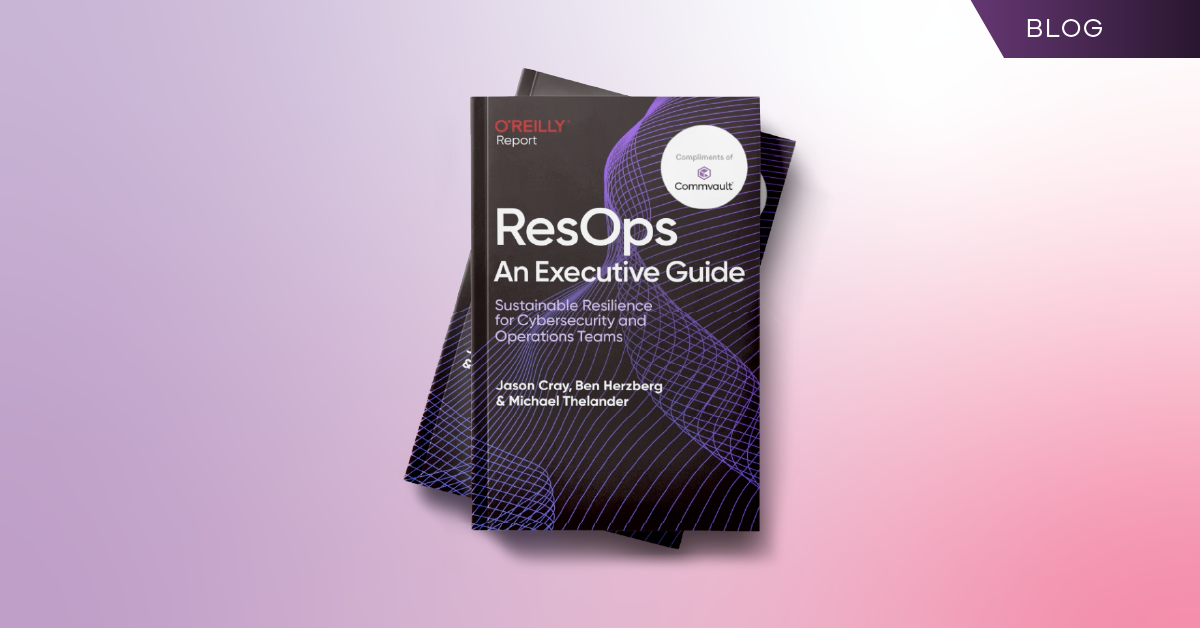
 

More related posts


AI Data Resilience

Read more about AI Data Resilience

Cyber Resilience

Read more about Cyber Resilience

AI-Ready Data Protection

Read more about AI-Ready Data Protection

Security does not end at the edge of an organization’s own systems. Modern businesses connect a growing web of third-party applications to their core platforms to support sales, service, and collaboration. Each of these connections adds value. Each one also introduces exposure the organization does not fully control.

That risk is not hypothetical. In June 2026, a threat actor compromised OAuth tokens tied to Klue, a competitive intelligence platform used to sync sales and marketing data with Salesforce. The attacker used those tokens to reach the Salesforce environments of the many organizations that had authorized the integration, including Commvault’s.

As soon as we were notified of potential impact, our Security team activated our incident response process to determine what had occurred, contain the exposure, and assess whether customer information or Commvault services were affected.

Our investigation found that the activity was limited to certain business relationship and sales information maintained within our Salesforce environment. The investigation found no indication that any customer backup data, product data, product metadata, operational logs, or Commvault services were impacted.

Acting Quickly When It Matters

Our response followed established security incident response procedures built to contain risk quickly while supporting a thorough investigation. Once we were notified of the incident, we disabled the Klue integration, revoked the associated access, and worked with the appropriate parties to conduct a full assessment of what happened.

Throughout the investigation, our teams worked to determine what information had been accessed, validate the integrity of our environment, and confirm the incident stayed within the scope we had already contained.

A Pattern Worth Noting

This incident is one recent example of a pattern security teams have watched grow for several years: attackers targeting third-party applications connected to core business systems rather than attacking those systems directly. A single compromised integration can offer a trusted path into the environments of many downstream organizations at once, often with less resistance than a direct attack on any one of them.

This shifts where an organization’s defense actually has to live. Strong internal controls remain necessary, but they are no longer sufficient by themselves. They have to be paired with active oversight of every application an organization connects, and a response capability that is ready before an incident, not built during one.

Building Resilience Beyond Our Own Environment

At Commvault, our security program includes ongoing assessment of the third-party applications connected to our environment. We review connected applications on a regular basis, evaluate the access each one holds, monitor for emerging risk, and reassess those integrations as business needs and the threat landscape change. When circumstances warrant, we act to reduce exposure and strengthen our posture, including disconnecting integrations that no longer meet our standards.

Our Commitment to Transparency

Trust is built through openness and accountability. When an event affects our stakeholders, we believe it is important to communicate what we know, explain how we responded, and share the outcome of our investigation, even when the event originated outside our own systems.

We will continue to evaluate our security controls, refine our incident response processes, and strengthen our approach to third-party risk as part of our broader commitment to protecting our customers and partners.

For the official details of this incident, including the scope of the investigation and customer guidance, please refer to our Trust Center Updates.

Will Galway is Deputy CISO at Commvault.

More related posts


Thumbnail_Blog-What-is-Resops-2026

What Is ResOps – and Why Cyber Resilience Needs It

Read more about What Is ResOps – and Why Cyber Resilience Needs It
Thumbnail_Blog-Playbook-2026

Prove It Before You Need It: The Playbook I Wish I’d Had 10 Years Ago

Read more about Prove It Before You Need It: The Playbook I Wish I’d Had 10 Years Ago
Thumbnail_Blog-Medusa-is-Evolving-2026

Medusa Is Evolving. Cyber Resilience, Cyber Recovery, and ResOps Matter More Than Ever.

Read more about Medusa Is Evolving. Cyber Resilience, Cyber Recovery, and ResOps Matter More Than Ever.

How to Architect Unified Data Protection: A Single Platform for Modern Workloads

Unified data protection consolidates security, recovery, governance, and AI automation into a single platform, enabling consistent protection and reliable recovery across hybrid and multi-cloud environments

Key Takeaways

Unified data protection consolidates security, recovery, governance, and AI automation into one platform, helping reduce complexity while strengthening cyber resilience.

  • Unified data protection replaces fragmented tools with a single control plane that spans on-premises, hybrid, and multi-cloud environments for optimized TCO.
  • Siloed protection strategies increase operational complexity, weaken visibility, and reduce confidence in enterprise-wide recoverability.
  • A unified platform connects data security, cyber recovery, and identity resilience to help strengthen overall cyber resilience.
  • A dedicated instance delivers isolated resources, streamlined compliance and data localization, along with SaaS-driven innovation – helping enable secure, compliant operations without infrastructure management overhead.
  • Embedded AI capabilities help support automated discovery, intelligent policy enforcement, and faster, cleaner recovery outcomes.

Most enterprise data protection strategies were designed for a world that no longer exists — before cloud sprawl, AI-generated data growth, and hybrid infrastructure became the norm. Commvault Cloud addresses this architectural gap with a unified platform that connects data security, cyber recovery, identity resilience, and AI-enabled governance across every environment from a single control plane.

Why Do Modern Enterprises Need Unified Data Protection?

According to IBM’s Cost of a Data Breach Report 2025, the average cost of a data breach stands at a staggering $4.4 million globally, with costs rising significantly when recovery is delayed or incomplete.

At the same time, the World Economic Forum notes that as organizations confront AI threats, geopolitical volatility, and supply chain vulnerabilities, the need for resilience has never been clearer.

Enterprise data protection is rapidly entering a new period of drastic modernization. Data no longer lives in predictable locations, and it certainly does not remain still. Critical workloads exist across on-premises infrastructures, multiple public clouds, SaaS platforms, containers, and emerging AI pipelines. Each environment brings its own operational model, its own tooling, and its own risks.

For security and IT teams, the pressure is intensifying. Many organizations are now confronting three critical structural challenges simultaneously:

  • AI is generating exponential volumes of distributed data, which expands the potential attack surface.
  • Many enterprises still rely on siloed products to secure, protect, manage, and recover data, even though those tools were never designed to operate together.
  • There is no one-size-fits-all approach. Modern enterprises run across on-premises, cloud, and hybrid environments, and require resilience that spans all of them.

This complexity did not emerge overnight. It developed as cloud adoption accelerated and application teams moved faster than protection strategies could evolve, resulting in fragmented visibility, inconsistent operations, and uncertainty around recovery readiness.

In this landscape, unified data protection has emerged as the architectural response – establishing a single control plane that helps protect workloads consistently across environments, reduce complexity, and strengthen confidence in enterprise-wide recoverability.


How Does Unified Data Protection Eliminate Fragmentation?

A recent study by IBM and Palo Alto Networks highlighted that the average organization has 83 different security solutions from 29 vendors. In this unhappy new norm, 52% of executives believe complexity is the biggest impediment to security operations.

The fragmentation of protection causes inefficiencies while actively increasing operational and security risks. What often happens is that each new workload category introduces another protection tool. Cloud-native backups operate separately from virtual machine protection. SaaS data sits in its own silo. Compliance reporting pulls from multiple disconnected systems. Over time, this complexity multiplies, with coverage becoming uneven and difficult to verify.

The operational burden grows quickly. Teams are forced to manage multiple consoles, increasing costs and technical challenges. Security leaders lack a unified view of protected vs. exposed data. Compliance teams spend cycles reconciling evidence. Finance teams struggle to understand true protection costs. And the biggest obstacle: Recovery confidence becomes inconsistent, and uncertainty reigns supreme.

Finally, leaders are left asking a fundamental question: Are we truly recoverable across our entire data estate?

Overcoming the obstacle of fragmentation now has become essential to long-term organizational success. Unified data protection is designed to address this by helping eliminate silos and establishing a consistent operational model across environments.

Why Do Modern Businesses Need a Unified Architectural Reset?

Unified data protection represents a change in how protection platforms are built and operated. Instead of layering tools around individual environments, modern architectures establish a single policy and intelligence layer that spans the entire data estate. Unified protection is about creating a cohesive cyber resilience foundation that brings together data security, cyber recovery, and identity resilience within a single operational model.

A unified platform supports:

  • Consistent protection across the full workload spectrum.
  • Centralized visibility into protection posture and cost.
  • Unified policy and governance enforcement.
  • Flexible deployment models that respect data residency needs.
  • AI-enabled automation that scales with data growth.
  • A single operational experience for backup, recovery, and mobility.

The Commvault Cloud platform positions unified protection as foundational to modern cyber resilience.


How Does Unified Protection Support Regulated and Sovereign Environments?

For heavily regulated industries and critical workloads, unified protectiohn must go beyond visibility and efficiency. It shoudl also help deliver provable isolation, geographic control, and audit readiness. Digital sovereignty requires demonstratable, auditable control over where data resides, who can access and operate the environment, and how recovery is executed. It is not achieved simply by chooisng a cloud region or provider; it depends on how the entire system is architected, governed, and operated.

Commvault Geo Shield helps address these requirements by helping enabling configurable controls across data while adapting to evolving customer sovereign needs in modern hybrid cloud environments. Built for real-world regulation, this solution helps keep data, metadata, and access within your region, limiting extraterritorial exposure.

Similarly, Commvault Cloud Dedicated Instance provides a fully isolated SaaS environment designed for organizations with strict compliance, privacy, or data residency mandates. Customers receive their own dedicated compute, storage, and management resources, and this solution is designed so that infrastructure is never shared across unrelated tenants.

Dedicated Private Instance provides several advantages for modern enterprises. It helps:

  • Simplify audits for frameworks such as HIPAA, FedRAMP, and GDPR.
  • Support data residency requirements through geographic deployment choice.
  • Support continuous SaaS innovation velocity while preserving isolation.
  • Exercise greater control over upgrade timing and feature rollout.
  • Reduce friction when transitioning regulated workloads to SaaS.

Dedicated Private Instance operates within the same unified platform experience. Organizations are designed to maintain feature parity and innovation speed when choosing a more controlled deployment model.


How Does AI Strengthen Unified Cyber Resilience?

AI is reshaping both the threat landscape and the opportunity for smarter protection. However, AI capabilities deliver the most value when they are embedded across the entire data protection lifecycle rather than applied as isolated features.

Within the unified platform, AI-enabled capabilities help support:
Automated data discovery and classification. 

  • Intelligent protection policy recommendations.
  • Continuous monitoring and enforcement.
  • Optimization insights that improve cost and resilience posture.

These capabilities are part of Commvault’s broader data security vision, which was strengthened through the acquisition of Satori Cyber. The acquisition was particularly important in an environment where data growth is outpacing traditional defenses.

Through this acquisition, Commvault Cloud now delivers Commvault Data & AI Security — a cloud-native capability that helps address the needs of modern enterprises adopting AI and managing sensitive data across structured and unstructured environments.

The unified platform also advances cyber recovery through AI-enabled workflows such as Synthetic Recovery, which helps surgically remove compromised data while restoring clean business operations. In parallel, expanding identity resilience capabilities helps organizations detect, audit, and respond to threats targeting identity systems such as Active Directory.

What Is the Strategic Impact of Unified Data Protection?

Unified data protection allows organizations to rethink how they operationalize cyber resilience. By bringing together data security, cyber recovery, and identity resilience within one architecture, organizations gain access to a coordinated set of capabilities that work consistenly across diverse ecosystems.

This unified foundation helps deliver extended benefits:

  • Unified protection across workloads, clouds, and locations designed to improve availability of trusted data.
  • Unified governance that connects security, identity, and recovery operations.
  • Unified intelligence that correlates signals across previously disconnected systems.
  • Faster, cleaner recovery outcomes when cyber incidents occur.
  • Reduced operational complexity at enterprise scale.

Industry observers have noted that while elements of this convergence have appeared before, meaningful unification across these disciplines has been limited. Platforms such as Commvault Cloud advance this vision by operationalizing resilience across the full enterprise data estate.

To learn more, visit the Commvault Cloud platform page.

Conclusion: How Does Unified Data Protection Define the Next Era of Cyber Resilience?

The shift toward unified data protection reflects a broader reality. Enterprises can no longer afford fragmented resilience strategies in a world defined by AI-enabled data growth, distributed infrastructure, and increasingly sophisticated cyber threats.

Now, architectures that unify visibility, governance, intelligence, and recovery are becoming foundational to IT and security operations.

Platforms designed around this principle help organizations modernize their approach to protection. By covering the broadest range of workloads, supporting flexible deployment models, and embedding AI-enabled intelligence across the lifecycle, such platforms enable organizations to improve recovery confidence without adding complexity.

For security and IT leaders, the path forward is becoming clear. Resilience must be unified, intelligent, and adaptable to wherever data lives.

Frequently Asked Questions

What is unified data protection, and why does it matter now?

Unified data protection is an architectural approach that uses a single platform to protect all workloads across hybrid and multi-cloud environments. It matters now because fragmented tools cannot address AI-enabled complexity, distributed infrastructure, and sophisticated cyber threats at enterprise scale. Commvault Cloud o designed to deliver this through a single control plane that spans data security, cyber recovery, and identity resilience.

How does fragmentation increase enterprise risk?

Fragmented protection creates visibility gaps, inconsistent policies, and uneven recovery capabilities — making it difficult to verify coverage or confidently recover at scale. Commvault Cloud is designed to address this by replacing siloed tools with a unified control plane that provides consistent visibility, governance, and recovery confidence across on-premises, hybrid, and multi-cloud environments.

How does Commvault Cloud support multi-cloud environments without vendor lock-in?

Commvault Cloud unifies protection across AWS, Azure, Google Cloud, and on-premises environments through a single interface. This approach helps organizations manage policies, monitor risk, and optimize costs across clouds without being tied to a single infrastructure provider.

What role does Dedicated Instance play in regulated industries?

Dedicated Instance provides a fully isolated SaaS environment with dedicated compute, storage, and management resources. It helps organizations meet compliance, privacy, and sovereignty requirements while maintaining access to the same unified platform capabilities.

How does AI enhance unified data protection?

Commvault Cloud embeds AI-enabled capabilities across the full protection lifecycle — supporting automated data discovery, intelligent classification, policy recommendations, and continuous monitoring. Strengthened through the acquisition of Satori Cyber, these capabilities help reduce exposure windows, optimize protection strategies, and accelerate clean recovery after incidents without adding operational complexity.

How does unified protection improve cyber recovery outcomes?

Commvault Cloud integrates data security, cyber recovery workflows, and identity resilience signals within a single platform — helping organizations detect threats earlier and execute faster, more precise recoveries. Capabilities like Synthetic Recovery and anomaly detection work together to help strengthen resilience and reduce operational disruption during incidents.

Explore Related Resources

Commvault’s Complete Cloud Platform

Solution

Commvault Cloud Geo Shield

Learn how Geo Shield helps organizations align cyber resilience with sovereignty, regulatory, and operational requirements across hybrid and multi-cloud environments.
Explore the solution about Commvault Cloud Geo Shield
Solution

Commvault Cloud Unity Dedicated Instance

Explore how Dedicated Private Instance combines infrastructure isolation with simplified SaaS-style operations for organizations with strict compliance, privacy, or data residency requirements.
Explore the solution about Commvault Cloud Unity Dedicated Instance