Here at Commvault, we’re continuing to live our values and celebrate why it’s OUR TIME as we connect, inspire, care, and deliver… together!
Last week, we hosted our quarterly internal Global Town Hall meeting and presented our CEO Living Our Values Awards. This quarterly awards program helps us globally recognize and celebrate our Vaulters for their incredible work!
I’m so proud to announce the inspiring Vaulters who just won our FY’23 Q1 CEO Living Our Values Awards:
Analyst Submissions Team
Microsoft & Oracle Teams
CEO Living Our Values Awards
If you are interested in joining our team and becoming a Vaulter, visit our Careers site for more information.
More related posts
Business Continuity Planning for the Cloud-Native Era
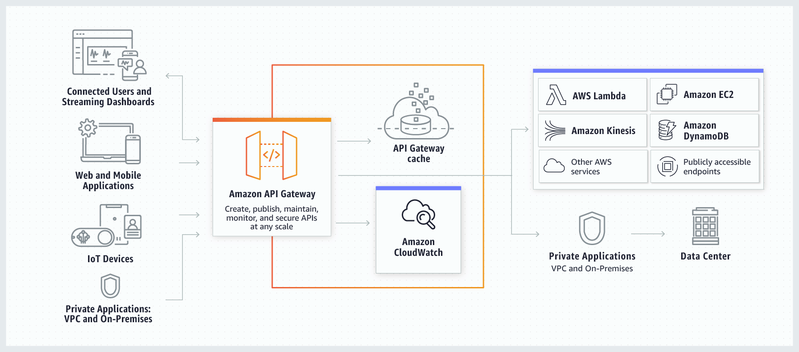
In a microservices-based architecture for an enterprise-level system like Clumio, it is impractical to have a public endpoint per microservice. One of the major problems is the tight coupling this introduces between the client and the server. In addition, each microservice needs to implement and maintain the common pieces like logging, tracing, security (authentication, authorization, rate-limiting).
An API Gateway dwells between a client and a server to proxy requests and responses between the two.
Having an API Gateway provides a unified entry-point for all the external clients and a framework that takes care of all the common pieces mentioned above. This also enables each microservice to implement its own communication protocol that best fits its requirements, independent of the Gateway.
AWS API Gateway
In addition to the above goodness provided by API Gateways, we also had additional requirements that went into choosing one:
Having a mechanism to integrate with the API Gateway in a manner that has no/minimal friction for introducing new APIs and maintaining existing APIs, so as to enable developers to focus primarily on their business logic
Given an API Gateway could potentially be a single point of failure, it should be a fully managed offering that is resilient and highly scalable
Support for Websockets
AWS API Gateway ticks all these requirements and offers good integration with other AWS services for building on top of it.
Leveraging AWS API Gateway
Swagger specification
Swagger provides a powerful representation for RESTful APIs.
We have employed the go-swagger tool which is capable of generating a Swagger specification from annotated Go code.
As a result, developers only need to annotate their REST API as per the above specification and let our framework (mentioned later) take care of integrating the same with AWS API Gateway.
Integrating with AWS API Gateway
At Clumio, all our AWS infrastructure is managed as code via Terraform. AWS API Gateway can be configured using the Terraform resources that it offers.
We use the aws_api_gateway_rest_api resource that allows us to feed the entire Swagger specification into the AWS API Gateway. The AWS API Gateway, however, cannot process a raw Swagger specification. It expects various extensions (like x-amazon-apigateway-integration) to be part of the Swagger specification so that it could configure an API seamlessly. This is where we have implemented a framework that injects the required extensions into a raw Swagger specification to make it work with the AWS API Gateway!
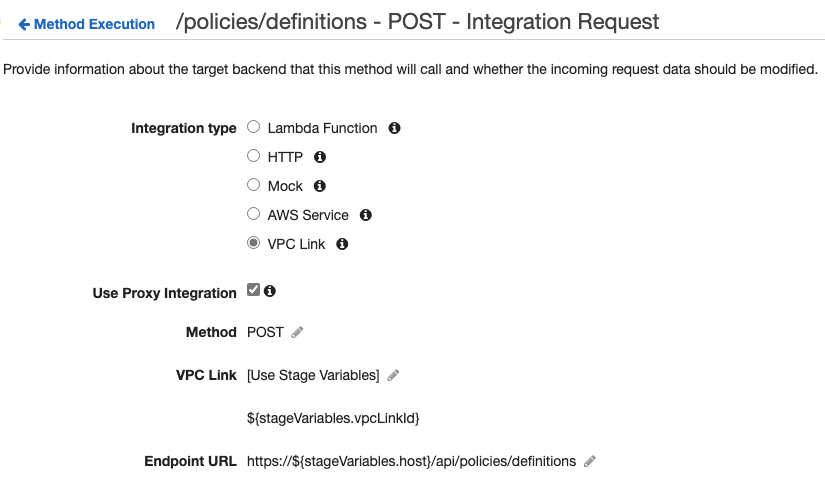
VPC Link Integration type
AWS API Gateway offers various integrations with your backend servers for proxying the incoming API requests.
As all our microservices are bound to a VPC for tighter security, we use the VPC Link integration. This enables the AWS API Gateway to access private API endpoints within the VPC securely.
Custom Domain Names and API Mappings
By default, AWS API Gateway generates a unique domain name for the API, something like aabbccdd12.execute-api.us-west-2.amazonaws.com. For an enterprise company, we would obviously like to customize the public domain name of the APIs for our consumers. AWS API Gateway allows us to do so via Custom Domain Names.
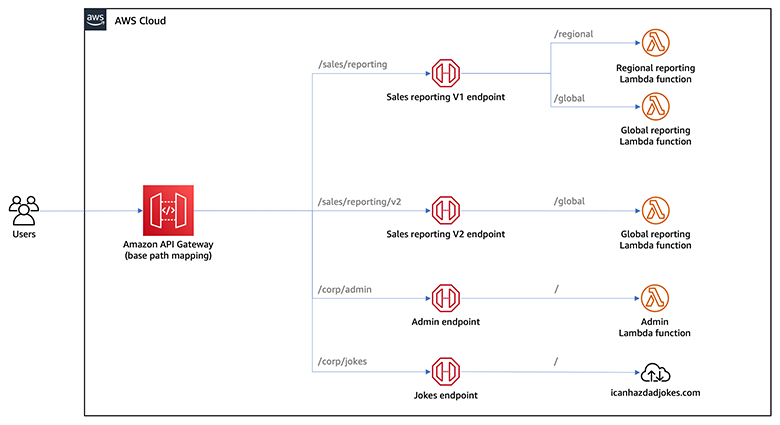
In addition, we also create separate APIs in API Gateway corresponding to some of our most dense API base paths. All these APIs are then glued together via API Mappings as below. This allows us to scale out our APIs and yet have a single public-facing domain name for them.
Lambda Authorizer, Usage Plans and API Keys
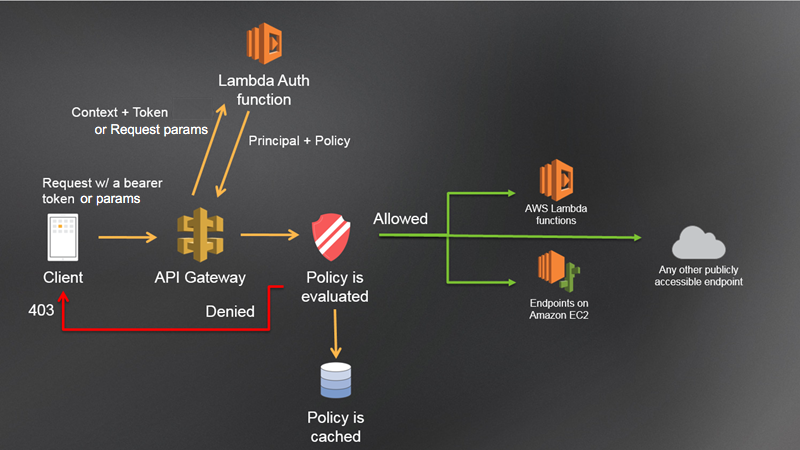
As mentioned earlier, one of the primary use-cases for an API Gateway is to enforce authentication and authorization right at the beginning of the API request lifecycle, so that only the relevant traffic hits the backend servers.
We have implemented a Token-based Lambda Authorizer which expects the following input: The authorizationToken (in the form of a JWT) can be used to implement the required authentication/authorization logic within the Lambda Authorizer to return the output as below:
The authentication/authorization decision is governed by the value of Effect (Allow|Deny) and the throttling decision is governed by the API key identifier in usageIdentifierKey. The API Key has to be associated with a Usage Plan which dictates the request quote to enforce (in terms of requests per second). We issue an API key for each client and hence are able to enforce throttling per client.
Another interesting thing in the output is context which can have any key-value pairs as required by the application. We use this heavily to capture the client information which we then pass throughout the API request lifecycle. This eliminates the need to lookup client details, while the request navigates through multiple microservices at the backend.
Conclusion
We hope you gained insight into how we leverage AWS API Gateway at Clumio and also a sneak-peek into the broader Engineering efforts that we carry out. We give utmost attention to security, scalability and most importantly adopting developer-friendly processes. This makes it easier to maintain products as we mature and scale, while being extensible enough to cater to new functionalities.
More related posts
Business Continuity Planning for the Cloud-Native Era
Welcome to the live stream celebrations as Commvault’s CEO, Sanjay Mirchandani rings the closing bell at NASDAQ’s headquarters in New York City.
The stream is due to start at 4pm ET on July 28th and a replay will be available shortly after. Post and follow the reaction by following #Commvault on social media.
That sense of accomplishment accompanies an added sense of relief, regardless of how long it took to achieve. But…what does this have to do with Bring Your Own Key (BYOK)? Read on.
Along similar lines, Clumio’s Backup as a Service Cloud promised to support the BYOK feature more than 2 years ago! This feature allowed customers to encrypt their backup data using their own encryption key using the Amazon Web Service (AWS) native Key Management Service (KMS) feature.
AWS KMS makes it easy for customers to create and manage cryptographic keys and control their use across a wide range of AWS services and in their applications.
When Clumio added the BYOK feature, it supported VMWare, Microsoft 365 (M365) and AWS EC2/EBS data sources as these were the data sources Clumio supported at that time. However, between then and now, Clumio added additional critical data sources like S3, RDS and DynamoDB.
Now with the most recent release, Clumio has brought BYOK capabilities to all of our critical data sources, and in doing so has achieved the resolution we started long ago. And it doesn’t stop here, as we will continue to invest efforts to bring BYOK to future data sources also.
Why do customers care about BYOK:
Doesn’t Clumio encrypt all backups already, and if yes, why is BYOK needed? It’s true that Clumio does encrypt all the backup data in its cloud with a customer-dedicated key, and that key is also rotated every 30 days. However, in some cases, certain customers have additional stringent security requirements:
How encryption works:
AWS S3 bucket keys have reduced the cost of server side encryption by more than 99% and don’t need to lookup the key for every single transaction. Since Clumio backs up data with millions of transactions, having to look up the key for every single transaction was a no-go. With AWS’S S3 bucket keys feature, Clumio can use the customers BYOK key as the Amazon S3 Bucket Key and encrypts all the data landing in the S3 bucket using the customers BYOK key.
How To Enable the BYOK feature:
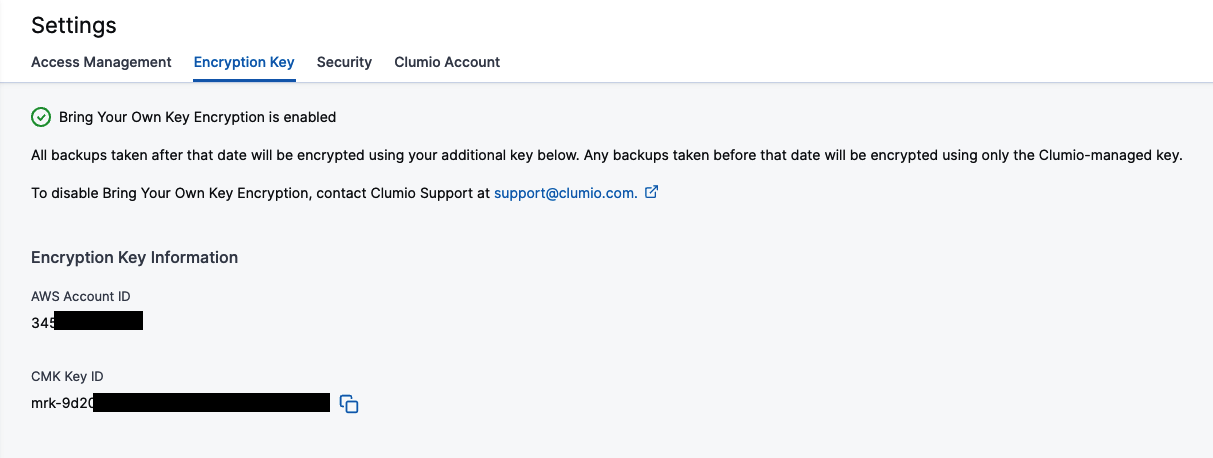
Go to Settings and Security Features – Encryption Key. When you go to the page, Clumio provides details about the feature, along with its requirements and limitations. Customers can proceed by deploying the AWS CloudFormation StackSets inside any one of their AWS accounts where they want to use the BYOK key.
The reason StackSets is needed is because Clumio will need to create a multi-region (global) key and use that for encrypting backups in all regions where the data sources are present. Once successfully deployed, customers can verify the connection in the Clumio UI by visiting the page at any time.
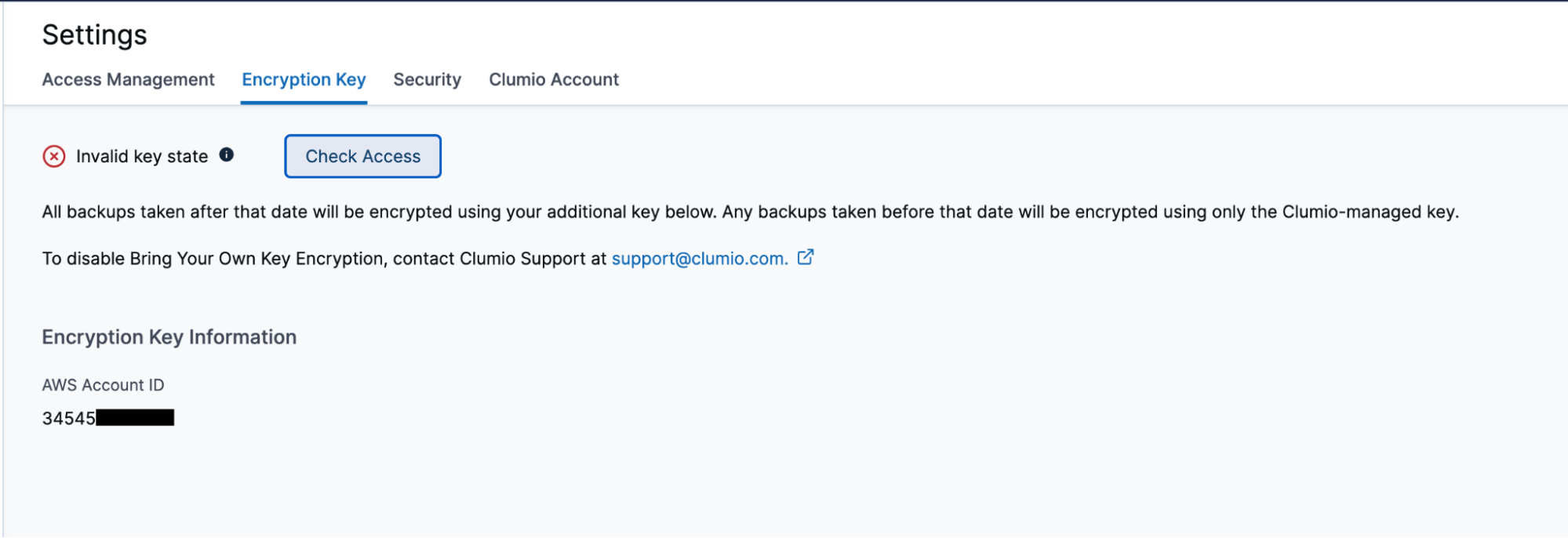
The green check at the top of the page indicates that everything is working as expected. For whatever reason, if the key is not accessible, it changes to a red X and allows you to Check Access again to see if things are resolved and working again.
How to verify and audit Clumio’s Access
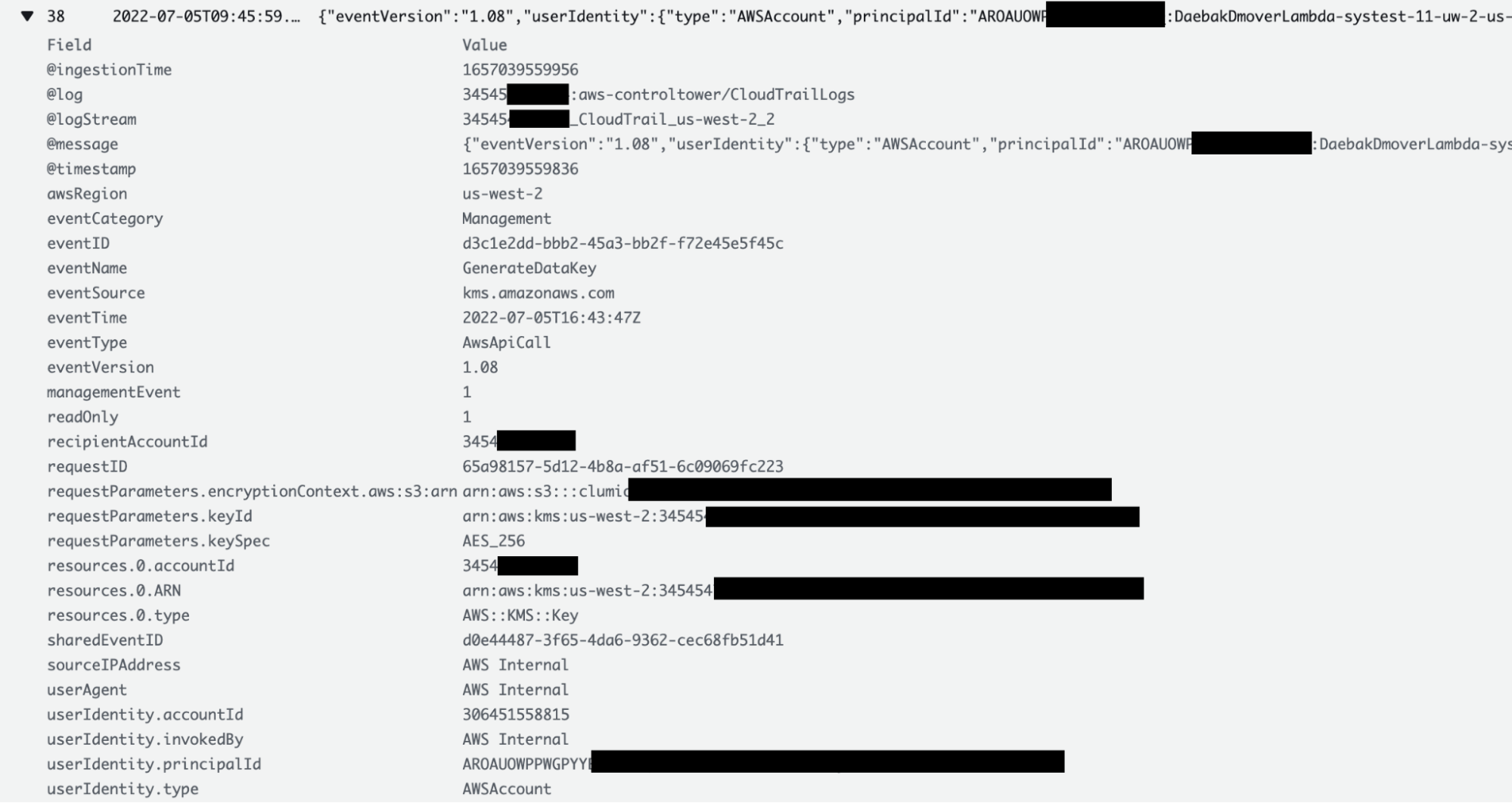
One of the advantages of the BYOK feature is that customers can verify and audit any time Clumio has accessed their key. Customers can go to the CloudTrail logs and see all the details of each time Clumio accesses their key, including the reason for access. Customers can go to the CloudTrail Logs section in their AWS account where the AWS CloudFormation StackSet was deployed.
For S3 bucket keys, since the keys are cached by the AWS S3 bucket keys, access might not be present for every single transaction. However, keys are accessed for every single transaction for EC2/EBS, VMWare and M365 backups.
What happens when key is no longer accessible:
Remember this: BYOK gives you the power of encrypting all backup data, but on the flip side, if the key is lost, then you’re in big trouble! Luckily, keys in AWS aren’t like physical keys and even if someone deletes them, customers still get 30 days to recover them. For whatever reason, if the keys are not recovered, then backup data would be rendered useless. It is meant to be used as a fail safe mechanism but great care should be taken to use this feature.
More related posts
Business Continuity Planning for the Cloud-Native Era
I joined Commvault fresh out of school and at the height of the dot.com boom in 1998. While I had other offers in hand, I liked the people I met during the rigorous interview process and was drawn to an opportunity to cut my teeth on something that would move the needle and bring real value for our customers.
Opportunities like this don’t come around often. For me, it was the right decision.
Jump ahead twenty years to when our new CEO Sanjay Mirchandani saw the opportunity to transform Commvault into a software and SaaS data management company. I couldn’t miss this once-in-a-lifetime opportunity. After all, how many times do you get to start with a clean sheet of paper and launch something that would transform both your company and your career?
No matter how it turned out, not taking this chance would have been a huge regret.
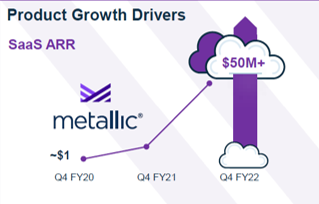
No regrets were necessary. Sanjay gave me and a small, stealth startup team a big goal, a little funding, and permission to break the mold to develop the best backup-as-a-service offering available. We had to be agile – make decisions, see it through, fail fast, and readjust. Together, we launched our Metallic software-as-a-service offering on-time later that year. And just six quarters later, it became a $50M business for Commvault.
For my career, this was the push I was looking for. It wasn’t engineering for engineering’s sake. We were designing a product that was tailored to the end-to-end customer experience – from trial to onboarding to purchase to support to renewal. We had to look at it from the outside in, working cross-functionally, and with customers and partners to plan for the entire user journey.
It was an amazing and incredibly rewarding challenge. However, opportunities like this are rare and can be a little risky because you’re stepping into the unknown. So I thought I’d share my advice to help you seize your next career opportunity:
Get uncomfortable. Look outside your role and even your chosen function for new opportunities. And know, a little bit of “imposter syndrome” is good – It means you are expanding, growing, and pushing your boundaries.
Look from the outside in. Take time to understand your stakeholders’ perspective and expectations. Not just about the product itself, but the broader customer experience – how it is priced, where can it be purchased, and how they will pay for it.
Don’t fall in love with your ideas. Great ideas can come from anywhere and anyone, especially working cross-functionally. And when you are moving fast, your ideas often have a shelf life. So be open, flexible, and agile.
Overcommunicate. Time is not a luxury in technology. Communications is critical to align people, functions, and the field to work better and faster. Don’t skip this step.
Bend it – don’t break it. In a role like this, it is common to ask why something it done a certain way. Look for opportunities to make a product or process better, but don’t break it (or the person behind it).
I’m fortunate. I joined a company that inspired me to look for new opportunities and empowered me to pursue them. And, in many respects, I am just getting started as CTO of our Metallic business – a ride I’m more than ready for. If you haven’t already found that once-in-a-lifetime opportunity, my advice to you in your career is to leave no room for regrets.
More related posts
Business Continuity Planning for the Cloud-Native Era
It’s time to get in on the Metallic Data Management as a Service (DMaaS) offering that’s gone from zero to $50M in record time
At Microsoft’s Inspire partner event this week (July19-21), there’ll be a significant focus on data management. Data is the lifeblood of any organization, and the threats to data loom larger today than ever before.
Today’s customers face significant data challenges. They’re looking for trusted experts—partners they can rely on to solve these issues with innovative, proven solutions. Customers are also suffering from point solution fatigue: needing one solution to protect some data, another to protect other data—on and on and on. They’re also looking for solutions that are proven to deliver results—solutions that deliver the results they promise.
Tired of managing so many solutions to meet your customers’ data challenges? (They are, too!)
Now, you can help end this madness. With Metallic, you get industry-leading Commvault technology, in a lightweight SaaS-delivery model. Enterprise data management that’s proven to safeguard entire customer data estates from deletion, corruption, and attack. It empowers businesses to protect and manage any workload—no matter where it lives and where it may need to live in the future—across on-prem, cloud, hybrid cloud, multi-cloud, SaaS, and the edge. It’s something no other solution can deliver on—and it’s exactly what your customers need.
If you want to be the partner of choice and win big as data protection transforms, it’s time to take a serious look at Metallic. If you don’t have a data protection practice and you need to start one, Metallic can be the cornerstone of your new practice. Here’s why:
The world of data protection and data management is moving to SaaS: All the experts agree that data protection is swiftly moving to SaaS. If you’re not offering solutions that meet your customers’ needs, you risk losing your customer base to someone who is. With Metallic, Commvault gives you a solution in your portfolio that is the best in class, best in DMaaS—and so much more. Plus, no infrastructure or operational support needed—Metallic provides it all for your customers.
Metallic is built on proven technology and a shared vision with Microsoft: Metallic is built on Azure and born out of 25+ years of joint engineering with Microsoft. Metallic is proven technology—it’s feature rich, supporting the widest range of workloads.
Ransomware recovery starts before you’re compromised: As the ONLY DMaaS provider to achieve FedRAMP High In Process – In PMO Review, Metallic offers a hardened, multi-layered approach to preserving and recovering data in the face of attack. But we take it one step further. Withfully integrated cyber deception, Metallic ThreatWise™ enables you to actively defend your data the moment an attack begins (not just recover from them). These unique and differentiated capabilities drive bad actors away from real data, and immediately surface zero-day and unknown threats before encryption, leakage, exfiltration, or theft. It’s unparalleled protection you can offer with Metallic.
Are you ready to win in the rapidly transforming data management market? If so, you’re ready for Metallic.
More related posts
Business Continuity Planning for the Cloud-Native Era
CSR is all about showing the human side of us. It’s about showing how we truly care about our business, our planet, and most importantly, our people! We all know that over the past few years, the importance of care, support, and creating a better world have never been more top of mind. Making a difference and having an impact is core to Commvault’s culture, and we are stronger than ever…together!
Our values – we connect, we inspire, we care, and we deliver – are at the root of everything we do. These guiding principles shape our daily interactions with each other and our communities, power our passion for technical excellence and outstanding customer service, and support our overarching commitment to responsible, sustainable, and ethical business. Whether we’re helping our customers manage their data more sustainably, supporting the development and inclusion of our global workforce, or giving back to our communities, we continue to prioritize our stakeholders and treat long-term sustainability as a non-negotiable requirement of doing business.
Building both a better today, and a better tomorrow, is at the heart of who we are. And with innovation at the core of everything we do, we continue to drive new sustainability initiatives to advance our progress in 2022 and beyond.
I’m so proud to see all the incredible efforts of our Vaulters represented in this year’s report. More to come on our CSR efforts, so stay tuned!
More related posts
Business Continuity Planning for the Cloud-Native Era
Ransomware threats continue to dominate headlines — and for good reason.
The good news is that you can strengthen your organization’s resiliency and security posture and stay one step ahead of ransomware with proactive data security best practices.
After all, the steps you take today to protect and defend against threats can determine how quickly your organization can resume normal business operations if you get hit with ransomware. For comprehensive coverage of cyber threats, you must proactively invest in preventative security measures to keep data safe and recoverable from attacks.
Follow these five best practices to implement a solid ransomware readiness strategy.
Have a Multilayered Security Plan
With ransomware threats becoming increasingly sophisticated, a multilayered approach to securing your data dramatically helps reduce your organization’s risk. Commvault believes a multilayered security framework that can protect, detect and recover is the best approach to protecting and recovering from ransomware attacks. While the average is 21 days of downtime, we have seen organizations resume operations as quickly as two days when leveraging a multilayered security approach.
Learn about Commvault’s multilayered approach to protect, detect, and recover from cyber threats. Learn more >
Control Who Has Access
Effective data protection starts with a strong foundation. Hardened security protocols, such as multifactor authentication, advanced data encryption, and zero-trust user access controls prevent unwarranted access to systems and data. With Commvault, you can identify risk exposure and coverage status from a single management console across your entire environment.
Watch this video to see how Commvault provides data security controls.
https://play.vidyard.com/xqQA12tnxA4dNEmSAgDj9P
Isolate and Air Gap
Data isolation using air gap techniques can reduce the exposure of backup data to malware and other vulnerabilities. Commvault suggests implementing a 3-2-1 back strategy for greater ransomware protection: 3 copies of your data, on 2 different media types, with 1 copy offsite. Utilize your cloud first initiatives for not just primary data but to secure your backups as well. Commvault provides a modernized approach to air gapping that is not only simple but also provides the maximum level of security needed to protect against lateral moving threats.
https://play.vidyard.com/i7Y7ACrZYzaSXEXkyBzibq
Segment Your Networks
If a cyberattack is successful, don’t give outside threats unlimited access to your entire network. Divide your network into smaller segments to prevent lateral movement and compromise of your business-critical data. Commvault augments your security strategy by providing the flexibility to quickly add cloud storage using Metallic® Recovery Reserve™. Using Metallic® Recovery Reserve™, you can easily implement an offsite cloud storage location, providing a virtual air-gapped, immutable copy of your data to satisfy the 3-2-1 backup storage rule and safeguard your data from cyberattacks.
Improve Security Posture
You need the ability to catch threats before they impact your business. Commvault provides centralized visibility and management through a single, unified platform with security dashboards and alerts to quickly identify risk exposure, detect suspicious activity, and resume business operations. The Commvault Security Health Assessment Dashboard offers a single place for IT Admins to bolster security posture quickly, identify risks in real-time, take corrective action, and rapidly recover data.
Commvault ransomware protection solutions are built on responsiveness, innovation, and rapid execution to help you stay one step ahead of ransomware. With Commvault, you have the most robust data management features at your fingertips to ensure your data remains secure and resilient, keeping your business ransomware ready.
Want to gain more insight into securing your enterprise data to avoid becoming headline news? Read how five organizations were attacked, how they recovered, and their lessons learned. Read Now >
Fred is the VP of Technology at BioPlus Specialty Pharmacy, the nation’s largest non-payer specialty pharmacy. They have physical locations in six states and are licensed to fill prescriptions in all 50, with over 500 employees. BioPlus innovated a 2 hour acceptance guarantee, 2 day ready to ship guarantee, and 2 click online refills.
The Pain Before the Cloud
Computing in an on-premises environment, BioPlus’s IT team was always playing catchup. They felt they were chronically behind, as the company was growing faster than the team could add servers, technologies and solutions. They knew they needed to move to the cloud to better enable their growth. BioPlus operates in a highly regulated space, subject to HIPAA, Medicare and PCI compliance standards, and of course the medical field is known to be a prime target of ransomware attacks. Given those realities, they knew data protection was of the utmost importance, and selected Clumio to help fufill that need.
Unlimited Scalability for Unlimited Business Growth
Once BioPlus decided to move their environment from on premises to the cloud, their journey took about 11 months. After considering all the options, they selected AWS because they felt those services would best support BioPlus’s brand promise and speed to service. They needed virtually unlimited resources to enable growth and scale as they expanded into new markets. The other very important factor was AWS’s security and compliance. Given BioPlus’s decision criteria for their cloud environment, it’s no surprise that they selected Clumio as their data protection provider. Fred loved that Clumio’s infinite scalability meant he wouldn’t have to worry about backup keeping up with growth. Especially considering that patient data like records and lab work tend to expand exponentially. Clumio’s elasticity was and is key to enabling BioPlus’s growth and success.
Data Protection Challenges
If one thing is a given, Fred knew their data had to be secure, and liked that Clumio is built with security at the forefront of thought, from front to back. Additionally, he had to consider the long-term retention requirements for patient records. HIPAA requires 6 years, and CMS requires 10 years for medicare providers. HIPAA also requires backed up data to be air-gapped. Because BioPlus processes payments, they are also subject to PCI, which requires end-to-end encryption. Clumio delivers on all of these needs.
Finding Even More Benefits in Clumio
Fred and his colleagues at BioPlus were already thrilled with everything Clumio delivered, but there were a few additional wow factors that really sealed the deal. First was the speed to implementation. BioPlus was able to have their Clumio backups fully up and running in less than a week from signing up. They also needed fast recovery times, and the ability to restore individual files. Finally, the fact that Clumio did all of this with SaaS simplicity meant Fred’s team could focus on their many other tasks. Then there’s the fact that Clumio saved Fred about 20% vs the other solutions he considered. This was naturally a welcome benefit.
More Details in the On-Demand Webinar
In the recording, Fred and Jeff go into much more detail on all of the points above, and they answer the audience’s questions about encryption key rotation, the future of healthcare and pharmacy technology, moving core legacy applications to the cloud, and more. If all this sounds interesting.
More related posts
Business Continuity Planning for the Cloud-Native Era
We’ve all heard of the adage, “The only constant in life is change.” These words ring especially true for our customers today, as they navigate rising tides of shifting IT hybrid and multi-cloud environments, while battling cyberthreats all along the way.
At Commvault, we see those customers’ needs clearly – which is why we evolve not only our solutions, but also our partnerships to help bring those customers safely through that sea of change. Today’s news of our expanded Oracle partnership is a perfect example of how Commvault helps customers navigate changing trends and markets, with a steadfast commitment to the same peace of mind we have always afforded them.
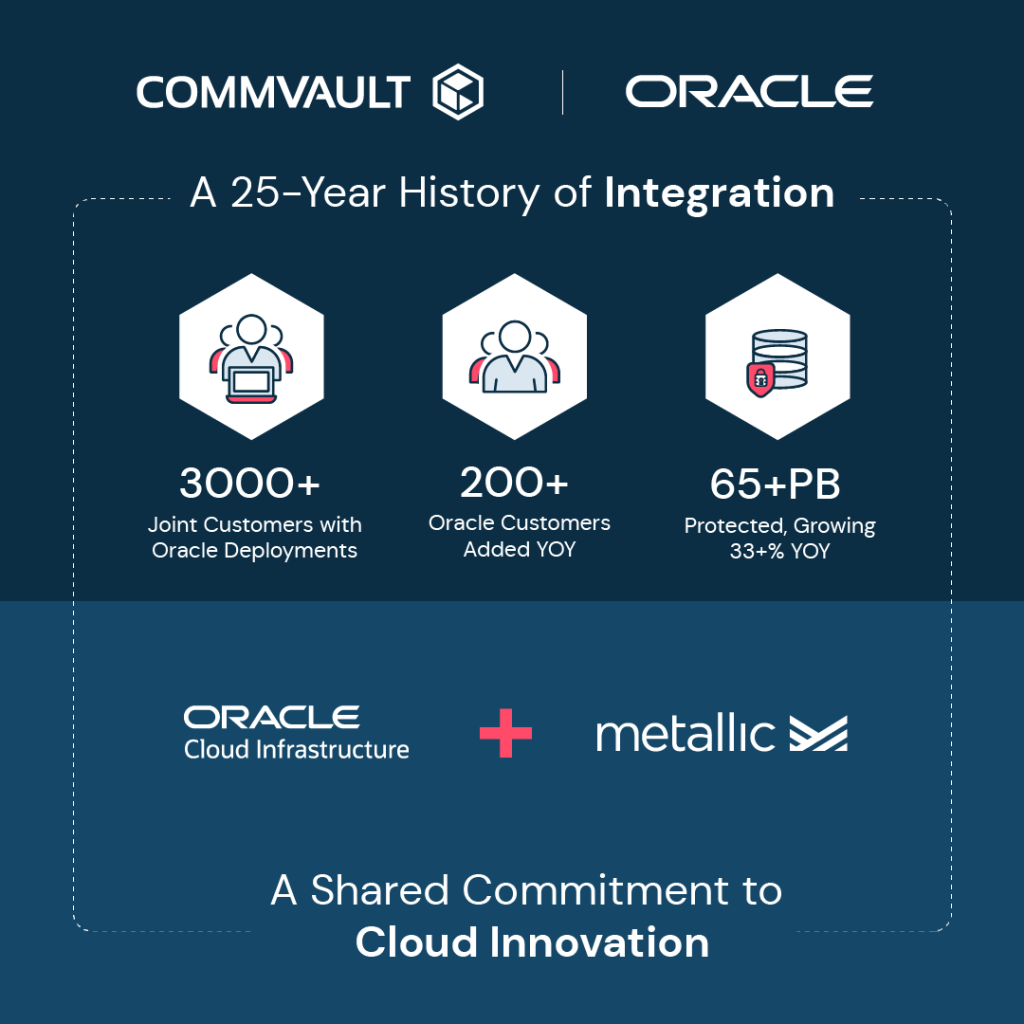
Commvault and Oracle: a 25-year history of integration
Commvault has long supported Oracle customers protecting the crown jewels of their enterprises – their Oracle data. We have more than 3,000 joint customers, which is increasing every year, and the amount of Oracle data we are protecting has grown by more than 30% year over year.
More than 400,000 customers rely on Oracle today to run their businesses. As many of those companies are accelerating their own cloud adoption and migrating to OCI – they have a natural need for agile cloud solutions to protect along that journey.
As Oracle accelerated its own cloud business, bringing the power of OCI to its customer base, Commvault kept pace. In 2017, Commvault underscored our support for Oracle customers moving to OCI, through our Commvault Complete software. Two years later, we introduced Metallic SaaS – which has quickly grown to become the gold standard in data management as a service. With today’s news, Oracle customers who need all the benefits of a SaaS-delivered solution, can now harness the power of Metallic with OCI to protect their data on premises and in the cloud. We’re excited for this natural evolution of our partnership to meet customers where they are with the most innovative and flexible SaaS solutions in our industry.
In fact, Metallic is the only DMaaS solution to protect across Azure, AWS, and OCI.
A shared commitment to cloud innovation and enterprise support
Oracle boasts the broadest and deepest suite of cloud applications, while OCI continues to scale. At the same time, Metallic SaaS has reached an inflection point of hypergrowth, having grown to 50M ARR in just 6 quarters. As both of our companies come alongside customers to help them through their cloud journeys, we deliver unique opportunity to the Oracle installed base, to protect traditional workloads as they adopt the cloud.
Today, our Metallic SaaS portfolio expands to include support for new Oracle Cloud workloads – with OCI VMs and Oracle Container Engine (OKE) – in addition to existing support for Oracle databases running on premises or in cloud VMs, while Oracle customers can choose to send air-gapped backup copies to OCI leveraging Metallic Recovery Reserve.
Maybe change isn’t the only constant – what also stays the same is our promise to customers that they can depend upon Commvault to always keep their data safe and recoverable, no matter what lies under the deep. With today’s news, we are happy to continue to pay off on these promises for Oracle customers everywhere.
More related posts
Business Continuity Planning for the Cloud-Native Era
Ransomware breaches have increased by 13% – more than the last five years combined.1 Sixty percent of InfoSec leaders agree that ransomware threats should be prioritized to the same level as terrorism.2 A cybersecurity attack will impact your organization. It all comes down to how well you have prepared for your cyber recovery.
Are your organization and employees prepared for a cyberattack?
Do your teams know their roles, and will they work together?
Who has the authority/decision-making power to make time-sensitive decisions such as shutting down servers or networks?
As an executive, are your business leaders in sync, and how will you keep them informed?
Zero Loss Strategy
Consider if a ransomware attack hit you today. Would you have a job or company tomorrow? You need a solution that expands beyond zero trust principles to better plan, manage and reduce the impact of a ransomware attack—introducing Zero Loss Strategy, built on Zero Trust Principles and implemented through a multilayered security framework for consistent and automated data protection and recovery. With Commvault, protect what matters most through the broadest workload coverage for greater data protection and rapid recovery across cloud and storage platforms all through a unified customer experience helping you to remain vigilant against cyber threats. Zero Loss Strategy delivers:
End-to-end data visibility
Catch threats before they fully impact your data. With a single management platform, identify business-critical and sensitive data, reduce your attack surface, and minimize risk exposure.
Broadest workload protection
Protect what matters most. Commvault covers the broadest of workloads, from traditional on-premises to hybrid cloud and SaaS applications; we also support native cloud integration, so as your organization and data grow, we can easily help you scale.
Faster business response
Speed and accuracy are essential to responding to a ransomware attack. Consolidating your data protection to a single dashboard, the Commvault Command Center™ gives your organization greater production and efficiency.
Zero Trust Principles
Trust but verify. Organizations need to follow zero trust principles to ensure cyber threats do not have unlimited access within their networks. It is core to every organization’s proper cyber hygiene.
A Zero Loss Strategy is built on Zero Trust Principles and implemented through a multi-layered security framework. Commvault uses these as the foundation for a Zero Loss Strategy. We provide multiple layers of authentication controls to stop malicious actors, insider threats, and even unintentional accidents from deleting backup data.
Commvault Multilayered Security Protection
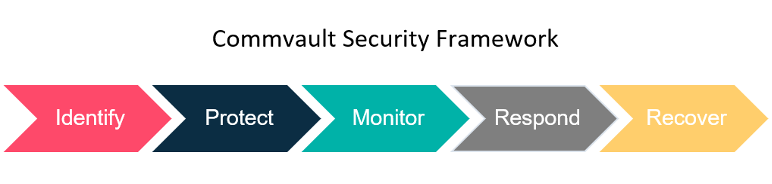
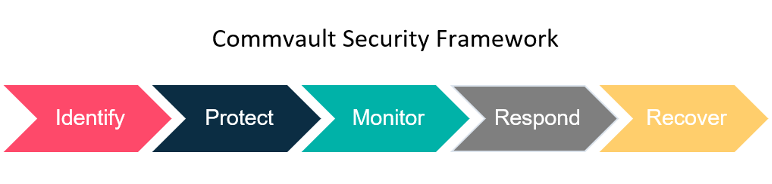
Many experts recommend having a layered anti-malware and ransomware strategy. Commvault has built these security capabilities into our data protection software and policies without the incremental management overhead. Commvault data protection and management platform include five security layers:
Identify and mitigate risks to backup data within a single interface
Protect by applying security controls based on industry-leading standards
Monitor for ransomware, insider threats, and other threats
Respond and take action on threats and continuously validate backup data
Recover data quickly across multiple on-premises, cloud, and hybrid environments
Implement an Action Plan
To help you better protect and manage your data, maintain healthy business operations, and manage risk, you need an approach that brings together your data management teams, security teams, and stakeholders. You need a strategy to help you be better prepared and have the ability to recover quickly if a cyberattack does occur.
Create an incident response plan and test, test, test
Ensure you have the right staff, vendors, process and technology in place
Follow the NIST multilayered security framework: identify, protect, monitor, respond and recover to cover security gaps that may exist in your infrastructure
Follow Zero Trust Principles to verify those users already in your perimeter
Use a centralized management system, not multiple product points, for easy visibility across your data
Eliminate gaps in your environment through air gap, honeypots and isolate networks
Ensure your data protection provider can easily scale with your evolving needs and that you have flexible restore options to rapidly recover. You want a comprehensive approach, not a complex one. Learn more about a Zero Loss Strategy and ransomware protection and recovery.
References
1. InfoSecuity, Benjamin David, Ransomware Attacks Increasing at “Alarmin” Rate, May 2022 – 2. TechRadarPro, Anthony Spadafora, IT Workers Believe Ransomware is as Serious as Terrorism, January 2022.
More related posts
Business Continuity Planning for the Cloud-Native Era
How are you protecting your data from a ransomware attack or natural disaster? What is your recovery plan? Is your disaster recovery plan the same as your cyber recovery plan? The steps you take to protect your data might be the same, but your recovery efforts may vary. Both types of disasters could be devastating to your business, but what’s critical is recovery. The average cost of downtime for large enterprises is more than $11,600 per minute,1 and 40-60% of small businesses won’t reopen after data loss.2 So, the way you think about recovery matters.
Gartner defines a ransomware attack as “cyber extortion that occurs when malicious software infiltrates computer systems and encrypts data, holding it hostage until the victim pays a ransom.”3 A cyberattack is very different from a natural disaster attack. In this instance, your data is intentionally infiltrated. Bad actors have proactively gained access and placed malware into your environment, locking up your systems, hijacking critical data, and seeking ransom. It is estimated that a ransomware attack occurs every 11 seconds.4
What Is a Natural Disaster?
When a disaster strikes, such as a flood, earthquake, fire, or storm, your data environments are inadvertently shut down or even destroyed. In this instance, your data is not intentionally infiltrated. In 2021, there were 401 natural disaster events worldwide.5
What Is Disaster Recovery?
Disaster recovery is the ability to regain access and functionality of critical data systems and IT infrastructure as soon as possible after a natural disaster occurs. It relies upon the replication of data from an off-premises location or cloud environment, where the data is backed up and not impacted by the natural disaster. In a disaster recovery situation, the goal is to restore business operations efficiently with minimal downtime and zero data loss, as the business readiness of the data is considered pre-qualified for recovery. In a disaster recovery situation, your efforts are centered on the efficiency of restoring operations.
What Is Cyber Recovery?
Cyber Recovery aims to provide the ability to regain access and functionality of critical data systems and IT infrastructure as soon as possible after a cyberattack such as ransomware occurs. In a cyber recovery situation, your objectives are to get your business backup and running from an air-gapped and immutable copy of data, which assures you of data integrity. Data protection solutions with the implementation of zero trust architecture assure you a layered approach to defense even for your backup environment. However, “seeing is believing” and this is where it is important to ensure you are frequently validating the business-readiness of the data as part of the cyber recovery tabletop exercises. This can be achieved by performing application validation of the data using custom scripts in a network-quarantined sandbox environment. By doing so, you can prevent any potential re-infection of the environment and thereby contain the “blast radius” after an attack.
How do Cyber Recovery and Disaster Recovery Differ?
Cyber recovery and disaster recovery differ. With disaster recovery, the focus is on the Mean Time to Recovery (MTTR) of operations and the smooth functioning of business. In a best-case disaster recovery scenario, data is not compromised. As for cyber recovery, it is all about your business survival, focusing on data, applications, infrastructure and more.
Characteristics of Disaster Recovery vs. Cyber Recovery
Disaster Recovery
Cyber Recovery
Principle requirement
Rapid means to recovery of business operations with minimal downtime. It is typically assumed that there is zero data loss.
Rapid recovery of business and its data, with zero data loss, and the assurance that data has not been manipulated or tampered with.
Recovery objective expected
Recovery to the closest point in time.
Recovery to the closest point in time from an air-gapped immutable copy.
Tools used
Typically requires replication tools to aid data replication between sites and locations, complete with orchestration to aid seamless failover and failback operations
Requires a host of tools and processes to confirm data has not been manipulated for the protection of applications, networks, use of SIEM/SOAR ecosystem solutions for forensics & analytics, and network monitoring tools.
Frequency of testing recovery runbook
Typically, once every six months to a year.
As frequently as possible to validate the business readiness of data. Exercises include processes that engage incident response teams (IRT), legal, corporate, public relations, communications, third-party insurance, and IT teams. These tabletop exercises help minimize downtime during times of crisis so that it becomes collective muscle memory when it comes to recovery.
What Is an Incident Response Plan?
Do you have an incident response plan? Is your organization and its employees prepared for a ransomware attack or natural disaster?
All the teams involved must be able to play their part in the cyber recovery process effectively
They must be capable of exercising plans and have permission to execute those plans if something happens. During an actual attack, you don’t want teams pointing fingers at each other regarding who is responsible for what. This is often referred to as “IT Collision,” which can significantly impact an organization’s ability to respond to a cyber-crisis efficiently. Ensuring that all the key stakeholders and teams are enabled with the right permissions ensures that they can make swift decisions with authority – and this can be achieved by teams typically being given pre-authorization to perform prescribed actions. Process-induced latency to the recovery exercise can be eliminated without having to get people out of bed and onto a Zoom call to receive authorization.
As for C-Level executives, are your business leaders in sync? How many different business units and partners need to be involved in an incident response plan? Are you concerned about consequences to shareholders in the event of a ransomware attack?
It is important that executives drive a business impact analysis of the entire estate that includes PPT (People, Process, and Technology) to measure the overall impact of downtime after a cyber event.
Identify what needs to be part of the cyber recovery plan .
Identify teams that need to be engaged with as security teams, IRT’s (incident response teams), cyber insurance partners, and data protection teams, as all need to work in close concert for the cyber recovery exercise to be effective.
Detailed processes need to be chalked out that need to be followed during a ransomware attack.
Finally, practice, practice, practice until it becomes collective muscle memory to be able to respond with minimal friction points during actual crisis response.
What Are the Types of Cyberattacks?
It is easy to assume that all ransomware is similar, and it is not uncommon to think that one size fits all in terms of prevention and preparation. However, because each type of ransomware is usually developed to attack different, targeted networks, they can be very different in the way they operate. It is essential to understand the different types currently being used (keeping in mind that attackers are capable of combining multiple types of ransomware).
The strength of protection against any ransomware attack is in your defense strategy, especially given the rise in zero-day vectors with no known tactics, techniques or procedures (TTP).
Six types of Ransomware:
CryptoWall – is responsible for a high percentage of ransomware attacks. Typically, CryptoWall is used to attack targets through phishing emails. The WannaCry ransomware virus is a derivative of the Crypto family and was at the core of the largest cyberattacks ever perpetrated. Unfortunately, the creators of CryptoWall continue to release new versions designed to get around security protections.
Locky – as the name implies, Locky is what it does (locks you out of files and replaces the files with the extension .lockey). However, its name misses the most damaging part of this type of ransomware – its speed. Locky has the distinction of spreading to other files throughout the network faster than other ransomware strains.
Crysis – takes data attacks to a new level, actually kidnapping your data and moving it to a new virtual location. The significance of this aspect of the attack is that it qualifies as a breach if your company works with personal data; organizations must contact anyone who may have information on your network to stay in compliance with local, state, and federal guidelines.
SamSam – attacks unpatched WildFly application servers in the internet-facing portion of their network. Once inside the network, the ransomware looks for other systems to attack.
Cerber – attacks the database server processes to gain access instead of going straight after the files. Its creators sell the ransomware software to criminals for a portion of the ransom collected, i.e., Ransomware-as-a-Service.
Maze – is a variant of ransomware representing the trend in what is called “leakware.” After data is encrypted, bad actors threaten to leak ransomed private data on the dark web unless the ransom is paid.
Safeguarding against ransomware must be at the forefront of organizations’ security efforts.
How Does Ransomware Spread?
Social Engineering is a key tactic used by cybercriminals to encourage unsuspecting users to download/click a spurious link/website. Ransomware is often spread through email phishing messages containing malicious links or by drive-by downloading, which occurs when a user unintentionally visits a contaminated site, and malware is downloaded onto the user’s computer or mobile device. Once within the IT environment, threat vectors move laterally within the network until detected. The anatomy of a ransomware attack is typically to move through unstructured data to remain undetected for as long as possible. Until recently, malware and threat vectors have been known to gestate within an environment for up to 300 days while gradually encrypting data sets and wreaking widespread havoc.
However, with more recent attacks, we find threat vectors being able to sweep in and achieve instantaneous, large-scale destruction by performing mass deletes or encryption. The speed of these attacks does not allow teams to respond fast enough. Therefore, ensuring that the data protection environment is safeguarded from day one against any pace of attack is key. Security professionals must rely on “air-gapped and immutable” backup copies as their insurance policy.
How Commvault Fights Ransomware
Commvault data protection and recovery can be a valuable part of your anti-ransomware strategy. Commvault multi-layered security is built on zero trust principles and based on the National Institute of Standards and Technology (NIST) cybersecurity framework to protect data and enable quick recovery in the event of a ransomware attack. Commvault helps protect and isolate your data, provides proactive monitoring and alerts, and enables fast restores. Advanced technologies powered by artificial intelligence and machine learning, including honeypots, make it possible to detect and provide alerts on potential attacks as they happen so you can respond quickly. By keeping your backups out of danger and making it possible to restore them within your Service Level Agreements, you can minimize the impact of a ransomware attack so you can get back to business right away (and avoid paying expensive ransoms).
Protecting and isolating your backup copies is critical for data integrity and security. Therefore, Commvault has taken an agnostic approach to immutability. With Commvault, you do not need special hardware or cloud storage accounts to lock backup data against ransomware threats. If you happen to have Write-Once, Read Many (WORM)-, object lock- or snapshot-supported hardware (which Commvault fully supports), you can still use Commvault’s built-in locking capabilities to complement and layer on top of existing security controls. Commvault’s ability to support layered defense for securing data sets against ransomware ensures that our customers benefit from a sound cyber recovery-ready architecture. Here are some elements to include in your immutability architecture:
Access locks to isolate copy store against ransomware
Immutability with lifecycle locks to reduce risks, balanced with consumption impact
Air-gap isolation network and controls
Configuration governance to protect against intentional or accidental changes
Concurrent Recovery performance – reduce latency with due importance to speed and cost impact
Automatic patching to stay current, simplifying management and maintenance of data protection infrastructure
Alignment with the 3-2-1 data protection philosophy (3 copies of data, 2 different media, 1 vaulted copy)
Learn more about Commvault’s immutable infrastructure architecture here.
Commvault Multilayered Security Protection
With every environment having a mix of different infrastructures, securing backup data against random unauthorized changes can seem challenging. Just like securing your house, you need to identify the risks and enable the protection and monitoring capabilities to match your needs.
Many experts recommend having a layered anti-malware and ransomware strategy. Commvault has built these security capabilities into our data protection software and policies without the incremental management overhead. The Commvault data protection and management platform include five security layers:
Identify and mitigate risks to backup data within a single interface
Protect by applying security controls based on industry-leading standards
Monitor for ransomware, insider threats, and other threats
Respond and take action on threats and continuously validate backup data
Recover data quickly across multiple on-premises, cloud, and hybrid environments
Commvault multi-layered security consists of feature sets, guidelines, and best practices to manage cybersecurity risk and ensure data is readily available. It is essential to understand that these capabilities are part of Commvault’s core platform experience, Commvault Complete™ Data Protection. There is no special licensing, no additional costs, and no required hardware or software. The layered security depth is enhanced through greater integration with Metallic™ and Commvault Grid for those customers seeking the simplicity of Backup as a Service or a data protection appliance, respectively.
Ransomware Security Measures
Air gap: Traditionally, air-gapped networks have absolutely no connectivity to public networks. Tape is a traditional medium for air-gapped backups because tape can be removed from the tape library and stored offsite. To air gap secondary backup targets on disk or cloud, some access is needed, but communication is severed when it is not required. When the isolated data does not need to be accessed, communication is severed either by turning communication ports off, disabling VLAN switching, enabling next-gen firewall controls, or turning systems off.
Multi-factor Authentication (MFA)6: This is a layered approach to securing data and applications where a system requires a user to present two or more credentials to verify a user’s identity for login. MFA increases security because even if one credential becomes compromised, unauthorized users will be unable to meet the second authentication requirement and will not be able to access the targeted physical space, computing device, network, or database.
Least Privilege Access: This standard security practice provides access to users and/or accounts with the bare minimum capabilities to do their job and nothing more. You decide who has access to what. This minimizes exposure if the account is compromised and limits data access leaks.
Perform Regular Backups with Immutability: Consider increasing the frequency of backups and expanding your data protection to a 3-2-1 backup strategy; 3 copies of your data, on 2 different media types, with a copy offsite and preferably air-gapped. Other essential data protection tools include encryption, write once, read many (WORM), and strict access controls.
Data immutability: Data that cannot be altered. To better protect against ransomware, ensure backup copies are immutable by using layered security controls, write once read many (WORM) capabilities, and immutable storage, as well as built-in ransomware protection for backup data.
Data encryption and key management: A technology in which data is translated into an unreadable form or code, and only users with access to a secret key or password can read it. Encryption at rest and in-flight ensures the backup data, even if exfiltrated, is rendered useless to bad actors without the decryption keys or password.
Anomaly Alerts: These indicate deviation from the expected pattern of data or events. Anomaly detection helps provide behavioral insight, giving your organization the ability to learn about identification patterns to understand your environment and recognize unusual behavior before a threat impacts your environment and business.
Honeypots7: A network-attached system set up as a decoy to lure cyberattackers and detect, deflect and study hacking attempts to gain unauthorized access to information systems. The function of a honeypot is to represent itself on the internet as a potential target for attackers — usually, a server or other high-value asset – and to gather information and notify defenders of any attempts to access the honeypot by unauthorized users.
Application hardening8: A catchall term for protecting an app against intrusions by eliminating vulnerabilities and increasing layers of security. Data security involves multiple layers of defense that are not limited to the app itself: the host level, the operating system level, the user level, the administrator level, and even the physical level of the device all have vulnerabilities that a good security system must address. For this reason, application hardening might be called system hardening or OS hardening as well.
Whether you are hit with a cyberattack or face a natural disaster — the reality is your organization needs to be prepared and take steps to protect your data and work with a provider who offers rapid cyber and disaster recovery solutions. So how prepared are you? Read our eBook on Understanding Team Roles and Responsibilities in Fighting Ransomware.
References
1.,2. Branko K: Web tribunal: 15+ scary data loss statistics to Keep in Mind in 2022, March 2022. – 3. Gartner, 6 Ways to Defend Against a Ransomware Attack, by Manasi Sakpal, November 2020 – 4. Safe at Last, 22 Ransomware Statistics to Help Fortify Your Cybersecurity Models: Jan 2022 – 5 Statistica, Madhumitha Jaganmohan, Global Number of Natural Disasters Events 2007-2021, February 2022 – 6. CISA – 7. TechTarget, Ben Lutkevich, Casey Clark, Michael Cobb, honeypot (computing) – 8. Thales, Application Hardening
More related posts
Business Continuity Planning for the Cloud-Native Era
In the world of SaaS businesses, new ventures pop up every day. However, the growth potential – and even survival – of a SaaS business can’t be taken for granted. In fact, the year that Commvault launched Metallic – our own SaaS venture – it was estimated only .04 percent of SaaS start-ups make it to $10 million. But Metallic had something special: it was an elegant, cloud-native solution that leveraged the best of cloud technologies together with Commvault’s industry-leading IP. We had a great team at the ready, committed to a singular mission of changing the status quo in data protection, and a market ready for change. Metallic was launched as a Commvault Venture, a start-up within the company, that boasted the technology, talent, and GTM chops to fuel a truly disruptive entrance to the market. In two short years, Metallic has experienced amazing growth and accomplished what most start-ups would dream of:
Rapid-fire portfolio expansion – more than tripling our offerings from launch
Growing from 1M to $50M ARR in 6 quarters
Establishing incredible cloud partnerships – including Microsoft, and a newly launched MSP business with global design partner SoftwareOne
Expansion to serve more than 2,000 customers, with availability in more than 30- countries around the globe
Made Enterprise grade DMaaS a reality for companies of all sizes, from the largest Fortune 500s to the smallest companies
But more than anything – our growth and success today is testament that we have struck a chord for customers: Metallic offers the security and flexibility companies of all sizes need to meet this unique moment of accelerated change … and rising risk.
Growth comes from meeting the moment
Data protection as a service is the fastest growing segment of our industry1, and Commvault had the foresight to know there was a gap: enterprises needed a SaaS-delivered solution that they could trust. What we couldn’t have predicted was a world plunged into a global pandemic, and the meteoric rise of cyberthreats alongside hyper-accelerated cloud adoption. Last year, companies predicted they would double their pace of cloud adoption by the time the year was out2. Adding to that, environments are increasingly hybrid and multi-cloud. This kind of distributed data estate means an expanded attack surface. It’s an (im)perfect storm. But we’ve got you covered:
Metallic was architected to let customers manage data close to the source, for fast hybrid cloud performance.
Metallic supports an expansive set of workloads – including SaaS apps, endpoints, and enterprise critical datacenter workloads – across clouds.
What’s next? Metallic® Recovery Reserve™ and Metallic® ThreatWise™
First, we’re excited to share the Metallic Cloud Storage Service (MCSS) gets a new name: Metallic Recovery Reserve. Since its launch in 2020, companies around the world have adopted this managed cloud service from Metallic for their ransomware recoverability – and we’re excited to give MCSS a new name to speak to the value we’ve heard from those customers. A company’s data is its strategic reserve – and those reserve must be called upon to help speed recovery and ensure businesses can get up and running fast in the face of cyberattack.
To continue our growth, we are keeping the innovations coming. Following Commvault’s acquisition of TrapX in February, this week we’re launching an early access program for ThreatWise, a warning system to help companies spot cyberattacks and allow early action alongside comprehensive tools for recoverability. ThreatWise helps catch latent and silent threats traversing environments to contain and limit windows of exposure – because true data protection is not about recoverability alone.
Learn more about why this matters and how companies can sign up to learn more as we move toward general availability in the coming months.
With Metallic together with a broad set of intelligent data services delivered as SaaS, software, or appliance, Commvault is helping customers move fast, stay agile, and put security first as they modernize their business. There’s much more to come this year and beyond from Metallic as we continue to listen to our customers’ needs – for security and compliance, for business efficiencies, and for smart hybrid- and multi-cloud data management. Stay tuned, the best is yet to come.
References
1. SaaSPath 2Q20, April 2020, IDC – 2. IDC Info Snapshot, sponsored by Microsoft, Doc #US4697620
More related posts
Business Continuity Planning for the Cloud-Native Era
A company’s backup data is its strategic reserve, and in the face of cyberthreats, it’s imperative they are able to call on those reserves, restore their data, and resume business operations as quickly and seamlessly as possible. Air-gapped cloud storage is an essential part of any data protection strategy as companies navigate the rise and growing sophistication of ransomware, which is why we brought Metallic Cloud Storage Service to the market nearly two years ago. Since then, we’ve seen companies around the world adopt this solution as part of their data security strategy, while also paying off on their cloud transformation initiatives and the drive to create efficiencies and lower costs. Today, we’re happy to announce that our managed cloud storage offering gets a new name: Metallic® Recovery Reserve™, a new name but still focused on Commvault’s ability to deliver industry leading enterprise grade protection and recovery of your corporate data.
Cloud storage for your ransomware strategy
Cyberattacks like ransomware attacks happen every 11 seconds1 and are expected to increase year over year, and if an organization is hit with a cyberattack, the average cost of downtime for large enterprises can be in the thousands per minute.2 These statistics reinforce the importance of recovery readiness of data, especially as organizations are accelerating to the cloud. Since data is the lifeblood of all organizations, customers adopted and continue to adopt Metallic Recovery Reserve to protect their business and recover their data when they needed it the most.
With immutability options and air gapping along with simplified management, Commvault, with Metallic, was first to market to deliver a managed cloud storage offering from a recognized industry leader in data protection customers know and trust.
Security with simplicity
While Metallic Recovery Reserve offers the ability to protect and recover data against security threats, the question is, is it simple? Yes.
A security solution that is complex comes with its own pitfalls and has the potential to be less secure the more complex it is to use. Metallic Recovery Reserve is the “easy button” to secure data and control costs. Since it is fully integrated with Commvault software, admins can use Metallic Recovery Reserve as a backup target just like any other disk target or tape target. This removes the need to provide extensive training, since all of this is handled by the Commvault software. Commvault writes directly to the cloud storage and reads from it for restores, with no compute running in the cloud. All of this is managed through the Commvault Command Center, providing a single UI to manage all corporate data.
Metallic Recovery Reserve is also available as a simple cloud storage target for hybrid cloud data center workloads customers protect with Metallic SaaS solutions. Additionally, customers get choice since Metallic Recovery Reserve offers flexible storage tiers across both Metallic SaaS and Commvault software, for both short and long-term retention needs.
While other backup vendors claim their solution is the “last line of defense”, Commvault offers a comprehensive set of ransomware protection capabilities that includes not only recoverability but also protection, monitoring, and detection, as well as early warning and early action capabilities with Metallic ThreatWise. With Metallic Recovery Reserve, you get a solid managed cloud storage service that delivers air-gapped ransomware protection and ensures your data is going to be recoverable when you need it the most.
References
1. CYBERSECURITY VENTURES, Global Ransomware Damage Costs Predicted to Exceed $265 Billion by 2031, David, Braue, June 3, 2021 – 2. Web tribunal, Branko K., 15+ Scary Data Loss Statistics to Keep in Mind in 2022, March 2022
More related posts
Business Continuity Planning for the Cloud-Native Era
For most of my life, I’ve been a builder. As a young child, my imagination was consumed with a passion for cars. I’d stroll down the hobby aisle and see flashy scale models of American muscle cars with their custom flame paint, exotic European sports cars with amazing detail. I was mesmerized. I would mow yards and haul brush in an effort to earn just enough money to purchase the kits and needed supplies to attempt my recreation of masterpieces depicted on the model box.
It was fun and challenging, but there’s one thing that even my imagination couldn’t overcome. I never built the model to its potential and never recreated the level of detail exhibited by the photographs emblazoned on the boxes. It wasn’t for lack of effort, but mostly lack of skill and experience. My glue would always overrun, stickers would adhere crooked or tear as I tried to stretch them across body panels. Painting was hard and I just didn’t have all the tools needed to achieve enough detail to recreate the example on the box. It was a lackluster outcome, even with a full instruction sheet carefully followed.
Now think about how a related situation exists in the cloud. We builders are presented with a world of possibility, and while we may possess the right skills, life is a little more complicated these days and we usually have numerous other priorities competing for our time and concentration. Of course the outcome is dependent on both. There are components where the quick version is ok; for example, we can get away with oversizing instances for a while. But some details of cloud architecture leave no room for error. This is especially evident when you look through the lens of data protection. Data protection is your final line of defense. If it isn’t built with care, you are at risk when you need recovery the most.
With AWS backup, the very basics of backup are provided. If your account is healthy, you can probably restore data. Let’s define health- the region has no outages, your production environment is mostly intact and backups are available. The risk is in the if. With AWS backup you can create a backup plan for your account, but you most likely only achieve an operational recovery point with an in account snapshot. Is this what you need? In the world of infrastructure as code, builders can also become destroyers. We have incredible administrative rights that allow us to manage an entire environment and these permissive roles aren’t without risk, especially when we can create and delete backups at will. The backup plan workflow has lots of prompts to help you achieve a ‘finished’ plan by choosing a default encryption or one of the default templates given, but these choices aren’t optimal as they are not designed to take into account the need to protect your backups from intentional bad actors or accidental deletions, and they don’t address availability due to regional outages.
In the world of infrastructure as code, builders can also become destroyers.
At Clumio, we help remove the risk. We’ve built a Secure Vault for cloud data sources. Our solution creates an air gap between your cloud backups and primary access plane. This helps prevent permissive user roles from compromising rentention and deleting backups. With the help of Clumio, you can recreate. You get optimal protection and simple recovery, even to other regions. Having a backup ready to help you in the worst case scenario sure sounds better than one that only works under optimal conditions.
I’ve come a long way as a builder. I know my priorities and limits, and know when to source out to experts. Take for example my latest project: While my skills have improved in assembly, I’m still no painter. I could probably invest in learning that skill, but that’s just not where I value spending my time. Instead, I’ll source that important part out to ensure a beautiful outcome, instead of risking the outcome quality, timeline, or both by doing it myself.
More related posts
Business Continuity Planning for the Cloud-Native Era
Cloud transformation is a huge part of digital transformation. As the cloud revolution moves into its third decade, it’s clear that there’s tremendous value in adopting cloud, with McKinsey estimating more than $1 trillion just for Fortune 500 companies. Interestingly, nearly all of that value comes from business innovation and optimization rather than IT cost reduction.
So how can organizations capture the potential benefits?
In this video you’ll learn the Do’s and Don’ts of what you need in your data protection environment to successfully achieve a cloud transformation that will make a positive impact for your business.
To further assist you with implementing a successful cloud strategy – please see below a handy checklist.
Requirement
Commvault
Broad Workload Coverage – Over the last few years, your data environment has gone through a high level of change and innovation – leaving a wide range of workloads. For a secure environment, all these workloads require data protection and management – legacy and next generation.
✔
Flexible Delivery Model. This is a big one. A flexible delivery model will allow you to consume, deploy and grow, according to your business needs now and, in the future, including SaaS.
✔
Multi Cloud Support. With 80% of customers using multiple clouds, it’s imperative to work with a vendor that has native integrations and deep relationships. This enables you, the customer, to get early/ fast access to innovations within the chosen cloud environment but also it protects you from cloud/ storage lock in.
✔
Smart Automation. Smart automation means moving data between cloud and on premises will be easy and fast. Automating the process will enable your teams to concentrate on delivering innovation and it will lower the risk of not meeting SLAs.
✔
Enterprise Level Security. With ransomware attacks conservatively estimated to occur every 11 seconds – we need to make sure that your security posture is high. End to end visibility via a single platform ensures that you are ready to deal with any issues or attacks that may arise.
Although vintage trends have become more popular in recent years, your outdated backups are not. They aren’t getting any easier to manage, in fact, most people consider them to be a burden in their IT environment. It would be nice if we could bring all our vintage backups to a thrift store and exchange them for something newer, and simpler to use, but that is not the case.
The complexity and lack of integration from these older backups restrict scalability, create silos that decrease data visibility, reduce IT productivity, and increase overall risk. You need to keep these outdated backups for retention and compliance requirements, but what comes with that is a whole slew of restrictions that hold you back from innovating.
As you are looking to modernize your data protection, make sure you not only, keep up with the trends but stay ahead – you need to migrate your backups with powerful simplicity to the cloud. Instead of holding onto expensive legacy backups, move them and other data sets to inexpensive cloud storage with Commvault. By migrating old backups to the cloud, you can eliminate data silos, improve their availability, and reduce the overall risk in your organization.
Take a look at five, but not all, benefits of migrating legacy backups to the cloud with Commvault:
Consolidating to a Single Platform with web-based browse and management will simplify your entire IT environment. Commvault is a single backup and recovery solution, delivered as an all-in-one appliance that provides unified management across your entire environment – from on-premises to the cloud – you’re adding more value with a single console.
Staff Efficiency will come from the automation and GUI- based management within Commvault’s comprehensive platform. Automation will help you to streamline the management of tasks so you’re staff can focus on more innovative projects as well as make migration a hands-free process for your staff.
Cost Reduction will be because of the reduction in maintenance fees from no longer holding onto expensive, legacy backups. You will also be able to retire unnecessary hardware and reduce the number of point solutions you are paying for. Your staff will no longer have to be trained on antiquated solutions and instead can spend time enhancing their skill set.
Improve Regulatory Compliance because migrating to the Commvault platform will allow for easy search, discovery, and recovery. Improve data availability and recoverability with instant access and policy-driven automation.
Streamline Recovery with faster and more reliable SLAs. Comprehensive data protection from a single platform will ensure enterprise-level disaster recovery every time.
Avoid a fashion faux pas with an outdated IT environment
Migrating to the cloud requires flexibility and simplicity from a modern data protection solution. Without Commvault, you could face falling behind on currents trend and negatively impact the success of your IT goals. It’s time to take a simple, cost-effective, and modern approach to safely protect your data where it lives – on-premises and in the cloud – and migrate it easily and effectively.
For a total closet refresh in your IT environment, take a look at this whitepaper.
More related posts
Business Continuity Planning for the Cloud-Native Era
With new threats emerging daily and increasing in complexity and sophistication too, cyber security has become a critical focus for all organisations – with every single company, irrespective of its size and location, at risk of a cyber-attack. As a result, most have started opting for cyber insurance to cover the losses that such attacks may incur, sometimes together with a specific ransomware warranty, catalysed by this type of threat accounting for some 75% of cyber insurance claims (AM Best 2021). Outside of ransomware, cyber insurance can cover areas including extortion demands and remediation efforts.
But this is a market under strain, with the ratio of losses to premiums earned at 73% in 2021 according to Fitch Ratings and difficulty in diversifying the risk as cyber-attacks have no boundaries. Further, the absence of historical data complicates the capacity for the type of risk forecasting that the insurance industry typically employs to set pricing rates. In combination, this is ultimately threatening the profitability of the industry and thereby the protection it affords – and fuelling rising premium prices for customers too.
Headline grabbing ransomware warranties are also an area that further investigation and small print reading is required. What may look an attractive proposition (and often a no brainer) in many cases will never pay out and could lead to dangerous complacency.
Additionally, clauses around cybersecurity insurance are increasingly tightening, as highlighted by the recent announcement by Lloyds of London on coverage limitation, for example its insurance products will no longer cover the fallout of cyber-attacks exchanged between nation-states. Many insurers are also imposing stricter safeguarding requirements, which although helping to support increased levels of cyber security defences, this can also leave some organisations and especially SMB’s exposed, as they are less able to meet the new minimum threshold limits.
This makes knowing exactly what is covered in any policy you have today, or are contemplating purchasing in the future, a business and technology imperative. Companies should know that cyber insurance policies and ransomware protection warranties do not cover every aspect of attacks and in most cases, there will be varying triggers, limits, conditions and coverages for different types of claims which can lead to denial or a reduced claim, creating an expectation and actualisation gap. Education and awareness here is key – you must be fully aware of what is not covered by your cyber insurance today, to avoid any surprises later. Roy May does a great job of covering exactly this point.
Let’s explore some of the key issues in turn to support exactly that.
Third-Party Mistakes: Cyber insurance companies do not cover you if a cyber-attack takes place on any third-party system causing damage to your primary business. This third-party software or services can be your web hosting, email, cloud services, customer service management or any other significant online business relationship.
Losses Incurred During ‘Waiting Period’: The insurance world often has a time-based deductible referred to as a “waiting period.” Only the losses that incur after the completion of the waiting duration are covered by insurance. This waiting period is usually around 10 to 12 hours. It means that if your network undergoes a cyberattack during the waiting period, you will not be able to claim money from your insurance.
Loss During Downtime: Losses incurred during the business interruption event are not covered by major policies. The downtime can cause harm to your business in many ways leading to loss of productivity and customers trust, loyalty and ultimately their business. No matter how much sales loss this downtime costs you, it will not be covered.
Reputation Damage: This is one of the most significant risks a company faces if a cyber-attack or data breach happens. Indeed, 1 in 3 customers are willing to leave a brand they love after just one bad experience, rising to over 90% after 2 or 3 poor experience interactions. (ADD CITE). Any attacks during special events like Cyber Mondays can do even more harm to the organization. As it is difficult to quantify such loss, cyber insurance companies do not cover them in their policy.
Bodily Injury or Property Damage: Cyber-attacks have tangible consequences. As the world moves towards IoT (Internet of everything), the connections between objects are increasing, and there are chances that it may lead to bodily injury or property damage. It can sound unusual but many production firms are nowadays running entirely on computers.
Everything right from collecting raw materials to shipping the final products happens through automated systems. In the scenario of a cyberattack taking place during any part of this process, it would lead to a catastrophe. If any company ends up in any such situation, cyber insurance will likely not cover the (extent of) the need.
New Hardware: Usually cyber insurance policy will not cover any property damage like hardware replacement and other equipment caused due to a cyber-attack. It becomes problematic when the hardware is corrupted to such an extent that it is impossible to fix it. The best way in such cases is to replace the hardware with something new, but the organization itself will have to pay for this.
Software Upgrades: The latest versions of the software are traditionally not covered by cyber insurance policies. In case of a cyber-attack, major cyber insurances will only help you restore the software to where it was before the attack took place.
Lost Equipment: Most cyber insurance policies do not cover any cybercrime that originated from a lost portable device like a company laptop or tablet. Few insurance policies include only encrypted devices in their policy, so all the devices used in the organization must have appropriate security patches.
Card Issuer Fines and Penalties: A key concern when dealing with a data breach is related to the penalties and potential fines imposed against a company by card issuers like MasterCard, Visa, etc, or indeed imposed against company directors under GDPR and similar regulations. These fines or penalties can reach a substantial amount of up to six figures. A few insurance companies exclude covering these types of fines which could lead to severe financial loss.
Specialised Attacks: Many insurance policies cover only the attacks that are committed by cybercriminals that seek personal profits, or collective profits when bad actors collaborate together for shared gain. They deny the coverage if the attack is carried out with a motive of terrorism or by a nation-state actor for political ends, an area where research shows increasing scale and volume of attacks to evade detection (Microsoft 2021)
Final Thoughts – So, Is Cyber Insurance Worth It?
The resiliency of a business is tied to its cyber resilience, making a sustained and organisation wide focus on cybersecurity critical, right across technology, process, culture and skills. As part of this, cyber insurance plays a role in protection by necessitating advances in security by design within increasingly stringent terms – and by supporting organisational recovery in the event of a breach when all such obligations were fulfilled. But not all cyber insurance policies are made equal, with material differences in coverage and conditions. So you must fully understand both your requirements and your obligations before making a final decision.
Start-ups and SMB’s having small portfolios or minimal digital assets might not be able to justify the expense of cybersecurity insurance, with a better return on investment likely achieved by focusing on security defence, for example Zero Trust practices and employee training and awareness. For large enterprises managing a significant volume of sensitive financial information or PII for their customers, then investment in a reputed cyber insurance policy can be well justified – but only as part of a holistic cybersecurity strategy. No policy will prevent nor spontaneously solve issues related to security but rather, they can form the final piece in a proactive defence program that focuses on both early identification of risks, and expedient recovery when (not if) an attack of some form inevitably occurs.
About the Author
Dr. Sally Eaves is the Chair for Global Cyber Trust at leading Think Tank GFCYBER and Digital Decentralization, Democracy and Security Advisor for the Centre for a New American Security (CNAS) reporting to the United States Government. A highly experienced Chief Technology Officer by background, Professor in Advanced Technologies, and a Global Strategic Advisor on Digital Transformation, Sally specialises in the application of emergent technologies, notably AI, Security, 5G, Cloud and IoT disciplines, for Business and IT transformation, alongside enabling Social Impact at scale.
An international Keynote Speaker and Author, Sally was the inaugural recipient of the Frontier Technology and Social Impact award, presented at the United Nations, and has been described as the “torchbearer for ethical tech”, founding Aspirational Futures to enhance inclusion, diversity, equity and belonging in the technology space and beyond.
More related posts
Business Continuity Planning for the Cloud-Native Era