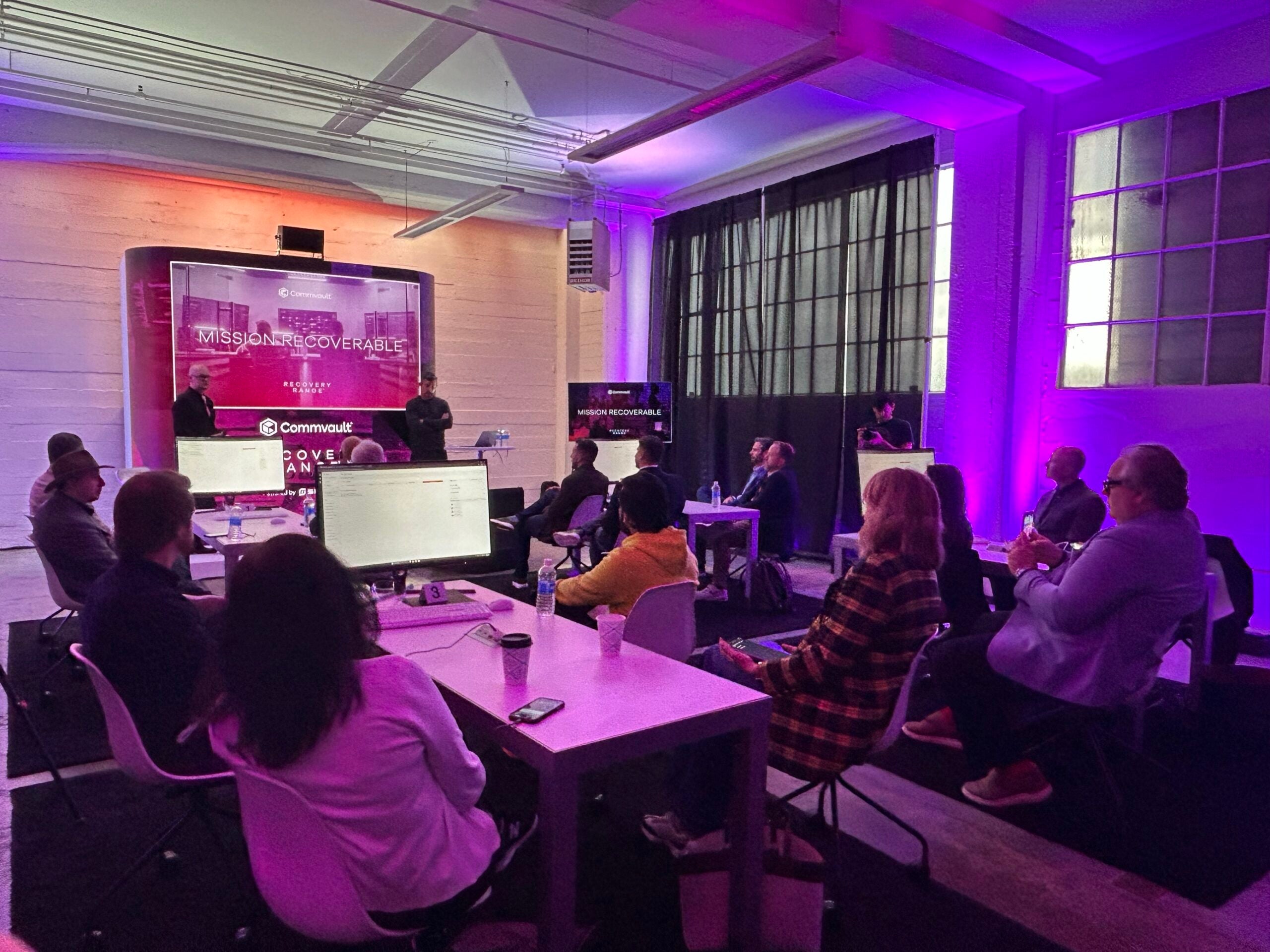
Commvault Cloud® Cleanroom™ Recovery creates an on-demand secure and isolated environment for organizations to prepare, validate, and execute cyber recovery – delivering continuous business.
Amidst ongoing security breaches, it’s essential to rigorously test your cyber resilience strategy. Ransomware threats to backup systems can severely impact recovery efforts.
Our innovative Commvault Cleanroom enables organizations to test their recovery plans with confidence, perform secure forensic investigations, and production recovery. These use cases help organizations maintain continuous business operations.
As organizations grapple with the realities of ongoing cyberattacks, it’s going to be vital for them to identify their minimum viability – the core assets and processes that allow a return to operational status.
Commvault Cleanroom is a key offering helping organizations achieve continuous business in the midst of chaos. It enables dependable, swift recovery; minimized downtime; and a more efficient process.
Commvault Cleanroom has delivered or will soon deliver features that significantly enhance orchestration, security, and expansion, including:
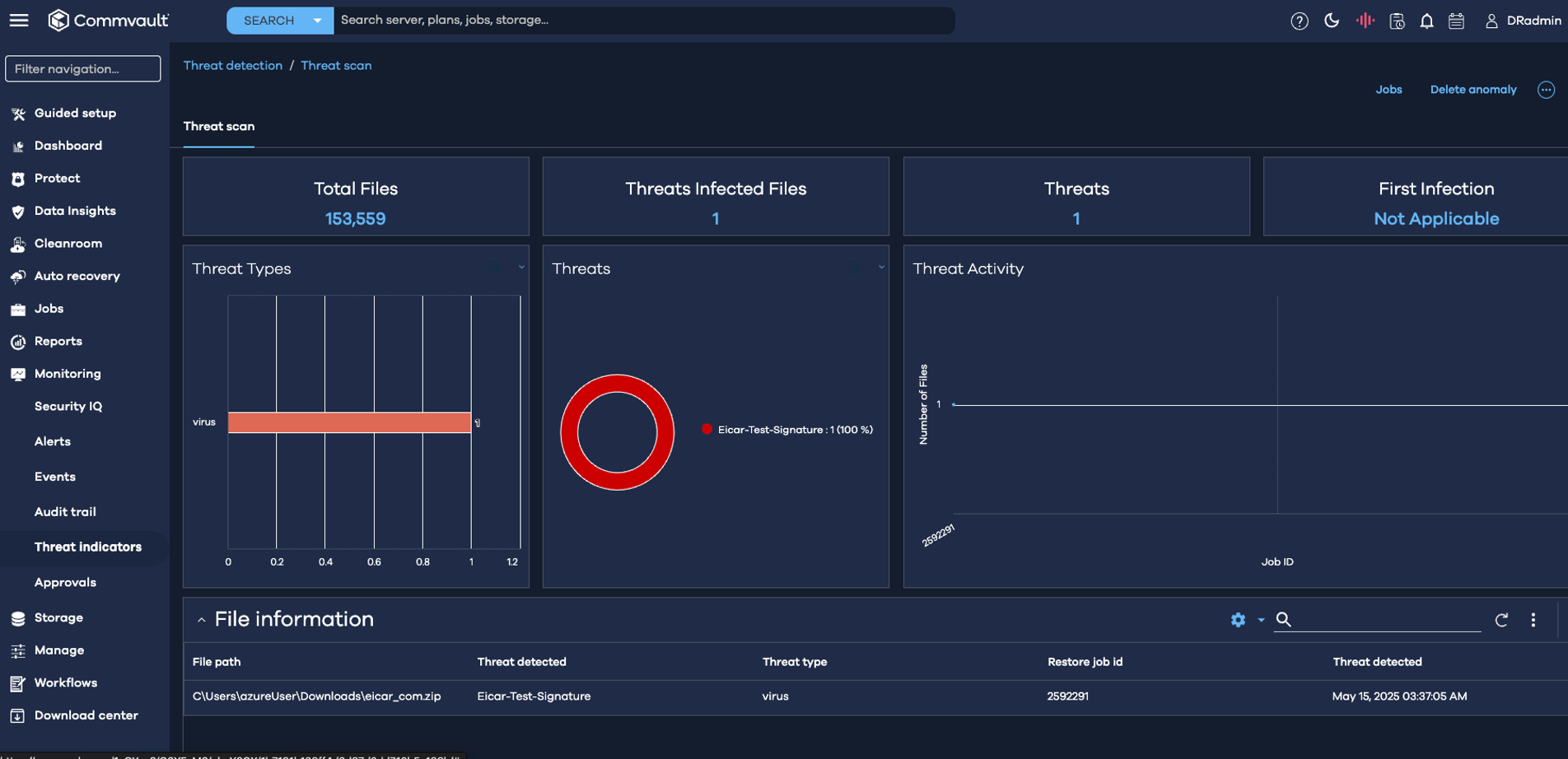
Threat Analysis in Azure Cleanroom using Threat Scan for virtual machines (VM).
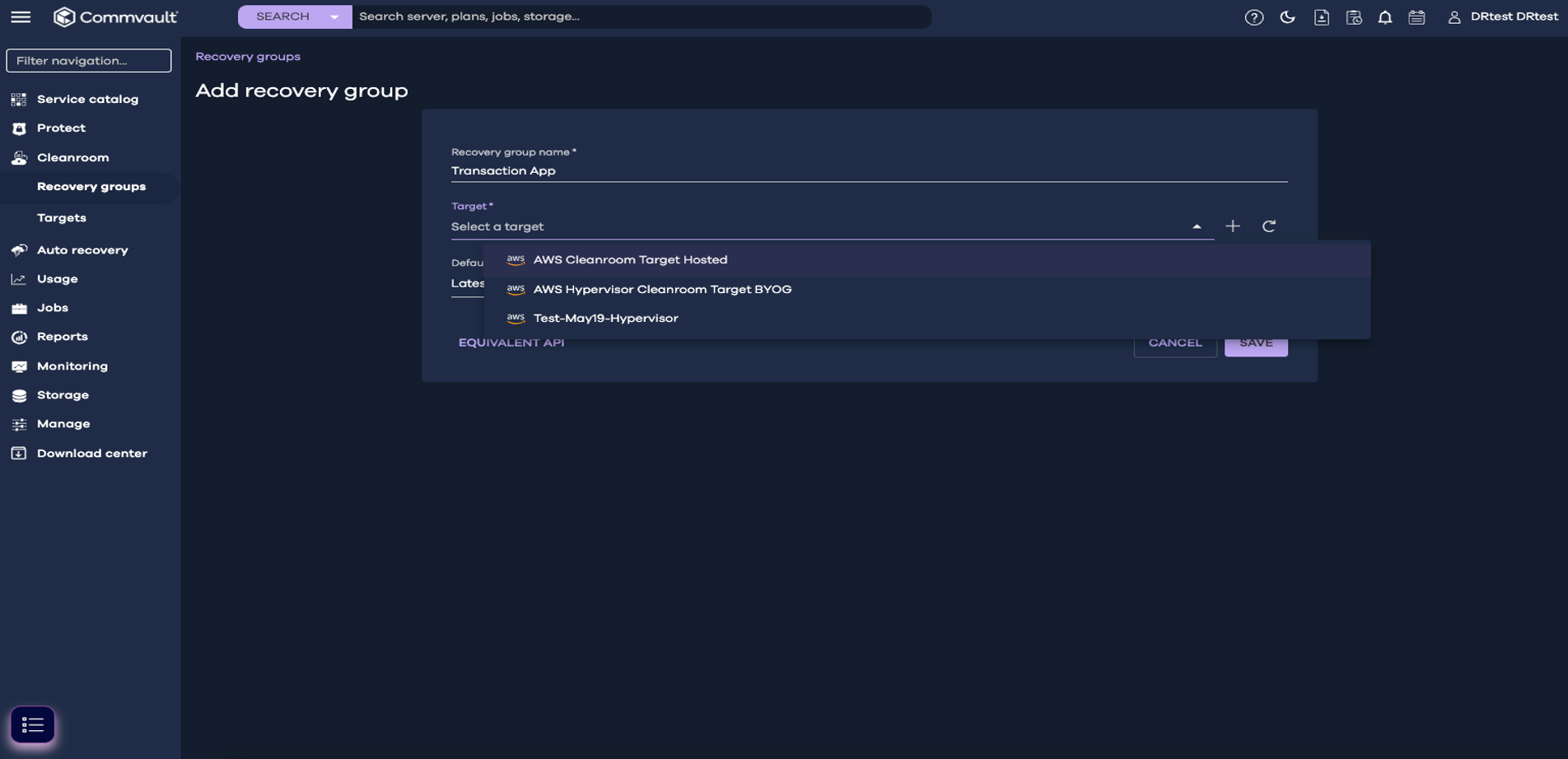
Expanding support for AWS as a Cleanroom site in both SaaS and software.
These features are significant because automating Commvault Cleanroom will enable one-click orchestration of networking resources, VMs, and security controls. This will significantly reduce any manual intervention.
Integrated runbooks trigger Cleanroom creation on demand, with built in validations. You can automate the creation of resource groups, establish a storage account, and configure networking components like virtual networks and security groups for a Cleanroom environment. This end-to-end automation will deliver significant speed, cost efficiency, help achieving compliance (NIST, DORA, etc.), and security enhancements.
With Threat Analysis in Commvault Cleanroom, customers can use Threat Scan for post-recovery threat analysis. Organizations can scan their recovered data using the latest updated signatures.
This gives security and IT teams an added layer of confidence and can help organizations remain in a state of continuous business after bad actors strike. Eliminating manual intervention will help reduce the window of vulnerability to emerging threats.
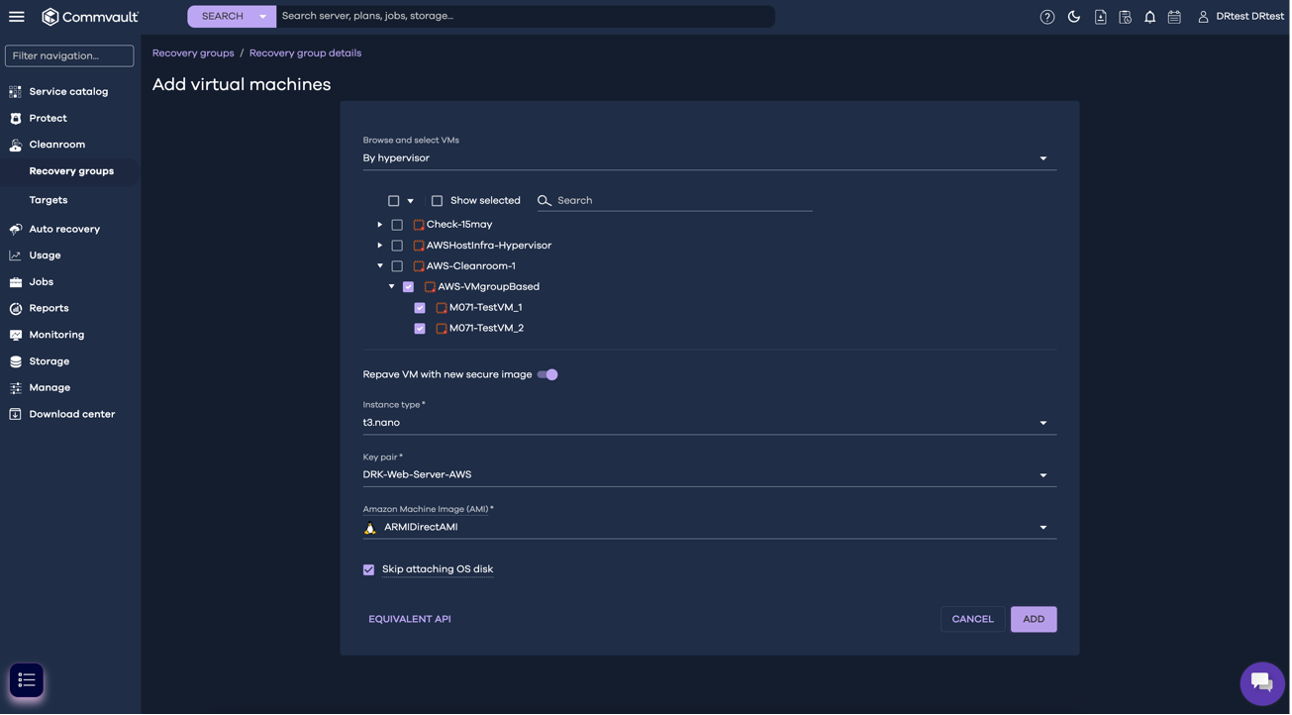
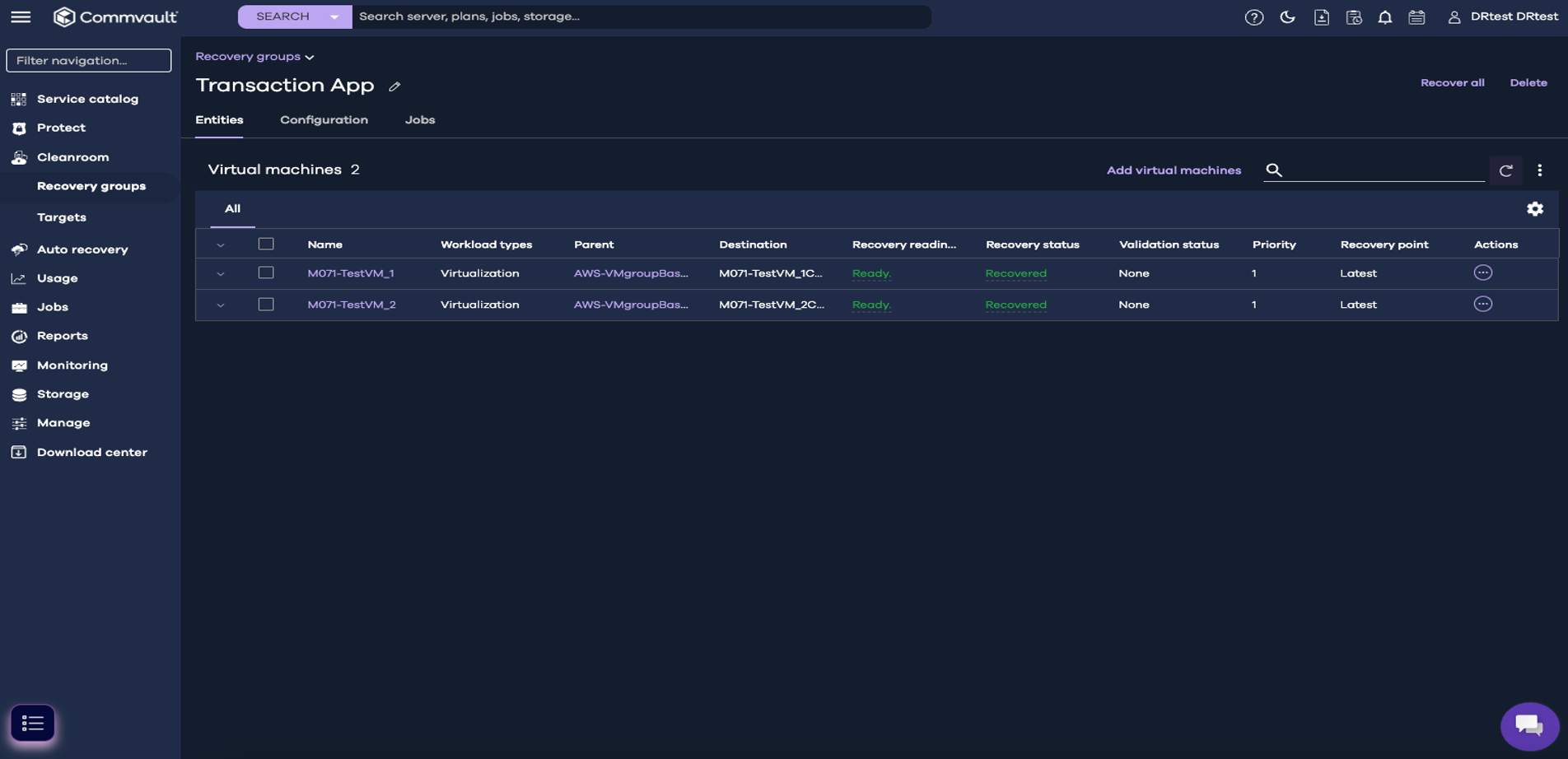
Commvault Cleanroom also now offers efficient data recovery into the AWS cloud. With automated instance conversion, customers can effortlessly convert instances from various environments into Amazon EC2 instances without manual intervention. This feature streamlines the recovery process and significantly reduces recovery time.
Customers can also take advantage of the repave capabilities to help rapidly restore infrastructure using a pre-validated, clean image when recovering into AWS. As a result, customers unlock an additional layer of security and confidence when recovering.
The latest enhancements within Commvault Cleanroom will enable users to:
Leverage Commvault Cleanroom with end-to-end automation accelerating recovery tests and incident response.
Upon VM restore, automatically invoke a full threat scan to flag any detected malware.
Fully automate the conversion process from the source cloud environment to Amazon EC2. Customers are not required to perform any manual steps in the conversion process.
As Commvault continues to steer organizations in the direction of establishing what components make up a minimum viable company, Commvault Cleanroom will serve as a key cog solution in this instrumental process to achieve continuous business operations. Learn how it can help your organization here.
More related posts
Meet Clumio Chat: An AI Assistant to Help Evaluate Cloud-Native Data Protection
For today’s job seekers, information and opportunity are only a click away. While this access is convenient, it also opens the door to an unfortunate reality: recruiting scams.
We recently became aware of this happening when several candidates reached out to our wwrecruitingteam email alias, concerned about suspicious messages they had received.
Once we saw that this was directly affecting prospective candidates – people who were genuinely excited about opportunities with us – we jumped in to help. Protecting your experience, safety, and wellbeing is something we take seriously.
Scammers are becoming more sophisticated, impersonating legitimate companies and recruiters to take advantage of job seekers. These scams can damage a company’s reputation and – more importantly – put candidates at risk. That’s why we want to equip you with practical tips to help you navigate your job search with confidence and caution.
1. Verify the job posting.
If a recruiter reaches out to you on LinkedIn or another platform, take a moment to visit the company’s official careers page. If the role isn’t posted there, don’t be afraid to ask questions:
How did they find your profile?
Why isn’t the role listed publicly?
Legitimate recruiters will have clear answers and won’t shy away from transparency.
2. Watch out for unusual interview methods.
No credible company conducts an entire interview process via email or messaging apps. While early communications might happen over chat, a reputable process will always include a phone, video, or even in-person interview. Be cautious of anyone asking you to answer interview questions exclusively via email or instant message.
3. Protect your personal information.
Be wary if you’re asked to fill out tax documents like a W-4 before receiving an official offer or onboarding through a secure company system. This is not a standard practice and could be a red flag.
4. Never pay to work.
A legitimate employer will never ask you to send money for equipment, software, or supplies. If you’re asked to spend your own money to get started, it’s almost certainly a scam.
5. Do your research.
Look up the recruiter or hiring manager on LinkedIn. Make sure they’re affiliated with the company they claim to represent. If you’re unsure, reach out directly to the company’s HR or recruiting team via official channels to confirm the legitimacy of the outreach.
Bonus Tip: Protect Your Resume Privacy
It’s perfectly fine to post your resume online – but be smart about what you share.
Create a job search–specific email address that isn’t linked to your personal accounts.
Avoid listing your home address.
Keep your contact information private on LinkedIn unless you’re actively job hunting.
Your Safety Comes First Job hunting should be an exciting step in your career journey – not a risk to your personal security. Staying vigilant, asking the right questions, and doing your homework can go a long way in protecting yourself from scams.
We’re here to support candidates every step of the way. If you ever have doubts about a communication claiming to come from us, don’t hesitate to reach out. Your safety matters.
More related posts
Meet Clumio Chat: An AI Assistant to Help Evaluate Cloud-Native Data Protection
Quantum computing has been making waves once again, starting with a significant gathering at Nvidia’s GTC AI conference. CEO Jensen Huang hosted a meeting with 14 CEOs and technical leaders from the quantum industry, where they discussed the current and future states of quantum technology. It was exciting to hear about the different ways to cool, improve logic gates, and try new things in this area. These companies are trying to make quantum computing available to everyone.
Since then, there has been a constant barrage of news on quantum computing for next-gen networking, blockchains, and even banking use cases. But before all that hype, there was a huge announcement from the National Institute of Standards and Technology (NIST) that didn’t get much airtime. NIST selected a fifth algorithm, Hamming Quasi-Cyclic (HQC), which will serve as a backup to the existing Module-Lattice-Based Key-Encapsulation Mechanism (ML-KEM) algorithms recommended by FIPS 203 for protecting against quantum attacks.
Commvault Implements NIST’s HQC Algorithm to Enhance Cyber Resiliency
In the ever-evolving landscape of cybersecurity, staying ahead of potential threats is paramount. Commvault is committed to helping protect our customers from modern threats, including the infamous “harvest now, decrypt later” exfiltration.
To improve our defenses, we’re excited to announce that we’re using NIST’s new HQC algorithm for post-quantum encryption. This algorithm is part of our strong crypto-agility strategy (which we will cover in a moment). HQC is designed to provide a second line of defense to protect internet traffic and stored data, even if vulnerabilities are discovered in ML-KEM.
It May Not Stay as a Backup … Why HQC Matters
HQC is based on error-correcting codes, a concept that has been integral to information security for decades. Unlike ML-KEM, which relies on structured lattices, HQC’s unique mathematical foundation offers a robust alternative that can help combat the potential threats posed by future quantum computers.
This shift in mathematical approaches is crucial for maintaining the integrity of encrypted data. At Commvault, we know how important it is to have data security measures in place and leverage a crypto- agile approach to respond quickly to changing threats.
The quantum world is changing fast, warranting swift responses. This capability is essential for maintaining cyber resiliency against sensitive data, with a 10+ year lifespan on hardware and software, based on recent estimates.
WhatAboutFIPS204andFIPS205Algorithms?
FIPS 204 and FIPS 205 are two digital signature algorithms (DSA) standards. They are designed to prove who sent a message and make sure it hasn’t been changed. Despite both being DSAs, they take a different mathematical approach to securing the signatures. FIPS 204 is module-lattice- based (ML-DSA), while FIPS 205 is stateless hash-based DSA (SLH-DSA).
These differ from HQC and ML-KEM, which are key-encapsulation mechanisms that provide thehandshake, or key exchange, between two parties.
I like to think of it this way: DSAs provide authentication, while KEMs provide key exchange. They tackle separate problems; thus, both are necessary for resiliency. Along the same lines, you can think of FIPS 205 as an alternative for FIPS 204, just like HQC is an alternative to ML-KEM, and this is why crypto-agility is a necessity.
Commvault’s crypto-agility strategy involves several key steps to prepare for the quantum era:
Commvault’s implementation of NIST’s HQC algorithm and our comprehensive crypto-agility strategy demonstrate our dedication to providing top-tier resiliency solutions. As we navigate the complexities of post-quantum encryption, our priority remains clear: to protect our customers’ data integrity and help them achieve continuous business. Stay tuned for more updates as we continue to enhance our data security features and safeguard your business.
Resilience is essential in a world with rapidly evolving threats, complex regulations, and where technology is advancing at an unprecedented pace. At Commvault, we believe resilience begins with trust transparency, consistency, and strong leadership.
That is why I am proud to share Commvault’s FY25 Sustainability Report, which details our strategy and commitment to business continuity, operational resilience, and environmental responsibility.
As the Head of Global Corporate Security and Workplace, I experience it every day. Our physical spaces, digital systems, and people programs must all function as one to maintain a secure, resilient enterprise. Whether we are hardening our cyber defenses, improving the efficiency of our facilities, or investing in employee well-being, each element plays a role in supporting a more secure and sustainable future.
Our cybersecurity efforts continue to scale with the growing sophistication of threats. With industry-leading certifications and rigorous internal controls, we help ensure the confidentiality, integrity, and availability of the data entrusted to us. Our Enterprise Risk Management Committee and Cyber Resilience Council provide the foresight, oversight, and structure needed to stay ahead of risk and respond when necessary.
At the same time, our environmental commitments remain a priority. Our headquarters and primary datacenter are housed in a LEED-certified facility, and our overall emissions profile remains relatively low for a company in an electricity-dependent industry. In FY25, we completed our second greenhouse gas emissions assessment and began preparing for long-term reduction targets. This helps us remain responsive to evolving climate regulations while supporting operational stability.
And we continue to invest in our people. In FY25, our employees and partners logged more than 260,000 hours of training and development. We maintained a spotless safety record, and we expanded programs that support health, wellness, and career growth. These initiatives are not only good for employees, they are also essential to maintaining continuity and performance across our operations.
As you’ll read, sustainability is not a separate function at Commvault – it is woven into the way we secure our business, serve our customers, and support our teams. It is core to who we are today and how we will continue to be a trusted partner with our customers, partners, and stakeholders.
More related posts
Meet Clumio Chat: An AI Assistant to Help Evaluate Cloud-Native Data Protection
The Security of Critical Infrastructure Act (SOCI), introduced in 2018, is a legislative framework in Australia designed to enhance the security and resilience of critical infrastructure. Its main goals are to protect important infrastructure assets from threats, both physical and cyber. The act aims to safeguard 11 key sectors, which are essential for the nation’s security, public safety, and economic well-being, and verify that organisations within these sectors have strong risk management programs.
Defining Critical Infrastructure
Critical infrastructure, as defined by SOCI, includes assets, systems, and networks that are essential for the functioning of the nation and the well-being of its people. These assets are considered critical because their disruption or destruction could have severe impacts on public safety, economic activity, and national security. The 11 sectors regulated by SOCI are:
Energy
Water and sewerage
Telecommunications
Banking and finance
Food and grocery
Transport
Healthcare and medical
Data storage and processing
Defense industry
Space industry
Civil aviation
SOCI Compliance and Rules
The key compliance obligations under SOCI can be summarised as the Positive Security Obligations. Organisations must take proactive steps to protect their critical infrastructure from risks, and for most, this is done by:
Registration of Critical Infrastructure Assets: Identifying and registering their critical infrastructure assets with the Cyber and Critical Infrastructure Centre.
Critical Infrastructure Risk Management Program: Establishing, maintaining, and reporting annually on their program to manage “hazards,” including cyberattacks.
Mandatory Cyber Incident Reporting: Reporting cyber incidents to the Australian Cyber Security Centre.
Organisations deemed by the government as Systems of National Significance may also be required to comply with Enhanced Cyber Security Obligations, which may include:
Developing and maintaining a comprehensive cyber security incident response plan.
Conducting cybersecurity exercises to test and validate incident response processes and capabilities.
Performing vulnerability assessments to identify weaknesses or gaps.
Providing relevant system information to the government.
How Commvault Supports SOCI Compliance
Commvault supports organisations in achieving and maintaining SOCI compliance by providing a comprehensive cyber resilience strategy. Commvault also can help you:
Understand your data assets and reduce risk by automating your risk monitoring.
Detect threats and anomalies to your environment with real-time anomaly and threat detection.
Implement and test your CIRMP in a secure, isolated environment for continuous business operations.
SOCI plays a crucial role in safeguarding Australia’s essential assets and systems. By defining critical infrastructure and outlining clear compliance rules, organisations in key sectors are well-prepared to manage and mitigate security risks.
Commvault’s comprehensive cyber resilience solutions provide the necessary tools and support to help you meet these requirements and build your CIRMP. Strengthen your cyber resilience with best practices and tools – such as air-gapped copies of critical data, the ability to automatically spin up a cleanroom to test recovery plans, identify clean points, and recover to a clean environment – which enable a return to business faster following an attack, outage, or disruption, and maintain continuous business.
In the inaugural episode of Commvault’s Continuous Compliance podcast, Chief Trust Officer Danielle Sheer welcomed GigaOm COO Howard Holton for a discussion about the evolving landscape of compliance, the vulnerabilities in critical infrastructure, and the implications of data loss and cybersecurity.
The discussion was both insightful and thought-provoking, offering valuable perspectives on how organizations can better protect themselves and their data in an increasingly digital world. Watch the full episode here.
The Shift in Compliance Perception
Compliance has long been viewed as a back-office function, a mere checkbox on a list of tasks to be completed. However, this mindset has led to critical infrastructure being highly vulnerable due to insufficient attention to proper architectural standards. Danielle stressed the importance of treating compliance as a critical aspect of organizational security and integrity.
Drawing a stark comparison between physical and digital compliance, noting that while a physical failure like tainted beef can lead to immediate and severe consequences, a digital failure like a data breach affecting 300 million people might not result in the same level of repercussions.
This disparity and lack of urgency in addressing digital security issues underscores the need for stricter penalties and regulatory frameworks so that organizations take compliance seriously.
“The CEO should face the worst penalties, the chairman of the board second. That would change things overnight,” Howard suggested.
The EU’s General Data Protection Regulation (GDPR) was cited as a model for the United States to follow. GDPR has had a significant impact on compliance, with more fines in its first year than in the entire history of HIPAA in the U.S. The success of GDPR underscores the importance of federal involvement in creating a unified regulatory framework for cybersecurity in the U.S.
The Evolving Role of the CISO
The role of the CISO is becoming increasingly crucial in bridging the gap between technical expertise and executive decision-making. Danielle and Howard stressed that the CISO should be a board-level position, with regular and transparent communication with the board.
“If your CISO is not in front of your board on a minimum of a quarterly basis, you don’t have a CISO,” Danielle said. “And if you are not letting your CISO talk to the board on a minimum quarterly basis and really deliver useful information and be as open and transparent as possible, you don’t have a security program.”
Howard also suggested a balanced board composition, with 60% MBAs and 40% technologists. This balance would help board members better understand and address cybersecurity challenges.
The CISO’s role in incident response and strategic planning is also critical. “The greatest way to make change is to have a smart CISO at your organization when you go through a ransomware attack. Everybody just goes, ‘Oh crap, we should have listened,’ and this is what we’ll do,” he observed.
The Complexity of State-by-State Regulations
The patchwork of state-by-state regulations in the United States poses significant challenges for effective cybersecurity compliance. Danielle explained that the U.S. is effectively 51 countries when it comes to compliance, with each state having the ability to enact its own laws.
This complexity can lead to confusion and inconsistent implementation of security measures. The speakers advocated for federal involvement to standardize regulations, making it easier for organizations to comply and enabling a more cohesive and effective approach to cybersecurity.
The Potential of AI in Information Management
AI has the potential to significantly disrupt industries, but this potential is contingent upon the quality and maturity of an organization’s data management practices.
“AI accelerates everything so insanely much that there’s nothing that accelerates potential the way AI can accelerate potential,” Howard said.
Companies with mature data management and high-quality data have a first-mover advantage in the AI-driven landscape. “If your data quality isn’t up to snuff and your organizational maturity around your data just is not there, it’s going to cost you potentially everything,” he warned.
Key Takeaways
Compliance as a critical function: Compliance should be treated as a critical aspect of organizational security and integrity, not just a back-office task. The lack of proper standards in software has led to significant security risks.
Stricter penalties needed: The disparity in penalties between physical and digital compliance failures highlights the need for more stringent and consistent enforcement of digital security standards. Severe penalties for CEOs and board members could drive significant change.
Elevating the CISO: The CISO’s role should be elevated to a board-level position, with regular and transparent communication. A balanced board composition, including technologists, can help address cybersecurity challenges more effectively.
Federal standardization: The complexity of state-by-state regulations hinders effective cybersecurity compliance. Federal involvement is necessary to create a unified and standardized regulatory framework.
AI and data quality: AI has the potential to accelerate organizational capabilities, but this potential is contingent upon the quality and maturity of an organization’s data management practices. Companies with high-quality data have a significant advantage.
More related posts
Meet Clumio Chat: An AI Assistant to Help Evaluate Cloud-Native Data Protection
In our recent webinar Thrive in Chaos: How to Get Your Minimum Viable Company Back Online, Commvault Vice President of Product Experience Michael Stempf offered valuable insights and strategies to help organizations not only survive but thrive in the face of cyber threats.
Here’s a sneak peak of the key takeaways:
1. Define your minimum viable company.
MVC focuses on the core operations necessary to resume business quickly after a cyberattack. Unlike traditional disaster recovery plans, which prioritize speed and minimal data loss, the MVC approach means that only the essential data and systems are restored first. As an example, a priority list of business systems that need to be restored first could include:
Active Directory services for secure and scalable access.
Secure communication systems like email and messaging.
Essential data to keep operations running and serve customers.
Operational infrastructure needed to run mission-critical applications.
This strategy helps organizations minimize downtime and maintain critical operations. You can learn more about minimum viability here.
2. Integrate data protection and anomaly detection.
Integrating anomaly and threat detection with data protection is crucial for maintaining the cleanliness of data during recovery. This involves analyzing data for unusual patterns and integrating with third-party security tools to detect indicators of compromise and indicators of attack. By doing so, organizations can help prevent the restoration of infected data and reduce the risk of reinfection.
3. Set up isolated recovery environments.
Cloud-based IREs, such as Commvault® Cloud Cleanroom™ Recovery, are essential for effective cyber recovery. These environments are dynamically built, elastic, and secure, reducing the risk of reinfection and minimizing costs compared to traditional on-premises IREs. Cloud-based IREs can be set up quickly, typically within 30 minutes, and can scale as needed, so the data is solid and secure.
4. Test regularly.
Regular testing and chaos exercises are vital for building muscle memory and testing that the cyber recovery plan works effectively. Cross-functional collaboration during these tests is crucial, as it helps identify and resolve issues before a real cyberattack occurs.
As Michael noted, the lack of muscle memory is a significant reason it takes organizations an average of 24 days to restore minimum operations. Regular testing and cross-functional collaboration can help reduce this downtime and minimize costs.
Challenges of Cyber Recovery
The webinar discusses the significant costs associated with cyberattacks, including the average cost of a breach and the cost of downtime (spoiler, it’s expensive). But it isn’t just the cost that’s a challenge; Michael outlines why cyber recovery is specifically more complicated than traditional disaster recovery.
Have a disaster recovery plan? Great. But you need a cyber recovery plan, too, for a myriad of reasons he explains. Check out this report, read this ebook, and watch the webinar on demand to learn more about the differences and gain a deeper understanding of how to thrive in the chaos.
More related posts
Meet Clumio Chat: An AI Assistant to Help Evaluate Cloud-Native Data Protection
It starts with a small wobble – a backup job running slower than usual, a security flag dismissed, a compliance box left unchecked. Each shift, seemingly insignificant, feels minor on its own. But over time, the structure weakens. Then, with one wrong move, everything tilts. Maybe you catch it in time. Maybe you don’t.
Managing IT infrastructure can feel like Jenga sometimes. Small cracks form beneath layers of complexity, often unnoticed until they turn into major failures. But what if your system could detect the shifts before they become a problem? What if, instead of scrambling to patch cracks, your IT system held itself steady?
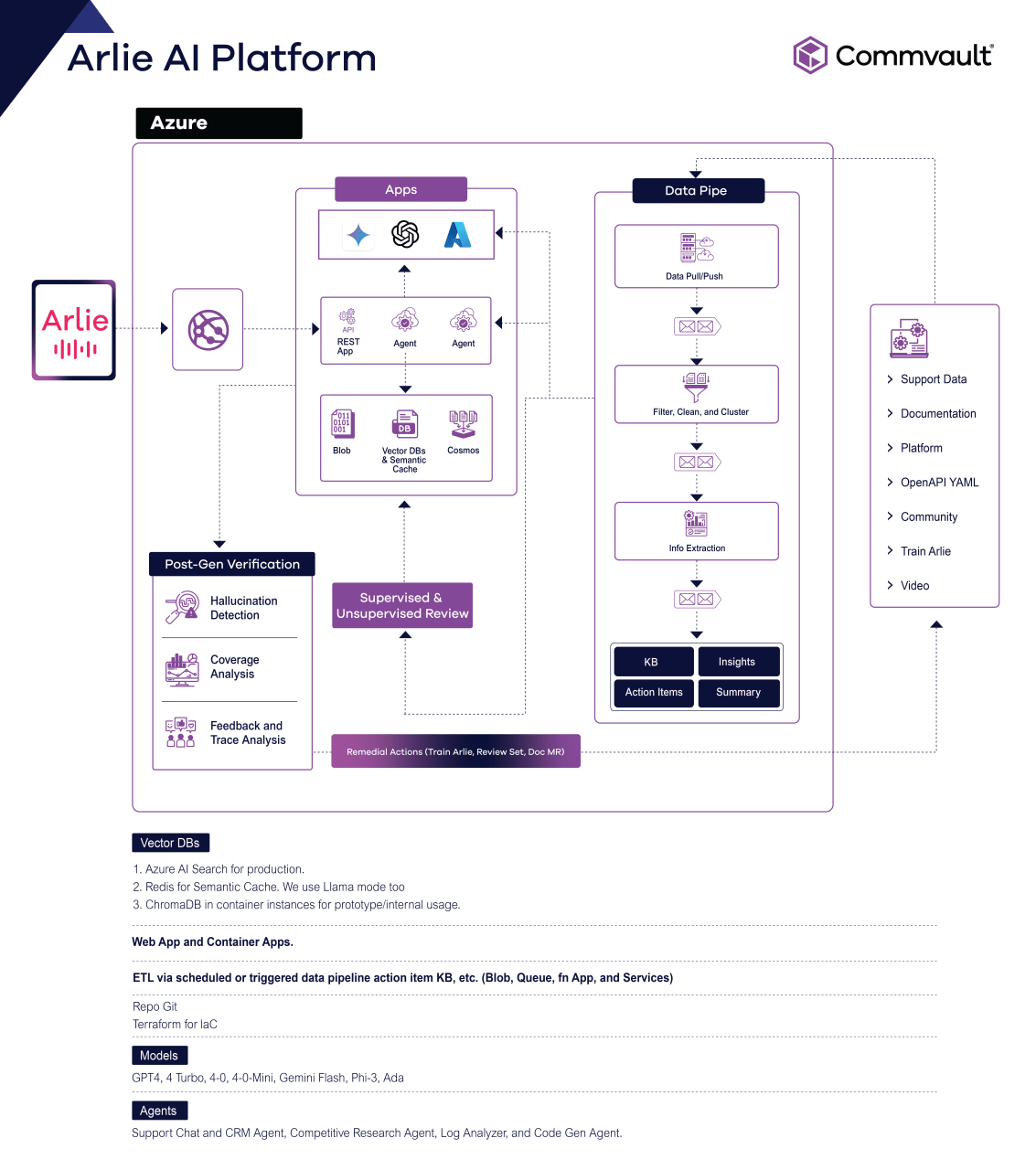
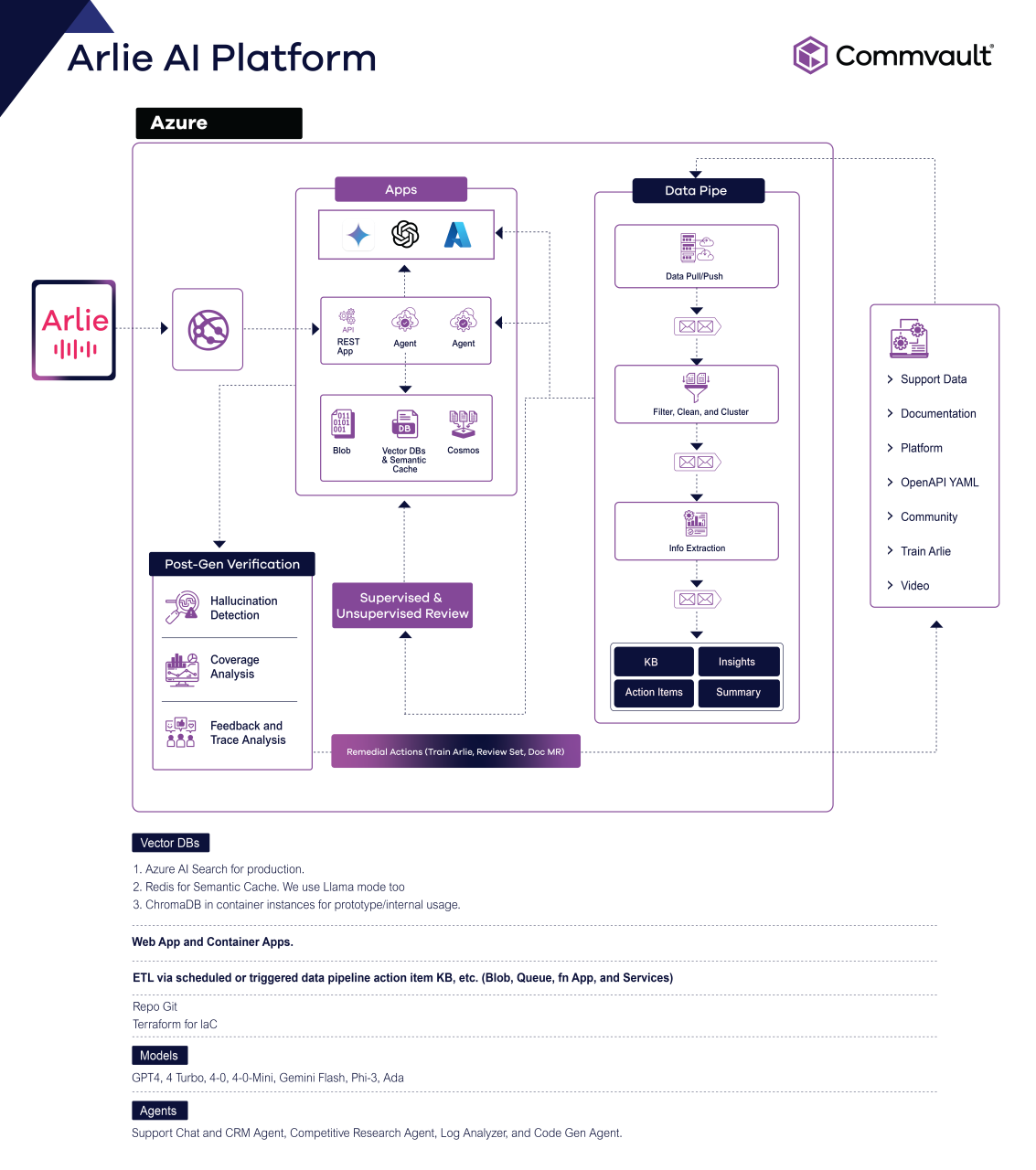
That’s precisely where Commvault’s Arlie comes in. Short for “Autonomous Resilience,” Arlie is designed to deliver actionable insights, helping you save time, resolve threats, and tackle complexities. With your 24/7 AI-powered assistant, you can keep everything stable, secure, and running smoothly before issues escalate.
How Commvault Uses AI to Enhance User Experience
AI has promised to revolutionize IT: faster troubleshooting, smarter automation, stronger defenses. But in reality, AI solutions can often hallucinate, be difficult to scale, cause data security concerns, and fail to adapt. What IT teams need isn’t more AI; they need AI that fits their world – accurate, scalable, secure, and smart enough to evolve.
Arlie isn’t a mere bolt-on chatbot or a pilot tool. It is designed to think, adapt, and automate IT operations with enterprise-grade precision. Arlie is natively embedded in Commvault Cloud, secure by design, and available where teams already work – through the console, chatbot, or API workflows. It scales across cloud, on-prem, hybrid, and air-gapped environments without disrupting existing architecture. That means real-time insights, smarter workflows, and fewer errors.
What’s more, being ubiquitous, Arlie provides system-wide visibility, giving you answers to your most critical questions. For example, it can help with tasks such as creating reports and providing a real-time daily digest of the things that matter most. If you’re having issues with your critical virtual machines, Arlie can provide reports showing failed backups on critical VMs along with specific reasons, explanations, and possible solutions.
Not only is Arlie your new favorite colleague, capable of executing tedious organizational tasks effortlessly, but it’s also simple to understand and easy to use. It’s readily available to Commvault Cloud software customers at the click of a button.
How Arlie Thinks: The Brain Behind the Assistant
Behind every smooth interaction with Arlie is a carefully built architecture – one designed to be accurate, secure, and reliable in the high-stakes world of IT.
Let’s take a closer look at how Arlie tackles AI challenges that other tools can’t.
AI That Effortlessly Scales to Enterprise Needs
AI solutions often promise efficiency, but they struggle with enterprise-scale workloads. Here’s why:
Compute-heavy, slow, and costly. Many AI models require massive resources, making them impractical for large IT environments.
Performance degrades under real-world loads. AI tools that work well in demos often fail when scaled across thousands of systems.
Rigid architectures. AI solutions with fixed infrastructure can’t adapt to fluctuating IT demands, leading to bottlenecks.
Arlie can handle high-volume workloads efficiently without breaking performance or budgets. It has:
Lightweight AI processing. Arlie optimizes compute usage, running AI models efficiently without excessive power consumption.
Adaptive workload balancing. AI dynamically scales up or down based on real-time demand, preventing slowdowns.
Multi-environment deployment. Arlie runs in the cloud, on-prem, or in air-gapped environments, making it adaptable for any IT infrastructure.
API-first integration. Seamlessly embeds into existing workflows, allowing enterprises to scale AI across thousands of systems without re-engineering.
BYO language model and vector index. Whether you’re using OpenAI, Gemini, Llama, or bringing your own LLM and vector store, Arlie adapts. Bring your own vector DB (Qdrant, Azure AI Search, or Cosmos DB).
AI That Minimizes Hallucinations
One of the biggest trust barriers in AI is hallucination, when models confidently generate inaccurate or misleading responses. The issues include:
Chatbots guess instead of knowing. Without verified context, AI tools often “fill in the blanks,” creating risk instead of clarity.
Static LLM outputs lack accountability. There’s no built-in way to cross-check if an answer is right.
Misinformation slows down IT teams. Instead of solving problems, teams waste time validating AI output.
Arlie is built on a retrieval-augmented generation framework – meaning it retrieves answers from trusted, enterprise-verified sources before responding. The benefits of this approach include:
Contextual retrieval over generation. Arlie pulls from known documentation, logs, and past incident records – not just an LLM’s language prediction.
Semantic vector search. It understands user intent and maps it to relevant data – not just keywords.
Real-time hallucination tracking. If confidence is low or coverage gaps are found, the response is flagged, re-evaluated, or withheld.
Continuous validation. Engineers review flagged responses, feeding structured feedback back into the model for ongoing refinement.
AI That Minimizes Data Risk by Design
AI models aren’t always built with security in mind. In fact, they may even treat enterprise data like test data – with little regard for compliance, isolation, or access controls. Some issues include:
LLMs trained on sensitive data. Some AI tools inadvertently retain or reuse customer inputs, creating massive security liabilities.
Opaque data flows. Enterprises can’t always tell where their data is going or how it’s being processed.
Poor fit for regulated industries. Most AI assistants aren’t equipped for air-gapped environments, compliance audits, or strict data governance.
Arlie is engineered for security, with controls that match the needs of the most regulated industries – from finance to government. Arlie has:
Customer data safeguarded. Customer data is never used to train AI models. Only metadata and structured query logs are analyzed – never content.
Sandboxed AI environments. Arlie runs in an isolated, secure framework that helps reduce data spillage across tenants.
Multi-environment deployment. Supports cloud, on-prem, and air-gapped installations, so that AI capabilities don’t compromise control.
Policy-aligned automation. Arlie, detects unauthorized access patterns, and helps enforce security and compliance policies automatically.
AI That Learns and Evolves
AI isn’t static. Your systems evolve, your threats change, your workflows shift. But most AI tools don’t. Once deployed, they plateau. That approach has drawbacks, such as:
No learning from real-world use. Many assistants don’t refine outputs over time, repeating the same inaccuracies.
Blind to feedback. If a user flags an error, it doesn’t necessarily feed back into the system for improvement.
Can’t adjust to changing infrastructure. AI that isn’t tuned continuously becomes outdated fast – especially in dynamic enterprise environments.
Arlie is built with continuous learning loops, allowing it to improve with every interaction. The advantages of this approach are:
Supervised and unsupervised learning. Flagged responses are manually reviewed by engineers while anomaly detection models track low-confidence outputs.
Adaptive tuning. Arlie adjusts semantic search weightings, threshold scores, and ranking algorithms based on what works in the field.
Refinement through usage. Every log it analyzes and every workflow it supports helps make future outputs smarter and faster.
Prevents repeat failures. Arlie identifies recurring error patterns and tunes its recommendations to resolve them earlier next time.
Not Just AI. AI That Works.
AI in IT can’t afford to be experimental. It needs to be scalable, secure, accurate, and adaptive – ready to perform under pressure and evolve with complexity. That’s exactly what Arlie delivers.
Instead of guessing, it verifies. Instead of overloading systems, it optimizes them. Instead of creating noise, it cuts through it. Deeply embedded across your IT environment – from workloads to workflows – Arlie is more than an assistant. It’s part of your infrastructure.
More related posts
Meet Clumio Chat: An AI Assistant to Help Evaluate Cloud-Native Data Protection
As the executive sponsor of Commvault’s VALOR (Veterans and Allies) Employee Resource Group (ERG), one of the most privileged duties is sharing heartfelt thoughts with all Vaulters and our Allies as we honor Memorial Day this Monday, May 26. Many of our international teams observed similar Remembrance Day events over the last few months.
Memorial Day is a U.S. holiday that honors and remembers service veterans who have fallen or passed away. On this day, I encourage each of us to take a moment to reflect and remember those who have courageously sacrificed their lives and express gratitude for their bravery and selflessness. Increasingly, we all need to look to our left and right to find comfort, trust, and support to help us reach the top of the hill.
As a U.S. Navy veteran, I am honored to help lead the inspiring Vaulters who are a part of our VALOR ERG. VALOR is dedicated to raising awareness about the value our veterans bring to the private and public sectors.
VALOR aims to enhance veteran recruitment and retention at Commvault, while strengthening our community outreach and fostering a military-friendly culture. We raise awareness of the value our veterans bring to the private sector by creating programs to honor them and their families, which also preserve their legacies. VALOR is a place where veterans and allies at Commvault connect, collaborate, celebrate, and learn.
On that note, we recently announced our partnership with the Warrior Canine Connection (WCC). This organization utilizes Mission-Based Trauma Recovery along with therapeutic service dogs to empower veterans who have sustained physical and psychological wounds.
Together, through our partnership, we will help enhance veteran resilience and support military heroes in reconnecting with life, their families, their communities, and one another through the healing power of service animals. I couldn’t be prouder to be part of an organization that supports the veteran community.
Click here to learn more about our culture at Commvault.
More related posts
Meet Clumio Chat: An AI Assistant to Help Evaluate Cloud-Native Data Protection
Here at Commvault, showing how we care, making a difference, and having an impact are fundamental to our values and our culture.
In honor of Military Appreciation Month, we’re thrilled to announce our new partnership with the Warrior Canine Connection (WCC) as we continue to care for the communities we serve. WCC is a pioneering organization that utilizes a Mission Based Trauma Recovery model to empower returning combat veterans who have sustained physical and psychological wounds while in service to the United States.
Based on the concept of Warriors helping Warriors, WCC’s therapeutic service dog training program is designed to mitigate symptoms of post-traumatic stress disorder, traumatic brain injury, and other challenges, while giving injured combat veterans a sense of purpose and help in reintegrating back into their families and communities.
Our partnership with WCC will help further veteran resilience and help military heroes reconnect with life, their families, their communities, and each other through the healing power of service animals. This is a cause close to our hearts and foundational to our VALOR Employee Resource Group’s mission. Our Vaulters now also have a wonderful opportunity to foster and/or “puppy sit” WCC’s service dogs in training.
We were thrilled to have members of WCC, including our furry friends Kathy and Eli, join us at our FY’26 Sales Kickoff in Chicago in April. Check out some highlights below:
We’re excited to make an impact with this new partnership and help veterans receive the support and care they deserve. Resilience is at the core of what we do here at Commvault, and we are proud to partner with WCC in its mission to create resilience and strength within the veteran community.
To learn more about what it’s like to work at Commvault, visit our Careers site.
More related posts
Meet Clumio Chat: An AI Assistant to Help Evaluate Cloud-Native Data Protection
In the fast-growing field of cloud computing, protecting critical applications and data from advanced cyber threats is crucial for businesses globally. Ransomware poses a major risk, pushing the limits of cloud security.
Traditional defenses alone are insufficient, but Commvault® Cloud Rewind offers a cloud resilience model that focuses on strong recovery and rebuilding. This blog highlights how Cloud Rewind employs data immutability, air gapping, zero trust, and automated recovery to strengthen cloud environments after attacks.
The Essence of Cloud Resilience
Cloud resilience means that cloud services, apps, and important data can keep working and bounce back quickly after disruptions. It’s not just about fixing things after a disaster, it’s about stopping downtime and data loss, and making security and rules better.
Immutability: The Bedrock of Resilience
At the core of a cloud resilience strategy is data and configuration immutability. Immutability means that once data or configurations are set, they can’t be altered or tampered with, thereby safeguarding against unauthorized changes and cyberattacks.
Air Gapping: Virtual Fortification
Traditionally, air gapping meant physically separating a network from the internet to secure it against unauthorized access. Commvault Cloud Rewind has made this idea work for the cloud. Environments are created almost air-tight, which protect important data and applications from possible threats.
Zero Trust: A Paradigm Shift in Security
The cloud resilience model is based on the zero-trust security framework. This framework says that no one should be trusted by default, no matter where they are or how they work with the organization. By implementing strict access controls and continuously verifying every access request, Cloud Rewind allows only authorized personnel to access critical data, thereby preventing data breaches and enhancing the overall security posture.
The Cloud Rewind Difference: A Comprehensive Approach to Cloud Resilience
Cloud Rewind has a strong set of protections to make sure your cloud applications and important data are safe and resilient. Our approach is tailored to meet different requirements and maturity levels, providing peace of mind through multiple layers of immutability and air-gapped protection.
Cloud Configuration Immutability
At the foundation, our Dual-vault Cloud Time Machine secures cloud configurations in an external cloud account. This separation is strengthened with 256-bit encryption and follows strict SOC 2 controls. This allows for your configurations to stay unchanged, isolated, and protected from unauthorized access.
Application Data Immutability
Level 1: Our snapshot-based data protection strategy secures the immutability of your application data. By creating unmodifiable snapshots, data can’t be altered unless it is purposefully restored, maintaining its integrity without extracting data from your environment.
Level 2 with air-gapped network: Cloud Rewind replicates application data to a separate cloud region within an air-gapped Virtual Private Cloud. This layer not only preserves data immutability but also significantly reduces the risk of unauthorized access.
Level 3 with zero trust and air-gapped network: Cloud Rewind offers replication to an entirely isolated AWS cloud account. This account is air-gapped and accessible only to authorized personnel under a zero-trust framework, where permissions are dynamically allocated and revoked. Cloud Rewind validates the snapshots with fingerprints from the original production environments so only the verified snapshots are recoverable for application rebuilds.
Level 4 with zero trust and air-gapped cross-cloud network: For fully containerized applications, Cloud Rewind extends capabilities to cross-cloud protection. Migrate your application environment and data to different hyperscale providers, achieving complete isolation from the production cloud network, underpinned by a zero-trust and air-gapped architecture.
Why Is Automated Recovery Testing Still Important?
Beyond these protective measures, Cloud Rewind integrates policy-based automated recovery and reporting capabilities. This allows for human-free recovery testing and comprehensive reporting, further enhancing your resilience against potential disruptions.
Cloud Rewind for Holisitic Cloud Resilience
As cloud computing continues to evolve, the need for innovative cloud resilience strategies becomes increasingly critical. Cloud Rewind helps organizations navigate the digital world with confidence. It has a unique mix of immutability, air-gapping, and zero-trust architectures. Cloud environments are not only safe but also resilient with rebuild capabilities. Let’s move beyond traditional data backup and disaster recovery models toward a holistic cloud resilience model.
More related posts
Meet Clumio Chat: An AI Assistant to Help Evaluate Cloud-Native Data Protection
On a recent episode of the STRIVE podcast, host Darren Thomson delved into an introduction of the concept of minimum viability for your organization. With the threat of cyberattacks ever present, you must be prepared to respond to potential disruptions to your business operations.
But what if there was a way to help your business survive and even thrive in the face of such threats? Enter the concept of the minimum (sometimes referred to as minimal) viable company (MVC) for cyber resilience.
What Is a Minimum Viable Company?
MVC is the absolute minimum set of functions and assets required to keep your business operational and recover from a cyberattack. Imagine a scenario where your entire IT infrastructure, critical applications, communication technology, customer data, and supply chains are compromised. In such a situation, having a well-defined MVC can be the difference between a quick recovery and a complete standstill.
Why Is MVC Important?
Prioritizing critical functions: MVC helps you identify the essential functions that must be running first. These might include finance, customer service, supply chains, and compliance-related operations.
Rapid recovery: By focusing on the bare minimum, you can recover more quickly than waiting for a full recovery. This is crucial in minimizing the negative impact to your finances and your reputation.
Maintaining trust: In the aftermath of a cyberattack, trust is a precious commodity. A well-defined MVC helps you continue to operate, even if it’s at a reduced capacity, which helps maintain trust and confidence.
How to Define Your MVC
Business impact analysis: Start by conducting a business impact analysis to identify functions and assets that are mission-critical and which can be temporarily suspended.
Tabletop exercises: Test your team’s responses through tabletop exercises that simulate cyber incidents and help you identify gaps in your response plan. These exercises are crucial for verifying that everyone knows their roles and responsibilities during a crisis.
Playbooks: Create detailed playbooks that document recovery steps and communication plans. These playbooks should be accessible and easy to follow, even in high-stress situations. They should include step-by-step instructions for restoring essential services and communicating with stakeholders.
Exhaustive testing: Testing is not a one-time activity. Regular, thorough testing is essential to confirm that your MVC can be effectively implemented when needed. This includes testing your IT environment, communication plans, and manual workarounds.
Key Strategies and Practices
Essential business functions: Focus on the functions that are absolutely necessary for your business to operate. This might include finance, customer service, and supply chain management.
Minimal but functional IT environment: Identify and restore top-priority services in a secure and clean state. Tools like cloud-based backups, isolated recovery zones, and clean rooms can be invaluable in this process.
Key people and processes: Identify key employees who can operate the business at a bare minimum. Enable them to have the necessary accesses and tools, and establish manual workarounds and communication plans for extended downtime.
Continuous Refinement
MVC is not a static concept. It requires ongoing refinement through business impact analysis, tabletop exercises, and testing. These activities help you stay ahead of potential threats and help enable your business to respond effectively to any cyber incident.
By focusing on essential functions, a minimal but functional IT environment, and key people and processes, you can maintain continuous business and trust. Establishing your minimum viability is a powerful tool for business survival and remaining resilient in the face of any challenge.
The RSA Conference, held from April 28 to May 1 in San Francisco, is one of the premier events in the cybersecurity industry, bringing together experts, thought leaders, and innovators to discuss the latest trends and solutions in cyber resilience and data protection.
I was there, and the energy was palpable, the learning top-notch, and the city buzzing. With so much to see, including our futuristic Rewind to the Future experience, we wanted to make sure you didn’t miss these five exciting announcements from Commvault.
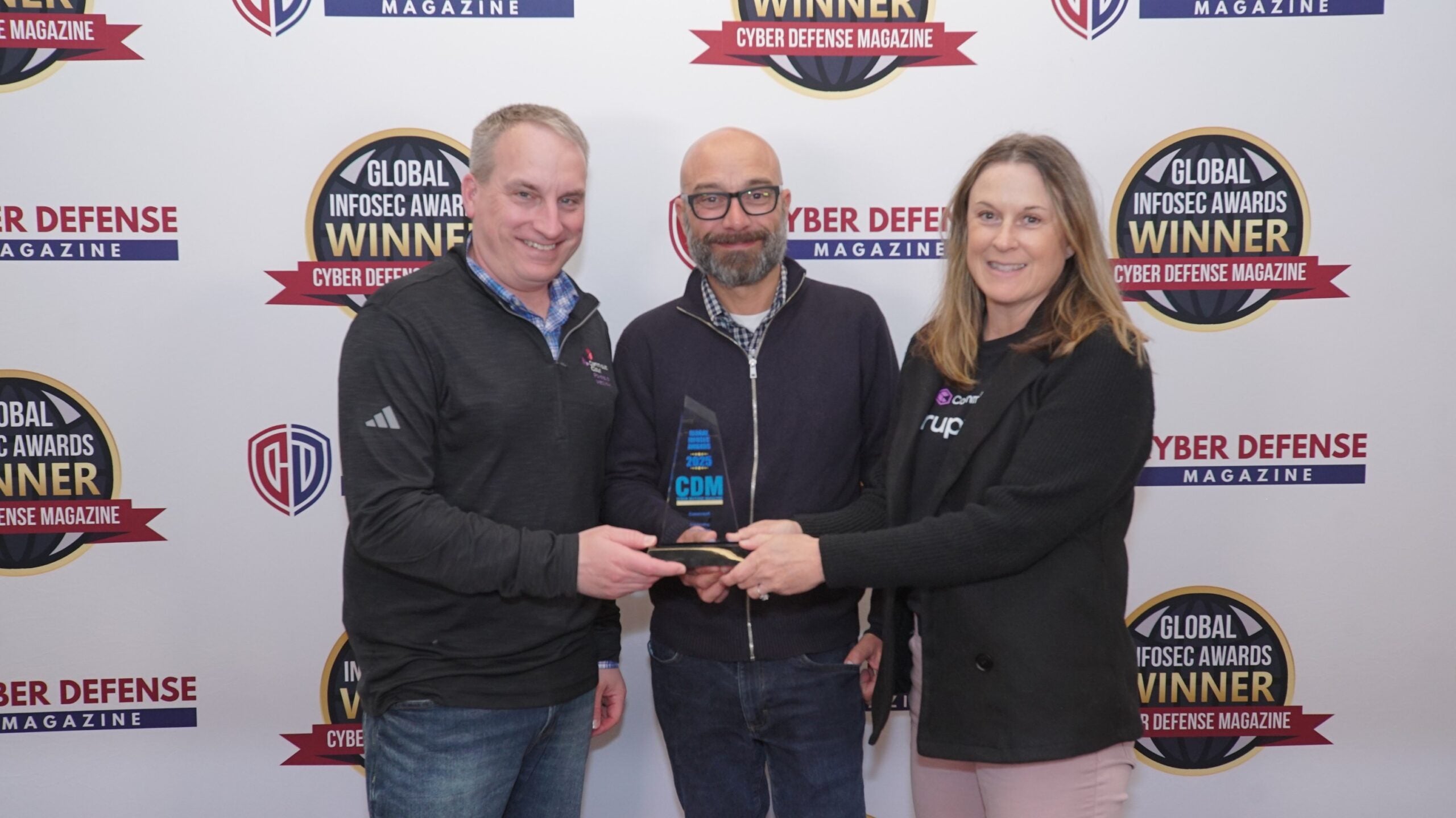
1. Commvault wins the 2025 Outstanding Cyber Resilience Global InfoSec Award.
I was one of the proud Vaulters happy to accept the 2025 Outstanding Cyber Resilience Global InfoSec Award on behalf of Commvault. This is a significant achievement that highlights our leadership and innovation in the field of cyber resilience.
The award recognizes the Commvault Cloud platform for its advanced solutions, including Cleanroom Recovery, Clumio Backtrack, and Cloud Rewind. They enable organizations to protect, test, and rapidly recover their data, applications, and production workloads, regardless of where the data is located.
We had our first run of Commvault Recovery Range, a hands-on cyber range that integrates realistic attack simulations with essential recovery exercises. I got to see firsthand conference goers practicing their data recovery in a hyper-realistic environment.
More than just a red team, blue team tabletop exercise, this first-of-its-kind recovery range mirrors the attendees’ actual networks and infrastructure, where they face sophisticated attacks and have to validate backups, clean infected data, and execute swift restorations.
It was an eye-opening moment for many attendees, as they realized that understanding their minimum viability is imperative and that it takes a village. CSOs, CISOs, CIOs, IT Ops, and SecOps have to work together to develop a cohesive strategy for handling cyber crises and restoring core services quickly. Be on the lookout for Commvault Recovery Range coming to a city near you. {https://www.commvault.com/news/commvault-and-simspace-launch-cyber-recovery-range}
3. Commvault introduces Factory Reset for enhanced Cleanroom Recovery.
Commvault also introduced Factory Reset, a new feature in our Cleanroom Recovery technology. This feature allows companies to rapidly restore their infrastructure within a cleanroom using a pre-defined, validated, clean image, with a customizable recovery point-in-time.
This is a significant development for cyber resilience because it dramatically reduces the average 24-day recovery time after a cyber incident, minimizes business disruption, and helps validate that systems are restored to a pristine state, free from any malicious elements. Read more in our announcement here: https://www.commvault.com/news/cleanroom-recovery-restoring-compromised-infrastructure
I’m also very proud to say that Commvault Cloud has achieved GovRAMP Authorized status for its cyber resilience SaaS solutions. Achieving GovRAMP Authorized status at a High impact level signifies that Commvault Cloud meets the most rigorous security and risk management standards, demonstrating our unwavering commitment to cyber resilience and building trust within the public sector.
Standing booth-to-booth with our competitors, it was gratifying to be the only cyber resilience vendor to hold GovRAMP Authorized at a High impact level, FedRAMP High Authorized, and FIPS 140-3 validated status for our SaaS cyber resilience solutions.
5. Commvault expands partnership with CrowdStrike.
Last but certainly not least, the expanded partnership between Commvault and CrowdStrike was a highlight of the conference. This collaboration brings together best-in-class incident response and recovery solutions, offering organizations faster and more effective ways to handle cyber incidents.
The integrated services, including real-time threat visibility and rapid data restoration, underscore the importance of a robust cyber-resilience strategy. Commvault’s contributions, such as the Guardian retainer-based services and the integration with CrowdStrike’s Falcon platform, are pivotal in helping organizations stay ahead of evolving threats and maintain continuous business. Learn more: https://www.commvault.com/news/enhances-cyber-recovery-offerings-crowdstrike-incident-response
Commvault Innovations a Highlight of RSAC
Attending the RSA Conference 2025 was an incredible experience, and I learned so much about the latest advancements in cybersecurity. One of the most compelling takeaways was Commvault’s strong messaging around continuous business and minimum viability.
Our innovative solutions, such as the Factory Reset for Cleanroom Recovery and Commvault Recovery Range, demonstrate a commitment to helping organizations quickly and effectively recover from cyber incidents with minimal disruption.
The expanded partnership with CrowdStrike and the achievement of GovRAMP Authorized status further solidify our position as a leader in the field. I am excited to see how these advancements will continue to shape the future of cyber resilience and data protection.
More related posts
Meet Clumio Chat: An AI Assistant to Help Evaluate Cloud-Native Data Protection
On February 20, 2025, Microsoft began notifying us regarding unauthorized activity by a nation-state threat actor based on their visibility within Azure environments. Commvault immediately launched an investigation with the assistance of leading cybersecurity experts and published a security advisory.
We are working with appropriate authorities and known targeted customers as information becomes available to us. In April, Microsoft provided new threat intelligence and we published an update to the security advisory.
What’s New
Based on industry experts, this threat actor uses sophisticated techniques to try to gain access to customer M365 environments. Our investigation to date indicates this threat actor may have accessed a subset of app credentials that certain Commvault customers use to authenticate their M365 environments. In response, Commvault has taken several remedial actions detailed below, including rotating credentials. Commvault continues to update indicators of compromise (IOCs) to enable customer investigations within their M365 environments.
Our investigation reveals there has been no unauthorized access to customer backup data that Commvault stores and protects, and no material impact on our business operations or our ability to deliver products and services.
What We’re Doing to Protect Customers:
Rotating app credentials for M365 managed by Commvault and enhancing security monitoring.
Providing optional configurations aligned with Microsoft’s latest security recommendations.
Furthering responsible vulnerability disclosure and patching, specifically for CVE-2025-3928 which is the known CVE to date related to this security advisory.
Continuing our investigation as we receive threat intelligence.
Recommended Actions for Customers:
For Saas customers who have deployed custom applications
Rotate app credentials for M365 used by Commvault as soon as possible.
Revalidate registration for proper scoping and permissions.
Apply conditional access policies on any single tenant app in use.
Enforce least-privilege access with tightly scoped permissions.
Stay up to date with Microsoft threat bulletins and Commvault updates.
Here at Commvault, our values – we connect, we inspire, we care, and we deliver – are foundational to everything we do and why it matters.
This week, we hosted our annual Global Company Kickoff event and presented our FY25 Q4 CEO Living Our Values Awards. This award program globally recognizes and celebrates our Vaulters for their incredible work over this past quarter and for living our values each day.
I’m so proud to announce our FY25 Q4 CEO Living Our Values Award winners and our employee-nominated Vaulters’ Choice Award winner below:
CEO Award Winners
Sarah Bricker
Lee Norman
Mrityuanjay Upadhyay
Integrated Campaign Team, Global Media, & Web Team
Sarah Mutscheller
Jenny Nelson
Michelle Norris
John Harned
Kyra Garcia
Katie Lisun
Vaulters’ Choice Award Winner
Maria Torres
These Vaulters set an inspiring example of what it truly means to be a part of Commvault.
To learn more about what it is like to work at Commvault, check out our careers site.
More related posts
Meet Clumio Chat: An AI Assistant to Help Evaluate Cloud-Native Data Protection
Given that remote work is one of the risk factors driving the demand for endpoint security, it’s understandable that it came into sharp focus during the COVID-19 pandemic. But it’s no less of a security concern even after many organizations have resumed in-office operations.
With the continuing rise of cyberattacks and proliferation of devices, the security of your endpoints is more critical than ever. From laptops to tablets and IoT devices, each endpoint represents a potential entry point for cyber threats. This is where Commvault Cloud Backup & Recovery for Endpoints comes into play, offering a robust and user-friendly approach to safeguarding your data and devices.
What Is Endpoint Protection?
Endpoint protection, also known as endpoint security, involves securing endpoints (devices that connect to a network) from various cyber threats. These threats can range from malware and viruses to phishing attacks and ransomware. Effective endpoint protection keeps your devices secure, your data confidential, and your operations running smoothly.
Advantages of Commvault Endpoint Protection
Commvault Cloud Backup & Recovery for Endpoints is both powerful and easy to use. It provides:
Comprehensive coverage: Protect a wide range of endpoints, including Windows, macOS, and Linux systems, as well as mobile devices.
Advanced threat detection: Commvault can detect and respond to threats in real time. This includes identifying and mitigating zero-day attacks, which are new and unknown threats that traditional security solutions might miss.
Broad integrations: Commvault’s solutions integrate with your existing IT infrastructure – whether on-premises servers, cloud services, or a hybrid environment – with minimal disruption to your operations.
User-friendly interface: The Commvault console is designed to be intuitive so you can easily manage and monitor your endpoint protection from a single, centralized dashboard.
Scalability: Commvault’s solutions are highly scalable, allowing you to add more devices and users as needed without compromising performance.
Key Benefits of Commvault Endpoint Protection
Here are the features of Commvault Cloud Backup & Recovery for Endpoints that will help keep your organization protected:
Data encryption: Protect sensitive data with strong encryption, so that that even if a device is lost or stolen, the data remains secure.
Backup and recovery: Regularly back up your data to prevent loss in the event of a cyberattack or hardware failure. Commvault solutions offer fast and reliable recovery options to minimize downtime.
Policy management: Create and enforce security policies to instill confidence that all endpoints meet your organization’s standards. This includes settings for password strength, device lockout, and more.
Remote management: Manage your endpoints from anywhere, at any time.
Compliance: Helps you stay compliant with industry regulations and standards like GDPR, HIPAA, and other regulatory frameworks.
Getting Started with Commvault
Implementing Commvault Cloud Backup & Recovery for Endpoints is straightforward. Here’s a quick guide to get you started:
Assessment: Evaluate your current security posture and identify areas that need improvement. Commvault offers free assessments to help you understand your specific needs.
Deployment: Choose the deployment method that best fits your environment. Options include on-premises, cloud, or hybrid solutions.
Configuration: Set up your policies and preferences through the intuitive Commvault console. Customize settings to align with your business requirements.
Training: Familiarize your IT team with Commvault’s tools and features. Commvault provides comprehensive training and support to deliver a smooth transition.
Monitoring and maintenance: Regularly monitor your endpoints and update your security measures as needed. Commvault’s solutions provide real-time alerts and reports to keep you informed.
Commvault Solutions for Peace of Mind
As cyber threats constantly evolve, it’s essential to have a reliable and robust endpoint protection solution. Commvault offers a comprehensive, user-friendly, and scalable approach to endpoint security, so that your data and devices are protected.
Ready to enhance your endpoint protection? Get a free 30-day trial of Commvault Cloud Backup & Recovery for Endpoints.
More related posts
Meet Clumio Chat: An AI Assistant to Help Evaluate Cloud-Native Data Protection
The importance of robust data protection solutions cannot be overstated, especially for state and local government agencies, as well as educational institutions. Commvault has achieved GovRAMP Authorized status for its cyber resilience SaaS solutions. Combined with our status of FedRAMP® High Authorized and FIPS 140-3 Validated, this accomplishment further solidifies our position as a trusted partner for public sector organizations across the United States.
What is GovRAMP?
GovRAMP, formerly known as StateRAMP, is a leading authority on cloud security standards for state and local governments. It provides a standardized approach to assessing and authorizing cloud services, helping these organizations navigate the complexities of cloud security with confidence.
The Significance of GovRAMP Authorization
Achieving GovRAMP Authorized status at the High baseline is a testament to our ability to meet the government’s stringent security and risk management standards. By securing this authorization, Commvault demonstrates our unwavering commitment to data protection and dedication to building trust within the public sector. Commvault stands out as the only cyber resilience vendor to hold all three of these authorizations:
This year marks two decades of collaboration between Commvault and Hitachi Vantara —20 years working side by side to support businesses through constant change and increasing complexity.
What started as a technology alliance has grown into a trusted partnership focused on helping organizations stay secure, resilient, and ready for what’s next. From global enterprises to innovative startups, we support teams modernizing data environments, scaling operations, and digitally transforming their business with robust performance and industry-leading cyber resilience capabilities. Together, we’ve built deeply integrated solutions to enable continuous business.
Our solutions help organizations:
Anticipate and mitigate cyber threats
Eliminate downtime and minimize disruption
Enable rapid recovery to drive business continuity
Manage and secure data across hybrid environment
Here’s to two decades of innovation and to our 1300+ joint customers that trust us with their Cyber Resiliency journey.
“Commvault and Hitachi Vantara have enjoyed a longstanding partnership, collaborating to deliver advanced cutting-edge cyber resilience solutions. Our partnership has led numerous innovations aimed at enhancing data security and readiness for global enterprises. We’re excited to continue advancing our new technology offerings together with Hitachi Vantara for years ahead.” –Alan Atkinson, Commvault Chief Partner Officer
“Celebrating 20 years of innovation, Hitachi Vantara and Commvault have built a trusted partnership focused on delivering high performance data protection and recovery solutions cutting-edge cyber resiliency solutions. We empower businesses with secure, scalable, and reliable data security in 86 countries and have protected over 1 Exabyte of data together. As we look to the future, we are excited to build upon this legacy of success, helping organizations unlock the full potential of their data, while ensuring its integrity and availability for years to come.” –Greg Bucyk, Hitachi Vantara VP, Strategic Partners and Alliances
More related posts
Meet Clumio Chat: An AI Assistant to Help Evaluate Cloud-Native Data Protection