A maioria dos sites de documentação corporativa que contêm blocos de código utiliza estilos que indicam espaços reservados. A intenção deveria ser clara,e os leitores deveriam saber o que precisam alterar,mas a experiência deixa a desejar. Esses mesmos estilos também são usados para ênfase,rótulos da interface do usuário ou sintaxe em outras partes da documentação. Os espaços reservados mais comuns que as equipes de redação técnica utilizam para identificar blocos de código — e que são empregados como outros estilos — incluem:
- Itálico
- {Colchetes}
- Negrito
- exemplo_nome_##
- TODAS EM MAIÚSCULAS
- Alguma combinação das opções acima
- Algo completamente diferente
This overlap makes placeholder tracking and management more complex than it should be. On a small scale,this can feel like a nuisance. But as documentation libraries grow and spread across teams and years,it creates problems for both authors and readers. What is meant to simplify placeholder management instead complicates it,because the same styling is reused elsewSaiba mais no SHIFT 2025.
The result can put you in a familiar position: You must figure out the placeholder convention and attempt to update them all if you want to succeed. If you miss one placeholder,the command may not work as expected. Other issues can appear,such as errors,unexpected configurations,or even settings you didn’t know could be changed.
Other code block approaches only go so far:
- Static blocks (with or without syntax highlighting) are essential when you already know the values. They are fast and copy-to-run ready. These are best when you don’t need to modify anything.
- Inline editors go to the other extreme and enable you to update text directly within the code block,but often at the expense of context – undo becomes unreliable and small mistakes erase the structure you need.
- Developer API editors let you try out requests in real time,and they’re a great fit when the main audience is developers working directly with APIs. But enterprise documentation serves broader roles and use cases,and that style of interactivity is often missing wSaiba mais no SHIFT 2025 it would still add value.
Preenchendo a lacuna com blocos de código interativos
Nossos blocos de código interativos preenchem essa lacuna,transformando uma parte historicamente frágil da documentação (o placeholder) em algo claro,editável e escalável.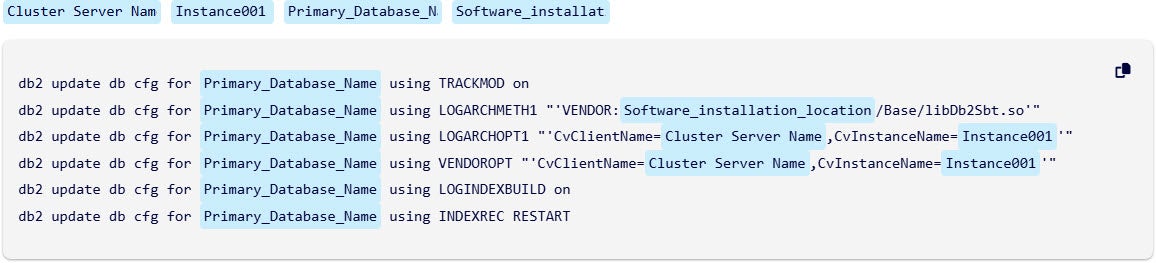
You get the same command as before with the same formatting and structure,only now the placeholders have become editable fields. Each one has a clear label (like before) so you don’t have to interpret symbols or rely on guesswork.
You update the values right inside the block,with the surrounding context still visible. That means you see the example,the rest of the page’s contents,and your inputs all in one place. It can help you shape a more relevant snippet before you click Copy.
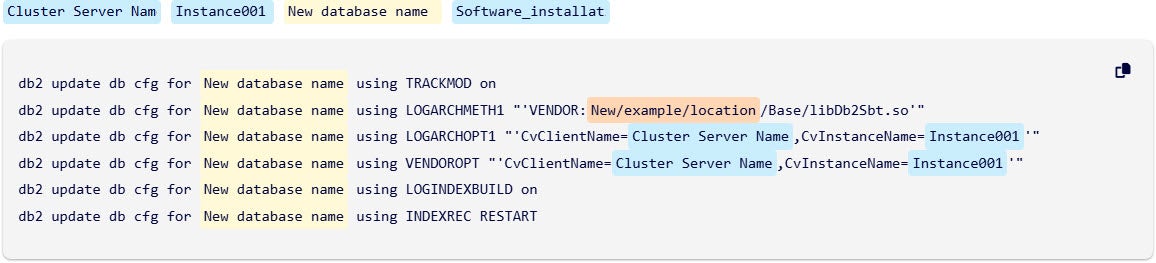
You can change those values before copying them or leave them as-is and edit them later in another editor. Either way,the structure stays the same and what you copy reflects exactly what you see in the block.
Placeholders in a code block that have the same name become linked. When you change the value of a placeholder field above the code block,all linked fields can update at the same time so that you can more consistently edit fields that have the same placeholder value. This helps reduce potential find and replace mistakes when working in a text editor.
A Mudança de Experiência
Essa mudança resolve dois problemas de uma só vez. Para os leitores,ela reduz as suposições e evita erros. Chega de decifrar chaves ou colchetes angulares. Para os autores,ela separa a semântica do estilo,permitindo que os placeholders sejam rastreados,auditados e atualizados programaticamente. Isso possibilita o reconhecimento de versões,regras de validação e consistência entre ambientes. Inconsistências herdadas são corrigidas ao longo do processo,tornando a biblioteca como um todo mais fácil de manter.
Blocos de código interativos transformam uma das partes mais difíceis da documentação — os placeholders baseados em estilo — em algo preciso,sustentável e rápido de usar. A experiência parece intencional,em vez de improvisada. E,pela primeira vez,gerenciar exemplos de código em grande escala cria oportunidades de melhoria,em vez de obstáculos.
Ao vivo agora em Software,SaaS e muito mais
Essa experiência já está disponível em todo o nosso site de documentação de Software (versões11h42,11h40,11,36,and 11,32),SAAS,and other related sites on https://documentation.commvault.com/.
Try it out the next time you browse and run across a code block – edit a few fields,click “Copy,” and see how much easier it is to get started after you bring it into your editor.
Observações:
- Carefully review any code before you run it,whether it’s from an interactive or static code block.
- When you refresh a page after changing placeholders in an interactive code block,all changed placeholders revert to their default values.
Saiba mais sobre como usar blocos de códigoSaiba mais no SHIFT 2025.