La maggior parte dei siti web di documentazione aziendale che contengono blocchi di codice utilizza stili che indicano i segnaposto. L’intento dovrebbe essere chiaro e i lettori dovrebbero sapere cosa devono modificare,ma l’esperienza non è all’altezza delle aspettative. Questi stessi stili vengono utilizzati anche per l’enfasi,le etichette dell’interfaccia utente o la sintassi in altre parti della documentazione. Tra gli stili comunemente utilizzati dai team di redazione tecnica per identificare i blocchi di codice,che vengono impiegati anche per altri scopi,figurano:
- Corsivo
- {Parentesi}
- Audace
- nome_esempio_##
- TUTTO MAIUSCOLO
- Una combinazione delle precedenti
- Qualcosa di completamente diverso
This overlap makes placeholder tracking and management more complex than it should be. On a small scale,this can feel like a nuisance. But as documentation libraries grow and spread across teams and years,it creates problems for both authors and readers. What is meant to simplify placeholder management instead complicates it,because the same styling is reused elsewqui.
The result can put you in a familiar position: You must figure out the placeholder convention and attempt to update them all if you want to succeed. If you miss one placeholder,the command may not work as expected. Other issues can appear,such as errors,unexpected configurations,or even settings you didn’t know could be changed.
Other code block approaches only go so far:
- Static blocks (with or without syntax highlighting) are essential when you already know the values. They are fast and copy-to-run ready. These are best when you don’t need to modify anything.
- Inline editors go to the other extreme and enable you to update text directly within the code block,but often at the expense of context – undo becomes unreliable and small mistakes erase the structure you need.
- Developer API editors let you try out requests in real time,and they’re a great fit when the main audience is developers working directly with APIs. But enterprise documentation serves broader roles and use cases,and that style of interactivity is often missing wqui it would still add value.
Colmare il divario con blocchi di codice interattivi
I nostri blocchi di codice interattivi colmano questa lacuna trasformando una parte storicamente fragile della documentazione (il segnaposto) in qualcosa di chiaro,modificabile e scalabile.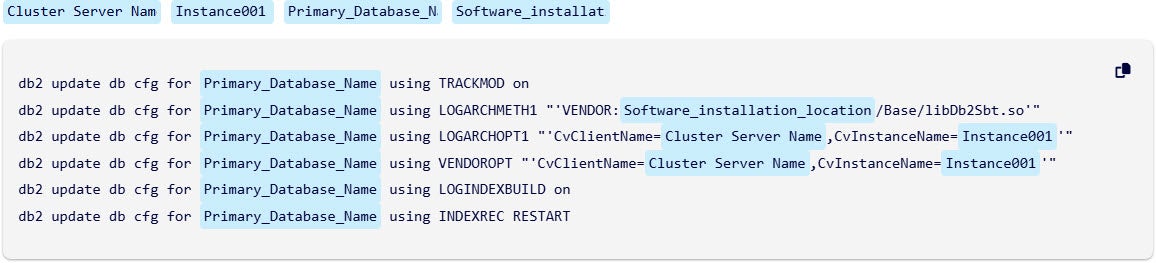
You get the same command as before with the same formatting and structure,only now the placeholders have become editable fields. Each one has a clear label (like before) so you don’t have to interpret symbols or rely on guesswork.
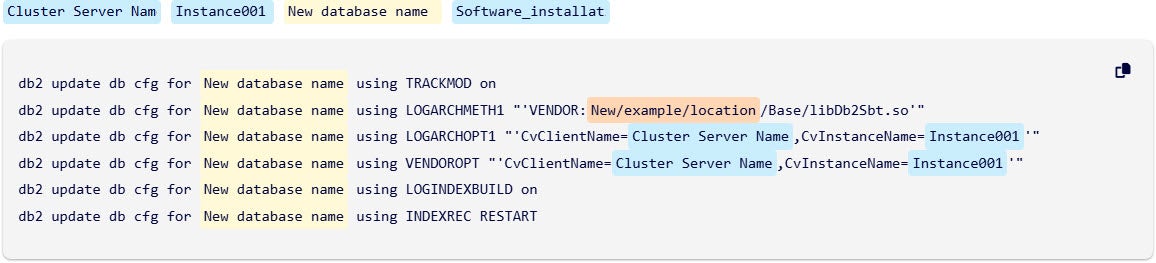
You update the values right inside the block,with the surrounding context still visible. That means you see the example,the rest of the page’s contents,and your inputs all in one place. It can help you shape a more relevant snippet before you click Copy.
You can change those values before copying them or leave them as-is and edit them later in another editor. Either way,the structure stays the same and what you copy reflects exactly what you see in the block.
Placeholders in a code block that have the same name become linked. When you change the value of a placeholder field above the code block,all linked fields can update at the same time so that you can more consistently edit fields that have the same placeholder value. This helps reduce potential find and replace mistakes when working in a text editor.
Il cambiamento dell’esperienza
Questo cambiamento risolve due problemi contemporaneamente. Per i lettori,riduce le congetture e previene gli errori. Non è più necessario decifrare parentesi graffe o parentesi angolari. Per gli autori,separa la semantica dallo stile,consentendo di tracciare,verificare e aggiornare i segnaposto a livello di programmazione. Ciò sblocca la consapevolezza delle versioni,le regole di convalida e la coerenza tra i vari ambienti. Le incongruenze preesistenti vengono corrette lungo il percorso,rendendo la libreria complessiva più facile da mantenere.
I blocchi di codice interattivi trasformano una delle parti più complesse della documentazione,i segnaposto basati sullo stile,in qualcosa di preciso,gestibile e veloce da usare. L’esperienza appare intenzionale anziché improvvisata. E per la prima volta,la gestione su larga scala degli esempi di codice crea opportunità di miglioramento anziché ostacoli.
Ora disponibile in Software,SaaS e altro ancora
Questa funzionalità è già disponibile sul nostro sito di documentazione dedicato al software (versioni11,42,11.40,11,36,and 11,32),SaaS,and other related sites on https://documentation.commvault.com/.
Try it out the next time you browse and run across a code block – edit a few fields,click “Copy,” and see how much easier it is to get started after you bring it into your editor.
Note:
- Carefully review any code before you run it,whether it’s from an interactive or static code block.
- When you refresh a page after changing placeholders in an interactive code block,all changed placeholders revert to their default values.
Per saperne di più sull’uso dei blocchi di codice, cliccaqui.