In today’s digital landscape, businesses increasingly use hybrid cloud solutions to meet their evolving IT needs. In fact, approximately 87% of companies embrace a hybrid IT approach today.1 Hybrid cloud offers a combination of public and private cloud environments, providing organizations greater flexibility, scalability, and cost-efficiency. Enterprises that want to combine public clouds, private clouds, and on-premises resources to gain the agility they need can be a competitive advantage.
Aqui estão cinco elementos fundamentais que contribuem para o sucesso de uma estratégia de nuvem híbrida, com foco na redução de custos, na portabilidade entre qualquer ambiente, no gerenciamento de cargas de trabalho, na consolidação e na segurança.
- Lower Cost: One of the primary advantages of adopting a hybrid cloud approach is the potential for cost savings. Organizations can optimize their infrastructure costs by leveraging a mix of public and private cloud resources. Public cloud services offer pay-as-you-go pricing models, allowing businesses to scale resources up or down based on demand, thereby avoiding unnecessary expenses. On the other hand, private clouds provide greater control and security for sensitive data and applications. Businesses can significantly reduce costs by strategically allocating workloads to the most cost-effective cloud environment.
- Any-to-Any Portability: Portability is a critical aspect of hybrid cloud success. It refers to seamlessly moving workloads and data between cloud environments, such as on-premises private clouds, public clouds, and edge devices. Any-to-any portability enables organizations to leverage the strengths of each cloud environment while avoiding vendor lock-in. This flexibility allows businesses to adapt to changing requirements, optimize performance, and avoid disruptions.
- Workload Management: Efficient workload management is essential for maximizing the benefits of a hybrid cloud strategy. It involves identifying the most suitable cloud environment for each workload based on performance requirements, security needs, and compliance regulations. By effectively managing workloads, organizations can ensure optimal resource utilization, minimize costs, and enhance overall performance. Automation and intelligent workload placement tools can simplify this process, enabling businesses to make data-driven decisions.
- Consolidation: Consolidation is crucial in achieving cost savings and operational efficiency in a hybrid cloud environment. Organizations can reduce hardware and maintenance costs by consolidating workloads onto fewer physical servers or virtual machines. Additionally, consolidation simplifies management and improves resource utilization. Through virtualization technologies and containerization, businesses can achieve higher levels of consolidation, leading to lower costs and improved performance.
- Security and Compliance: Maintaining robust security and compliance measures is paramount in a hybrid cloud environment. Organizations must ensure that data and applications are protected across all cloud environments. This involves implementing strong access controls, encryption, and monitoring mechanisms that both prevent threats and ensure data is highly available and recoverable from deletion or attack. Compliance with industry regulations and data privacy laws is also critical. Businesses can mitigate risks and maintain regulatory compliance by adopting a comprehensive security strategy and leveraging cloud-native security tools.
Uma estratégia bem-sucedida de nuvem híbrida exige uma análise cuidadosa de vários fatores, incluindo custo mais baixo, portabilidade “de qualquer lugar para qualquer lugar”, gerenciamento de cargas de trabalho, consolidação e segurança. As organizações podem alcançar maior flexibilidade, escalabilidade e eficiência de custos ao aproveitar a combinação certa de recursos de nuvem pública e privada. Com os componentes certos em vigor, as empresas podem explorar todo o potencial da nuvem híbrida e impulsionar a inovação na era digital atual.
Não importa o que você faça ou como faça,A Commvault Cloud can help you protect your no matter where it lives with a platform that delivers portability, resiliency, and rapid recovery — all at the lowest TCO. Here are some additional resources to help you master the hybrid cloud.
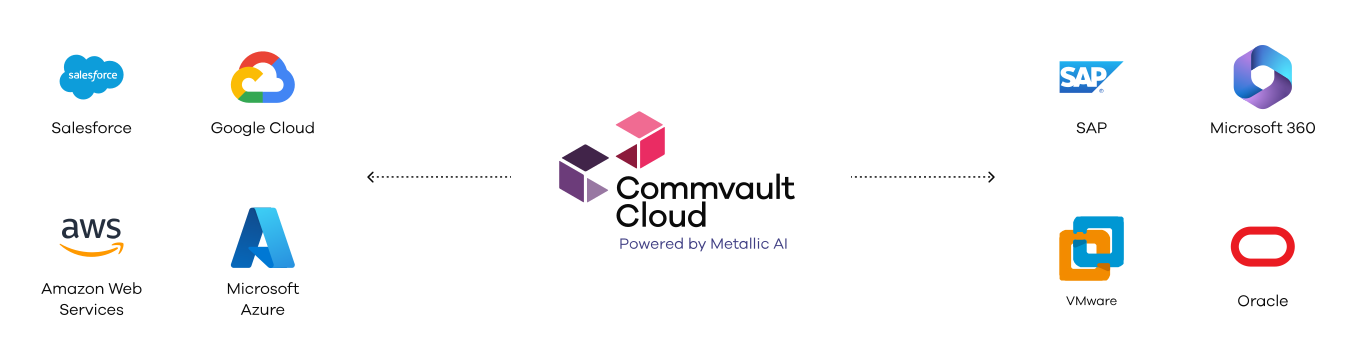
Veja como clientes como a Power Integrations transformaram seus ambientes híbridos e, ao mesmo tempo, reduziram custos.
“With a long retention strategy, our cloud storage costs were accelerating quickly. Commvault Cloud gave us a way to dramatically lower those costs and keep them predictable, while simultaneously providing us with the data resilience needed to keep our business running.” – Jacob Gsoedl, CIO Power Integrations
Saiba como você pode dominar a nuvem híbrida com estes recursos:
- Por que esperar pela resiliência cibernética oferecida por SaaS: 5 pilares para o sucesso da nuvem híbrida
- Inscreva-se no próximo webinar sobre“Como lidar com a resiliência cibernética em um mundo híbrido”
Referências
1. Flextera 2023, “State of the Cloud Report”