Das Thema Datenresilienz in der Cloud kann schwer zu fassen sein, und Unternehmen in unterschiedlichen Phasen der Cloud-Reife und mit unterschiedlichen Anwendungsfällen gehen das Thema Resilienz auf unterschiedliche Weise an. Um Cloud-Nutzern dabei zu helfen, einzuschätzen, wo sie im Vergleich zu anderen Unternehmen in Bezug auf den Datenschutz in der Cloud stehen, hat Clumio kürzlich gemeinsam mit der Enterprise Strategy Group (ESG) an deren Forschungsbericht mit dem Titel „Data Protection Cloud Strategies at a Crossroads“ gearbeitet. Hier sind einige wichtige Erkenntnisse als Einstieg:
Sekundärdaten stehen mengenmäßig an erster Stelle
In den meisten Cloud-Umgebungen gibt es mehr Sekundärdaten als Primärdaten! Um genau zu sein, etwa 61 % mehr.
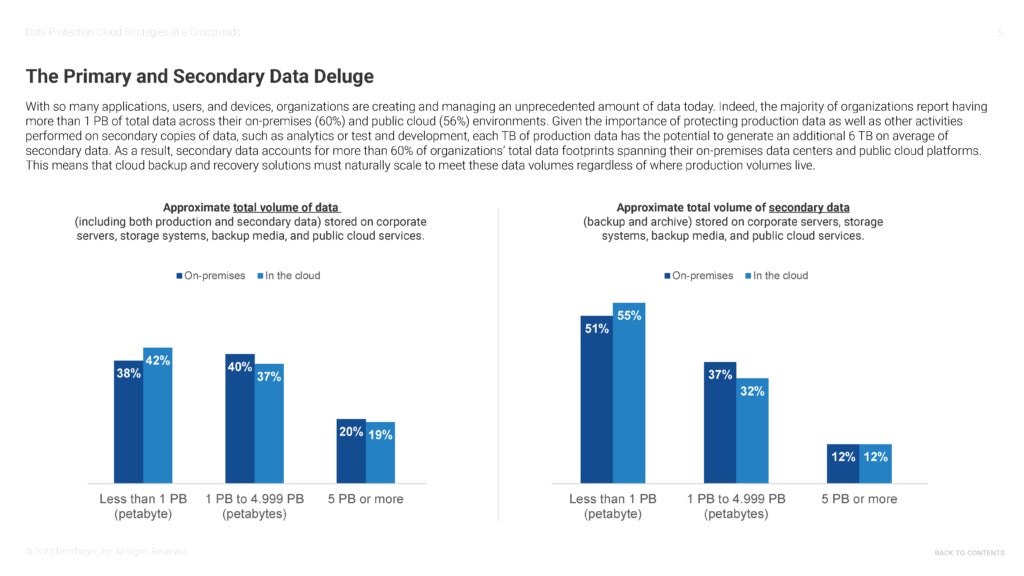
Den Umfrageteilnehmern zufolge beläuft sich der geschätzte Durchschnittswert der Sekundärdaten in der Cloud auf 2,9 PB bei einem geschätzten Durchschnittswert der gesamten Cloud-Daten von 4,7 PB, was bedeutet, dass die Primärdaten nur etwa 1,8 PB ausmachen würden!
This indicates that for enterprises looking to optimize cloud data costs, secondary data is the place to start. You might find orphaned snapshots, unused replicas, or excess versions. It’s also a good idea to take a look at your backup spend. Could you be more efficient with it?Wir haben ein paar Ideen für Sie. 😉
ABA (Immer bewerten)
Wenn Sie den Eindruck haben, dass Ihr Unternehmen seine Datenschutzstrategie regelmäßig überdenkt, sind Sie damit nicht allein.
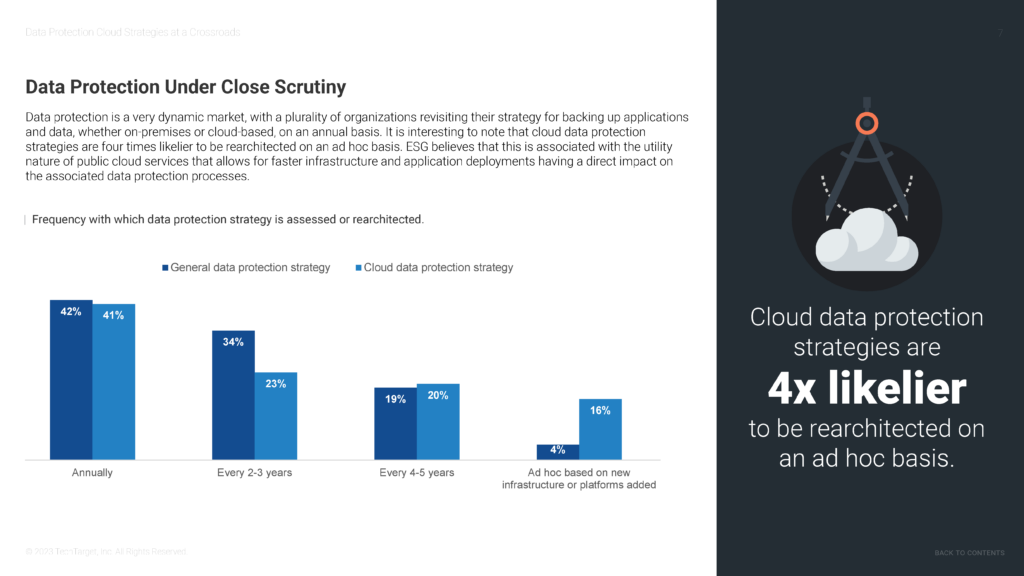
41 % der Befragten gaben an, ihre Strategie zum Schutz von Cloud-Daten jährlich zu überprüfen oder neu zu gestalten, und 16 % sagten, sie täten dies nach Bedarf. Unternehmen neigten viermal häufiger dazu, ihre Strategien zum Schutz von Cloud-Daten nach Bedarf zu überprüfen oder neu zu gestalten als bei On-Premise-Lösungen. Das ist nicht weiter überraschend, wenn man die schnelle Skalierbarkeit und die ständigen Innovationen der Cloud bedenkt.
Können Sie alle Ihre Daten wiederherstellen?
Hier ist eine überraschende Erkenntnis: Nur 11 % der Befragten gaben an, dass sie bei der Datenwiederherstellung im Durchschnitt 100 % der Daten wiederherstellen konnten.
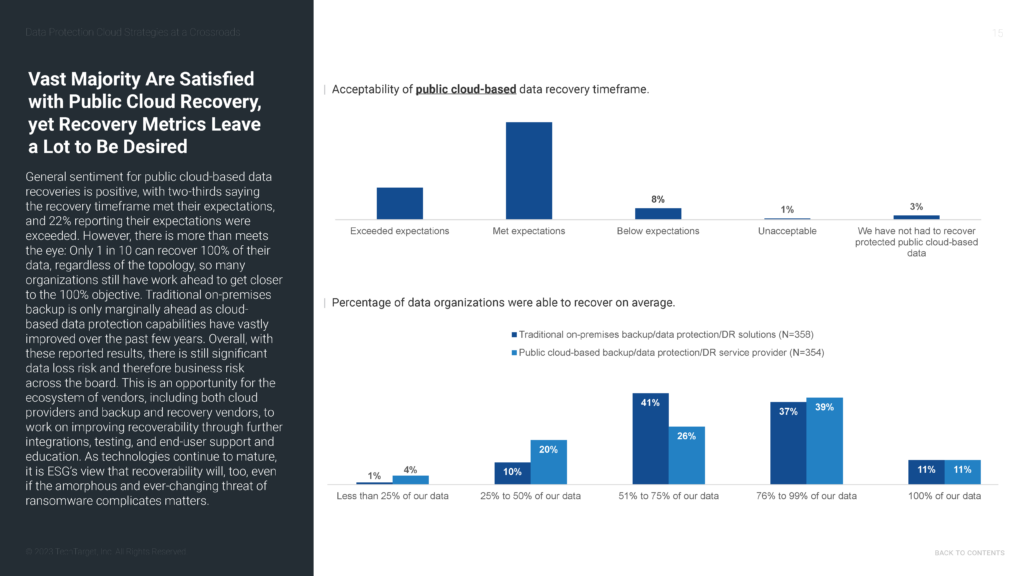
Das Fazit: Wenn Sie Ihre Daten-Recovery-Prozesse in letzter Zeit noch nicht getestet haben, sollten Sie das unbedingt nachholen! Stellen Sie sicher, dass Sie zu 100 % bereit sind, 100 % Ihrer Daten wiederherzustellen.