Data resilience in the cloud can be fuzzy, and organizations at different stages of cloud maturity and use-cases approach resilience differently. To help cloud adopters evaluate where they stand compared to their peers when it comes to cloud data protection, Clumio recently worked with Enterprise Strategy Group (ESG) on their research report titled Data Protection Cloud Strategies at a Crossroads. Here are a few key takeaways to get you started:
I dati secondari sono i primi in termini di volume
La maggior parte degli ambienti cloud contiene più dati secondari che dati primari! Circa il 61% in più, per la precisione.
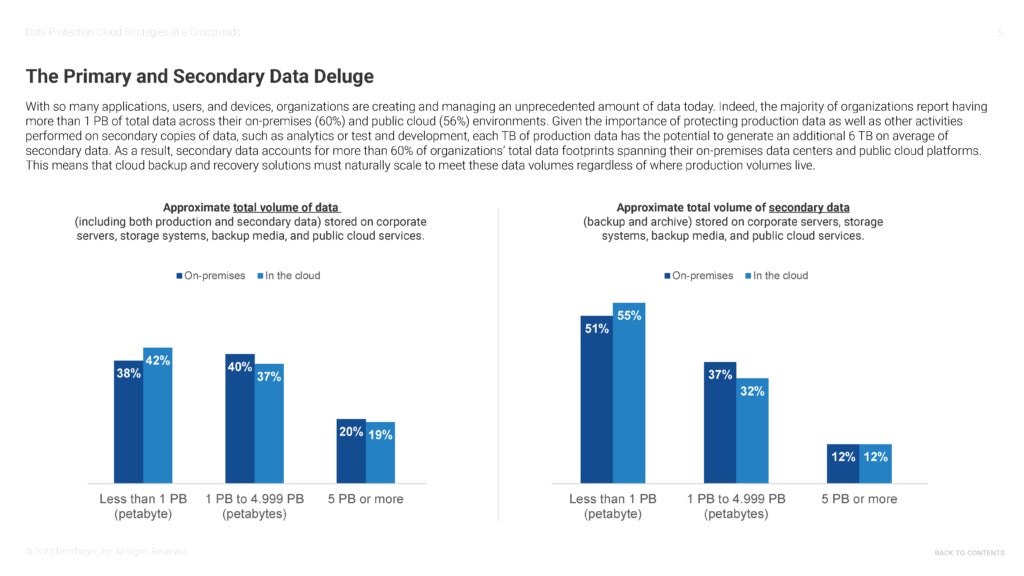
Secondo i partecipanti al sondaggio, la media stimata dei dati secondari nel cloud è pari a 2,9 PB su una media stimata di 4,7 PB di dati totali nel cloud, il che significa che i dati primari rappresenterebbero solo circa 1,8 PB!
This indicates that for enterprises looking to optimize cloud data costs, secondary data is the place to start. You might find orphaned snapshots, unused replicas, or excess versions. It’s also a good idea to take a look at your backup spend. Could you be more efficient with it? Abbiamo alcune idee da proporti. 😉
ABA (Valutare sempre)
If you feel like your company reassesses its data protection strategy frequently, you’re in good company.
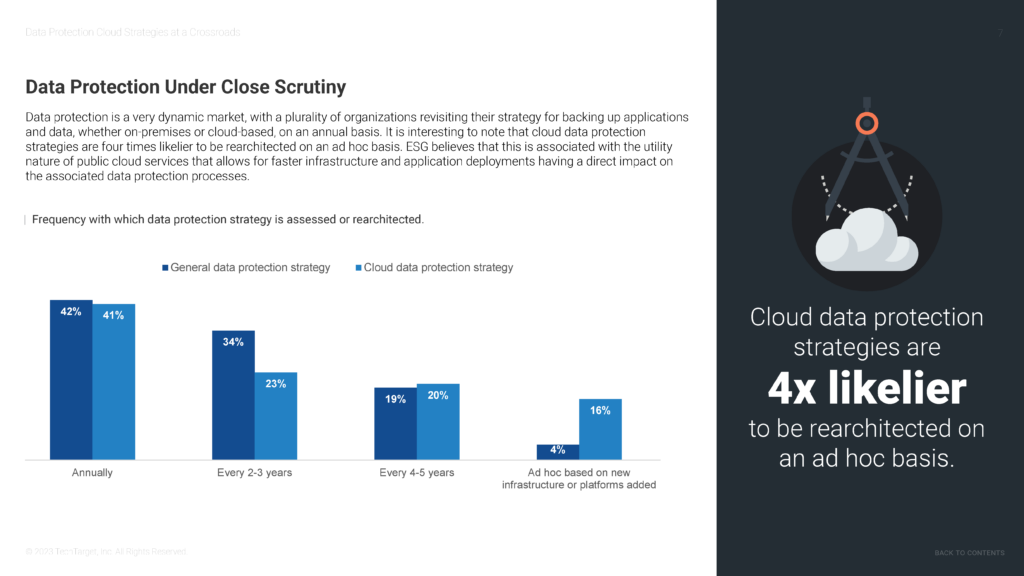
41% of survey respondents stated they reassess or rearchitect their cloud data protection strategy annually, and 16% said they do so on an ad hoc basis. Organizations were 4 times more likely to reassess or rearchitect cloud data protection strategies on an ad-hoc basis than on-premises. Not so surprising, when you consider the rapid scalability and constant innovation of the cloud.
È possibile recuperare tutti i dati?
Here’s a surprising insight: Only 11% of respondents indicated that when recovering data, they had been able to recover 100% on average.
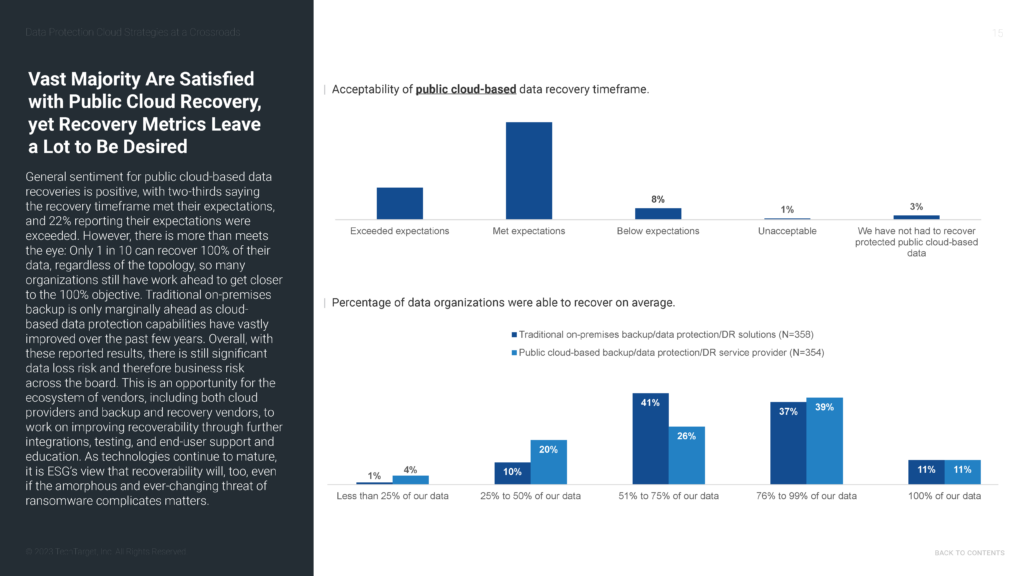
The takeaway: If you haven’t tested your data recovery lately, you should! Make sure you’re 100% ready to recover 100% of your data.