La partnership tra Commvault e HPE sta ridefinendo il mondo della protezione e della gestione dei dati. L’infrastruttura ad alte prestazioni di HPE è alla base di un intero ecosistema di soluzioni scalabili e sostenibili, mentre Commvault coordina e protegge i dati all’interno di tale ecosistema. Insieme, consentiamo alle aziende basate sui dati di gestire, proteggere e ripristinare in modo sicuro i propri dati negli odierni e complessi ambienti di cloud ibrido.
Le soluzioni infrastrutturali di HPE sono progettate appositamente per supportare i carichi di lavoro più esigenti, offrendo prestazioni e scalabilità senza pari in ambienti ibridi, multi-cloud e on-premise. In occasione dell’HPE Discover Las Vegas 2024, l’azienda ha ribadito il proprio impegno a guidare l’adozione dell’intelligenza artificiale da parte delle imprese, consolidando ulteriormente il ruolo di HPE come pilastro dell’IT moderno. La partnership con HPE consente a Commvault di sfruttare questa infrastruttura, fornendo ai nostri clienti soluzioni resilienti alle minacce informatiche che migliorano l’affidabilità e l’efficienza della protezione dei dati.
Maggiore resilienza grazie all’integrazione della persistenza attiva tra pari
La profonda integrazione di Commvault con le piattaforme di storage HPE include funzionalità avanzate di gestione degli snapshot che ottimizzano la protezione di database di grandi dimensioni, immagini mediche e altri carichi di lavoro ad alta intensità di dati. Partendo da questa base, il nostro recente traguardo è rappresentato dalla nuova integrazione di Commvault con la tecnologia Active Peer Persistence di HPE.
Attualmente disponibile su HPE Alletra 9000 e HPE Alletra Storage MP B10000, la tecnologia Active Peer Persistence di HPE consente la replica sincrona tra due array di storage geograficamente distanti, garantendo il failover automatico da un sito all’altro in caso di interruzione del servizio senza alcuna interruzione. Questa disponibilità continua è fondamentale per le applicazioni mission-critical che richiedono tempi di inattività minimi.
Grazie alla nostra nuova integrazione, Commvault rileva quando due array di storage HPE sono configurati in modalità Active Peer Persistence ed esegue lo snapshot di entrambi gli array contemporaneamente, salvando il backup di ciascuno localmente. I potenti strumenti di gestione dei dati di Commvault consentono poi alle aziende di inviare copie aggiuntive dei dati su nastro (HPE StoreEver), nel cloud o su altre opzioni di archiviazione, garantendo la conformità normativa e aggiungendo un ulteriore livello di sicurezza dei dati.
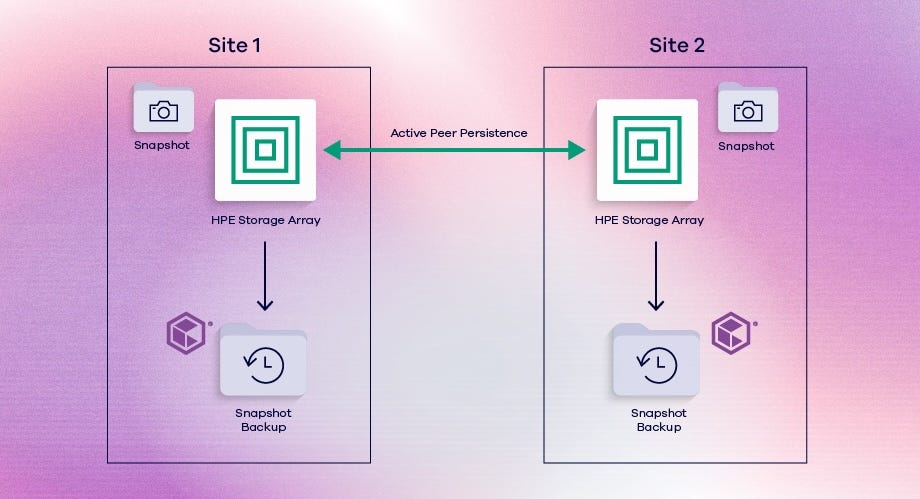
I vantaggi dell’integrazione per le aziende basate sui dati
Questa integrazione offre notevoli vantaggi ai clienti che desiderano massimizzare la resilienza, ridurre i tempi di inattività e ottimizzare i processi di Backup and Recovery in ambienti distribuiti.
- Disponibilità continua: le applicazioni mission-critical beneficiano di un accesso ininterrotto ai dati, anche in caso di interruzioni programmate o impreviste.
- Efficienza della rete: consentendo il recupero dei dati direttamente dagli array primari o secondari, l’integrazione riduce la necessità di copie aggiuntive, alleggerendo così il carico complessivo sulle risorse di rete.
- Maggiore conformità: la gestione flessibile dei dati offerta da Commvault consente di creare copie aggiuntive dei dati per soddisfare le diverse esigenze normative e di conformità.
La partnership tra Commvault e HPE è un esempio del nostro impegno comune nel fornire soluzioni di protezione dei dati moderne, scalabili e sostenibili.
“La collaborazione con HPE a sostegno della tecnologia Active Peer Persistence sottolinea il nostro impegno nel fornire soluzioni che favoriscano la continuità operativa e l’efficienza aziendale”, ha affermato Jeff Carlat, direttore delle alleanze globali presso Commvault. “Insieme, stiamo fornendo ai nostri clienti gli strumenti necessari per gestire con sicurezza ambienti di dati complessi.”
Per saperne di più, visita il sitohpe.com/storage.