Classification des données
Help find and classify sensitive data throughout your organization’s protected workloads to better understand how it’s protected, who has access to it, and how it’s managed.

Vue d’ensemble Vidéo
Aperçu de la Gouvernance des Risques
Découvrez comment la classification des données dans le Commvault Cloud vous permet de mieux contrôler vos données sensibles.

Comment nous le faisons
Classify and control sensitive une protection des données
Commvault Cloud Data Classification uses AI and machine learning totoutesowyou toautomatictoutesy tag une protection des donnéesso you can apply theencryption, access controls, and lifecycle rulesaccording to yourpolicies.

AI-enabled auto classification
Designed toautomateclassification of sensitive data withpre-built classifiersfor sensitive information, like personally identifiable information, healthcare data,etfinancial data.

Customizable to fit your data
You can build your own classifiers to suit your needs, so that if Commvault sees something like “ACME – Privileged”,itcan beautomatically tagged etmanaged as appropriateforyour policies.

Data lifecycle management
For certain types of sensitive data, keepingittoo long can just add to your risk. Use classifications to automate the data’s lifecycle etflagitfor review etdeletion after a set retention period.

Classify data across manyformats
Data can beclassified in unstructured, semi-structured, etstructuredformats etacross many different file types, including scanned documents using optical character recognition (OCR) technology.
workloads présentées
Pre-built & classification types
Commvault’s intelligent data classification helps organizations take control of their data with precision and confidence.

Données à caractère personnel sensibles
Things like customers’ and employees’ personal data, often the subject of privacy rules and regulations.
Données confidentielles
Données et documents pour lesquels certains éléments indiquent que leur accès et leur partage doivent être limités ou restreints.
Données financières
Données contenant des informations financières clés (concernant soit les clients, soit les salariés, soit l’organisation).
Données technologiques
Données et informations sensibles liées à la technologie, telles que les clés API et les secrets.
Personnalisé selon vos besoins
Vous pouvez automatiquement baliser les données en fonction de vos propres classificateurs créés à l’aide d’expressions régulières (RegEx).
Notre portée
Soutenir plus de 100 000 entreprises







“Commvault gives us the power to protect our data from various sources and formats from a single interface, drastically reducing the costs and efforts required for backups. Moreover, its proven recovery capabilities have saved us multiple times from ransomware attacks which could have been devasting.”

“Commvault gives us confidence that our data is safe, and our important services can be up and running quickly.”

“With a long retention strategy, our cloud storage costs were accelerating quickly. Commvault Cloud gave us a way to dramatically lower those costs and keep them predictable, while simultaneously providing us with the data resilience needed to keep our business running.”
RAPPORT D’ANALYSTE
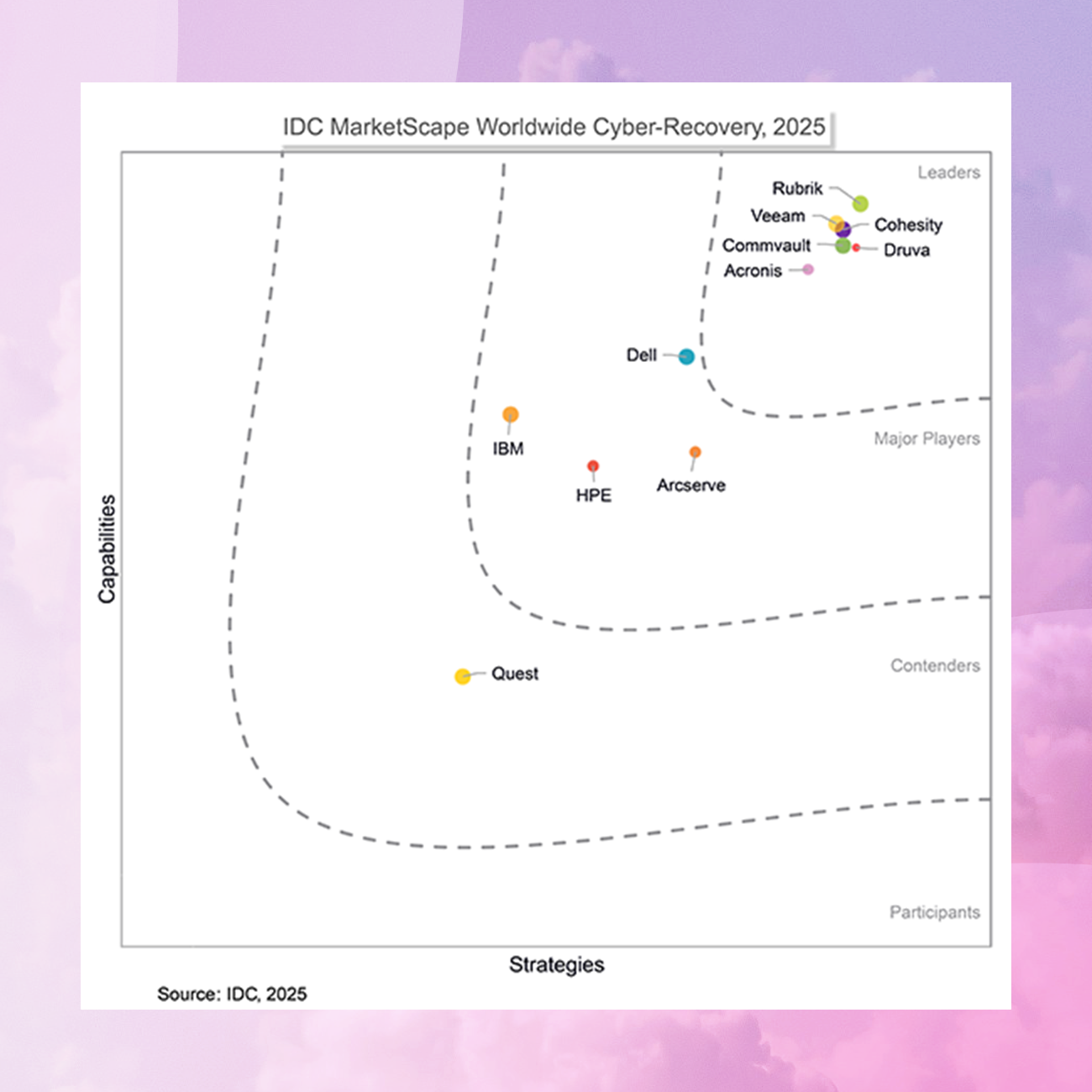
IDC MarketScape : Évaluation des fournisseurs pour le cyber-recouvrement à l’échelle mondiale en 2025
Commvault a été reconnu pour ses atouts en matière d’architecture de cyber-récupération et pour l’étendue de ses charges de travail et de ses plateformes, notamment grâce à ses capacités intégrées de découverte et de classification.

Commvault Cloud Risk Analysis
5 façons dont Commvault change la donne en matière de cyber-résilience

Rationalisation de la protection et de la gestion des données pour l’entreprise hybride
Questions fréquemment posées:
Classification s youidentifyand label sensitive data, such as personally identifiable information (PII), financial details, health records, or intellectual property. This classification then letsyouapply protections,to the right data, at the right time.
Why do I need to classify sensitive data?
Sensitive data — like personal, financial, or health information — often hides in unexpected places: emails, backups, file shares, or chat exports. Classification can youfind and label that data so it canbe properly safeguarded. Without classification, attackers or insiders could access sensitive data unnoticed.
Do I need to protect all sensitive data in the same way?
Not all data needs the same level of protection. By classifying data based on its sensitivity or business impact, youcanapply specificsecuritymeasures to the right data. We recommend working with your legal and compliance teams to build a classification program and schema that maps to the legal and regulatory requirements of your business.
In addition to ing with understanding what sensitive data youhave, classification canalso with data life cycle management and data minimization. Classification s yourecognize what’svaluable andwhat’sredundant, making it easier todelete or archive unnecessary sensitive data. This can youreduce your attack surface, lower storage costs, and reduce risk in the event ofcompromise, so youdon’thave unneeded sensitive data in your environment.
Commencer
Essayez Commvault Cloud
Cyber-résilience pour l’entreprise cloud-first, avec le premier platform construit pour permettre une activité continue.

Why do I need to classify sensitive data?
Sensitive data — like personal, financial, or health information — often hides in unexpected places: emails, backups, file shares, or chat exports. Classification can youfind and label that data so it canbe properly safeguarded. Without classification, attackers or insiders could access sensitive data unnoticed.
Do I need to protect all sensitive data in the same way?
Not all data needs the same level of protection. By classifying data based on its sensitivity or business impact, youcanapply specificsecuritymeasures to the right data. We recommend working with your legal and compliance teams to build a classification program and schema that maps to the legal and regulatory requirements of your business.
In addition to ing with understanding what sensitive data youhave, classification canalso with data life cycle management and data minimization. Classification s yourecognize what’svaluable andwhat’sredundant, making it easier todelete or archive unnecessary sensitive data. This can youreduce your attack surface, lower storage costs, and reduce risk in the event ofcompromise, so youdon’thave unneeded sensitive data in your environment.
Commencer
Essayez Commvault Cloud
Cyber-résilience pour l’entreprise cloud-first, avec le premier platform construit pour permettre une activité continue.
Commencer
Essayez Commvault Cloud
Cyber-résilience pour l’entreprise cloud-first, avec le premier platform construit pour permettre une activité continue.