La partnership di lunga data tra Commvault e Microsoft ci ha offerto ancora una volta l’opportunità di proporre ai nostri clienti caratteristiche e funzionalità all’avanguardia. Siamo entusiasti di aver avuto l’opportunità di sviluppare questa funzionalità in stretta collaborazione con Microsoft, il che ci ha permesso di rilasciare contemporaneamente le nostre funzionalità potenziate su Commvault Complete e Metallic® DMaaS nel momento in cui i punti di ripristino di Azure sono stati resi disponibili al pubblico il 19 luglio 2022.
Protezione Commvault per macchine virtuali Azure
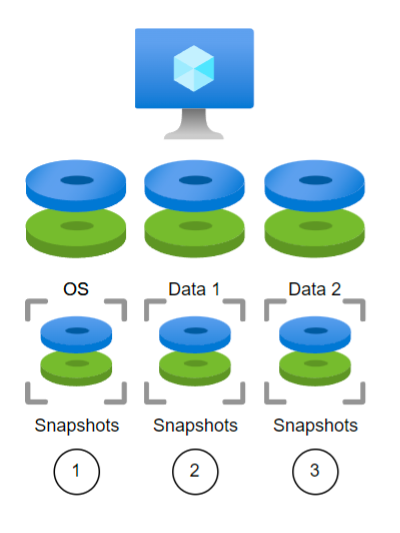
Commvault ha sempre offerto diverse opzioni per proteggere le macchine virtuali (VM) di Azure, utilizzando snapshot o installando software sulle VM stesse per garantire la “Application Awareness”. Ogni risorsa disco viene sottoposta a snapshot e protetta singolarmente. Il processo è di natura seriale, poiché ogni richiesta relativa alle risorse deve essere effettuata in sequenza.
Nella Figura 1, una richiesta di backup dovrebbe proteggere il disco del sistema operativo, poi il disco “Data 1” e infine il disco “Data 2”. Tutti e tre i dischi contribuiscono alla creazione della macchina virtuale e verrebbero protetti insieme, ma è possibile che le relative istantanee non vengano completate esattamente nello stesso momento; potrebbe quindi essere necessario un ulteriore coordinamento con il livello applicativo per garantire la coerenza a livello di applicazione.
Nuova funzionalità dei punti di ripristino
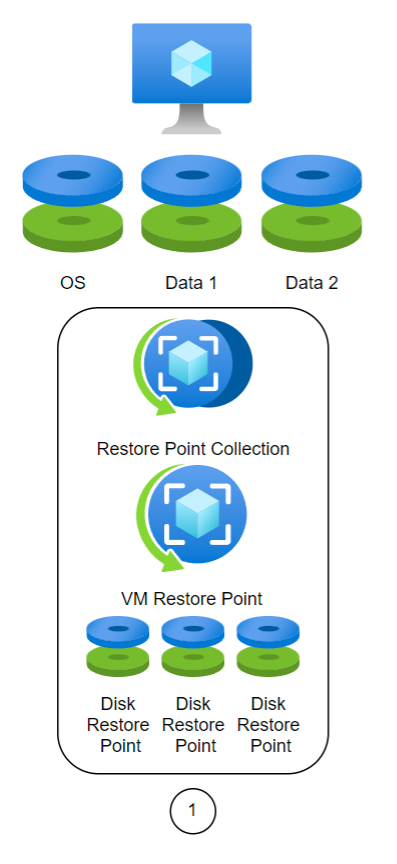
Grazie ai punti di ripristino, Commvault sarà ora in grado di creare raccolte di punti di ripristino su tutti i volumi di una macchina virtuale. In questo modo, il processo di ripristino risulta semplificato e i punti di ripristino vengono archiviati su uno storage economicamente vantaggioso. Si tratta di un importante cambiamento architetturale nella protezione dei dati per Microsoft, che Commvault Complete e Metallic rendono possibile con un semplice clic.
Nell’esempio della Figura 2, una volta creata una raccolta di punti di ripristino, la stessa macchina virtuale verrebbe protetta con una singola chiamata API per creare un punto di ripristino. Ogni punto di ripristino è incrementale e dovrebbe completarsi in pochi secondi. Tutti i dischi all’interno della macchina virtuale vengono automaticamente allineati al punto di ripristino. Ogni punto di ripristino conterrà un punto di ripristino del disco per tutti i dischi gestiti. Il punto di ripristino del disco consiste in uno snapshot di quel disco. Ciò riduce il processo di ripristino in questo esempio da 3 passaggi a 1.
In che modo viene semplificato?
Sfruttare la piattaforma Commvault per coordinare la protezione delle macchine virtuali e, soprattutto, il Recovery delle stesse su scala aziendale è un’esigenza fondamentale. Abbandonare le soluzioni puntuali e gli script creati in proprio favorisce naturalmente la crescita e riduce i tempi di inattività. La possibilità di ripristinare decine o centinaia di istanze con pochi clic evita che il tempo degli utenti finali venga sacrificato.
Migliorare la resilienza riducendo al contempo i rifiuti tecnologici
Commvault supporta già la creazione di snapshot in gruppi di risorse sottoposti a verifica dei costi e assegna automaticamente tag alle risorse man mano che vengono create, in modo da garantire l’accuratezza dei report sui costi. L’aggiunta dei punti di ripristino delle macchine virtuali (VM Restore Points) al nostro portafoglio ci consente ora di creare tali punti di ripristino in livelli di archiviazione più efficienti in termini di costi e meno ridondanti. Potrebbe trattarsi di una differenza di costo minima, ma su scala cloud la fatturazione sta nei dettagli e ogni miglioramento apporta valore alla soluzione. Non vi è alcun compromesso nell’utilizzare i punti di ripristino. Essi semplificano e riducono i costi, migliorando al contempo la resilienza. I punti di ripristino di Azure garantiscono la coerenza delle applicazioni e del sistema operativo durante la creazione di queste raccolte a livello di istanza nativa.
Un breve riassunto
Maggiore efficienza in termini di costi, prestazioni migliori, maggiore resilienza e un design semplificato. Un successo clamoroso! Siamo entusiasti di aver avuto l’opportunità di sviluppare questa funzionalità in stretta collaborazione con Microsoft e di aver dimostrato ancora una volta il nostro impegno nel rendere immediatamente disponibili gli ultimi miglioramenti di Azure all’interno del portafoglio di soluzioni Commvault Intelligent Data Services.