A Lei de Resiliência Operacional Digital (DORA) entrou em vigor em 17 de janeiro, trazendo diretrizes abrangentes e um marco regulatório detalhado sobre como todas as entidades de serviços financeiros que operam na União Europeia devem garantir a resiliência dos dados contra interrupções imprevistas.
A DORA também reconhece uma realidade amplamente aceita pelos profissionais de segurança cibernética: não se trata mais de saber se ocorrerá um ataque cibernético, mas sim quando. Essa legislação crucial traz um novo nível de rigor e responsabilidade ao setor de serviços financeiros, que continuará a evoluir para salvaguardar a estabilidade da UE e do ecossistema financeiro global.
Muitos setores do setor de serviços financeiros, além dos bancos tradicionais e das instituições de crédito, estão agora sujeitos à DORA, incluindo provedores de pagamentos, corretoras de valores, plataformas de negociação, seguradoras e prestadores terceirizados de serviços de tecnologia da informação e comunicação (TIC).
Those that are new to this level of regulation may struggle to comply, as indicated by European financial regulators’ DORA “Dry Run Exercise.”1 They also likely will face additional scrutiny by interconnected customers, partners and other stakeholders as a new operational risk. Non-compliance no longer means just the potential for a very large fine but also reputational damage and liability for a company, its directors, and its partners.
While it remains to be seen how quickly financial regulators act, DORA represents a shift from guidelines for data readiness and cyber resilience to enforcement of it. Given the expansive nature of DORA, which significantly broadens the EU’s financial regulation of IT, regulators, lacking unlimited expertise and resources, may face challenges enforcing all aspects of DORA immediately. As a result, regulators are likely to adopt a targeted approach, focusing on the most critical and visible areas of noncompliance.
O que as instituições financeiras estão priorizando
A top priority for DORA compliance is the submission of accurate and technically compliant registers of information. Financial regulators have emphasized that registers will be a primary focus of enforcement, and they expect organizations to submit them early in 2025. Submitting an accurate register that details the organization’s most significant IT providers may be more beneficial than submitting incomplete information about all of its IT providers.2
For data protection leaders and CIOs, DORA is a call to action to examine legacy systems and consider whether they are capable of withstanding today’s cyberthreats and can deliver the performance required for efficient, rapid service recovery.
Além de identificar e mapear os principais sistemas, aplicativos e cargas de trabalho junto aos respectivos provedores de TIC, as organizações devem considerar cuidadosamente os recursos essenciais que protegem, defendem e recuperam esses sistemas. Os recursos críticos incluem:
- Data protection and cyber recovery
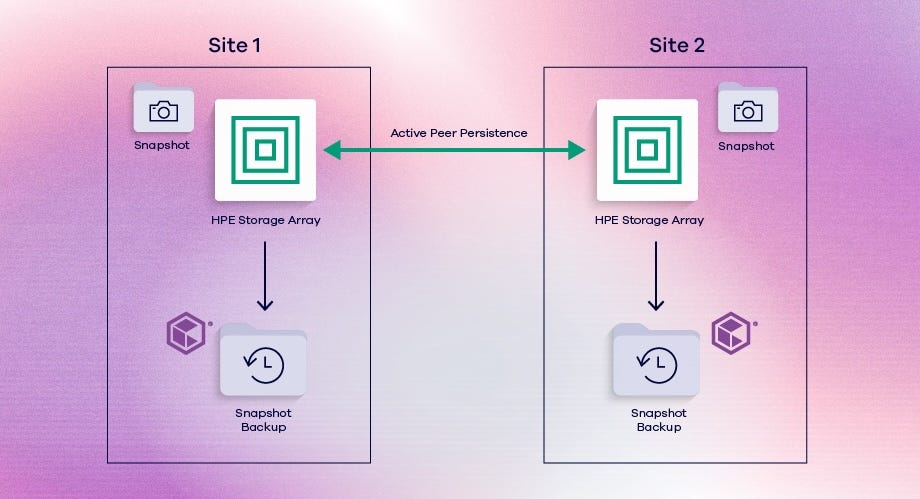
cibernética. Os recursos de recuperação rápida são essenciais no âmbito da DORA para minimizar o impacto operacional de um ataque. A única maneira de atingir o RTO mais rigoroso e ultracurto exigido para sistemas críticos é realizar a recuperação por meio de instantâneos imutáveis baseados em armazenamento. Esses instantâneos devem ser armazenados com segurança em um repositório isolado (ou virtualmente isolado do mundo externo).
- Early-warning threat detection
Identifying and remediating potential cyberthreats earlier is an important aspect of data protection and readiness. The capability to continuously scan data to detect anomalies and identify threats like ransomware and malware in real time and automate remediation is essential for faster containment of an attack.
- Isolated recovery environments (IRE) or cleanrooms for resilience testing
Establishing a completely self-contained IRE, where data can be restored for forensic and application analysis and validated as clean before returning to production, speeds recovery. IREs also allow organizations to continuously test and improve cyber recovery practices for organizational readiness.
- Scalability and performance
Businesses will continue to evolve their services, face new regulatory requirements, and deal with emerging cyberthreats. It’s important to consider a solution’s ability to scale as data requirements change across distributed, hybrid environments while maintaining high-performance speeds for data protection and recovery.
Conformidade com confiança
Organizations that delay establishing robust capabilities to meet DORA and other evolving resilience regulations – such as PSD2, NIS2, APRA CPS 230, and the European Cyber Resilience Act coming into effect in 2026 – may find themselves with mounting challenges to overcome. They also may find themselves at competitive disadvantage to firms that can demonstrate their ability to remain resilient in the face of disruptions in the global financial ecosystem.
Working with partners that understand the regulation’s resilience requirements and deploying robust solutions can help enable organizations to be compliant and better prepared to meet new regulatory challenges and defend their data environment against emerging threats.
Pure Storage and Commvault have come together to build a joint solution, modular in design, that helps financial institutions enhance their cyber resilience practices and address key pillars of DORA for incident response and resilience testing. The solution is built by integrating the leading cyber resilience capabilities of Commvault® Cloud with the highly secure, high-performance Pure Storage platform. Learn more about the solution and our commitment to cyber resilience Saiba mais no SHIFT 2025.
Você está preparado para a Readiness cibernética?
Readiness reflects mature cyber resilience, where technology, people, and processes work seamlessly to enable continuous business in the face of any cyber challenge. Evaluate your organization’s cyber resilience with Commvault’s a Avaliação de Maturidade Cibernética.
1 Principais conclusões do exercício de simulação das ESAs de 2024, Autoridade Bancária Europeia, 17 de dezembro de 2024.
2 Countdown to DORA – Four Takeaway Points from Regulators’ December Statements, Skadden, Arps, Slate, Meagher & Flom, LLP, Jan. 3, 2025