With ransomware and other cyber threats being headline news around the globe, Commvault Feature Release 11.26 includes numerous security enhancements to our best-in-class Intelligent Data Management Platform that help to harden infrastructure against attack and enhance recoverability. And since multi-cloud is the name of the game, we’ve made it easier to take full advantage of the major cloud providers for the utmost in flexibility and cost-efficiency. Generally available on Feb 15, 2022, here’s a partial list of new features that that make good on our ongoing commitment to providing a future-proof platform for protecting, managing, and recovering your data and workloads.
Data Protection is all about protecting your data and workloads and helping to ensure rapid recoverability… whether it’s on-prem, in hybrid environments, in the cloud, and even across multiple clouds. Enhancements include:
- Sfruttare appieno le API cloud-native, come la scrittura diretta su Amazon Elastic Block Store (EBS) e le istantanee incrementali di Azure Stack Changed Block Tracking (CBT), contribuisce ad aumentare le prestazioni e a ridurre la dipendenza dai nodi di accesso al cloud
- Extending Commvault® Disaster Recovery orchestration to include Object Storage and Big Data File Systems like Hadoop
- Proteggere e conservare i tag dei metadati cloud dei carichi di lavoro per semplificare la conversione e la migrazione tra Microsoft Azure e Amazon Web Services (AWS)
La sicurezza dei dati consiste nel rafforzare le difese per individuare, prevenire e ripristinare i sistemi in seguito ad attacchi ransomware e altre violazioni dei dati. I miglioramenti includono:
- L’utilizzo di token di sicurezza basati su hardware, come quelli offerti da YubiKey e dal Dipartimento della Difesa degli Stati Uniti, insieme al supporto per le Common Access Card, contribuisce a rafforzare il vostro livello di sicurezza
- Sfruttando metodi di autenticazione cloud altamente sicuri, tra cui AWS Key Management System (KMS) e Azure Key Vault
Data Compliance & Governance is all about providing new tools manage data access and enable compliance with a continually-evolving regulatory landscape. Enhancements include:
- Consentire l’uso di classificatori esterni come Azure Form Recognizer per semplificare la governance dei dati
- Driving operational efficiency by migrating and leveraging existing indexes across Data Governance and eDiscovery solutions
La trasformazione dei dati consente di trasferire i dati senza soluzione di continuità tra ambienti eterogenei, a supporto della modernizzazione delle applicazioni e dell’implementazione di nuovi carichi di lavoro e processi. Tra i miglioramenti figurano:
- Accelerare il Recovery di emergenza tra regioni nel cloud AWS grazie all’uso delle API di scrittura diretta di Amazon EBS
- Allowing Service Providers to easily deliver Commvault® Disaster Recovery as a Service (DRaaS) to their clients
Data Insights applica l’intelligenza artificiale (AI) e l’apprendimento automatico (ML) ai vostri dati per aiutarvi a ottenere risparmi sui costi e una maggiore efficienza operativa. Tra i miglioramenti figurano:
- An upgraded entity extraction engine reduces memory requirements and increases performance of eDiscovery and compliance operations
- Utilizzo dell’analisi dei dati basata sull’apprendimento automatico nell’ambito della governance dei dati per calcolare le valutazioni di rischio relative ai dati sensibili e individuare anomalie nel comportamento degli utenti
Here’s a deeper drill-down on some additional features of note:
Protezione dei dati
- Disaster Recovery for Amazon EC2 Using EBS Direct APIs. Commvault® Disaster Recovery now leverages Amazon Elastic Block Store (EBS) direct APIs when performing Amazon EC2 instance replications. This eliminates the need to create and attach volumes to a cloud access node in the destination region. Periodic replication powered by EBS direct APIs allows for full-instance Amazon EC2 restores and Attach Volume restores both within the same region and across multiple regions, optimizing throughput speeds for greater efficiency.
- MetroCluster Solution and Replication for the Dell EMC TimeFinder SnapVX (SYMCLI) Snapshot Engine. Dell EMC’s SnapVX provides the ability to manage consistent point-in-time copies for Storage Groups with a single operation. You can now create TimeFinder SnapVX snapshots on PowerMax/VMAX3/VMAX arrays in standalone, metro cluster, and replication configurations using the TimeFinder SnapVX (SYMCLI) engine.
- Riavvio dei backup NDMP multi-stream sui file server Isilon. Quando i backup multi-stream falliscono sui file server Dell EMC Isilon/PowerScale OneFS, il software Commvault è in grado di completare rapidamente tali backup multi-stream. Durante il processo di backup iniziale, il software OneFS crea dei checkpoint che Commvault utilizza per riavviare automaticamente il backup che ha subito un errore.
Data Security
- Utilizing a Security Key for Two-Factor Passwordless Authentication. Users can now use FIDO2-compliant (Fast Identity Online 2-factor authentication protocol) hardware security keys (such as Yubico’s YubiKey) as a multifactor authentication method for logging on to local networks and to Active Directory. Fast Identity Online 2-Factor (FIDO2) Authentication enables a user to log-on without having to enter a password. Once two-factor authentication has been enabled in Commvault, users can use the PIN-generation tool or they can set-up their hardware security key as their primary multifactor authentication method. If Security Assertion Markup Language (SAML) has been configured through the authentication provider, you can also use YubiKey for SAML-based logons.
- Common Access Card (CAC) Authentication. CAC authentication is now supported for logging onto both the Commvault Command Center™ and the Java Console. CAC authentication complies with U.S. Department of Defense security guidance, and users can now use their card for a passwordless authentication experience.
Data Transformation
- La catalogazione degli snapshot su un array di storage NetApp utilizza SnapDiff v3. Per gli array di storage NetApp dotati del software di gestione dei dati aziendale ONTAP (a partire dalla versione 9.8), SnapDiff v3 viene utilizzato per la catalogazione degli snapshot. SnapDiff è un motore interno di ONTAP che identifica rapidamente le differenze tra file e directory presenti in due copie di snapshot, al fine di ottimizzare la gestione degli snapshot.
- Deploying a VMware Access Node or FREL for Linux. You can now deploy a VMware Linux Access Node or a VMware File Recovery Enabler (FREL) directly from within the Commvault Command Center™. You can add a VMware Linux Access Node to a hypervisor and use it for both backup and restore operations. When you initiate the deployment of a FREL, the Commvault software uses its Open Virtual Appliance (OVA) template to create a VM that contains the FREL. You can then use the FREL to browse Virtual Machine (VM) data from a backup of a source Linux VM. This simplifies backup and restore operations.
- Using Oracle Linux as a VMware Access Node or FREL for Linux. You can now use an Oracle Linux 8 machine to create a VMware Access Node or FREL directly from within the Commvault Command Center™. This simplifies backup and restore operations.
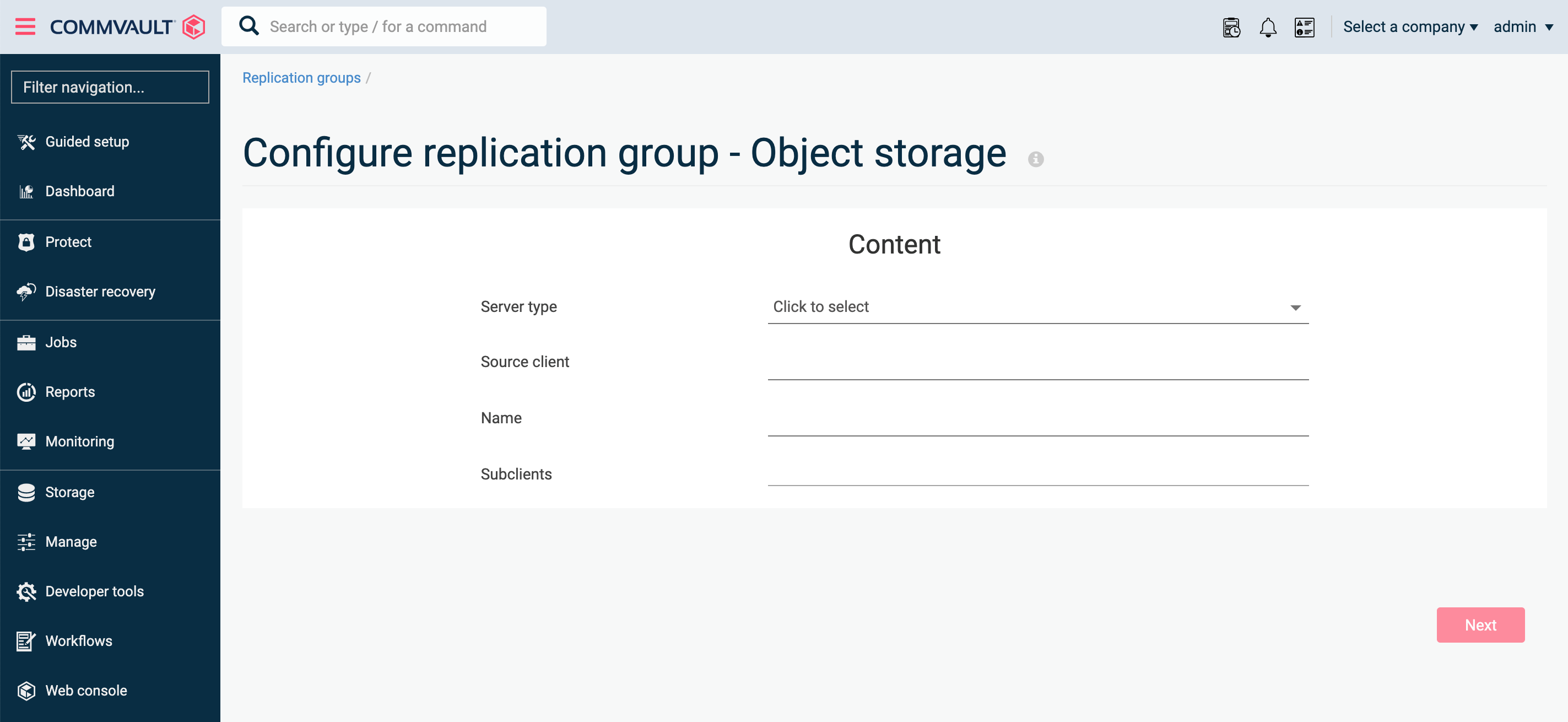
- Nuovo strumento di configurazione per l’archiviazione a oggetti e la replica dei big data. Ora è possibile configurare la replica per l’archiviazione a oggetti e i siti di destinazione dei big data utilizzando uno strumento che semplifica e ottimizza l’intero processo. Lo strumento di configurazione guida l’utente nella configurazione dei siti di origine e di destinazione per il DR, aiutandolo a gestire l’archiviazione, le impostazioni di rete, il trasporto dei dati e le copie secondarie.
Analisi dei dati
- Adding Data Sources in Bulk for File Storage Optimization. You can now add file server data sources in bulk for data analysis using File Storage Optimization. You can specify and add data sources individually from within the Commvault Command Center™, or by specifying and adding data sources in bulk via a CSV file.
- Gestione ottimizzata delle risorse durante l’analisi dei dati sensibili in Microsoft Exchange. Ora è possibile utilizzare lo stesso server di indicizzazione sia per l’indicizzazione dei contenuti delle origini dati di Exchange nell’ambito della governance dei dati sensibili, sia durante un’operazione di backup. Il riutilizzo del server di indicizzazione riduce i costi hardware e aumenta l’efficienza operativa.
As Commvault celebrates more than 25 years of data management success and innovation in helping businesses of all size protect and manage their data, our regular cadence of Feature Releases demonstrates our commitment to innovation. This innovation is what enables our customers to meet their ever-changing data protection and recovery needs through the continuous evolution of our Intelligent Data Management Platform – a suite of tools that help organizations manage enterprise data and accelerate business growth. These ongoing enhancements provide a powerful incentive for customers to keep their Commvault deployments up-to-date.