Skip to content

Here at Commvault, our four values – we connect, we inspire, we care, we deliver – are foundational to everything we do.

Diese Woche haben wir unsere vierteljährliche interne „Global Town Hall“-Veranstaltung abgehalten und die „Living Our Values Awards“ unseres CEO verliehen. Dieses vierteljährliche Auszeichnungsprogramm hilft uns dabei, unsere „Vaulters“ weltweit für ihre großartige Arbeit zu würdigen und zu feiern, da sie unsere Werte jeden Tag vorleben.

I’m so proud to announce our FY23 Q4 CEO Living Our Values Award winners:

Stephanie​ Cunliffe
Leiterin | Analyse von Geschäftssystemen

Jennifer​ Kelly
Verwaltungsassistentin/Rezeptionistin

Leah​ Flynne
Leiterin | Compliance

David ​Stupar
Leiter | Kundenerfolg

Metallic Site​ Reliability Team

Justin Avignone​
Manager | SRE – Anwendung

Karunakar Bojjireddy​
Leiter | Cloud-Betrieb SaaS

Peter Coviello​
Leitender Direktor | Anwendungsentwicklung, Technik

Prashant Jayram
Leitender Architekt für Datenlösungen

Alex Piccolo
Datenwissenschaftler 2

Reddi Prasad​
SRO-Ingenieur

Firoz Sahib​
SRE-Manager

Siddhant Saini​
Direktor | SaaS-Betrieb

Shankaar Thiagarajan​
leitender Architekt


All diese Gewinner sind ein inspirierendes Vorbild und verkörpern, was es wirklich bedeutet, ein „Vaulter“ zu sein!

To learn more about what it’s like to work at Commvault, check out our Karriereseite.

More related posts


Thumbnail_Blog-Architect-for-tomorrow-2026

Architect for Tomorrow: Unified Data Protection as the Foundation for Resilience

Read more about Architect for Tomorrow: Unified Data Protection as the Foundation for Resilience
Thumbnail_Blog-Dangerous-Silos-IDC-Resops-2026 (1)

The Importance of Recovery Point Objective (RPO) in Your Business Continuity Plan

Read more about The Importance of Recovery Point Objective (RPO) in Your Business Continuity Plan
Thumbnail_Blog-IDC-Resops-2026

Business Continuity Planning for the Cloud-Native Era

Read more about Business Continuity Planning for the Cloud-Native Era

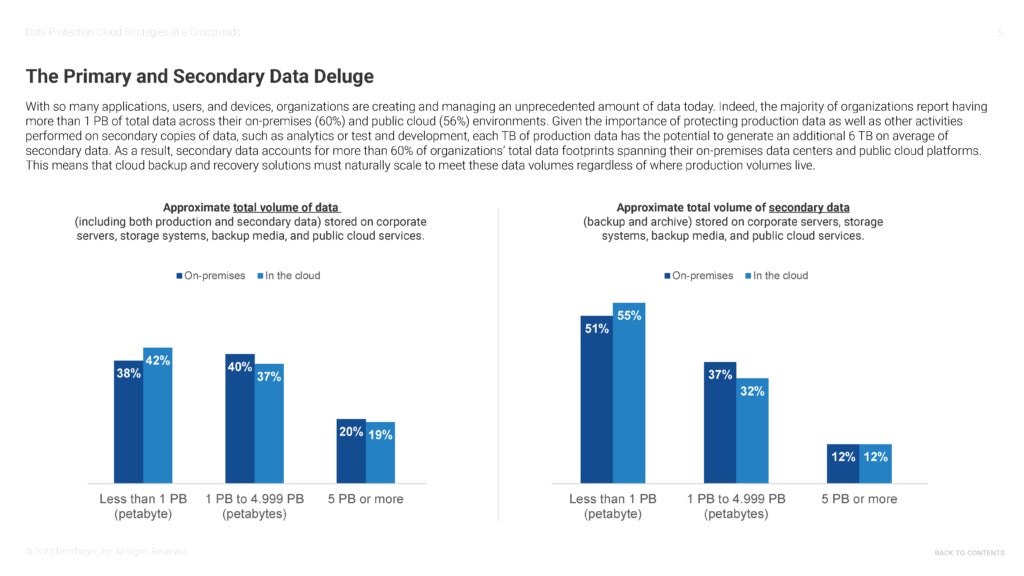
Data resilience in the cloud can be fuzzy, and organizations at different stages of cloud maturity and use-cases approach resilience differently. To help cloud adopters evaluate where they stand compared to their peers when it comes to cloud data protection, Clumio recently worked with Enterprise Strategy Group (ESG) on their research report titled Data Protection Cloud Strategies at a Crossroads. Here are a few key takeaways to get you started:

Sekundärdaten stehen mengenmäßig an erster Stelle

In den meisten Cloud-Umgebungen gibt es mehr Sekundärdaten als Primärdaten! Um genau zu sein, etwa 61 % mehr.

Source: Enterprise Strategy Group, a division of TechTarget, Inc. Research eBook, Data Protection Cloud Strategies at a Crossroads, May 2023

Den Umfrageteilnehmern zufolge beläuft sich der geschätzte Durchschnittswert der Sekundärdaten in der Cloud auf 2,9 PB bei einem geschätzten Durchschnittswert der gesamten Cloud-Daten von 4,7 PB, was bedeutet, dass die Primärdaten nur etwa 1,8 PB ausmachen würden!

This indicates that for enterprises looking to optimize cloud data costs, secondary data is the place to start. You might find orphaned snapshots, unused replicas, or excess versions. It’s also a good idea to take a look at your backup spend. Could you be more efficient with it? Wir haben ein paar Ideen für Sie. 😉

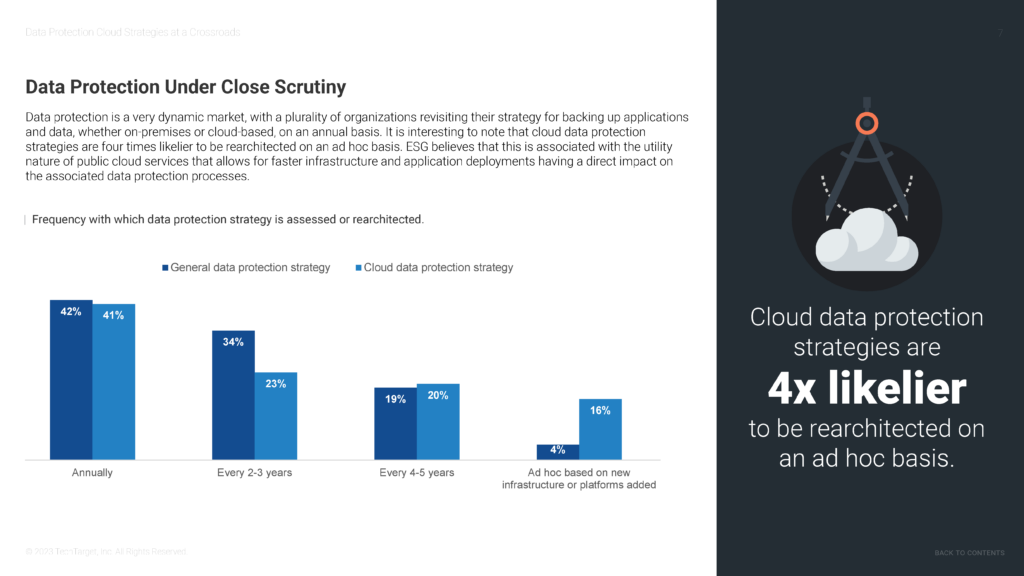
ABA (Immer bewerten)

If you feel like your company reassesses its data protection strategy frequently, you’re in good company.

Source: Enterprise Strategy Group, a division of TechTarget, Inc. Research eBook, Data Protection Cloud Strategies at a Crossroads, May 2023

41% of survey respondents stated they reassess or rearchitect their cloud data protection strategy annually, and 16% said they do so on an ad hoc basis. Organizations were 4 times more likely to reassess or rearchitect cloud data protection strategies on an ad-hoc basis than on-premises. Not so surprising, when you consider the rapid scalability and constant innovation of the cloud.

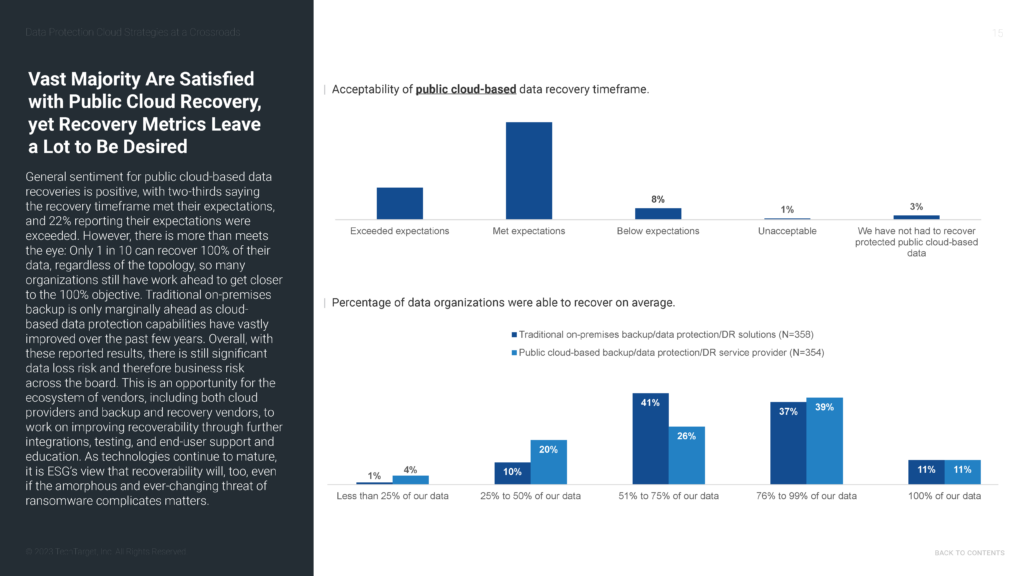
Können Sie alle Ihre Daten wiederherstellen?

Here’s a surprising insight: Only 11% of respondents indicated that when recovering data, they had been able to recover 100% on average.

Source: Enterprise Strategy Group, a division of TechTarget, Inc. Research eBook, Data Protection Cloud Strategies at a Crossroads, May 2023

The takeaway: If you haven’t tested your data recovery lately, you should! Make sure you’re 100% ready to recover 100% of your data.


More related posts


Thumbnail_Blog-Architect-for-tomorrow-2026

Architect for Tomorrow: Unified Data Protection as the Foundation for Resilience

Read more about Architect for Tomorrow: Unified Data Protection as the Foundation for Resilience
Thumbnail_Blog-Dangerous-Silos-IDC-Resops-2026 (1)

The Importance of Recovery Point Objective (RPO) in Your Business Continuity Plan

Read more about The Importance of Recovery Point Objective (RPO) in Your Business Continuity Plan
Thumbnail_Blog-IDC-Resops-2026

Business Continuity Planning for the Cloud-Native Era

Read more about Business Continuity Planning for the Cloud-Native Era

Last month, we closed out our International Women’s Day and Women’s History Month celebration with a Courageous Conversation about working parents, the struggles of fertility, and pregnancy loss. Today marks the start of National Infertility Awareness week here in the U.S., so I wanted to share more about our recent event and how we’re supporting the women of Commvault, as well as our working partners, as they navigate these challenges.

Our Courageous Conversations are global, virtual events that are a core component of our DE&I strategy. They allow us to connect, support, and inspire each other by having open discussions about topics that are close to our hearts.  As our Chief People Officer Martha Delehanty always says, “you need to have the conversation, to change the conversation.”

Im Rahmen der Veranstaltung berichteten unsere „Vaulters“ Lisa McGahran, Stephanie Joyce und Elliot Hujarski von ihren persönlichen Erfahrungen mit Fruchtbarkeit und Fehlgeburten. Außerdem war die GastrednerinStacey Skrysak join us to share her own story and how she’s helping others by being a voice for premature birth, child loss, and infertility. This Courageous Conversation was so powerful and important for our Vaulter community – our speakers courageously opened their hearts to share their stories with us as we talked about how grief and hope can co-exist.


Unfruchtbarkeit und Fehlgeburten sind leider sehr reale Probleme, mit denen viele berufstätige Frauen (und auch ihre Partner) heute zu kämpfen haben, während sie ihre Karriere vorantreiben. Bei Commvault bekräftigen wir weiterhin unser Engagement und unsere Unterstützung nicht nur für unsere berufstätigen Eltern, sondern auch für diejenigen, die sich ein Kind wünschen.

The power of hope, positivity, and support is what guides us all each day. We’re proud to support the wellness of our Vaulters and give them the resources they need throughout their journeys.  

More related posts


Thumbnail_Blog-Architect-for-tomorrow-2026

Architect for Tomorrow: Unified Data Protection as the Foundation for Resilience

Read more about Architect for Tomorrow: Unified Data Protection as the Foundation for Resilience
Thumbnail_Blog-Dangerous-Silos-IDC-Resops-2026 (1)

The Importance of Recovery Point Objective (RPO) in Your Business Continuity Plan

Read more about The Importance of Recovery Point Objective (RPO) in Your Business Continuity Plan
Thumbnail_Blog-IDC-Resops-2026

Business Continuity Planning for the Cloud-Native Era

Read more about Business Continuity Planning for the Cloud-Native Era

In der heutigen Welt sind Daten Ihr wertvollstes Kapital, und Unternehmen erfassen, verarbeiten und speichern ständig riesige Datenmengen. Kubernetes ist ein Tool zur Container-Orchestrierung, das für die skalierbare und innovative Verwaltung und Bereitstellung von Anwendungen immer beliebter wird. In einer kürzlich durchgeführten Umfrage haben wir erfahren, dass mehr als 75 % der Unternehmen Container einsetzen. Unternehmen, die Container und Kubernetes einführen, müssen jedoch Aspekte des Datenschutzes und der Sicherheit berücksichtigen.

In diesem Blogbeitrag werden wir uns mit den verschiedenen Herausforderungen befassen, denen Unternehmen beim Schutz ihrer Daten in ihrer Kubernetes-Umgebung gegenüberstehen. Darüber hinaus werden wir uns eingehend mit Tools und Techniken befassen, mit denen Sie den Datenschutz für Ihre gesamte Kubernetes-Umgebung gewährleisten können.

Kubernetes is no longer something that is coming or on the roadmap – it’s here. In fact, among those organizations that have adopted containers, nearly all (94%) use Kubernetes, and most (86%) even find it critical to their operations. This doesn’t come as a surprise since we also learned that Kubernetes is helping drive effective cloud migration and flexibility, container orchestration, and workload mobility. Organizations also see improved scalability, availability, and DevOps processes when implementing Kubernetes.

Now that we know organizations truly embrace Kubernetes and will continue to use it more moving forward let’s look at what they primarily use it for. On average, over half of an organization’s data (59%) is orchestrated with Kubernetes, and nearly all organizations (94%) plan to utilize Kubernetes more in the next five years to protect their data. However, most organizations (89%) also expect to do more work to protect their data in Kubernetes in the next five years.

Assessing your Kubernetes protection needs

As with any change or disruption, organizations face issues with identifying vulnerabilities and fully understanding their systems and needs when using Kubernetes. When moving to cloud-native applications, customers must be aware that backups and data protection are not always guaranteed. Most cloud service providers follow the Shared Responsibility Model, where they are responsible for securing their service infrastructure, and customers are responsible for securing their data and applications within the cloud environment. About half of organizations currently face challenges with identifying vulnerabilities (52%), assessing backups (49%), scaling based on the scope of operations (49%), and understanding system complexity (48%).

The survey also revealed the top features for organizations when implementing Kubernetes.  Two-thirds of organizations (64%) believe ensuring data security is important in a full data protection system for Kubernetes. Additionally, flexible levels of recovery (56%) and ransomware protection (52%) are important features to more than half of organizations. Additionally, nearly all organizations (95%) find it important that they can back-up data in Kubernetes.

Was bedeutet das nun für die Zukunft von Kubernetes und dafür, dass Sie über eine robuste Datensicherungsstrategie für Ihre neuen zustandsbehafteten K8s-Anwendungen verfügen? Sie müssen in der Lage sein, alle Herausforderungen zu meistern, denen Sie heute und in Zukunft gegenüberstehen, wie zum Beispiel:

  • Bedienungsfehler
  • Hardware- und Softwareausfälle
  • Gezielte Ransomware-/Malware-Angriffe

Commvault and Kubernetes – protect K8s containers without getting boxed in

Commvault provides K8s-native protection for your stateful (and stateless) K8s applications in a convenient SaaS-based backup and recovery solution. Safeguarding K8s applications includes protecting all configuration data (pods, manifests, secrets, CRDs) and the persistent application data (persistent volumes, persistent volume claims). Protection of K8s configuration and data allows granular recovery of application configuration, persistent data, or the entire application to the original or a new cluster. Recovery to on-premises or cloud locations provides your business with application mobility and the agility to adopt the K8s distribution and operational model that works for your developers. Full data protection of your Kubernetes cluster means recovery of any/all applications can be ensured in a data loss event. And with Commvault, you won’t get boxed into using a single-purpose tool. Our K8s protection is part of Commvault’s strategy to secure, defend, and recover all data distributed across the hybrid cloud. Here’s how GigaOm describes this in its recent Kubernetes Data Protection Radar Report:

Commvault Backup & Recovery is a backup solution that supports more than Kubernetes workloads, making it suitable for hybrid applications that run across Kubernetes, VMs, and cloud services, consolidating backup operations on a single platform.”

–  GigaOm, January 26, 2023

Read about Commvault’s leadership in Kubernetes data protection https://www.commvault.com/analyst-reports#gigaom.

Source: Hanover Research, Kubernetes Attributes and Usage, February 2023

More related posts


Thumbnail_Blog-Architect-for-tomorrow-2026

Architect for Tomorrow: Unified Data Protection as the Foundation for Resilience

Read more about Architect for Tomorrow: Unified Data Protection as the Foundation for Resilience
Thumbnail_Blog-Dangerous-Silos-IDC-Resops-2026 (1)

The Importance of Recovery Point Objective (RPO) in Your Business Continuity Plan

Read more about The Importance of Recovery Point Objective (RPO) in Your Business Continuity Plan
Thumbnail_Blog-IDC-Resops-2026

Business Continuity Planning for the Cloud-Native Era

Read more about Business Continuity Planning for the Cloud-Native Era

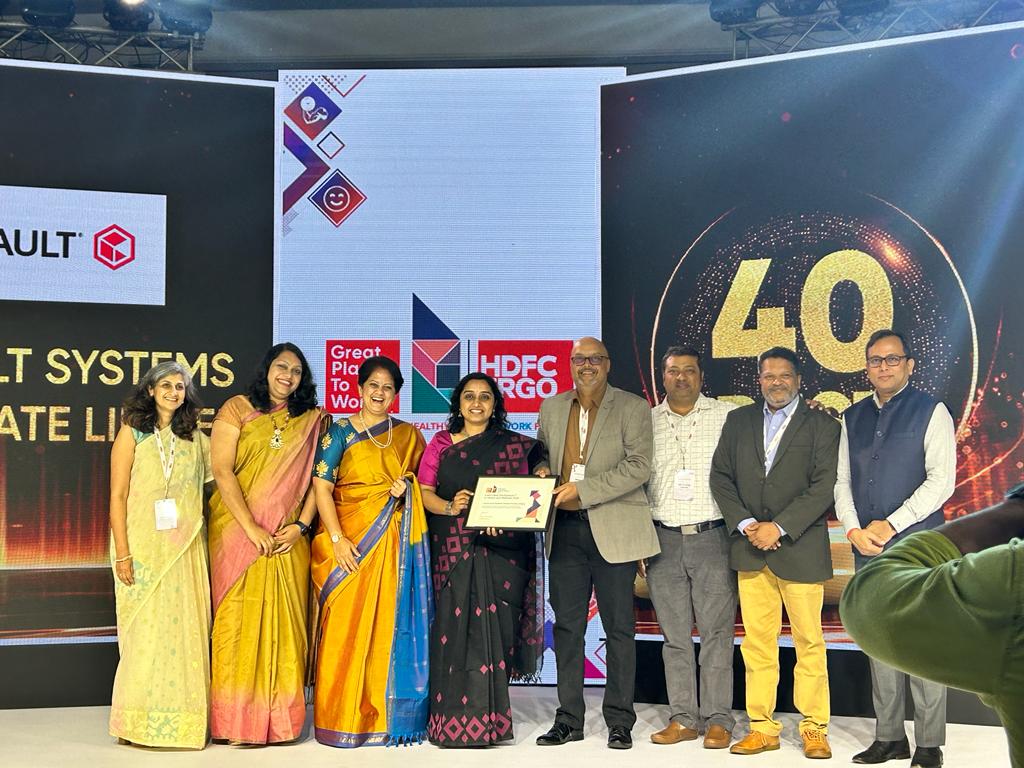
I’m excited to share that Commvault has been recognized by Great Place to Work® India for our culture of care and belonging.

Wir wurden als einer derIndia’s Best Workplaces in Health & Wellness 2022ausgezeichnet. Diese Auszeichnung basiert auf einer umfassenden und strengen Bewertung, bei der Unternehmen ermittelt werden, die sich durch besonders gut konzipierte Maßnahmen zur Förderung des Wohlbefindens am Arbeitsplatz auszeichnen.

We’ve also been Accredited for Inclusive Practices™, a Diversity, Equity & Inclusion initiative by Great Place to Work Institute India. This assessment identifies organizations that have internal and external practices to promote equal and equitable participation of historically excluded communities (women, other gender identities, LGBTIQA+, persons with disabilities, veterans, individuals returning from a career break, and other under-represented minorities in the country) in the workplace.


I’m so proud our organization has achieved this recognition. Here at Commvault, we continue to prioritize our culture of holistic wellbeing and DE&I as we support each other and show how we care.

When it comes to health and wellness, we believe the total wellness of each of our employees builds a better company and a better world. Having a healthy work-life balance is crucial and creating a culture of balance and flexibility is greatly important to us. And we know that in order to deliver for our customers and partners, we must deliver for ourselves first… which means caring for ourselves! We also continue to honor and celebrate our diverse Vaulter community and cultivate an environment of respect and belonging. Listening to the experiences and perspectives of others and learning how to better support one another empowers us to create a more equitable future together. 

Herzlichen Glückwunsch an unser Team in Indien!

More related posts


Thumbnail_Blog-Architect-for-tomorrow-2026

Architect for Tomorrow: Unified Data Protection as the Foundation for Resilience

Read more about Architect for Tomorrow: Unified Data Protection as the Foundation for Resilience
Thumbnail_Blog-Dangerous-Silos-IDC-Resops-2026 (1)

The Importance of Recovery Point Objective (RPO) in Your Business Continuity Plan

Read more about The Importance of Recovery Point Objective (RPO) in Your Business Continuity Plan
Thumbnail_Blog-IDC-Resops-2026

Business Continuity Planning for the Cloud-Native Era

Read more about Business Continuity Planning for the Cloud-Native Era

Transformative, channel-friendly, and cutting-edge are just a few of the adjectives the editors over at CRN used to describe the companies they’ve chosen as the cream of the crop – the „CRN Storage 100“-Liste 2023 – an honor that recognizes industry-leading storage vendors that deliver the best channel-friendly products and services the industry has to offer.  

According to the publication, the companies they chose for this year’s Storage 100 list have been selected by CRN editors for their “perseverance in pushing the boundaries of innovation through cutting-edge technology and strategic partnerships.” 

It’s definitely a difficult landscape to navigate, with too many vendors to count. Luckily, the Storage 100 list is a valuable resource for solution providers looking for vendors that can support them in a complex storage market with industry-leading portfolios in areas such as data protection, management and resilience; software-defined storage, and storage components.  

CRN emphasized that this year’s list also represents the industry leaders of storage technology that can be used for on-premises or cloud deployments. This is a critical point. Resiliency is key in a world where vendors and partners are trying to help customers keep their data safe, unharmed, and always-on across cloud, on-prem, and SaaS workloads…enter Commvault.  

Wir wurden in derKategorie „Datenschutz, Management und Ausfallsicherheit“, we offer a simple and unified Data Protection Platform that spans the complete enterprise data estate, regardless of where that data lives. Whether it’s software-defined distributed storage such as containers, a storage appliance like Commvault Grid, or cloud storage in the form of Metallic Recovery Reserve™, Commvault helps customers accelerate their digital transformation journey with unmatched scalability, security, and resiliency.  

Blaine Raddon, CEO of The Channel Company shared his sentiments about this year’s program, stating, “CRN’s 2023 Storage 100 list recognizes the leading vendors that are delivering transformative advancements in storage technology and bringing modern solutions to customers and solution providers that are built for the future. We are honored to recognize their contributions as the leading players in storage technology for 2023.” 

Like CRN, we are also honored; honored to be celebrated for our industry-leading data protection, honored to be highlighted as a recommended choice for solution providers, and honored to continuously be innovating. 

Die „CRN Storage 100“-Liste wird in der Aprilausgabe 2023 des CRN-Magazins sowie online unterwww.crn.com/storage100.  

More related posts


Thumbnail_Blog-Architect-for-tomorrow-2026

Architect for Tomorrow: Unified Data Protection as the Foundation for Resilience

Read more about Architect for Tomorrow: Unified Data Protection as the Foundation for Resilience
Thumbnail_Blog-Dangerous-Silos-IDC-Resops-2026 (1)

The Importance of Recovery Point Objective (RPO) in Your Business Continuity Plan

Read more about The Importance of Recovery Point Objective (RPO) in Your Business Continuity Plan
Thumbnail_Blog-IDC-Resops-2026

Business Continuity Planning for the Cloud-Native Era

Read more about Business Continuity Planning for the Cloud-Native Era

Spring is a time of renewal and rejuvenation – when we can finally shed the weight of winter and start anew. As flowers bloom and trees bud, it’s the perfect time to reassess and enhance your data protection and recovery plans.

Genau wie beim Anlegen eines Gartens ist es wichtig, sich einen Überblick darüber zu verschaffen, was man hat und was man braucht. So wie man eine Blume nicht in ungeeigneten Boden oder ohne ausreichende Bewässerung pflanzen würde, sollte man seine Daten auch nicht mit den falschen Werkzeugen oder ohne Plan schützen. Wie das Sprichwort sagt: „Wer nicht plant, plant sein Scheitern.“ Das gilt insbesondere für den Schutz der Daten Ihres Unternehmens.

Die Folgen eines Datenlecks oder Datenverlusts können katastrophal sein und reichen von Umsatz- und Produktivitätsverlusten bis hin zu Reputationsschäden und rechtlichen Konsequenzen. Um die Auswirkungen solcher Vorfälle zu minimieren, ist eine umfassende Readiness erforderlich, die auf potenzielle Ausfälle vorbereitet und darauf reagiert.

Für die Recovery-Readiness gerüstet zu sein bedeutet, das Selbstvertrauen und die Fähigkeit zu besitzen, alle Daten in Ihrer gesamten Umgebung schnell wiederherzustellen.

Routine maintenance is key

Einer der wichtigsten Aspekte eines erfolgreichen Gartens ist die regelmäßige Pflege. Das Gleiche gilt für den Datenschutz. Man kann ihn nicht einfach einmal einrichten und dann vergessen. Durch regelmäßige Überprüfung und Aktualisierung Ihrer Pläne stellen Sie sicher, dass diese wirksam bleiben und weiterhin Ihren geschäftlichen Anforderungen entsprechen. Angesichts der zunehmenden Häufigkeit und Raffinesse von Ransomware-Angriffen ist es wichtiger denn je, regelmäßige Bewertungen Ihrer Infrastruktur und Ihres Readiness-Plans durchzuführen.

Glücklicherweise kann eine umfassende Datensicherungslösung, die von Experten unterstützt wird, entscheidend dazu beitragen, das Risiko von Ransomware zu verringern und eine schnelle Recovery-Phase nach einem Angriff zu gewährleisten. MitCommvault® Professional Services.

Darüber hinaus ist eine Datenschutzlösung mit einem robusten Funktionsumfang, der kontinuierlich aktualisiert und erweitert wird, für Ihre Überprüfungsmaßnahmen von entscheidender Bedeutung. Durch die Einführung eines regelmäßigen Wartungsplans zur Verwaltung Ihrer Datenschutzumgebung können Sie wertvolle Funktionen integrieren und aktualisieren. Besuchen Sie unsereWhat’s New Pagezu Plattform-Releases, um sich über unsere neuesten Features und Verbesserungen zu informieren.

Be ready for anything

Halten Sie sich stets bereit, damit Sie auf jeden Vorfall reagieren können, der Ihre Daten gefährdet. Ganz gleich, ob Ihr Unternehmen mehr Unterstützung bei der Erstellung und Pflege Ihres Plans zur Vorbereitung auf die Recovery nach einem Ransomware-Angriff oder bei der Recovery nach einem Angriff benötigt – mitden Commvault Readiness Solutionswählen Sie das Serviceniveau, das Ihren geschäftlichen Anforderungen am besten entspricht. Das Serviceangebot umfasst:

Ready helps you align Commvault’s technical capabilities with your recovery objectives.

Steady assists you in monitoring and maintaining a state of recovery readiness.

Respond helps accelerate your return to normal business operations in the event of an outage or disaster.

Harvest data protection success

So wie ein gepflegter Garten Freude bereiten kann, kann ein solider Datenschutz- und Recovery-Plan für Seelenfrieden sorgen. Nutzen Sie also den Frühling, um den Grundstein für einen soliden Datenschutz- und Recovery-Plan zu legen, und beobachten Sie, wie dieser in den kommenden Monaten wächst und gedeiht.

Sprechen Siemit einem unserer Mitarbeiter, um zu erfahren, wie Commvault Sie bei der Erstellung Ihres Ransomware-Notfallplans unterstützen kann.

More related posts


Thumbnail_Blog-Architect-for-tomorrow-2026

Architect for Tomorrow: Unified Data Protection as the Foundation for Resilience

Read more about Architect for Tomorrow: Unified Data Protection as the Foundation for Resilience
Thumbnail_Blog-Dangerous-Silos-IDC-Resops-2026 (1)

The Importance of Recovery Point Objective (RPO) in Your Business Continuity Plan

Read more about The Importance of Recovery Point Objective (RPO) in Your Business Continuity Plan
Thumbnail_Blog-IDC-Resops-2026

Business Continuity Planning for the Cloud-Native Era

Read more about Business Continuity Planning for the Cloud-Native Era

Wir wissen, dass Datenschutz eine ernste Angelegenheit sein kann, aber wir möchten dem Ganzen anlässlich des World Backup Day eine spielerische Note verleihen! Bist du bereit, zu überprüfen, wie du deine sensiblen Daten schützt, und kritische Fragen zu den von dir verwendeten Produkten zu stellen?

Wir bei Commvault wissen, wie wichtig Datenschutz ist, und möchten Ihnen die Antworten geben, die Sie verdienen. Begleiten Sie uns auf einer Reise, auf der wir sechs der am häufigsten gestellten Fragen zum Thema Datenschutz behandeln, und wir zeigen Ihnen, wie Sie Ihr Unternehmen schützen können.

https://play.vidyard.com/AMTPw7ny3Ahn5Ju3rCTFEr

Datenschutzverletzungen und Verstöße gegen den Datenschutz können für Unternehmen zu einem echten Problem werden. Sie können nicht nur rechtliche und finanzielle Folgen nach sich ziehen, sondern auch Ihrem Ruf und dem Vertrauen Ihrer Kunden schaden. Deshalb ist es entscheidend, in Bezug auf Ihre Datenschutzstrategien gut informiert und wachsam zu sein.

Es ist an der Zeit, beim Thema Datenschutz Fakten von Fiktion zu trennen. Fallen Sie nicht auf diese ausgefallenen Marketingversprechen herein, ohne sich vorher gründlich zu informieren. Halten diese Unternehmen mit dem Tempo Ihres Datenwachstums Schritt? Helfen sie Ihnen dabei, Ihr IT-Budget optimal zu nutzen? Verkaufen sie Ihnen ein Produkt, obwohl Sie eigentlich eine Plattform benötigen? Das sind die Fragen, die Sie stellen müssen!

Arbeiten Sie mit einem vertrauenswürdigen Anbieter von Datenschutzlösungen wie Commvault zusammen, um sicherzustellen, dass Ihre sensiblen Daten stets sicher und geschützt sind. Kontaktieren Sie uns noch heute, um mehr über unsere Datenschutzlösungen zu erfahren, und lassen Sie uns Ihnen dabei helfen, Ihr Unternehmen und die Daten Ihrer Kunden zu schützen.

Denken Sie daran: Datenschutz muss nicht langweilig sein. Mit der richtigen Einstellung und ein bisschen Spaß bleiben Sie auf dem Laufenden und schützen sich, während Sie gleichzeitig dafür sorgen, dass Ihr Unternehmen floriert!

Follow Commvault on Social Media for more insights on #WorldBackupDay!

More related posts


Thumbnail_Blog-Architect-for-tomorrow-2026

Architect for Tomorrow: Unified Data Protection as the Foundation for Resilience

Read more about Architect for Tomorrow: Unified Data Protection as the Foundation for Resilience
Thumbnail_Blog-Dangerous-Silos-IDC-Resops-2026 (1)

The Importance of Recovery Point Objective (RPO) in Your Business Continuity Plan

Read more about The Importance of Recovery Point Objective (RPO) in Your Business Continuity Plan
Thumbnail_Blog-IDC-Resops-2026

Business Continuity Planning for the Cloud-Native Era

Read more about Business Continuity Planning for the Cloud-Native Era

As Women’s History Month comes to an end, we’re continuing to celebrate women at Commvault all year round! As a working mom and proud co-leader of our Family Support Network Employee Affinity Group (EAG), I wanted to share my experience in hopes to empower working moms (and dads!) everywhere.

I began my career in Human Resources (HR) over 25 years ago, and have been at Commvault for the past 11 years. I was always a people-centric person, and being in HR allowed me to celebrate the human side of the business and focus on the people, a company’s most important asset. Building strong connections and empowering people to thrive and grow is what has inspired me throughout my career.

Having empathy has always been an integral part of my role as an HR leader, but my level of empathy completely evolved once I became a mom. I am blessed to have two beautiful sons in my life – Jake, 8, and Ryan, 6 – but my journey wasn’t without challenges. In 2016, I found out I was pregnant with identical twin boys. After my initial shock that I was going to be 42 years old with three children under the age of two – I was overjoyed! After some complications 24 weeks into my pregnancy, I ended up delivering Ryan and Max prematurely. The next day, Max passed peacefully in my husband’s arms. I was completely numb after this tragedy, yet still had a critical newborn baby in the hospital and a 19-month-old at home whom I had to stay positive (and thankful) for. 129 days and three surgeries later, Ryan was released from the hospital, a day after his original due date. He’s a happy and healthy boy today.

As a mom, you change after you have kids. And after losing a child, I changed even more. It made me realize that you never know someone’s full story – which is why always leading with empathy and care is crucial to building relationships and creating a positive, supportive work environment. That’s why I’m so passionate about not only what I do in HR, but also my involvement with our Family Support Network EAG. This is a support group for working parents and caretakers in all facets of family life – from being a new parent to dealing with toddlers, tweens, teens, and aging parents.  

In the spirit of celebrating working moms (and all working parents!) I wanted to share some tips and tricks I’ve learned from my fellow Vaulters that have helped me become a better working parent:

  • Learn how to unplug from work. Disconnecting is harder said than done, however, we all have to unplug at some point or else we’ll burn out. Remember – taking time to reset is crucial in helping us come back to work the next day refreshed and recharged. I turn off my phone at night after a certain time to help disconnect from work.
  • Talk to your kids about your job. Working and living at home is the reality for many of us in this new hybrid work world. Young children often don’t understand why mom is home but can’t spend time with them during certain hours. Explaining what your job is to your kids can help them better understand you and the concept of this new way of remote working.
  • Embrace planning. Whenever I have a busy week coming up, I create a schedule and plan ahead to make things less stressful. A big thing for me – planning dinners. This allows me to avoid wasting time figuring out what we’re going to eat after a hectic day and gives me more quality time with my kids.
  • Remember that feeling guilty is normal. Finding a balance between being a parent and working is always going to be a challenge. We’ll likely always have moments when work gets in the way and we feel guilty about having to miss time with our kids. Or on the flip side, we may feel guilty stepping away from work to do something with our kids. Find a routine that works best for you and remember to not be so hard on yourself!

Trial and error is the key to success in many aspects of our lives, especially with parenting. I can tell you firsthand that life throws many obstacles at us, and at the end of the day, it’s important to realize that we are all human. Celebrating and supporting each other as parents and caretakers is what helps us stay grounded and inspired, so let’s continue to embrace the power of empathy! When we open our minds and hearts to better understand each other, it not only makes us better professionally but personally too. I’m so thankful to my global Vaulter community and our Family Support Network for allowing me to share my story and learn from others every day.

To learn more about Commvault’s culture of caring, klicken Sie hier.

More related posts


Thumbnail_Blog-Architect-for-tomorrow-2026

Architect for Tomorrow: Unified Data Protection as the Foundation for Resilience

Read more about Architect for Tomorrow: Unified Data Protection as the Foundation for Resilience
Thumbnail_Blog-Dangerous-Silos-IDC-Resops-2026 (1)

The Importance of Recovery Point Objective (RPO) in Your Business Continuity Plan

Read more about The Importance of Recovery Point Objective (RPO) in Your Business Continuity Plan
Thumbnail_Blog-IDC-Resops-2026

Business Continuity Planning for the Cloud-Native Era

Read more about Business Continuity Planning for the Cloud-Native Era

Datenschutz ist eine Teamleistung. Wir sind stolz auf unsercommunityaus Allianz- und Technologiepartnern, und es steht außer Frage, dass die Zusammenarbeit bei der Bereitstellung stärker integrierter und effektiverer Lösungen einen Mehrwert für unsere Kunden schafft.

But one thing we don’t do (unlike some we could name….) and that is to partner to fill and hide gaps and then position it as a benefit to customers.

There’s no integration, no added value, just PR and additional complexity… And it’s the customer who suffers.

What does that mean for the customer?

Let’s be honest, most vendors in the backup market are good at a limited or select set of things:  Good at VM backup, good at big backup appliances, good at protecting Salesforce, good at protecting M365, or Oracle or Kubernetes, but rarely are they good at LOTS of things…which leaves them with gaps in their solution capabilities, a few bricks shy of a load, lacking cohesion, or just plain green with envy – take your pick on the saying that applies.

This problem really rears itself when customers find themselves and their business has evolved to need new data protection capabilities such as protection of Azure Active Directory, Oracle Cloud, or more proactive data security. 

Not every vendor has the vision to anticipate these innovations and changing business needs and incorporate them into their solutions, meaning they’ll be left trying to catch up or be left behind.  This forces, the vendor to look in the mirror at their own technology stack (or tech debt) and realize the change is too big or will take too long for them to deliver it on their own, and in that case they have to either give up on addressing that need or go in search of someone they can buy or partner with to bolt-on that functionality.  

Despite the marketecture, at the end of the day you are left with two or more completely different solutions, with little to no integrations between them, supported by multiple account teams, and ultimately get more of what you don’t want in your environment:  Cost, complexity, friction, and risk. 

Now you’re faced with more questions:

  • Wen soll man überhaupt anrufen, wenn etwas kaputtgeht?
  • Wie soll man konsolidieren oder automatisieren, wenn man ständig neue Teile zum Puzzle hinzufügt?
Das macht Mando wirklich wütend!

So what is “THE WAY”?

We can agree that more products = more cost = more complexity = more risk, right?

Well, fixing that is something pretty obvious – and much simpler:  Tackle data protection with a single unified solution.  Multicloud, on-prem, SaaS, hybrid — One solution to rule your data! 

[Commvault enters the chat]

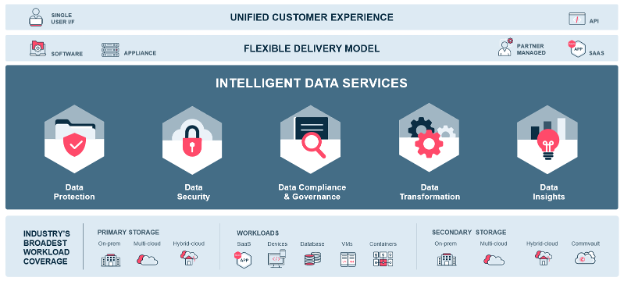
Rather than rely on others to do the work for us, we’ve built the Commvault platform from the ground up, which has allowed us to easily grow the solution to meet new challenges and demands such as data governance, transformation, and multi/hybrid cloud evolutions in customer environments.   

We’ve been listening to our customers and anticipating their needs for a long time. 

Just to name off a few examples:

Als unsere Kunden eine Deduplizierung benötigten, um ihre Speicherkosten zu senken, haben wir
it right into the software. In fact, we were the first to deliver embedded software
eine integrierte Software-Deduplizierung angeboten haben, ohne dass teure proprietäre Appliances erforderlich waren.
Da wir das zukünftige Potenzial von Containern vorausgesehen haben, haben wir bereits 2017 Schutzmaßnahmen
für containerisierte Workloads integriert.
Understanding the shift to SaaS, we built Metallic – the first (and still only) fully
verwalteten SaaS-Backup-Dienst für den Datenschutz in Multi-Cloud-Umgebungen, bei SaaS, Endgeräten und
data protection. Operating as a unified platform, Metallic and Commvault provide
Flexibilität und einen Mehrwert, sodass sie die für ihre Umgebung am besten geeignete Lösung auswählen
und diese bei steigenden Anforderungen erweitern können.
Da wir erkannt haben, dass angesichts wachsender Bedrohungen ein erhöhter Datensicherheitsbedarf besteht, haben wir eine
Ransomware-Erkennung in die Plattform integriert.
Einige Jahre später brachten wir „Metallic Recovery Reserve“ auf den Markt, die erste spezielle Air-Gap-Lösung für die
cloud air-gap solution in the data protection market.  Every one of our competitors
zogen alle unsere Wettbewerber nach.

Eigentümer des Codes

OWNING the code also makes it easy for us to pivot and expand the services of the platform to encompass new workloads such as cloud, DBaaS, SaaS and allows us to leverage the latest infrastructure innovations like object storage, containers, and cloud compute/storage technologies (e.g.: AWS Graviton) to efficiently deliver those services how you need to consume them.   

This unified approach also enables a higher degree of automation across the environment and provides greater observability to potential risks and threats to the data.  Automate. Secure. Respond.  These all get easier when you can consolidate and reduce the friction by reducing the tools and touch points needed to manage your diversifying data landscape.

So, if your environment was all virtual and physical systems yesterday – Commvault has you covered.  And you added cloud and M365 into it today – Commvault has you covered.  And then when you need to add containers, new cloud-native apps, and more in tomorrow, guess what?  Commvault still has you covered.  No need to reinvent the wheel or bolt on more point products to cover the changes in YOUR data needs – you can trust Commvault to provide that consistent data protection across whatever your data is and wherever it lives.

Zusammenfassend lässt sich sagen

QUESTION IT – When you’re digging into HOW a vendor or vendor(s) are actually going to deliver their solution and meet your business needs, to see if it’s all just more talk or if it can really do everything it says it can. 

Ask yourself: Should you really be using a data protection provider that can’t protect your SaaS data?”

More related posts


Thumbnail_Blog-Architect-for-tomorrow-2026

Architect for Tomorrow: Unified Data Protection as the Foundation for Resilience

Read more about Architect for Tomorrow: Unified Data Protection as the Foundation for Resilience
Thumbnail_Blog-Dangerous-Silos-IDC-Resops-2026 (1)

The Importance of Recovery Point Objective (RPO) in Your Business Continuity Plan

Read more about The Importance of Recovery Point Objective (RPO) in Your Business Continuity Plan
Thumbnail_Blog-IDC-Resops-2026

Business Continuity Planning for the Cloud-Native Era

Read more about Business Continuity Planning for the Cloud-Native Era

March is a month for us to celebrate women, as we honor both Women’s History Month and International Women’s Day.

As a Vaulter and member of our Women in Technology Employee Resource Group (ERG), I recently had the great honor and privilege to lead a group of students at San Diego City College for the „City Women Rock“ Conference to celebrate International Women’s Day on March 8th. The conference is designed to ignite, inspire, empower, and uplift students – many of whom face significant adversity, such as overcoming challenges of poverty, domestic and gang-related violence, and personal hardships. During the conference, our local community came together to share stories of triumph, reflecting on the many achievements of women throughout history and providing a blueprint for not only achieving goals, but lifting up others along the way. „City Women Rock“konzentriert sich auf die folgenden Schlüsselstrategien, um Frauen zu befähigen, ihre Ziele zu erreichen:

  • Dankbarkeitsübung
  • Tagebuch schreiben
  • Selbstfürsorge in den Vordergrund stellen
  • Deine Träume in Worte fassen
  • Ziele setzen
  • Positive affirmations 
  • Asking for help 
  • Transforming fear into fuel 
  • Overcoming self-limiting beliefs 

Diese Strategien sprechen mich wirklich an, und es war mir eine Ehre, auf der Konferenz zu sprechen, um mehr darüber und über meine persönliche Geschichte zu erzählen, wie ich in meinen frühen Jugendjahren eine Essstörung, eine Sucht und ein geringes Selbstwertgefühl überwunden habe. Diese Herausforderungen führten mich letztendlich auf einen 15-jährigen Weg der Heilung, Transformation und des Wachstums. Ich kann mit Stolz sagen, dass ich am Ende dieses Weges mit unerschütterlicher Selbstliebe und innerem Selbstvertrauen herausgekommen bin. Durch die Umsetzung positiver Veränderungen bin ich zu der Frau, Mutter, Tochter, Schwester, Freundin und Führungskraft geworden, die ich schon immer sein wollte.

I’m so thankful for my local community and the opportunities that organizations like City Women Rock provide to women to allow us to be our best selves. I’m also grateful for my Vaulter community and our Women in Technology ERG. This ERG brings together both women and allies to elevate and advance gender equality in technology and celebrate the inspiring women of Commvault who are driving our innovation and growth every day.

We all have personal stories to share of strength, stability and overcoming adversity. As we continue to celebrate women throughout March, let’s remember the importance of empowering ourselves and others to uplift, inspire and encourage each other to achieve GREATNESS.

To learn more about Commvault’s culture and ERGs, klicken Sie hier.

More related posts


Thumbnail_Blog-Architect-for-tomorrow-2026

Architect for Tomorrow: Unified Data Protection as the Foundation for Resilience

Read more about Architect for Tomorrow: Unified Data Protection as the Foundation for Resilience
Thumbnail_Blog-Dangerous-Silos-IDC-Resops-2026 (1)

The Importance of Recovery Point Objective (RPO) in Your Business Continuity Plan

Read more about The Importance of Recovery Point Objective (RPO) in Your Business Continuity Plan
Thumbnail_Blog-IDC-Resops-2026

Business Continuity Planning for the Cloud-Native Era

Read more about Business Continuity Planning for the Cloud-Native Era

Der Aufstieg des Cloud-Computing hat die Art und Weise, wie Unternehmen ihre Daten verwalten, revolutioniert und sich schnell zur bevorzugten Methode für die Speicherung und den Zugriff auf kritische Informationen entwickelt. Vor der Pandemie wuchs die Nutzung der Cloud für Datenbanken exponentiell, wobei immer mehr Unternehmen auf einzelne Cloud-Anbieter umstiegen. Nach der Pandemie nimmt die Nutzung von Cloud-Datenbanken weiter zu, doch da die Kunden immer versierter im Umgang mit der Cloud werden, setzen die meisten Unternehmen auf einen Multi-Cloud- und/oder Hybrid-Cloud-Ansatz, um für ihre Datenbank-Workloads das Beste aus beiden bzw. mehreren Welten zu nutzen.

Laut einem Bericht von Flexera nutzen 89 % aller Unternehmen Multi-Cloud-Lösungen, während 80 % der Unternehmen eine Hybrid-Cloud-Strategie mit einer oder mehreren Clouds verfolgen.

A hybrid or multi-cloud database strategy comes with its own challenges –

  • Complexity – Keeping track of multiple tools for multiple clouds and multiple database types.
  • Cost – Redundant costs increase as teams across an organization employ their own tools, sometimes doubling up on capabilities and infrastructure.
  • Security – Security teams must defend against new threats while managing cloud database services and tools that are different from one cloud provider to the next. Security becomes more challenging with an ever-growing attack surface.

Here is how Commvault helps mitigate these challenges for cloud database protection –

  • Management made simple
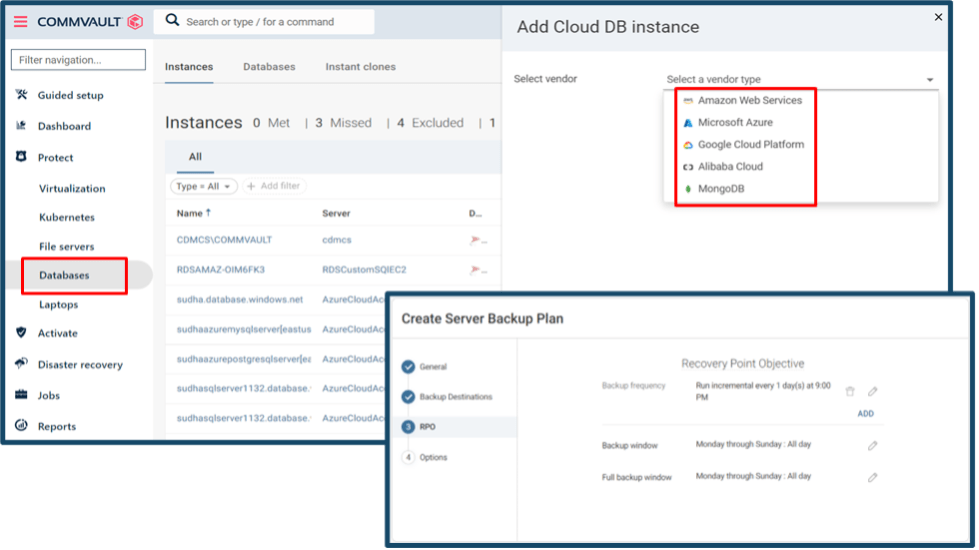
    Single UI and API-first support that gives simplified & unified control with cloud-native integration to automatically discover, protect and manage database copy lifecycle. Ability to define RPO policies that are uniform across hybrid cloud & multi-cloud with a blend of snap and backup. Ability to protect instances, complete regions, or multiple regions.
  • Broad workload, cloud, and multi-cloud portability support 
    Commvault bietet im Vergleich zu allen anderen derzeit auf dem Markt vertretenen Backup-Anbietern die umfassendste Unterstützung für Cloud-, Datenbank-Workloads und Multi-Cloud-Portabilität und erfüllt damit die Anforderungen der Kunden an den Datenschutz, unabhängig davon, in welcher Phase ihrer Multi-Cloud-Entwicklung sie sich befinden.
  • Cost Savings
    Die meisten Backup-Anbieter nutzen „Snap“ als Backup-Strategie für ihre Cloud-Datenbanken. Sie bieten eine „Snap“-Orchestrierung an, die zwar den Verwaltungsaufwand verringert, jedoch die Speicherkosten für „Snap“ nicht senkt. Commvault hingegen bietet seinen Kunden eine einzigartige Möglichkeit, „Snap“- und exportbasierte Backups zu kombinieren, was im Vergleich zu anderen Lösungen zu einer erheblichen Senkung der Kosten für den Schutz von Cloud-Datenbanken führt.
  • Security
    Secure access to the Commvault environment with RBAC-based control and multi-factor authentication. Ensure that backups are tamper-proof with encryption and air-gapped immutability. 

Zusammenfassend lässt sich sagen, dass Commvault die Verwaltung von Datenbanken vor Ort und über mehrere Clouds hinweg mithilfe einer einzigen Plattform ermöglicht. Wir arbeiten kontinuierlich an Innovationen und bringen neue Produkte und Lösungen für das sich ständig wandelnde Datenbank-Ökosystem auf den Markt, um einfache, umfassende, sichere und kosteneffiziente Funktionen für Datensicherung und Recovery dort bereitzustellen, wo Kunden diese am dringendsten benötigen.

To learn more:

References

1- Source: https://www.flexera.com/blog/cloud/cloud-computing-trends-2022-state-of-the-cloud-report/

More related posts


Thumbnail_Blog-Architect-for-tomorrow-2026

Architect for Tomorrow: Unified Data Protection as the Foundation for Resilience

Read more about Architect for Tomorrow: Unified Data Protection as the Foundation for Resilience
Thumbnail_Blog-Dangerous-Silos-IDC-Resops-2026 (1)

The Importance of Recovery Point Objective (RPO) in Your Business Continuity Plan

Read more about The Importance of Recovery Point Objective (RPO) in Your Business Continuity Plan
Thumbnail_Blog-IDC-Resops-2026

Business Continuity Planning for the Cloud-Native Era

Read more about Business Continuity Planning for the Cloud-Native Era

The Modern Cloud Era.

Das klingt so dramatisch und offiziell, fast wie eine Art Wachablösung, vergleichbar mit dem Übergang vom Jura zum Kreidezeitalter – aber was bedeutet das eigentlich?

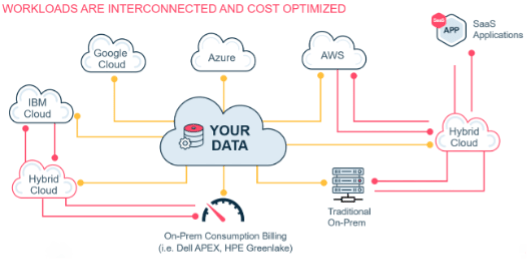
Das bedeutet, dass die Herausforderungen und Chancen, die sich aus der weit verbreiteten Nutzung der Cloud ergeben, zu einer Welt geführt haben, in der nicht mehr die „Dinosaurier“, sondern der Einsatz von Hybrid- und Multi-Cloud-Lösungen zum neuen Mainstream geworden ist. Nahezu jedes Unternehmen weltweit nutzt mindestens eine Art von Cloud, wobei viele formelle Diversifizierungsstrategien verfolgen, um die Vorteile von Hybrid- und Multi-Cloud-Ansätzen zu nutzen. Diese Diversifizierung kann jedoch zu Komplexität führen, die neue Herausforderungen in den Bereichen Kostenoptimierung und Risikominderung mit sich bringt.

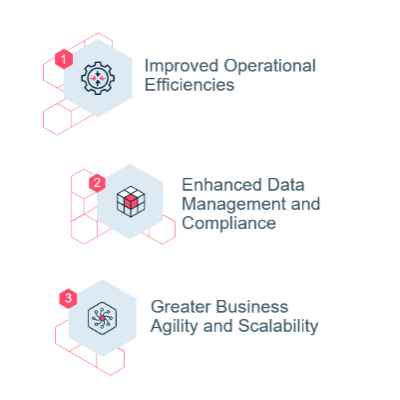
Im Zeitalter der modernen Cloud geht es darum, sich in der Welt der digitalen Transformation zurechtzufinden, in der jedes Unternehmen und jede Abteilung auf moderne Tools angewiesen ist, um ihre Aufgaben zu bewältigen. In dieser neuen Welt kann die Bedeutung einer zielgerichteten, plattformübergreifenden Strategie zur Organisation und zentralen Verwaltung von Daten und Workloads nicht hoch genug eingeschätzt werden – eine Strategie, die darauf abzielt, Geschäftsziele zu erreichen und gleichzeitig die Kosteneffizienz zu maximieren sowie Risiken zu minimieren. Bei korrekter Umsetzung können Hybrid- und Multi-Cloud-Strategien zu einer verbesserten betrieblichen Effizienz, einem optimierten Datenmanagement und besseren Compliance-Fähigkeiten sowie einer höheren geschäftlichen Skalierbarkeit führen. Bei falscher Umsetzung können sie jedoch künstliche Datensilos schaffen, den Bedarf an qualifizierten Arbeitskräften erhöhen und zusätzliche Arbeitsstunden für die Implementierung und den Support erfordern.


We recently had the privilege of having our Vice President of Solutions Engineering, Cesar Cid de Rivera and Sr. Director of Solutions Engineering, Vincenzo Costantino give a talk on how to best navigate the waters of this new, Modern Cloud Era. Together, Cesar and Vincenzo identified three primary benefits of successfully implementing a hybrid & multi-cloud strategy, as well as some tips in how to get there.

Some of the major benefits you can hope to expect are:

  • Verbesserte betriebliche Effizienz bei der Prozessabwicklung und der Arbeit Ihrer Mitarbeiter
  • Verbesserte Funktionen für Datenmanagement und Compliance
  • Achieving Greater Business Agility and Scalability 


1. Operational Efficiencies
Die Suche nach Mitarbeitern mit einem breiten Spektrum an Kompetenzen in verschiedenen nativen Cloud-Schnittstellen kann schwierig und kostspielig sein. Durch den Einsatz zentralisierter Plattformen, die eine einheitliche Verwaltung über alle Clouds und Workload-Typen hinweg ermöglichen, können Sie diese Hürde beseitigen und die Plattform die Hauptarbeit übernehmen lassen. Das Commvault Command Center ist ein Beispiel für eine Plattform, die mit nur wenigen Klicks eine native Verwaltung über verschiedene Cloud-Anbieter und Workload-Typen hinweg ermöglicht. Dies spart Zeit und Geld und reduziert gleichzeitig den Bedarf an teuren Nischenfachkräften.

Another challenge in improving operational efficiencies is the risk of downtime, productivity loss, and potential compliance breaches resulting from unintentional human error. Policy-based automation can be a life saver in these scenarios, giving IT teams the peace of mind of a “set it and forget it” approach to critical workload movements and failover procedures. The Commvault Command Center can empower IT teams to easily create and set automation plans, either from scratch or from an existing template.

2. Enhanced Data Management and Compliance Capabilities
In a Modern Cloud Era of rapidly migrating workloads and form-factors between clouds and form-factors, data sprawl can become a major concern. That data sprawl, however, goes beyond simple storage capacity concerns and has serious implications in contributing to the unintentional creation of a larger attack surface for bad actors, as well as inflating cloud provider fees. 

Um die Datenflut in den Griff zu bekommen, muss zunächst sichergestellt werden, dass sich die richtigen Daten auf den richtigen Speicherebenen befinden und über alle Umgebungen und Workloads hinweg dedupliziert und optimiert wurden. Durch Deduplizierung und Komprimierung lassen sich Einsparungen von bis zu 80 % erzielen, während die Optimierung der Speicherebenen diese Einsparungen um weitere 35 % steigern kann. Dieser Ansatz kann zu weiteren Vorteilen führen, wie beispielsweise einer verkürzten RTO und einer kleineren Angriffsfläche für Angreifer.

3. Achieving Greater Business Agility and Scalability
Der Mangel an Transparenz über ALLE Daten, unabhängig davon, wo sie sich befinden, ist die entscheidende Grundlage für jeden erfolgreichen Hybrid- oder Multi-Cloud-Betrieb. Die Überwindung dieses Hindernisses ist entscheidend für den Erfolg und kann mithilfe einer wirklich zentralisierten Plattform für alle Ihre Workload-Umgebungen erreicht werden. Die gute Nachricht ist, dass Commvault eine einheitliche Lösung für Ihre gesamte Datensicherungsstrategie bietet und so Ihre operative Agilität bei der Bewältigung von Ausfällen, Audits und Ereignissen rasch verbessert, ohne den Produktivbetrieb zu beeinträchtigen.


For a detailed overview of this topic and additional information about how Commvault’s powerful technology suite can accomplish this and much more, please visit our website.

More related posts


Thumbnail_Blog-Architect-for-tomorrow-2026

Architect for Tomorrow: Unified Data Protection as the Foundation for Resilience

Read more about Architect for Tomorrow: Unified Data Protection as the Foundation for Resilience
Thumbnail_Blog-Dangerous-Silos-IDC-Resops-2026 (1)

The Importance of Recovery Point Objective (RPO) in Your Business Continuity Plan

Read more about The Importance of Recovery Point Objective (RPO) in Your Business Continuity Plan
Thumbnail_Blog-IDC-Resops-2026

Business Continuity Planning for the Cloud-Native Era

Read more about Business Continuity Planning for the Cloud-Native Era

There is no simple answer, mainly because you can’t boil down Cloud-Backup-Lösungen solutions to just one or two primary characteristics. Here are five of the most important aspects to consider when weighing your options for a Cloud-Backup-Lösungen provider.

5 Aspekte, die bei der Auswahl einer Cloud-Backup-Lösung zu berücksichtigen sind

Geschäftsführung

Many cloud backup users tend to assume that the cloud architecture will make the backup management process easier, but it’s never a given. Aside from the actual managing of the backups (scheduling, running recovery tests, etc.), you still have to account for the planning of data usage, upgrades, patching, and security.

Simplicity and usability are key, so it’s best to avoid products with multiple management consoles or require extra hardware.

Instead, opt for a single solution backup service with an intuitive interface that provides clear visibility into all the processes you are responsible for while eliminating any guesswork and manual processes when possible.

Skala

Cloud architecture provides enterprises with a virtually limitless supply of storage and processing resources, but not every backup solution finds ways to leverage these abilities fully. And then there’s the guesswork involved with forecasting compute usage and storage demand, which can easily lead to over-provisioning or under-provisioning. The former can cause you to spend too much, while the latter can result in performance bottlenecks, gaps in data protection, and compromised recoveries.

Suchen Sie nach einer cloud-nativen, serverlosen Backup-Lösung, die sich bei steigendem Speicherbedarf schnell skalieren lässt und gleichzeitig die Notwendigkeit von Prognosen zur zukünftigen Nutzung überflüssig macht. Problem gelöst.

Compliance

Today’s compliance landscape is complicated and fluid due to the emerging location-specific laws regarding user data retention within certain jurisdictions. In simpler terms, there’s a lot at stake, and you have to be sure you’re in compliance with everything from these data privacy laws to proving the security and frequency of your backup during insurance audits.

The key to meeting compliance is three-fold: understanding your specific compliance requirements, having clear visibility into your compliance status, and rock-solid data security.

It’s best to choose a cloud backup solution that will offer a single view into your compliance status, notify you when backups are out of compliance, and provide features that can quickly and easily prove compliance in the event of an audit by pulling specific, relevant data. Your cloud backup solution should also be able to store backups outside of production environments and provide end-to-end encryption to meet compliance security requirements.

Sicherheit

Securing customer data and protecting it from threats like ransomware is paramount—but far from simple. Data security typically involves complicated decisions made across multiple cloud infrastructure resources. And you have to get all of them right. Not only do you have to meet data governance requirements related to security (such as ISO/IEC 27001, SSAE 18, HIPAA, and PCI), you also have to frequently manage and update access rights while ensuring there are no gaps anywhere.

Übersehen Sie diesen Aspekt nicht! Entscheiden Sie sich für einen Anbieter von Cloud-Backup-Lösungen, bei dem Sicherheit an erster Stelle steht und der sich an Ihren Sicherheitsanforderungen orientieren kann, anstatt für einen, der Sicherheit lediglich als Zusatzfunktion anbietet. Dazu gehören die Möglichkeit, Backups in einem Air-Gap und getrennt von den Primärkonten zu speichern, eine End-to-End-Verschlüsselung aller Backups sowie die Möglichkeit, Schlüssel bei Bedarf zu ändern.

Kosten

The cloud is supposed to offer cost-efficiencies when it comes to backup and storage, but choosing the wrong cloud backup solution can result in the opposite. This is often due to surprise charges that you did not anticipate, such as egress, bandwidth, and storage. There’s also the issue of racking up expenses from inefficient creation, storage, and usage of snapshots. To make matters worse, many vendors offer confusing pricing models that are overly complicated, making it hard to predict what the TCO should even be.

Sie können überhöhte Cloud-Kosten vermeiden, indem Sie sich für einen Anbieter von Cloud-Backup-Lösungen entscheiden, der ein einfaches, übersichtliches Preismodell bietet, in dem die laufenden Kosten klar aufgeführt sind.

Clumio: Die überlegene Cloud-Backup-Lösung

Clumio is a secure AWS cloud backup solution for enterprises that removes the complexity of software and hardware management while leveraging the cloud’s scale, economics, and elasticity.

Noch wichtiger ist, dass Clumio alle oben genannten Aspekte der Cloud-Backup-Lösung – Verwaltung, Skalierbarkeit, Compliance, Sicherheit und Kosten – abdeckt, indem es Features wie die folgenden bietet:

  • Schlüsselfertiger Ransomware-Schutz durch Air-Gapped-Speicherung von Backups außerhalb der Produktionskonten
  • Klare Transparenz und Verwaltung der Compliance-Anforderungen
  • End-to-End-Verschlüsselung von Backups
  • Der Einsatz von Cloud-Scale zur Unterstützung von Umgebungen jeder Größe
  • Erkenntnisse mit Empfehlungen zur Optimierung von AWS-Backups
  • Kostenanalysetool zur Reduzierung unnötiger Cloud-Ausgaben

More related posts


Thumbnail_Blog-Architect-for-tomorrow-2026

Architect for Tomorrow: Unified Data Protection as the Foundation for Resilience

Read more about Architect for Tomorrow: Unified Data Protection as the Foundation for Resilience
Thumbnail_Blog-Dangerous-Silos-IDC-Resops-2026 (1)

The Importance of Recovery Point Objective (RPO) in Your Business Continuity Plan

Read more about The Importance of Recovery Point Objective (RPO) in Your Business Continuity Plan
Thumbnail_Blog-IDC-Resops-2026

Business Continuity Planning for the Cloud-Native Era

Read more about Business Continuity Planning for the Cloud-Native Era

https://play.vidyard.com/hFMHqJvmMJXMVRZLNiUEnR
Takeaway 1: Despite the challenges of a ransomware attack, having data stored in the cloud can help minimize the damage and keep operations running.

Die Diskussionsteilnehmer sprachen über die Herausforderungen eines Ransomware-Angriffs, wobei Tony Kinkead anmerkte, dass der Schutz vor Ransomware einen großen Teil ihres Produktangebots ausmache. Paul Vries berichtete über den Angriff, den sein Unternehmen erlebt hatte, und sagte: „Wir haben eine nicht-private Umgebung, und alles wurde verschlüsselt. Alles, was zum Hauptnetzwerk gehörte, wurde verschlüsselt.“

Er erklärte, dass sie anhand von Anzeichen für einen Angriff feststellen mussten, welche Dateien hochgeladen wurden und wann der Angriff stattfand, um anschließend die Daten auf einen sicheren Stand zurückzusetzen.

Vries merkte ferner an, dass sie bereits viele Nutzer in die Cloud verlagert hätten, was dazu beigetragen habe, den Schaden zu minimieren und den Betrieb aufrechtzuerhalten: „Viele der Büroanwender konnten weiterarbeiten, da sich ihre Daten bereits in der Cloud befanden und nur das zentrale gemeinsame Gerät angegriffen wurde.“ So konnten sie sich darauf konzentrieren, den Angriff zu dokumentieren und ihm beim nächsten Mal zuvorzukommen.

Takeaway 2: Cybersecurity is an arms race, and organizations need to take steps to reduce their risk of attack.

Unternehmen müssen Maßnahmen ergreifen, um das Risiko eines Angriffs zu verringern, da Angreifer nur eine einzige Schwachstelle finden müssen, um erfolgreich zu sein. Wie Kinkead es formulierte, müssen Unternehmen ein mehrschichtiges Sicherheitskonzept schaffen, um nach dem Zero-Trust-Sicherheitsmodell zu arbeiten. „Man sollte jeden Teil der Infrastruktur für sich allein absichern“, sagte er und merkte an: „Wenn der Angreifer Zugriff auf einen Teil Ihres Netzwerks erhält, hatten Sie Glück.“

Vries pflichtete dem bei und merkte an: „Es ist ein Wettrüsten, und die Angreifer müssen nur eine Schwachstelle finden, während man sich gegen alle schützen muss.“

Martijn Hoogesteger shared an example of how this can work in practice, noting that his organization had “deployed a number of decoys” to “whitelist and take out some noise” in a South American R&D facility. This allowed them to “stop the individual” who was attempting to gain access to the “crown jewels” of the organization.

Takeaway 3: The key to successful data protection is to act quickly and have a plan in place

Kinkead betonte, wie wichtig es sei, in der Datenschutzphase schnell zu handeln. „Man muss sofort handeln, aber man muss sich auch an den Plan halten oder mit externen Teams zusammenarbeiten, um den richtigen Ansatz zu finden“, sagte er.

„Man muss eine Strategie für die Unveränderlichkeit seiner Backups haben, um seine Daten selbst wiederherstellen zu können – auch wenn man möglicherweise weiterhin dafür bezahlt, dass diese Daten nicht veröffentlicht werden.“

Remko Deenik wies darauf hin, dass zum Schutz von Daten noch mehr getan werden könne, während Vries die Bedeutung der Sensibilisierung hervorhob. Kinkead betonte, dass Zusammenarbeit der Schlüssel sei, und sagte: „Wie ich bereits zuvor von Microsoft gehört habe: Wir sollten diese Standards gemeinsam definieren, und es gibt bereits viele solcher Standards, die wir erarbeitet haben, wie CIS und viele andere, bei denen wir uns im Grunde darauf einigen, was die grundlegenden Sicherheitsvorschriften sein sollten, was bewährte Verfahren sein sollten und so weiter.“

Vries schlug außerdem vor, IP-Adressen und Exportdaten zu nutzen, um Systeme vor Ort zu kontaktieren, während Deenik vorschlug, mithilfe digitaler forensischer Untersuchungen herauszufinden, welche Daten gestohlen worden waren. Er merkte an, dass es selbst im Falle eines Datendiebstahls weiterhin möglich sein könnte, innovativ zu bleiben und im Geschäft zu bleiben.

Discover how prepared you are for ransomware attacks by taking our quick assessment today. Evaluate your ransomware protection and recovery capabilities and get valuable insights from Commvault’s experts. Don’t leave your business vulnerable to cyber threats, act now and find out your level of ransomware preparedness! 
https://www.commvault.com/ransomware/risk-assessment

More related posts


Thumbnail_Blog-Architect-for-tomorrow-2026

Architect for Tomorrow: Unified Data Protection as the Foundation for Resilience

Read more about Architect for Tomorrow: Unified Data Protection as the Foundation for Resilience
Thumbnail_Blog-Dangerous-Silos-IDC-Resops-2026 (1)

The Importance of Recovery Point Objective (RPO) in Your Business Continuity Plan

Read more about The Importance of Recovery Point Objective (RPO) in Your Business Continuity Plan
Thumbnail_Blog-IDC-Resops-2026

Business Continuity Planning for the Cloud-Native Era

Read more about Business Continuity Planning for the Cloud-Native Era

As Co-Executive Sponsors of our Women in Technology Employee Resource Group (ERG), we’re thrilled to celebrate International Women’s Day as we honor women’s achievements, raise awareness about bias, and take action to drive gender equality. But we’re not just celebrating for one day… we’re honouring women the entire month of March, which also happens to be Women’s History Month! Our Women in Technology ERG brings together both women and allies to elevate and advance gender equality in technology and celebrate the inspiring women of Commvault who are driving our innovation and growth every day.

Today we’re amplifying our Vaulters’ voices across the world as they share stories of women who have inspired them throughout their lives.

In the coming weeks, we’ll be hosting a variety of learning opportunities and global events, in partnership with our DE&I team, to connect and inspire as we continue the conversation together about equity in action.

It’s so inspiring to see our Vaulter community come together and celebrate the importance of a diverse, equitable, and inclusive culture. We continue to work together to create a world where difference is valued and belonging is a non-negotiable both inside and outside our workplaces.  

Klicken Sie hier, to learn more about what it’s like to work at Commvault.

More related posts


Thumbnail_Blog-Architect-for-tomorrow-2026

Architect for Tomorrow: Unified Data Protection as the Foundation for Resilience

Read more about Architect for Tomorrow: Unified Data Protection as the Foundation for Resilience
Thumbnail_Blog-Dangerous-Silos-IDC-Resops-2026 (1)

The Importance of Recovery Point Objective (RPO) in Your Business Continuity Plan

Read more about The Importance of Recovery Point Objective (RPO) in Your Business Continuity Plan
Thumbnail_Blog-IDC-Resops-2026

Business Continuity Planning for the Cloud-Native Era

Read more about Business Continuity Planning for the Cloud-Native Era

The cloud has revolutionized how businesses operate, allowing them to take advantage of its scalability and flexibility while reducing costs. However, protecting data remains a critical challenge, with 98% of businesses reporting a cloud data breach within 1.5 years1, according to IDC research – highlighting the need for organizations to take additional measures to protect their data.

Cloud-Dienstleister sind sich der Bedeutung des Schutzes von Daten und Anwendungen in ihrer Umgebung bewusst und haben ein Modell der geteilten Verantwortung (Shared Responsibility Model, SRM) entwickelt. Dieses Modell verlangt von Unternehmen, dass sie selbst die Verantwortung für die Sicherheit ihrer Daten und Anwendungen in der Cloud-Umgebung übernehmen.

Cloud-Anbieter verfolgen unterschiedliche Ansätze beim Datenschutz, was die Komplexität noch erhöht, und Unternehmen müssen die spezifischen Details und Feinheiten der einzelnen Anbieter verstehen.

Daher müssen Kunden eine ganzheitliche Datenschutzstrategie entwickeln, um sicherzustellen, dass sie über die erforderlichen Kontrollmechanismen zum Schutz ihrer Daten verfügen – auch wenn sie auf die vom Anbieter bereitgestellten nativen Tools zurückgreifen. In diesem Beitrag wird erläutert, was dieses Modell für Kunden bedeutet und warum eine umfassende Datenschutzstrategie für Cloud- und Hybridumgebungen unerlässlich ist, um Cloud-Dienste sicher und geschützt nutzen zu können.

Warum setzen Unternehmen zunehmend auf Cloud-Computing?

Cloud computing has extended the possibilities for businesses and provides many advantages. Having workloads, applications, and services running on the cloud or hybrid environments gives businesses greater flexibility and incredible scalability to accommodate growth. In addition to these valuable benefits, having a wide variety of software as a service (SaaS) applications delivered via the cloud enhances operations, optimizes resource utilization, and brings agility and efficiency to business workloads. It’s no surprise that most companies have already embraced the cloud or are actively transitioning workloads, with Gartner estimating that over 95% of new digital workloads will be deployed on cloud-native platforms by 20253.

Another key advantage that makes cloud computing so attractive is that it allows users to access data and applications quickly and easily without requiring advanced technical knowledge or expertise. This makes it easier for businesses to deploy applications and manage data in a shorter time– something that would otherwise require significant technical know-how or experience with traditional IT environments.

Aus diesen Gründen setzen immer mehr Unternehmen auf Cloud Computing, um ihre Daten und Anwendungen zu verwalten. Das SRM stellt sicher, dass sowohl Kunden als auch Anbieter verstehen, was innerhalb der Cloud-Umgebung gesichert werden muss, damit Unternehmen die Vorteile dieser Technologie sicher und geschützt voll ausschöpfen können.

Was ist das Modell der geteilten Verantwortung?

Das Shared-Responsibility-Modell (SRM) ist eine Cloud-Sicherheitsstrategie, die besagt, dass Cloud-Anbieter zwar für die Sicherheit ihrer Service-Infrastruktur verantwortlich sind, die Kunden jedoch für die Sicherheit ihrer Daten und Anwendungen innerhalb der Cloud-Umgebung zuständig sind. Diese Aufteilung der Verantwortlichkeiten soll sicherstellen, dass beide Seiten verstehen, was gesichert werden muss und wie dies zu geschehen hat. Dieses Modell ermöglicht es Unternehmen, die Skalierbarkeit und Flexibilität von Cloud-Diensten zu nutzen und gleichzeitig darauf zu vertrauen, dass ihr Anbieter in der Lage ist, eine sichere Infrastruktur aufrechtzuerhalten.

Um Cloud-Dienste sicher und geschützt nutzen zu können, müssen Kunden ihre Rolle im SRM verstehen. Dies bedeutet, eine ganzheitliche Datenschutzstrategie zu entwickeln, die die nativen Tools des Anbieters sowie alle zusätzlichen Sicherheitsmaßnahmen berücksichtigt, die der Kunde möglicherweise ergreifen muss. Auf diese Weise können Kunden ihre Daten besser vor Bedrohungen wie böswilligen Angriffen, unbefugtem Zugriff, Datenlecks und vielem mehr schützen.

Wofür sind Cloud-Anbieter verantwortlich?

Cloud-Anbieter sind für die Sicherheit und den Datenschutz ihrer Cloud-Computing-Infrastruktur verantwortlich, einschließlich der physischen Sicherheit, der Datenspeicherung, des Netzwerkschutzes, der Host-Firewalls, der Zugriffskontrolle und der Behebung von Software-Sicherheitslücken. Sie müssen außerdem sicherstellen, dass ihre Dienste den gesetzlichen und behördlichen Compliance-Anforderungen entsprechen. Neben der Bereitstellung all dieser entscheidenden Komponenten einer sicheren Cloud-Umgebung sind sie auch für die betriebliche Integrität ihres Systems verantwortlich und müssen dessen Verfügbarkeit, Skalierbarkeit, Fehlertoleranz, Leistungsoptimierung, Kostenmanagement und allgemeine Zuverlässigkeit gewährleisten.

Each provider supplies a detailed description of what falls under their cover. For example, in its simplest form, AWS states explicitly that they are “responsible for protecting the infrastructure that runs all of their services in the AWS Cloud.”  

Eine weitere wichtige Aufgabe von Cloud-Anbietern besteht darin, ihre Kunden über alle Änderungen oder Aktualisierungen ihrer Plattformen oder Dienste auf dem Laufenden zu halten. Dazu gehört auch, Kunden zu benachrichtigen, wenn ein neuer Sicherheitspatch veröffentlicht wurde oder ein Dienst nicht mehr unterstützt wird. Anbieter sollten zudem über einen klar definierten Prozess verfügen, um schnell und effizient auf auftretende Sicherheitsvorfälle reagieren zu können.

Cloud-Anbieter sollten zudem strenge Verfahren zum Identitätsmanagement anwenden, um zu kontrollieren, wer innerhalb der Cloud-Umgebung Zugriff auf die Kundendaten hat. Dazu gehören die Authentifizierung von Benutzern mithilfe von Multi-Faktor-Authentifizierungsmethoden sowie die regelmäßige Überprüfung der mit jedem Konto verbundenen Berechtigungen, um sicherzustellen, dass nur befugtes Personal auf sensible Informationen zugreifen kann.

Schließlich sollten Cloud-Anbieter gegenüber ihren Kunden transparent darlegen, wie sie deren Daten schützen, und sie über alle neuen Änderungen oder Aktualisierungen hinsichtlich der Einhaltung gesetzlicher Vorschriften informieren, die sich auf deren Geschäftsbetrieb auswirken könnten.

Inwiefern können sich die Verantwortlichkeiten bei den verschiedenen Cloud-Anbietern unterscheiden?

While the Shared Responsibility Model can initially seem simple, cloud providers have different approaches to securing their customers’ data, meaning their responsibilities can vary significantly. For example, some cloud providers may have more stringent access control policies than others, meaning customers may require higher levels of authentication or authorization when accessing their accounts and data.

Auch andere Anbieter stellen verschiedene Tools und Features zur Verfügung, mit denen Kunden ihre Daten schützen können. Einige bieten möglicherweise fortschrittliche Verschlüsselungs- und wichtige Verwaltungsdienste an, mit denen Kunden sicherstellen können, dass ihre Daten in der Cloud sicher sind. Andere stellen ihren Kunden möglicherweise detaillierte Überwachungsfunktionen zur Verfügung, mit denen sie nachverfolgen und überwachen können, wer auf bestimmte Dateien oder Verzeichnisse in ihrer Umgebung zugegriffen hat.

Darüber hinaus unterscheiden sich die Sicherheitsanforderungen der einzelnen Anbieter je nach Art der von ihnen angebotenen Cloud-Dienste.Microsoft erläutert how the division of responsibility changes between customers and Microsoft, according to the deployment type. Infrastructure as a Service (IaaS) providers typically require customers to maintain responsibility for protecting the operating system, applications, and data stored within their virtual machines. Whereas Platform as a Service (PaaS) providers often offer more capabilities out-of-the-box, such as managed databases, web servers, and development frameworks – all of which must be configured according to the customer’s security requirements.

Schließlich sollten Kunden bedenken, dass Cloud-Anbieter zwar für die Bereitstellung sicherer Umgebungen und Tools verantwortlich sind, es jedoch keine Garantie dafür gibt, dass Kundendaten privat und sicher bleiben, wenn Unternehmen die bewährten Verfahren in Bezug auf Zugriffskontrolle, Verschlüsselung und andere erforderliche Maßnahmen nicht angemessen umsetzen. Daher müssen Unternehmen verstehen, in welchem Umfang der jeweilige Anbieter für den Datenschutz verantwortlich ist, um den richtigen Partner für ihre Bedürfnisse auszuwählen.

Companies should carefully review each Cloud Provider’s responsibilities to know precisely what they are responsible for versus their service provider when protecting their data from malicious actors, misconfigurations and meeting compliance requirements.

Wofür sind Kunden verantwortlich?

Despite cloud data being subject to the same responsibilities as any on-premise computing system, many companies remain unaware of this fact. The Shared Responsibility Model outlines that customers are responsible for securing the data and applications within a cloud environment – yet research has found that only 39% of organizations are confident in their ability to do so effectively4.

Um sicherzustellen, dass diese Verpflichtungen erfüllt werden, müssen zusätzliche Sicherheitsmaßnahmen umgesetzt werden, wie beispielsweise Backup and Recovery, Verschlüsselung, Identitäts- und Zugriffsmanagement sowie Überwachung.

Key Data Protection Considerations

  •  A robust data protection strategy for all workloads is essential for the total visibility and security of hybrid cloud environments. With regular backups of all workloads, organizations can be better prepared to respond in case of data loss due to either a cybersecurity event or a natural disaster. Additionally, having data readily accessible enables IT teams to restore any lost workloads quickly and efficiently with minimal downtime.
  • Encryption is critical when protecting sensitive data, such as financial or personal information, from unauthorized access attempts from external sources and internal personnel who could misuse customer information. Still, only 17% of businesses are encrypting at least half of the sensitive data they store in the cloud5. Customers should ensure they have robust encryption protocols across their environment and regularly re-inspect and apply the latest available options.
  • Identity and Access Management (IAM) is also essential for cloud service customers. Implementing an IAM system will enable customers to control who has access to their cloud environment on a user level, allowing only authorized personnel to view or modify data. By utilizing multi-factor authentication, customers can enjoy better protection from breaches and limit the potential damage a malicious actor could cause. Additionally, customers should ensure that their authentication methods meet the standards set by their industry’s governing body or regulatory agencies. Furthermore, companies should have a Separation of Duty (SOD) policy to further protect cloud data from misuse by any single account holder.
  • Monitoring and managing cloud and hybrid environments is a complex task, as cloud-based data resources constantly change. Therefore, using a monitoring and observability service is essential for administrators to ensure the security and proper management of cloud data. Cloud-native tools such as Amazon CloudWatch and Azure Monitor enable real-time monitoring and visibility into cloud, hybrid, and on-premises applications and infrastructure resources. The provision of data analysis not only helps administrators gain actionable insights from cloud data but also access crucial information about the performance of their cloud environment.

By following the best practices regarding security protocols, businesses can ensure they have the necessary controls to protect their data while taking full advantage of the benefits offered by cloud computing services. Ultimately, it’s up to each company’s circumstances when deciding what specific measures must be taken to keep sensitive information safe from external threats or unauthorized access.

Warum Sie eine ganzheitliche Datenschutzstrategie benötigen

With cloud related threats topping the list of cyber security concerns for UK senior executives and 90% saying they have experienced a greater exposure to cyber risks due to increased digitization in the last two years6, customers should continuously develop and maintain a holistic data protection strategy to ensure their data is secure, even when relying on the cloud provider’s native tools. A holistic approach involves understanding the full scope of data security requirements across multiple clouds and implementing appropriate technical, operational, and physical controls.

One of the most important reasons for this type of strategy is to identify and address any potential risks or vulnerabilities that could occur due to the increased use of cloud services. While cloud providers may have robust security measures in place, only 52% of CISOs are confident they are able to fully enforce a consistent security policy across all applications in the cloud7, meaning any additional security measures taken by businesses can provide extra layers of protection against malicious attacks, unauthorized access, data leakage, and other cyber threats.

Eine ganzheitliche Datenschutzstrategie trägt nicht nur dazu bei, sensible Daten vor potenziellen Bedrohungen zu schützen, sondern kann Unternehmen auch dabei helfen, verschiedene Branchenvorschriften wie HIPAA oder DSGVO einzuhalten. Durch die Einführung eines angemessenen Datenschutzkonzepts können Unternehmen besser sicherstellen, dass sie alle relevanten Compliance-Standards erfüllen und gleichzeitig alle Vorteile der Nutzung cloudbasierter Dienste nutzen.

Encryption and backup are vital considerations customers should keep in mind to ensure data protection.  To achieve this, customers should also consider investing in third-party vendors like Commvault that provide additional layers of security for their cloud environments to complement native tools, ensure they meet their responsibilities, and effectively protect their data.

Microsoft bekräftigt diese Aussage in seinerNutzungsvereinbarung, stating, all online services suffer occasional disruptions and outages, and Microsoft is not liable for any disruption or loss you may suffer as a result. and we recommend that you regularly backup Your Content and Data that you store on the Services or store using Third-Party Apps and Services.

Commvault goes beyond backup by providing a simple and unified Data Protection Platform that spans all customer data – regardless of whether legacy or modern workloads live on-premises, in the cloud, or spread across a hybrid environment. Our knowledge of cloud options and deep integrations with a broad range of cloud providers offers the integration and automation possibilities to meet your unique data management and protection requirements.

Schließlich müssen die Kundenunternehmen eine klare Zuständigkeit für ihre Daten festlegen, damit alle Beteiligten wissen, wer für welche Art von Informationen verantwortlich ist und wie diese über ihren gesamten Lebenszyklus hinweg sicher behandelt werden sollen. Dazu gehört auch, festzulegen, wer Zugriffsrechte auf bestimmte Datensätze hat und wann diese Rechte widerrufen werden müssen (z. B. wenn ein Mitarbeiter das Unternehmen verlässt).

Durch eine ganzheitliche Datenschutzstrategie in Verbindung mit den nativen Tools ihres Anbieters können Kunden ihre Daten besser vor externen Bedrohungen schützen und gleichzeitig sicherstellen, dass ihre Geschäftsabläufe den erforderlichen gesetzlichen Anforderungen entsprechen.

Unternehmen müssen Zeit in die Entwicklung solcher Strategien investieren, um die Vorteile des Cloud-Computing sicher und in vollem Umfang nutzen zu können, ohne sich dabei dem Risiko kostspieliger Sicherheitsverletzungen oder Bußgelder aufgrund späterer Compliance-Verstöße auszusetzen.

Abschließende Überlegungen zu Strategien für den Datenschutz in der Cloud

With cyber-attacks increasing and nearly half of all data breaches happening in the cloud8, organizations must take adequate measures to protect their data and environment. The Shared Responsibility Model is a crucial cloud security strategy that emphasizes an effective combination of customer responsibility in developing proactive defense plans with third-party solutions for additional layers of protection when using cloud services. To successfully implement this approach, customers must understand how responsibilities differ across different providers to minimize potential risks while taking full advantage of the services offered by these platforms.

To learn more about how we protect your Cloud Environments, visit ourdigitale Transformation and SaaS-Delivered Solutionpages. You can also discover more about our latest release on ourwhat’s new page.

References

1.IDC survey, commissioned by Ermetic.– 3.Gartner IT Symposium/Xpo 2021– 4.CSA Understanding Cloud Data Security and Priorities 2022– 5.2021 Thales Global Cloud Security Study– 6.PWC Cyber Security Outlook 2023– 7.BlueFort Security 2022 CISO survey – Help net security– 8.IBM and the Ponemon Institute’s 2021 Cost of a Data Breach


More related posts


Thumbnail_Blog-Architect-for-tomorrow-2026

Architect for Tomorrow: Unified Data Protection as the Foundation for Resilience

Read more about Architect for Tomorrow: Unified Data Protection as the Foundation for Resilience
Thumbnail_Blog-Dangerous-Silos-IDC-Resops-2026 (1)

The Importance of Recovery Point Objective (RPO) in Your Business Continuity Plan

Read more about The Importance of Recovery Point Objective (RPO) in Your Business Continuity Plan
Thumbnail_Blog-IDC-Resops-2026

Business Continuity Planning for the Cloud-Native Era

Read more about Business Continuity Planning for the Cloud-Native Era

Here at Commvault, we celebrated Black History Month with a variety of experiences, virtual events, and conversations hosted by our DE&I team and Multi-Culture Employee Resource Group (ERG).

This year, the theme of Black History Month 2023 was Resistance, in recognition of those who have fought against oppression, and is a time when we remember the global heroes of Black history, honor their fight by condemning racism, and champion change not only during Black History Month but every day of the year. As a global community, our goal was to explore these concepts through our programming this month under the theme “equity in action.”

Als Commvault-Community haben wir unsere Feierlichkeiten damit begonnen, eine virtuelle Kulturveranstaltung von BLK House Virtual zu unterstützen und daran teilzunehmen, um durch schwarze Musik Freude zu erleben – als Erinnerung daran, dass wir weiterhin Verbindungen pflegen und den Gemeinschaftsgeist stärken.

Later in the month, we hosted our Black History keynote event with special guest Arika Pierce, JD. With over 15 years of experience in corporate leadership, Arika is the CEO and founder of Piercing Strategies and works with organizations to develop their professionals by ensuring they have the right tools and resources to excel in their organizations and grow and thrive as inclusive leaders. Throughout the interactive session, Arika shared challenges and strategies for motivating leaders to engage in DE&I work, actionable ways leaders can prioritize diversity, equity, and inclusion, and evidence-based DE&I practices to improve workplace culture.

To close out the month, we hosted a Courageous Conversation with our newest Board Member, Shane Sanders, and our Chief People Officer, Martha Delehanty, where they discussed his career journey and perspectives on how the theme of “equity in action” has impacted him as a Black man. Shane also shared career advice, highlights, and challenges he has experienced throughout his personal and professional life. He also shared more on the social cost of not embracing diversity and inclusion in the workplace.


Auch wenn der Black History Month heute zu Ende geht, sind wir entschlossen, diese Gespräche über Vielfalt, Gerechtigkeit und Inklusion hier bei Commvault fortzusetzen, und freuen uns auf die Feierlichkeiten, die wir im Laufe des Jahres geplant haben, um unsere Bemühungen weiter voranzutreiben.

To learn more about our DE&I efforts at Commvault, klicken Sie hier.

More related posts


Thumbnail_Blog-Architect-for-tomorrow-2026

Architect for Tomorrow: Unified Data Protection as the Foundation for Resilience

Read more about Architect for Tomorrow: Unified Data Protection as the Foundation for Resilience
Thumbnail_Blog-Dangerous-Silos-IDC-Resops-2026 (1)

The Importance of Recovery Point Objective (RPO) in Your Business Continuity Plan

Read more about The Importance of Recovery Point Objective (RPO) in Your Business Continuity Plan
Thumbnail_Blog-IDC-Resops-2026

Business Continuity Planning for the Cloud-Native Era

Read more about Business Continuity Planning for the Cloud-Native Era