Skip to content

Here at Commvault, our four values – we connect, we inspire, we care, we deliver – are foundational to everything we do.

Questa settimana abbiamo tenuto la nostra riunione interna trimestrale “Global Town Hall” e abbiamo consegnato i premi “Living Our Values” del nostro CEO. Questo programma di premi trimestrale ci aiuta a riconoscere e celebrare a livello globale i nostri “Vaulters” per il loro incredibile lavoro, grazie al quale mettono in pratica i nostri valori ogni giorno.

I’m so proud to announce our FY23 Q4 CEO Living Our Values Award winners:

Stephanie​ Cunliffe
Direttrice | Analisi dei sistemi aziendali

Jennifer​ Kelly
assistente amministrativa/addetta alla reception

Leah​ Flynne
Direttrice | Conformità

David ​Stupar
Responsabile | Successo dei clienti

Metallic Site​ Reliability Team

Justin Avignone​
Responsabile | SRE – Applicazioni

Karunakar Bojjireddy​
Direttore | Operazioni cloud SaaS

Peter Coviello​
Direttore senior | Applicazioni, Ingegneria

Prashant Jayram
Architetto senior delle soluzioni dati

Alex Piccolo
Data Scientist 2

Reddi Prasad​
ingegnere SRO

Firoz Sahib​
responsabile SRE

Siddhant Saini​
Direttore | Operazioni SaaS

Shankaar Thiagarajan​
Architetto senior


Tutti questi vincitori rappresentano un esempio fonte di ispirazione e incarnano il vero significato di essere un Vaulter!

To learn more about what it’s like to work at Commvault, check out our sito dedicato alle carriere.

More related posts


Thumbnail_Blog-Architect-for-tomorrow-2026

Architect for Tomorrow: Unified Data Protection as the Foundation for Resilience

Read more about Architect for Tomorrow: Unified Data Protection as the Foundation for Resilience
Thumbnail_Blog-Dangerous-Silos-IDC-Resops-2026 (1)

The Importance of Recovery Point Objective (RPO) in Your Business Continuity Plan

Read more about The Importance of Recovery Point Objective (RPO) in Your Business Continuity Plan
Thumbnail_Blog-IDC-Resops-2026

Business Continuity Planning for the Cloud-Native Era

Read more about Business Continuity Planning for the Cloud-Native Era

Data resilience in the cloud can be fuzzy, and organizations at different stages of cloud maturity and use-cases approach resilience differently. To help cloud adopters evaluate where they stand compared to their peers when it comes to cloud data protection, Clumio recently worked with Enterprise Strategy Group (ESG) on their research report titled Data Protection Cloud Strategies at a Crossroads. Here are a few key takeaways to get you started:

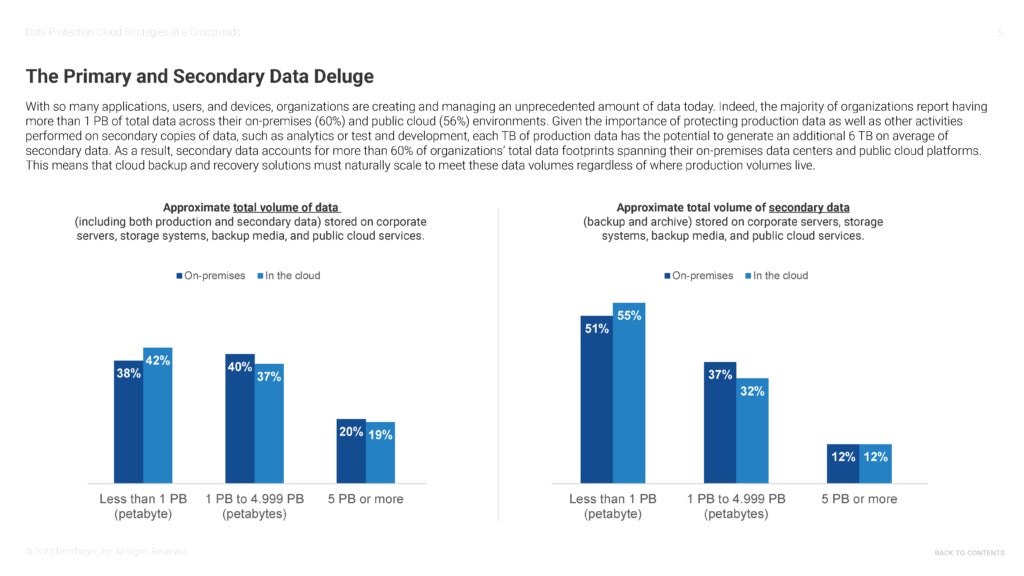
I dati secondari sono i primi in termini di volume

La maggior parte degli ambienti cloud contiene più dati secondari che dati primari! Circa il 61% in più, per la precisione.

Source: Enterprise Strategy Group, a division of TechTarget, Inc. Research eBook, Data Protection Cloud Strategies at a Crossroads, May 2023

Secondo i partecipanti al sondaggio, la media stimata dei dati secondari nel cloud è pari a 2,9 PB su una media stimata di 4,7 PB di dati totali nel cloud, il che significa che i dati primari rappresenterebbero solo circa 1,8 PB!

This indicates that for enterprises looking to optimize cloud data costs, secondary data is the place to start. You might find orphaned snapshots, unused replicas, or excess versions. It’s also a good idea to take a look at your backup spend. Could you be more efficient with it? Abbiamo alcune idee da proporti. 😉

ABA (Valutare sempre)

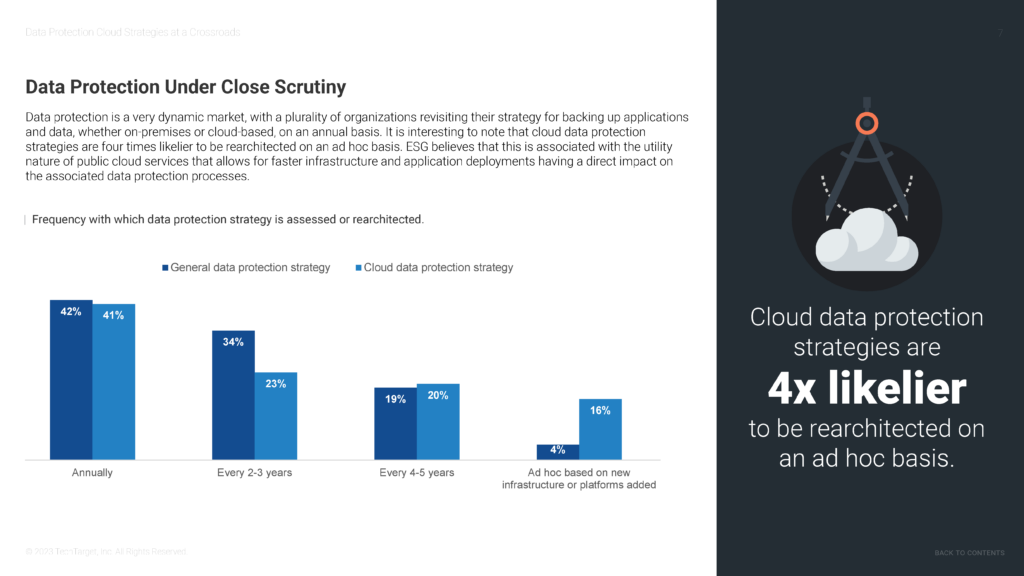
If you feel like your company reassesses its data protection strategy frequently, you’re in good company.

Source: Enterprise Strategy Group, a division of TechTarget, Inc. Research eBook, Data Protection Cloud Strategies at a Crossroads, May 2023

41% of survey respondents stated they reassess or rearchitect their cloud data protection strategy annually, and 16% said they do so on an ad hoc basis. Organizations were 4 times more likely to reassess or rearchitect cloud data protection strategies on an ad-hoc basis than on-premises. Not so surprising, when you consider the rapid scalability and constant innovation of the cloud.

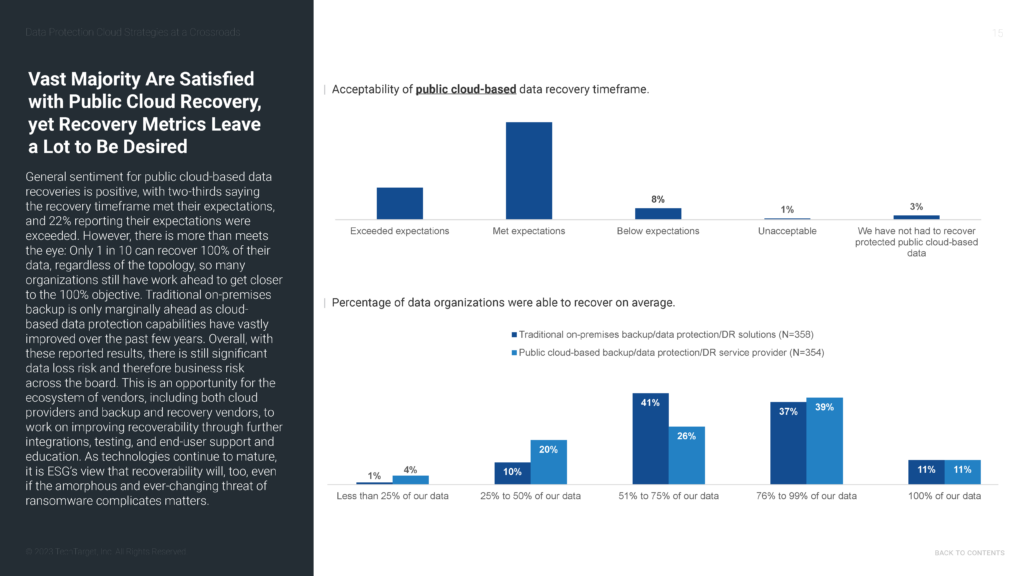
È possibile recuperare tutti i dati?

Here’s a surprising insight: Only 11% of respondents indicated that when recovering data, they had been able to recover 100% on average.

Source: Enterprise Strategy Group, a division of TechTarget, Inc. Research eBook, Data Protection Cloud Strategies at a Crossroads, May 2023

The takeaway: If you haven’t tested your data recovery lately, you should! Make sure you’re 100% ready to recover 100% of your data.


More related posts


Thumbnail_Blog-Architect-for-tomorrow-2026

Architect for Tomorrow: Unified Data Protection as the Foundation for Resilience

Read more about Architect for Tomorrow: Unified Data Protection as the Foundation for Resilience
Thumbnail_Blog-Dangerous-Silos-IDC-Resops-2026 (1)

The Importance of Recovery Point Objective (RPO) in Your Business Continuity Plan

Read more about The Importance of Recovery Point Objective (RPO) in Your Business Continuity Plan
Thumbnail_Blog-IDC-Resops-2026

Business Continuity Planning for the Cloud-Native Era

Read more about Business Continuity Planning for the Cloud-Native Era

Last month, we closed out our International Women’s Day and Women’s History Month celebration with a Courageous Conversation about working parents, the struggles of fertility, and pregnancy loss. Today marks the start of National Infertility Awareness week here in the U.S., so I wanted to share more about our recent event and how we’re supporting the women of Commvault, as well as our working partners, as they navigate these challenges.

Our Courageous Conversations are global, virtual events that are a core component of our DE&I strategy. They allow us to connect, support, and inspire each other by having open discussions about topics that are close to our hearts.  As our Chief People Officer Martha Delehanty always says, “you need to have the conversation, to change the conversation.”

Durante l’evento, abbiamo ascoltato le testimonianze delle nostre “Vaulters” Lisa McGahran, Stephanie Joyce ed Elliot Hujarski, che hanno parlato dei loro percorsi personali legati alla fertilità e alla perdita di gravidanza. Abbiamo inoltre avuto con noi la relatrice ospiteStacey Skrysak join us to share her own story and how she’s helping others by being a voice for premature birth, child loss, and infertility. This Courageous Conversation was so powerful and important for our Vaulter community – our speakers courageously opened their hearts to share their stories with us as we talked about how grief and hope can co-exist.


L’infertilità e le interruzioni di gravidanza sono, purtroppo, problemi molto concreti che molte donne nel mondo del lavoro (così come i loro partner) devono affrontare oggi mentre proseguono il proprio percorso professionale. Noi di Commvault continuiamo a dimostrare il nostro impegno e il nostro sostegno non solo nei confronti dei nostri genitori che lavorano, ma anche di coloro che aspirano a diventare genitori.

The power of hope, positivity, and support is what guides us all each day. We’re proud to support the wellness of our Vaulters and give them the resources they need throughout their journeys.  

More related posts


Thumbnail_Blog-Architect-for-tomorrow-2026

Architect for Tomorrow: Unified Data Protection as the Foundation for Resilience

Read more about Architect for Tomorrow: Unified Data Protection as the Foundation for Resilience
Thumbnail_Blog-Dangerous-Silos-IDC-Resops-2026 (1)

The Importance of Recovery Point Objective (RPO) in Your Business Continuity Plan

Read more about The Importance of Recovery Point Objective (RPO) in Your Business Continuity Plan
Thumbnail_Blog-IDC-Resops-2026

Business Continuity Planning for the Cloud-Native Era

Read more about Business Continuity Planning for the Cloud-Native Era

Nel mondo odierno, i dati rappresentano la risorsa più preziosa e le organizzazioni raccolgono, elaborano e archiviano costantemente enormi quantità di dati. Kubernetes è uno strumento di orchestrazione dei container che sta diventando sempre più diffuso per la gestione e la distribuzione di applicazioni in modo scalabile e innovativo. Da un recente sondaggio è emerso che oltre il 75% delle organizzazioni utilizza i container. Tuttavia, le organizzazioni che adottano i container e Kubernetes devono tenere in considerazione le questioni relative alla protezione e alla sicurezza dei dati.

In questo blog analizzeremo le varie sfide che le organizzazioni devono affrontare quando si tratta di proteggere i dati nel proprio ambiente Kubernetes. Inoltre, approfondiremo gli strumenti e le tecniche necessari per garantire la protezione dei dati nell’intero ambiente Kubernetes.

Kubernetes is no longer something that is coming or on the roadmap – it’s here. In fact, among those organizations that have adopted containers, nearly all (94%) use Kubernetes, and most (86%) even find it critical to their operations. This doesn’t come as a surprise since we also learned that Kubernetes is helping drive effective cloud migration and flexibility, container orchestration, and workload mobility. Organizations also see improved scalability, availability, and DevOps processes when implementing Kubernetes.

Now that we know organizations truly embrace Kubernetes and will continue to use it more moving forward let’s look at what they primarily use it for. On average, over half of an organization’s data (59%) is orchestrated with Kubernetes, and nearly all organizations (94%) plan to utilize Kubernetes more in the next five years to protect their data. However, most organizations (89%) also expect to do more work to protect their data in Kubernetes in the next five years.

Assessing your Kubernetes protection needs

As with any change or disruption, organizations face issues with identifying vulnerabilities and fully understanding their systems and needs when using Kubernetes. When moving to cloud-native applications, customers must be aware that backups and data protection are not always guaranteed. Most cloud service providers follow the Shared Responsibility Model, where they are responsible for securing their service infrastructure, and customers are responsible for securing their data and applications within the cloud environment. About half of organizations currently face challenges with identifying vulnerabilities (52%), assessing backups (49%), scaling based on the scope of operations (49%), and understanding system complexity (48%).

The survey also revealed the top features for organizations when implementing Kubernetes.  Two-thirds of organizations (64%) believe ensuring data security is important in a full data protection system for Kubernetes. Additionally, flexible levels of recovery (56%) and ransomware protection (52%) are important features to more than half of organizations. Additionally, nearly all organizations (95%) find it important that they can back-up data in Kubernetes.

Cosa significa tutto ciò per il futuro di Kubernetes e per garantire una solida strategia di protezione dei dati per le vostre nuove applicazioni K8s stateful? È necessario essere in grado di superare tutte le sfide che dovrete affrontare oggi e in futuro, quali:

  • Errore dell’operatore
  • Guasti hardware e software
  • Attacchi mirati con ransomware/malware

Commvault and Kubernetes – protect K8s containers without getting boxed in

Commvault provides K8s-native protection for your stateful (and stateless) K8s applications in a convenient SaaS-based backup and recovery solution. Safeguarding K8s applications includes protecting all configuration data (pods, manifests, secrets, CRDs) and the persistent application data (persistent volumes, persistent volume claims). Protection of K8s configuration and data allows granular recovery of application configuration, persistent data, or the entire application to the original or a new cluster. Recovery to on-premises or cloud locations provides your business with application mobility and the agility to adopt the K8s distribution and operational model that works for your developers. Full data protection of your Kubernetes cluster means recovery of any/all applications can be ensured in a data loss event. And with Commvault, you won’t get boxed into using a single-purpose tool. Our K8s protection is part of Commvault’s strategy to secure, defend, and recover all data distributed across the hybrid cloud. Here’s how GigaOm describes this in its recent Kubernetes Data Protection Radar Report:

Commvault Backup & Recovery is a backup solution that supports more than Kubernetes workloads, making it suitable for hybrid applications that run across Kubernetes, VMs, and cloud services, consolidating backup operations on a single platform.”

–  GigaOm, January 26, 2023

Read about Commvault’s leadership in Kubernetes data protection https://www.commvault.com/analyst-reports#gigaom.

Source: Hanover Research, Kubernetes Attributes and Usage, February 2023

More related posts


Thumbnail_Blog-Architect-for-tomorrow-2026

Architect for Tomorrow: Unified Data Protection as the Foundation for Resilience

Read more about Architect for Tomorrow: Unified Data Protection as the Foundation for Resilience
Thumbnail_Blog-Dangerous-Silos-IDC-Resops-2026 (1)

The Importance of Recovery Point Objective (RPO) in Your Business Continuity Plan

Read more about The Importance of Recovery Point Objective (RPO) in Your Business Continuity Plan
Thumbnail_Blog-IDC-Resops-2026

Business Continuity Planning for the Cloud-Native Era

Read more about Business Continuity Planning for the Cloud-Native Era

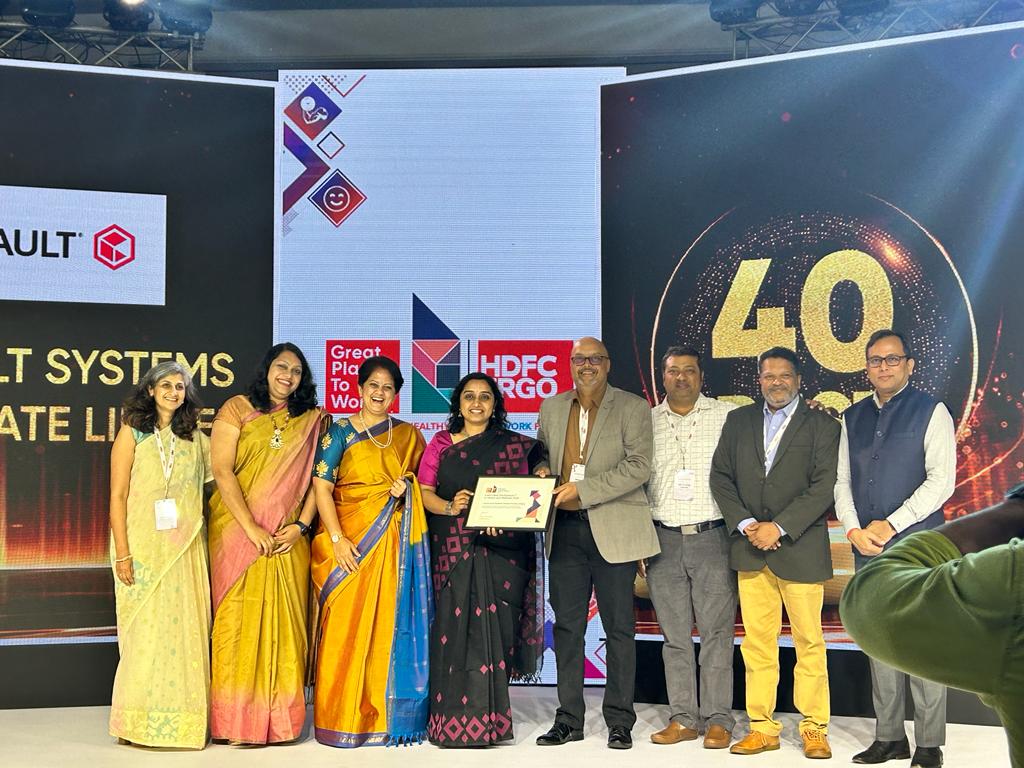
I’m excited to share that Commvault has been recognized by Great Place to Work® India for our culture of care and belonging.

Siamo stati inseriti nell’elenco deiIndia’s Best Workplaces in Health & Wellness 2022, sulla base di una valutazione completa e rigorosa volta a individuare le aziende leader nell’adozione di pratiche ben strutturate per il benessere sul posto di lavoro.

We’ve also been Accredited for Inclusive Practices™, a Diversity, Equity & Inclusion initiative by Great Place to Work Institute India. This assessment identifies organizations that have internal and external practices to promote equal and equitable participation of historically excluded communities (women, other gender identities, LGBTIQA+, persons with disabilities, veterans, individuals returning from a career break, and other under-represented minorities in the country) in the workplace.


I’m so proud our organization has achieved this recognition. Here at Commvault, we continue to prioritize our culture of holistic wellbeing and DE&I as we support each other and show how we care.

When it comes to health and wellness, we believe the total wellness of each of our employees builds a better company and a better world. Having a healthy work-life balance is crucial and creating a culture of balance and flexibility is greatly important to us. And we know that in order to deliver for our customers and partners, we must deliver for ourselves first… which means caring for ourselves! We also continue to honor and celebrate our diverse Vaulter community and cultivate an environment of respect and belonging. Listening to the experiences and perspectives of others and learning how to better support one another empowers us to create a more equitable future together. 

Congratulazioni al nostro team indiano!

More related posts


Thumbnail_Blog-Architect-for-tomorrow-2026

Architect for Tomorrow: Unified Data Protection as the Foundation for Resilience

Read more about Architect for Tomorrow: Unified Data Protection as the Foundation for Resilience
Thumbnail_Blog-Dangerous-Silos-IDC-Resops-2026 (1)

The Importance of Recovery Point Objective (RPO) in Your Business Continuity Plan

Read more about The Importance of Recovery Point Objective (RPO) in Your Business Continuity Plan
Thumbnail_Blog-IDC-Resops-2026

Business Continuity Planning for the Cloud-Native Era

Read more about Business Continuity Planning for the Cloud-Native Era

Transformative, channel-friendly, and cutting-edge are just a few of the adjectives the editors over at CRN used to describe the companies they’ve chosen as the cream of the crop – the classifica CRN Storage 100 del 2023 – an honor that recognizes industry-leading storage vendors that deliver the best channel-friendly products and services the industry has to offer.  

According to the publication, the companies they chose for this year’s Storage 100 list have been selected by CRN editors for their “perseverance in pushing the boundaries of innovation through cutting-edge technology and strategic partnerships.” 

It’s definitely a difficult landscape to navigate, with too many vendors to count. Luckily, the Storage 100 list is a valuable resource for solution providers looking for vendors that can support them in a complex storage market with industry-leading portfolios in areas such as data protection, management and resilience; software-defined storage, and storage components.  

CRN emphasized that this year’s list also represents the industry leaders of storage technology that can be used for on-premises or cloud deployments. This is a critical point. Resiliency is key in a world where vendors and partners are trying to help customers keep their data safe, unharmed, and always-on across cloud, on-prem, and SaaS workloads…enter Commvault.  

Recognized in theData Protection, Management, and Resilience category, we offer a simple and unified Data Protection Platform that spans the complete enterprise data estate, regardless of where that data lives. Whether it’s software-defined distributed storage such as containers, a storage appliance like Commvault Grid, or cloud storage in the form of Metallic Recovery Reserve™, Commvault helps customers accelerate their digital transformation journey with unmatched scalability, security, and resiliency.  

Blaine Raddon, CEO of The Channel Company shared his sentiments about this year’s program, stating, “CRN’s 2023 Storage 100 list recognizes the leading vendors that are delivering transformative advancements in storage technology and bringing modern solutions to customers and solution providers that are built for the future. We are honored to recognize their contributions as the leading players in storage technology for 2023.” 

Like CRN, we are also honored; honored to be celebrated for our industry-leading data protection, honored to be highlighted as a recommended choice for solution providers, and honored to continuously be innovating. 

La classifica CRN Storage 100 sarà pubblicata nel numero di aprile 2023 della rivista CRN Magazine e online all’indirizzowww.crn.com/storage100.  

More related posts


Thumbnail_Blog-Architect-for-tomorrow-2026

Architect for Tomorrow: Unified Data Protection as the Foundation for Resilience

Read more about Architect for Tomorrow: Unified Data Protection as the Foundation for Resilience
Thumbnail_Blog-Dangerous-Silos-IDC-Resops-2026 (1)

The Importance of Recovery Point Objective (RPO) in Your Business Continuity Plan

Read more about The Importance of Recovery Point Objective (RPO) in Your Business Continuity Plan
Thumbnail_Blog-IDC-Resops-2026

Business Continuity Planning for the Cloud-Native Era

Read more about Business Continuity Planning for the Cloud-Native Era

Spring is a time of renewal and rejuvenation – when we can finally shed the weight of winter and start anew. As flowers bloom and trees bud, it’s the perfect time to reassess and enhance your data protection and recovery plans.

Proprio come quando si crea un giardino, è importante fare il punto su ciò che si ha a disposizione e su ciò di cui si ha bisogno. Così come non si pianterebbe un fiore in un terreno inadatto o senza acqua a sufficienza, non si dovrebbero proteggere i dati con strumenti sbagliati o senza un piano. Come dice il proverbio, “chi non pianifica, pianifica il fallimento”. Questo è particolarmente vero quando si tratta di salvaguardare i dati della propria organizzazione.

Le conseguenze di una violazione o di una perdita di dati possono essere catastrofiche e spaziano dalla perdita di ricavi e produttività al danno alla reputazione e alle conseguenze legali. Per ridurre al minimo l’impatto di tali eventi è necessario un piano di Readiness completo che consenta di affrontare e reagire a potenziali interruzioni del servizio.

Essere pronti per la Recovery significa avere la sicurezza e la capacità di recuperare rapidamente qualsiasi dato in tutto il proprio ambiente.

Routine maintenance is key

Uno degli aspetti più importanti per avere un giardino ben curato è prendersene cura regolarmente. Lo stesso vale per la protezione dei dati. Non basta impostare il sistema e poi non pensarci più. Rivedere e aggiornare regolarmente i propri piani garantirà che rimangano efficaci e continuino a soddisfare le esigenze aziendali. E con la crescente frequenza e sofisticazione degli attacchi ransomware, effettuare valutazioni periodiche dell’infrastruttura e del piano di Readiness non è mai stato così fondamentale.

Fortunatamente, disporre di una soluzione completa per la protezione dei dati, supportata da risorse specializzate, può rappresentare un punto di svolta per ridurre il rischio di attacchi ransomware e garantire un rapido Recovery in caso di attacco. ConCommvault® Professional Services.

Inoltre, disporre di una soluzione per la protezione dei dati che offra un solido insieme di Features costantemente aggiornate e ampliate è fondamentale per le vostre attività di revisione. L’adozione di un programma di manutenzione regolare per la gestione del vostro ambiente di protezione dei dati vi consente di integrare e aggiornare Features di grande valore. Visitate la nostraWhat’s New Pagededicata alle versioni della piattaforma per scoprire le nostre ultime Features e i miglioramenti apportati.

Be ready for anything

Mantenete uno stato di prontezza per poter reagire a qualsiasi evento che comprometta i dati. Che la vostra organizzazione abbia bisogno di maggiore supporto nella progettazione del piano di preparazione al Recovery in caso di ransomware, nella sua gestione o nel ripristino a seguito di un attacco, conCommvault Readiness Solutionspotrete scegliere il livello di servizio più in linea con le vostre esigenze aziendali. L’offerta di servizi include:

Ready helps you align Commvault’s technical capabilities with your recovery objectives.

Steady assists you in monitoring and maintaining a state of recovery readiness.

Respond helps accelerate your return to normal business operations in the event of an outage or disaster.

Harvest data protection success

Proprio come un giardino ben curato può regalare felicità, un solido piano di protezione e Recovery dei dati può garantire tranquillità. Approfittate quindi della primavera per piantare i semi di un solido piano di protezione e Recovery dei dati e osservatelo crescere e prosperare nei mesi a venire.

Contattateun nostro rappresentante per scoprire come Commvault può aiutarvi a preparare il vostro piano di risposta al ransomware.

More related posts


Thumbnail_Blog-Architect-for-tomorrow-2026

Architect for Tomorrow: Unified Data Protection as the Foundation for Resilience

Read more about Architect for Tomorrow: Unified Data Protection as the Foundation for Resilience
Thumbnail_Blog-Dangerous-Silos-IDC-Resops-2026 (1)

The Importance of Recovery Point Objective (RPO) in Your Business Continuity Plan

Read more about The Importance of Recovery Point Objective (RPO) in Your Business Continuity Plan
Thumbnail_Blog-IDC-Resops-2026

Business Continuity Planning for the Cloud-Native Era

Read more about Business Continuity Planning for the Cloud-Native Era

Sappiamo bene che la protezione dei dati è una questione seria, ma in occasione della Giornata mondiale del backup vogliamo affrontarla in modo divertente! Sei pronto a valutare come proteggi le tue informazioni sensibili e a porre domande scomode sui prodotti che utilizzi?

Noi di Commvault comprendiamo l’importanza della protezione dei dati e siamo qui per fornirvi le risposte che meritate. Seguiteci in questo percorso in cui affronteremo sei delle domande più frequenti sulla protezione dei dati e vi mostreremo come garantire la sicurezza della vostra azienda.

https://play.vidyard.com/AMTPw7ny3Ahn5Ju3rCTFEr

Le violazioni dei dati e della privacy possono rappresentare un vero e proprio grattacapo per le aziende. Non solo possono comportare ripercussioni legali e finanziarie, ma possono anche danneggiare la reputazione dell’azienda e la fiducia dei clienti. Ecco perché è fondamentale essere informati e vigili quando si tratta delle proprie strategie di protezione dei dati.

È ora di distinguere la realtà dalla finzione quando si parla di protezione dei dati. Non fatevi ingannare da quelle affermazioni di marketing altisonanti senza prima fare le vostre ricerche. Queste aziende stanno innovando allo stesso ritmo della crescita dei vostri dati? Vi stanno aiutando a sfruttare al meglio il vostro budget IT? Vi stanno vendendo un prodotto quando ciò di cui avete davvero bisogno è una piattaforma? Queste sono le domande che dovete porvi!

Affidati a un fornitore affidabile di soluzioni per la protezione dei dati, come Commvault, per garantire che le tue informazioni sensibili siano sempre al sicuro. Contattaci oggi stesso per saperne di più sulle nostre soluzioni di protezione dei dati e lasciaci aiutarti a proteggere la tua azienda e le informazioni dei tuoi clienti.

Ricorda: la protezione dei dati non deve per forza essere noiosa. Con l’atteggiamento giusto e un pizzico di divertimento, puoi tenerti informato e al sicuro, assicurandoti al contempo che la tua attività prosperi!

Follow Commvault on Social Media for more insights on #WorldBackupDay!

More related posts


Thumbnail_Blog-Architect-for-tomorrow-2026

Architect for Tomorrow: Unified Data Protection as the Foundation for Resilience

Read more about Architect for Tomorrow: Unified Data Protection as the Foundation for Resilience
Thumbnail_Blog-Dangerous-Silos-IDC-Resops-2026 (1)

The Importance of Recovery Point Objective (RPO) in Your Business Continuity Plan

Read more about The Importance of Recovery Point Objective (RPO) in Your Business Continuity Plan
Thumbnail_Blog-IDC-Resops-2026

Business Continuity Planning for the Cloud-Native Era

Read more about Business Continuity Planning for the Cloud-Native Era

As Women’s History Month comes to an end, we’re continuing to celebrate women at Commvault all year round! As a working mom and proud co-leader of our Family Support Network Employee Affinity Group (EAG), I wanted to share my experience in hopes to empower working moms (and dads!) everywhere.

I began my career in Human Resources (HR) over 25 years ago, and have been at Commvault for the past 11 years. I was always a people-centric person, and being in HR allowed me to celebrate the human side of the business and focus on the people, a company’s most important asset. Building strong connections and empowering people to thrive and grow is what has inspired me throughout my career.

Having empathy has always been an integral part of my role as an HR leader, but my level of empathy completely evolved once I became a mom. I am blessed to have two beautiful sons in my life – Jake, 8, and Ryan, 6 – but my journey wasn’t without challenges. In 2016, I found out I was pregnant with identical twin boys. After my initial shock that I was going to be 42 years old with three children under the age of two – I was overjoyed! After some complications 24 weeks into my pregnancy, I ended up delivering Ryan and Max prematurely. The next day, Max passed peacefully in my husband’s arms. I was completely numb after this tragedy, yet still had a critical newborn baby in the hospital and a 19-month-old at home whom I had to stay positive (and thankful) for. 129 days and three surgeries later, Ryan was released from the hospital, a day after his original due date. He’s a happy and healthy boy today.

As a mom, you change after you have kids. And after losing a child, I changed even more. It made me realize that you never know someone’s full story – which is why always leading with empathy and care is crucial to building relationships and creating a positive, supportive work environment. That’s why I’m so passionate about not only what I do in HR, but also my involvement with our Family Support Network EAG. This is a support group for working parents and caretakers in all facets of family life – from being a new parent to dealing with toddlers, tweens, teens, and aging parents.  

In the spirit of celebrating working moms (and all working parents!) I wanted to share some tips and tricks I’ve learned from my fellow Vaulters that have helped me become a better working parent:

  • Learn how to unplug from work. Disconnecting is harder said than done, however, we all have to unplug at some point or else we’ll burn out. Remember – taking time to reset is crucial in helping us come back to work the next day refreshed and recharged. I turn off my phone at night after a certain time to help disconnect from work.
  • Talk to your kids about your job. Working and living at home is the reality for many of us in this new hybrid work world. Young children often don’t understand why mom is home but can’t spend time with them during certain hours. Explaining what your job is to your kids can help them better understand you and the concept of this new way of remote working.
  • Embrace planning. Whenever I have a busy week coming up, I create a schedule and plan ahead to make things less stressful. A big thing for me – planning dinners. This allows me to avoid wasting time figuring out what we’re going to eat after a hectic day and gives me more quality time with my kids.
  • Remember that feeling guilty is normal. Finding a balance between being a parent and working is always going to be a challenge. We’ll likely always have moments when work gets in the way and we feel guilty about having to miss time with our kids. Or on the flip side, we may feel guilty stepping away from work to do something with our kids. Find a routine that works best for you and remember to not be so hard on yourself!

Trial and error is the key to success in many aspects of our lives, especially with parenting. I can tell you firsthand that life throws many obstacles at us, and at the end of the day, it’s important to realize that we are all human. Celebrating and supporting each other as parents and caretakers is what helps us stay grounded and inspired, so let’s continue to embrace the power of empathy! When we open our minds and hearts to better understand each other, it not only makes us better professionally but personally too. I’m so thankful to my global Vaulter community and our Family Support Network for allowing me to share my story and learn from others every day.

To learn more about Commvault’s culture of caring, clicca qui.

More related posts


Thumbnail_Blog-Architect-for-tomorrow-2026

Architect for Tomorrow: Unified Data Protection as the Foundation for Resilience

Read more about Architect for Tomorrow: Unified Data Protection as the Foundation for Resilience
Thumbnail_Blog-Dangerous-Silos-IDC-Resops-2026 (1)

The Importance of Recovery Point Objective (RPO) in Your Business Continuity Plan

Read more about The Importance of Recovery Point Objective (RPO) in Your Business Continuity Plan
Thumbnail_Blog-IDC-Resops-2026

Business Continuity Planning for the Cloud-Native Era

Read more about Business Continuity Planning for the Cloud-Native Era

La protezione dei dati è un lavoro di squadra. Siamo orgogliosi della nostraComunitàdi alleati e partner tecnologici, e non c’è dubbio che la collaborazione per fornire soluzioni più integrate ed efficaci apporti un valore aggiunto ai nostri clienti.

But one thing we don’t do (unlike some we could name….) and that is to partner to fill and hide gaps and then position it as a benefit to customers.

There’s no integration, no added value, just PR and additional complexity… And it’s the customer who suffers.

What does that mean for the customer?

Let’s be honest, most vendors in the backup market are good at a limited or select set of things:  Good at VM backup, good at big backup appliances, good at protecting Salesforce, good at protecting M365, or Oracle or Kubernetes, but rarely are they good at LOTS of things…which leaves them with gaps in their solution capabilities, a few bricks shy of a load, lacking cohesion, or just plain green with envy – take your pick on the saying that applies.

This problem really rears itself when customers find themselves and their business has evolved to need new data protection capabilities such as protection of Azure Active Directory, Oracle Cloud, or more proactive data security. 

Not every vendor has the vision to anticipate these innovations and changing business needs and incorporate them into their solutions, meaning they’ll be left trying to catch up or be left behind.  This forces, the vendor to look in the mirror at their own technology stack (or tech debt) and realize the change is too big or will take too long for them to deliver it on their own, and in that case they have to either give up on addressing that need or go in search of someone they can buy or partner with to bolt-on that functionality.  

Despite the marketecture, at the end of the day you are left with two or more completely different solutions, with little to no integrations between them, supported by multiple account teams, and ultimately get more of what you don’t want in your environment:  Cost, complexity, friction, and risk. 

Now you’re faced with more questions:

  • Ma a chi ci si rivolge se qualcosa si rompe?
  • Come si può consolidare o automatizzare il sistema quando si continuano ad aggiungere nuovi pezzi al puzzle?
Davvero, questa cosa fa arrabbiare Mando!

So what is “THE WAY”?

We can agree that more products = more cost = more complexity = more risk, right?

Well, fixing that is something pretty obvious – and much simpler:  Tackle data protection with a single unified solution.  Multicloud, on-prem, SaaS, hybrid — One solution to rule your data! 

[Commvault enters the chat]

Rather than rely on others to do the work for us, we’ve built the Commvault platform from the ground up, which has allowed us to easily grow the solution to meet new challenges and demands such as data governance, transformation, and multi/hybrid cloud evolutions in customer environments.   

We’ve been listening to our customers and anticipating their needs for a long time. 

Just to name off a few examples:

Quando i nostri clienti hanno espresso l’esigenza di una funzione di deduplicazione per ridurre i costi di archiviazione,
it right into the software. In fact, we were the first to deliver embedded software
deduplicazione software integrata senza la necessità di costose Appliances proprietarie.
Prevedendo il potenziale futuro dei container, già nel 2017 abbiamo integrato misure di protezione
per i carichi di lavoro contenuti nei container.
Understanding the shift to SaaS, we built Metallic – the first (and still only) fully
gestito per la protezione dei
data protection. Operating as a unified platform, Metallic and Commvault provide
flessibilità e valore, consentendo loro di scegliere la soluzione più adatta al proprio ambiente
e di espandersi man mano che le loro esigenze crescono.
Consapevoli della necessità di garantire una maggiore sicurezza dei dati a fronte di minacce sempre più gravi, abbiamo integrato nella piattaforma una funzione di rilevamento del
ransomware.
Qualche anno dopo abbiamo lanciato Metallic Recovery Reserve, la prima soluzione
cloud air-gap solution in the data protection market.  Every one of our competitors
seguito il nostro esempio.

Essere padroni del codice

OWNING the code also makes it easy for us to pivot and expand the services of the platform to encompass new workloads such as cloud, DBaaS, SaaS and allows us to leverage the latest infrastructure innovations like object storage, containers, and cloud compute/storage technologies (e.g.: AWS Graviton) to efficiently deliver those services how you need to consume them.   

This unified approach also enables a higher degree of automation across the environment and provides greater observability to potential risks and threats to the data.  Automate. Secure. Respond.  These all get easier when you can consolidate and reduce the friction by reducing the tools and touch points needed to manage your diversifying data landscape.

So, if your environment was all virtual and physical systems yesterday – Commvault has you covered.  And you added cloud and M365 into it today – Commvault has you covered.  And then when you need to add containers, new cloud-native apps, and more in tomorrow, guess what?  Commvault still has you covered.  No need to reinvent the wheel or bolt on more point products to cover the changes in YOUR data needs – you can trust Commvault to provide that consistent data protection across whatever your data is and wherever it lives.

In conclusione

QUESTION IT – When you’re digging into HOW a vendor or vendor(s) are actually going to deliver their solution and meet your business needs, to see if it’s all just more talk or if it can really do everything it says it can. 

Ask yourself: Should you really be using a data protection provider that can’t protect your SaaS data?”

More related posts


Thumbnail_Blog-Architect-for-tomorrow-2026

Architect for Tomorrow: Unified Data Protection as the Foundation for Resilience

Read more about Architect for Tomorrow: Unified Data Protection as the Foundation for Resilience
Thumbnail_Blog-Dangerous-Silos-IDC-Resops-2026 (1)

The Importance of Recovery Point Objective (RPO) in Your Business Continuity Plan

Read more about The Importance of Recovery Point Objective (RPO) in Your Business Continuity Plan
Thumbnail_Blog-IDC-Resops-2026

Business Continuity Planning for the Cloud-Native Era

Read more about Business Continuity Planning for the Cloud-Native Era

March is a month for us to celebrate women, as we honor both Women’s History Month and International Women’s Day.

As a Vaulter and member of our Women in Technology Employee Resource Group (ERG), I recently had the great honor and privilege to lead a group of students at San Diego City College for the “City Women Rock” Conference to celebrate International Women’s Day on March 8th. The conference is designed to ignite, inspire, empower, and uplift students – many of whom face significant adversity, such as overcoming challenges of poverty, domestic and gang-related violence, and personal hardships. During the conference, our local community came together to share stories of triumph, reflecting on the many achievements of women throughout history and providing a blueprint for not only achieving goals, but lifting up others along the way. “City Women Rock”si concentra sulle seguenti strategie chiave per dare alle donne gli strumenti necessari a raggiungere i propri obiettivi:

  • La pratica della gratitudine
  • Tenere un diario
  • Dare priorità alla cura di sé
  • Esprimere i propri sogni
  • Definizione degli obiettivi
  • Positive affirmations 
  • Asking for help 
  • Transforming fear into fuel 
  • Overcoming self-limiting beliefs 

Queste strategie mi toccano profondamente, ed è stato un onore per me intervenire alla conferenza per approfondire l’argomento e raccontare la mia storia personale di come ho superato un disturbo alimentare, una dipendenza e una scarsa autostima nei miei primi anni di adolescenza. Queste sfide mi hanno infine condotta lungo un percorso di guarigione, trasformazione e crescita durato 15 anni. Posso dire con orgoglio di esserne uscita con un amore per me stessa incrollabile e una profonda fiducia in me stessa. L’aver messo in atto cambiamenti positivi mi ha permesso di diventare la donna, la madre, la figlia, la sorella, l’amica e la leader che ho sempre desiderato essere.

I’m so thankful for my local community and the opportunities that organizations like City Women Rock provide to women to allow us to be our best selves. I’m also grateful for my Vaulter community and our Women in Technology ERG. This ERG brings together both women and allies to elevate and advance gender equality in technology and celebrate the inspiring women of Commvault who are driving our innovation and growth every day.

We all have personal stories to share of strength, stability and overcoming adversity. As we continue to celebrate women throughout March, let’s remember the importance of empowering ourselves and others to uplift, inspire and encourage each other to achieve GREATNESS.

To learn more about Commvault’s culture and ERGs, clicca qui.

More related posts


Thumbnail_Blog-Architect-for-tomorrow-2026

Architect for Tomorrow: Unified Data Protection as the Foundation for Resilience

Read more about Architect for Tomorrow: Unified Data Protection as the Foundation for Resilience
Thumbnail_Blog-Dangerous-Silos-IDC-Resops-2026 (1)

The Importance of Recovery Point Objective (RPO) in Your Business Continuity Plan

Read more about The Importance of Recovery Point Objective (RPO) in Your Business Continuity Plan
Thumbnail_Blog-IDC-Resops-2026

Business Continuity Planning for the Cloud-Native Era

Read more about Business Continuity Planning for the Cloud-Native Era

L’ascesa del cloud computing ha rivoluzionato il modo in cui le organizzazioni gestiscono i propri dati ed è diventata rapidamente la soluzione preferita per l’archiviazione e l’accesso alle informazioni critiche. Prima della pandemia, l’adozione del cloud per i database cresceva a un ritmo esponenziale, con un numero sempre maggiore di organizzazioni che passavano a un unico fornitore di servizi cloud. Dopo la pandemia, l’adozione dei database cloud continua a crescere, ma man mano che i clienti acquisiscono maggiore familiarità con il cloud, la maggior parte delle imprese sta adottando un approccio multi-cloud e/o ibrido per ottenere il meglio da entrambi o da più mondi per i propri carichi di lavoro relativi ai database.

Secondo un rapporto di Flexera, l’89% di tutte le aziende utilizza il multi-cloud, mentre l’80% delle aziende adotta una strategia di cloud ibrido che prevede l’utilizzo di uno o più cloud.

A hybrid or multi-cloud database strategy comes with its own challenges –

  • Complexity – Keeping track of multiple tools for multiple clouds and multiple database types.
  • Cost – Redundant costs increase as teams across an organization employ their own tools, sometimes doubling up on capabilities and infrastructure.
  • Security – Security teams must defend against new threats while managing cloud database services and tools that are different from one cloud provider to the next. Security becomes more challenging with an ever-growing attack surface.

Here is how Commvault helps mitigate these challenges for cloud database protection –

  • Management made simple
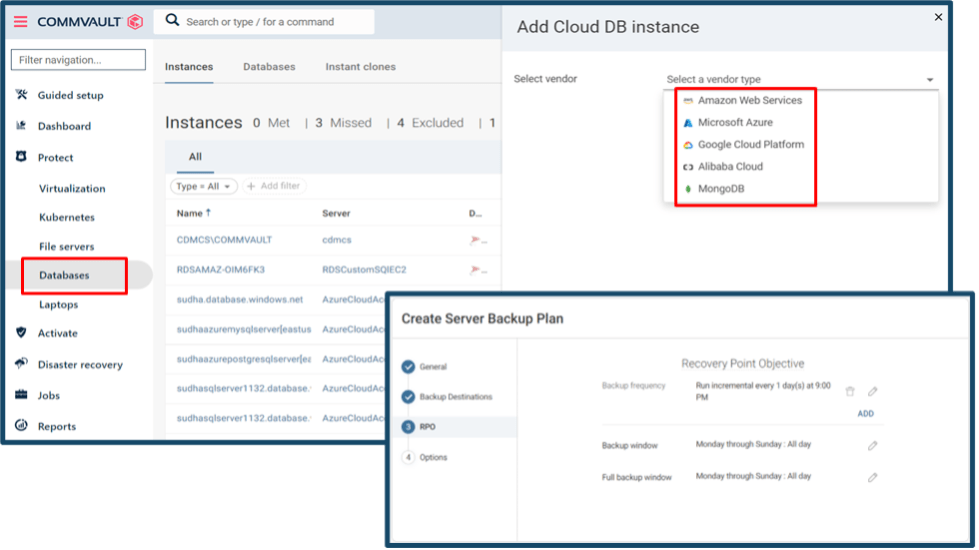
    Single UI and API-first support that gives simplified & unified control with cloud-native integration to automatically discover, protect and manage database copy lifecycle. Ability to define RPO policies that are uniform across hybrid cloud & multi-cloud with a blend of snap and backup. Ability to protect instances, complete regions, or multiple regions.
  • Broad workload, cloud, and multi-cloud portability support 
    Commvault offre il più ampio supporto per la portabilità di carichi di lavoro su cloud, database e multi-cloud rispetto a qualsiasi altro fornitore di soluzioni di backup attualmente presente sul mercato, soddisfacendo così le esigenze dei clienti in materia di protezione dei dati, indipendentemente dalla fase in cui si trovano nel loro percorso verso il multi-cloud.
  • Cost Savings
    sui costi La maggior parte dei fornitori di soluzioni di backup utilizza gli snap come strategia di backup per i propri database cloud. Questi fornitori offrono servizi di orchestrazione degli snap che, pur semplificando la gestione, non riducono i costi di archiviazione degli snap. Commvault, invece, offre ai clienti un modo unico di combinare backup basati su snap ed esportazioni, il che comporta una significativa riduzione dei costi di protezione dei database cloud rispetto ad altre soluzioni.
  • Security
    Secure access to the Commvault environment with RBAC-based control and multi-factor authentication. Ensure that backups are tamper-proof with encryption and air-gapped immutability. 

In conclusione, Commvault consente di gestire i database sia in locale che su più cloud utilizzando un’unica piattaforma. Continuiamo a innovare e a introdurre nuovi prodotti e soluzioni nell’ecosistema dei database, in continua evoluzione, per offrire funzionalità di protezione e Recovery dei dati semplici, complete, sicure ed economiche proprio dove i clienti ne hanno più bisogno.

To learn more:

References

1- Source: https://www.flexera.com/blog/cloud/cloud-computing-trends-2022-state-of-the-cloud-report/

More related posts


Thumbnail_Blog-Architect-for-tomorrow-2026

Architect for Tomorrow: Unified Data Protection as the Foundation for Resilience

Read more about Architect for Tomorrow: Unified Data Protection as the Foundation for Resilience
Thumbnail_Blog-Dangerous-Silos-IDC-Resops-2026 (1)

The Importance of Recovery Point Objective (RPO) in Your Business Continuity Plan

Read more about The Importance of Recovery Point Objective (RPO) in Your Business Continuity Plan
Thumbnail_Blog-IDC-Resops-2026

Business Continuity Planning for the Cloud-Native Era

Read more about Business Continuity Planning for the Cloud-Native Era

The Modern Cloud Era.

Sembra una cosa così drammatica e solenne, quasi come un cambio della guardia simile al passaggio dall’era giurassica a quella cretacea, ma cosa significa in realtà?

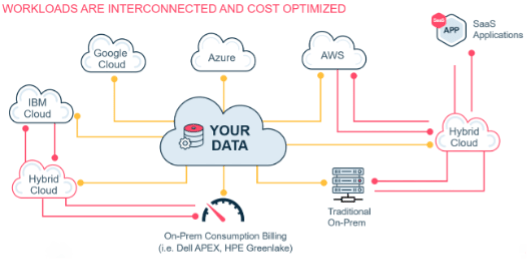
Ciò significa che le sfide e le opportunità offerte dalla diffusione capillare del cloud hanno portato a un mondo in cui, anziché i “dinosauri”, l’adozione di soluzioni ibride e multi-cloud è diventata la nuova norma. Quasi tutte le aziende del pianeta utilizzano almeno un tipo di cloud, e molte adottano strategie formali di diversificazione per sfruttare approcci ibridi e multi-cloud. Questa diversificazione, tuttavia, può comportare una maggiore complessità che pone nuove sfide in termini di ottimizzazione dei costi e mitigazione dei rischi.

L’era del cloud moderno consiste nel districarsi nel mondo della trasformazione digitale, in cui ogni azienda e ogni reparto si affida a strumenti moderni per svolgere il proprio lavoro. In questo nuovo contesto, non si può sottovalutare l’importanza di organizzare e gestire centralmente i dati e i carichi di lavoro nell’ambito di una strategia multipiattaforma mirata, al fine di raggiungere gli obiettivi aziendali massimizzando al contempo l’efficienza dei costi e la mitigazione dei rischi. Se attuate correttamente, le strategie ibride e multi-cloud possono portare a una maggiore efficienza operativa, a migliori capacità di gestione dei dati e di conformità, nonché a una maggiore scalabilità aziendale. Se attuate in modo errato, invece, possono creare silos di dati artificiali, aumentare la domanda di manodopera qualificata e richiedere ore di lavoro aggiuntive per l’implementazione e il supporto.


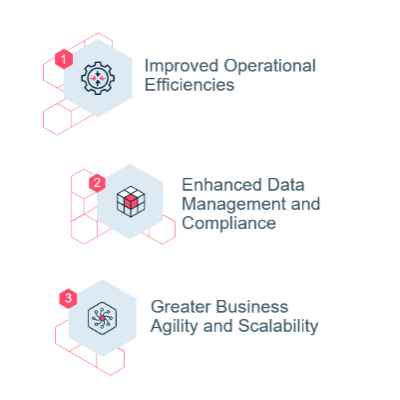
We recently had the privilege of having our Vice President of Solutions Engineering, Cesar Cid de Rivera and Sr. Director of Solutions Engineering, Vincenzo Costantino give a talk on how to best navigate the waters of this new, Modern Cloud Era. Together, Cesar and Vincenzo identified three primary benefits of successfully implementing a hybrid & multi-cloud strategy, as well as some tips in how to get there.

Some of the major benefits you can hope to expect are:

  • Maggiore efficienza operativa per i vostri processi e per il lavoro del personale
  • Funzionalità avanzate di gestione dei dati e di conformità
  • Achieving Greater Business Agility and Scalability 


1. Operational Efficiencies
operativa: trovare personale con un’ampia gamma di competenze in diverse interfacce cloud native può essere difficile e costoso. Sfruttando piattaforme centralizzate che offrono gestibilità su tutti i cloud e per tutti i tipi di carico di lavoro, è possibile rimuovere questa barriera e lasciare che sia la piattaforma a occuparsi del lavoro più impegnativo. Commvault Command Center è un esempio di piattaforma che offre gestibilità nativa su diversi provider cloud e tipi di carico di lavoro con pochi clic, consentendo di risparmiare tempo e denaro e riducendo al contempo la necessità di ricorrere a costose figure professionali specializzate.

Another challenge in improving operational efficiencies is the risk of downtime, productivity loss, and potential compliance breaches resulting from unintentional human error. Policy-based automation can be a life saver in these scenarios, giving IT teams the peace of mind of a “set it and forget it” approach to critical workload movements and failover procedures. The Commvault Command Center can empower IT teams to easily create and set automation plans, either from scratch or from an existing template.

2. Enhanced Data Management and Compliance Capabilities
In a Modern Cloud Era of rapidly migrating workloads and form-factors between clouds and form-factors, data sprawl can become a major concern. That data sprawl, however, goes beyond simple storage capacity concerns and has serious implications in contributing to the unintentional creation of a larger attack surface for bad actors, as well as inflating cloud provider fees. 

Per tenere sotto controllo la proliferazione dei dati, occorre innanzitutto assicurarsi che i dati giusti si trovino nei livelli di archiviazione corretti e che siano stati deduplicati e ottimizzati in tutti gli ambienti e per tutti i carichi di lavoro. La deduplicazione e la compressione possono generare risparmi fino all’80%, mentre l’ottimizzazione dei livelli di archiviazione può aumentare tali risparmi di un ulteriore 35%. Questo approccio può portare a vantaggi a valle, quali un RTO ridotto e una superficie di attacco più limitata a cui gli autori di attacchi malintenzionati possono mirare.

3. Achieving Greater Business Agility and Scalability
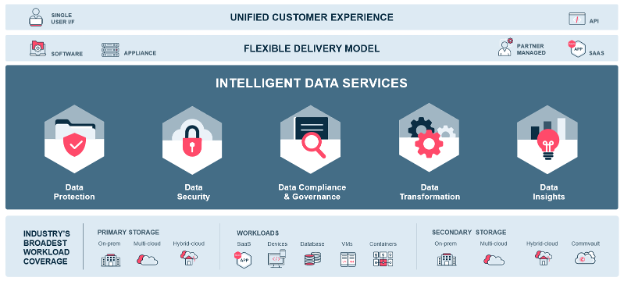
La mancanza di visibilità su TUTTI i dati, indipendentemente da dove si trovino, è il fondamento fondamentale di qualsiasi operazione ibrida o multi-cloud di successo. Superare questo ostacolo è fondamentale per il successo e può essere fatto utilizzando una piattaforma veramente centralizzata per tutti i vostri ambienti di carico di lavoro. La buona notizia è che Commvault offre un’esperienza unificata per l’intera strategia di protezione dei dati, migliorando rapidamente l’agilità operativa nella gestione di interruzioni, audit ed eventi, senza influire sulla produzione.


For a detailed overview of this topic and additional information about how Commvault’s powerful technology suite can accomplish this and much more, please visit our il sito web.

More related posts


Thumbnail_Blog-Architect-for-tomorrow-2026

Architect for Tomorrow: Unified Data Protection as the Foundation for Resilience

Read more about Architect for Tomorrow: Unified Data Protection as the Foundation for Resilience
Thumbnail_Blog-Dangerous-Silos-IDC-Resops-2026 (1)

The Importance of Recovery Point Objective (RPO) in Your Business Continuity Plan

Read more about The Importance of Recovery Point Objective (RPO) in Your Business Continuity Plan
Thumbnail_Blog-IDC-Resops-2026

Business Continuity Planning for the Cloud-Native Era

Read more about Business Continuity Planning for the Cloud-Native Era

There is no simple answer, mainly because you can’t boil down di servizi di backup su cloud solutions to just one or two primary characteristics. Here are five of the most important aspects to consider when weighing your options for a di servizi di backup su cloud provider.

5 aspetti da considerare nella scelta di una soluzione di backup su cloud

Gestione

Many cloud backup users tend to assume that the cloud architecture will make the backup management process easier, but it’s never a given. Aside from the actual managing of the backups (scheduling, running recovery tests, etc.), you still have to account for the planning of data usage, upgrades, patching, and security.

Simplicity and usability are key, so it’s best to avoid products with multiple management consoles or require extra hardware.

Instead, opt for a single solution backup service with an intuitive interface that provides clear visibility into all the processes you are responsible for while eliminating any guesswork and manual processes when possible.

Scala

Cloud architecture provides enterprises with a virtually limitless supply of storage and processing resources, but not every backup solution finds ways to leverage these abilities fully. And then there’s the guesswork involved with forecasting compute usage and storage demand, which can easily lead to over-provisioning or under-provisioning. The former can cause you to spend too much, while the latter can result in performance bottlenecks, gaps in data protection, and compromised recoveries.

Cerca una soluzione di backup cloud-native e serverless in grado di adattarsi rapidamente all’aumento delle esigenze di archiviazione, eliminando al contempo la necessità di prevedere l’utilizzo futuro. Problema risolto.

Conformità

Today’s compliance landscape is complicated and fluid due to the emerging location-specific laws regarding user data retention within certain jurisdictions. In simpler terms, there’s a lot at stake, and you have to be sure you’re in compliance with everything from these data privacy laws to proving the security and frequency of your backup during insurance audits.

The key to meeting compliance is three-fold: understanding your specific compliance requirements, having clear visibility into your compliance status, and rock-solid data security.

It’s best to choose a cloud backup solution that will offer a single view into your compliance status, notify you when backups are out of compliance, and provide features that can quickly and easily prove compliance in the event of an audit by pulling specific, relevant data. Your cloud backup solution should also be able to store backups outside of production environments and provide end-to-end encryption to meet compliance security requirements.

Sicurezza

Securing customer data and protecting it from threats like ransomware is paramount—but far from simple. Data security typically involves complicated decisions made across multiple cloud infrastructure resources. And you have to get all of them right. Not only do you have to meet data governance requirements related to security (such as ISO/IEC 27001, SSAE 18, HIPAA, and PCI), you also have to frequently manage and update access rights while ensuring there are no gaps anywhere.

Non trascurate questo aspetto! Scegliete un fornitore di soluzioni di backup su cloud che metta la sicurezza al primo posto e sia in grado di soddisfare le vostre esigenze in materia, piuttosto che uno che la offra semplicemente come opzione aggiuntiva. Ciò include la possibilità di archiviare i backup in un ambiente isolato (air-gap) e separato dagli account primari, la crittografia end-to-end su tutti i backup e la possibilità di cambiare le chiavi quando lo si desidera.

Costo

The cloud is supposed to offer cost-efficiencies when it comes to backup and storage, but choosing the wrong cloud backup solution can result in the opposite. This is often due to surprise charges that you did not anticipate, such as egress, bandwidth, and storage. There’s also the issue of racking up expenses from inefficient creation, storage, and usage of snapshots. To make matters worse, many vendors offer confusing pricing models that are overly complicated, making it hard to predict what the TCO should even be.

È possibile evitare spese eccessive per il cloud scegliendo un fornitore di servizi di backup su cloud che offra un modello tariffario semplice e trasparente, in cui siano chiaramente indicati i costi ricorrenti.

Clumio: la soluzione di backup su cloud per eccellenza

Clumio is a secure AWS cloud backup solution for enterprises that removes the complexity of software and hardware management while leveraging the cloud’s scale, economics, and elasticity.

Ma soprattutto, Clumio affronta tutti gli aspetti del backup su cloud sopra menzionati – gestione, scalabilità, conformità, sicurezza e costi – offrendo funzionalità quali:

  • Protezione completa contro il ransomware grazie all’archiviazione dei backup in un ambiente “air-gapped”, separato dagli account di produzione
  • Chiara visibilità e gestione dei requisiti di conformità
  • Crittografia end-to-end dei backup
  • Utilizzo del cloud per supportare ambienti di qualsiasi dimensione
  • Approfondimenti che forniscono consigli per ottimizzare i backup su AWS
  • Strumento di analisi dei costi per aiutare a ridurre le spese superflue nel cloud

More related posts


Thumbnail_Blog-Architect-for-tomorrow-2026

Architect for Tomorrow: Unified Data Protection as the Foundation for Resilience

Read more about Architect for Tomorrow: Unified Data Protection as the Foundation for Resilience
Thumbnail_Blog-Dangerous-Silos-IDC-Resops-2026 (1)

The Importance of Recovery Point Objective (RPO) in Your Business Continuity Plan

Read more about The Importance of Recovery Point Objective (RPO) in Your Business Continuity Plan
Thumbnail_Blog-IDC-Resops-2026

Business Continuity Planning for the Cloud-Native Era

Read more about Business Continuity Planning for the Cloud-Native Era

https://play.vidyard.com/hFMHqJvmMJXMVRZLNiUEnR
Takeaway 1: Despite the challenges of a ransomware attack, having data stored in the cloud can help minimize the damage and keep operations running.

I relatori hanno discusso delle sfide poste da un attacco ransomware; Tony Kinkead ha sottolineato che la sicurezza informatica contro il ransomware costituisce una parte importante della loro offerta di prodotti. Paul Vries ha parlato dell’attacco subito, affermando: «Abbiamo un ambiente non privato e tutto è stato crittografato. Tutto ciò che costituiva il nucleo principale è stato crittografato».

Ha spiegato che hanno dovuto ricorrere agli indicatori di compromissione per individuare quali file fossero stati caricati e quando si fosse verificato l’attacco, per poi ripristinare una versione sicura dei dati.

Vries ha inoltre sottolineato che avevano già trasferito molti utenti sul cloud, il che ha contribuito a ridurre al minimo i danni e a garantire la continuità operativa: «Molti utenti degli uffici hanno potuto continuare a lavorare perché i loro dati erano già sul cloud e sono stati attaccati solo i dispositivi principali condivisi». Ciò ha permesso loro di concentrarsi sulla documentazione dell’attacco e di prepararsi ad affrontarlo al meglio la prossima volta.

Takeaway 2: Cybersecurity is an arms race, and organizations need to take steps to reduce their risk of attack.

Le organizzazioni devono adottare misure per ridurre il rischio di attacchi, poiché agli aggressori basta trovare un solo punto debole per avere successo. Come ha affermato Kinkead, le organizzazioni devono creare un sistema di sicurezza a più livelli per poter operare secondo un modello di sicurezza Zero Trust. «Bisogna proteggere ogni singola parte dell’infrastruttura», ha affermato, sottolineando che «se l’aggressore riesce ad accedere a una parte della rete, si può ritenersi fortunati».

Vries si è detto d’accordo, sottolineando che «è una corsa agli armamenti: agli aggressori basta trovare un solo punto debole, mentre tu devi proteggerti da tutti».

Martijn Hoogesteger shared an example of how this can work in practice, noting that his organization had “deployed a number of decoys” to “whitelist and take out some noise” in a South American R&D facility. This allowed them to “stop the individual” who was attempting to gain access to the “crown jewels” of the organization.

Takeaway 3: The key to successful data protection is to act quickly and have a plan in place

Kinkead ha sottolineato l’importanza di agire rapidamente nella fase di protezione dei dati. “Bisogna agire immediatamente, ma è anche necessario seguire il piano o collaborare con team esterni per individuare l’approccio giusto”, ha affermato.

“È necessario adottare una strategia incentrata sull’immutabilità dei propri backup per poter recuperare autonomamente i propri dati, anche se si continua a pagare per impedire che alcuni di quei dati vengano resi pubblici.”

Remko Deenik ha sottolineato che si potrebbe fare ancora di più per proteggere i dati, mentre Vries ha evidenziato l’importanza della sensibilizzazione. Kinkead ha suggerito che la collaborazione fosse fondamentale, affermando: «Come ho sentito dire anche da Microsoft in precedenza, occorre definire in modo collaborativo tali standard; ce ne sono già molti che abbiamo elaborato, come il CIS e molti altri, in cui sostanzialmente concordiamo su quali debbano essere le regole di base per il rafforzamento della sicurezza, quali debbano essere le migliori pratiche, ecc.».

Vries ha inoltre suggerito che gli indirizzi IP e i dati di esportazione potrebbero essere utilizzati per contattare i sistemi a livello locale, mentre Deenik ha suggerito che le indagini forensi digitali potrebbero servire a individuare quali dati siano stati sottratti. Ha osservato che, anche in caso di furto dei dati, potrebbe comunque essere possibile innovare e continuare a operare.

Discover how prepared you are for ransomware attacks by taking our quick assessment today. Evaluate your ransomware protection and recovery capabilities and get valuable insights from Commvault’s experts. Don’t leave your business vulnerable to cyber threats, act now and find out your level of ransomware preparedness! 
https://www.commvault.com/ransomware/risk-assessment

More related posts


Thumbnail_Blog-Architect-for-tomorrow-2026

Architect for Tomorrow: Unified Data Protection as the Foundation for Resilience

Read more about Architect for Tomorrow: Unified Data Protection as the Foundation for Resilience
Thumbnail_Blog-Dangerous-Silos-IDC-Resops-2026 (1)

The Importance of Recovery Point Objective (RPO) in Your Business Continuity Plan

Read more about The Importance of Recovery Point Objective (RPO) in Your Business Continuity Plan
Thumbnail_Blog-IDC-Resops-2026

Business Continuity Planning for the Cloud-Native Era

Read more about Business Continuity Planning for the Cloud-Native Era

As Co-Executive Sponsors of our Women in Technology Employee Resource Group (ERG), we’re thrilled to celebrate International Women’s Day as we honor women’s achievements, raise awareness about bias, and take action to drive gender equality. But we’re not just celebrating for one day… we’re honouring women the entire month of March, which also happens to be Women’s History Month! Our Women in Technology ERG brings together both women and allies to elevate and advance gender equality in technology and celebrate the inspiring women of Commvault who are driving our innovation and growth every day.

Today we’re amplifying our Vaulters’ voices across the world as they share stories of women who have inspired them throughout their lives.

In the coming weeks, we’ll be hosting a variety of learning opportunities and global events, in partnership with our DE&I team, to connect and inspire as we continue the conversation together about equity in action.

It’s so inspiring to see our Vaulter community come together and celebrate the importance of a diverse, equitable, and inclusive culture. We continue to work together to create a world where difference is valued and belonging is a non-negotiable both inside and outside our workplaces.  

Clicca qui to learn more about what it’s like to work at Commvault.

More related posts


Thumbnail_Blog-Architect-for-tomorrow-2026

Architect for Tomorrow: Unified Data Protection as the Foundation for Resilience

Read more about Architect for Tomorrow: Unified Data Protection as the Foundation for Resilience
Thumbnail_Blog-Dangerous-Silos-IDC-Resops-2026 (1)

The Importance of Recovery Point Objective (RPO) in Your Business Continuity Plan

Read more about The Importance of Recovery Point Objective (RPO) in Your Business Continuity Plan
Thumbnail_Blog-IDC-Resops-2026

Business Continuity Planning for the Cloud-Native Era

Read more about Business Continuity Planning for the Cloud-Native Era

The cloud has revolutionized how businesses operate, allowing them to take advantage of its scalability and flexibility while reducing costs. However, protecting data remains a critical challenge, with 98% of businesses reporting a cloud data breach within 1.5 years1, according to IDC research – highlighting the need for organizations to take additional measures to protect their data.

I fornitori di servizi cloud comprendono l’importanza di proteggere i dati e le applicazioni all’interno del proprio ambiente e hanno sviluppato un modello di responsabilità condivisa (SRM). Questo modello richiede alle aziende di assumersi la responsabilità della sicurezza dei propri dati e delle proprie applicazioni all’interno dell’ambiente cloud.

I fornitori di servizi cloud adottano approcci diversi alla protezione dei dati, il che aumenta la complessità; le aziende devono quindi comprendere i dettagli specifici e le sfumature che variano da un fornitore all’altro.

Pertanto, i clienti devono sviluppare una strategia olistica di protezione dei dati per assicurarsi di disporre dei controlli necessari a proteggere i propri dati anche quando si affidano agli strumenti nativi forniti dal proprio provider. Questo articolo analizzerà cosa comporti questo modello per i clienti e perché sia essenziale disporre di una strategia completa di protezione dei dati negli ambienti cloud e ibridi per utilizzare i servizi cloud in modo sicuro e protetto.

Perché le aziende stanno adottando sempre più il cloud computing?

Cloud computing has extended the possibilities for businesses and provides many advantages. Having workloads, applications, and services running on the cloud or hybrid environments gives businesses greater flexibility and incredible scalability to accommodate growth. In addition to these valuable benefits, having a wide variety of software as a service (SaaS) applications delivered via the cloud enhances operations, optimizes resource utilization, and brings agility and efficiency to business workloads. It’s no surprise that most companies have already embraced the cloud or are actively transitioning workloads, with Gartner estimating that over 95% of new digital workloads will be deployed on cloud-native platforms by 20253.

Another key advantage that makes cloud computing so attractive is that it allows users to access data and applications quickly and easily without requiring advanced technical knowledge or expertise. This makes it easier for businesses to deploy applications and manage data in a shorter time– something that would otherwise require significant technical know-how or experience with traditional IT environments.

Per questi motivi, sempre più aziende stanno adottando il cloud computing per gestire i propri dati e le proprie applicazioni. L’SRM garantisce che sia i clienti che i fornitori comprendano quali elementi debbano essere protetti all’interno dell’ambiente cloud, in modo che le aziende possano sfruttare appieno questa tecnologia in tutta sicurezza.

Che cos’è il modello di responsabilità condivisa?

Il modello di responsabilità condivisa (SRM) è una strategia di sicurezza cloud secondo cui, mentre i fornitori di servizi cloud sono responsabili della sicurezza della propria infrastruttura di servizio, i clienti sono responsabili della sicurezza dei propri dati e delle proprie applicazioni all’interno dell’ambiente cloud. Questa ripartizione delle responsabilità è pensata per garantire che entrambe le parti comprendano cosa debba essere protetto e in che modo. Questo modello consente alle aziende di sfruttare la scalabilità e la flessibilità dei servizi cloud, confidando al contempo nella capacità del proprio fornitore di mantenere un’infrastruttura sicura.

Per utilizzare i servizi cloud in modo sicuro e protetto, i clienti devono comprendere il proprio ruolo nell’ambito dell’SRM. Ciò significa sviluppare una strategia olistica di protezione dei dati che tenga conto degli strumenti nativi del proprio fornitore e di eventuali misure di sicurezza aggiuntive che il cliente potrebbe dover adottare. In questo modo, i clienti possono proteggere meglio i propri dati da minacce quali attacchi dolosi, accessi non autorizzati, fughe di dati e altro ancora.

Di cosa sono responsabili i fornitori di servizi cloud?

I fornitori di servizi cloud sono responsabili della sicurezza e della privacy della propria infrastruttura di cloud computing, inclusi la sicurezza fisica, l’archiviazione dei dati, la protezione della rete, i firewall degli host, il controllo degli accessi e l’applicazione delle patch per le vulnerabilità del software. Devono inoltre garantire che i propri servizi soddisfino i requisiti di conformità legale e normativa. Oltre a fornire tutte queste componenti fondamentali di un ambiente cloud sicuro, sono anche responsabili dell’integrità operativa del proprio sistema, garantendone la disponibilità, la scalabilità, la tolleranza ai guasti, l’ottimizzazione delle prestazioni, la gestione dei costi e l’affidabilità complessiva.

Each provider supplies a detailed description of what falls under their cover. For example, in its simplest form, AWS states explicitly that they are ““responsabile della protezione dell’infrastruttura su cui girano tutti i propri servizi nel cloud AWS.”  

Un’altra responsabilità fondamentale dei fornitori di servizi cloud è quella di tenere informati i propri clienti su eventuali modifiche o aggiornamenti alle loro piattaforme o ai loro servizi. Ciò include avvisare i clienti quando viene rilasciata una nuova patch di sicurezza o quando un servizio non è più supportato. I fornitori dovrebbero inoltre disporre di una procedura ben definita per rispondere in modo rapido ed efficiente a eventuali incidenti di sicurezza che dovessero verificarsi.

I fornitori di servizi cloud dovrebbero inoltre adottare rigorose pratiche di gestione delle identità per controllare chi ha accesso ai dati dei clienti all’interno dell’ambiente cloud. Ciò comporta l’autenticazione delle identità degli utenti tramite metodi di autenticazione a più fattori e la revisione periodica delle autorizzazioni associate a ciascun account, al fine di garantire che solo il personale autorizzato possa accedere alle informazioni sensibili.

Infine, i fornitori di servizi cloud dovrebbero garantire la massima trasparenza nei confronti dei clienti riguardo alle modalità di protezione dei loro dati e informarli di eventuali novità o aggiornamenti in materia di conformità che potrebbero influire sulle loro attività.

In che modo le responsabilità possono variare da un fornitore di servizi cloud all’altro?

While the Shared Responsibility Model can initially seem simple, cloud providers have different approaches to securing their customers’ data, meaning their responsibilities can vary significantly. For example, some cloud providers may have more stringent access control policies than others, meaning customers may require higher levels of authentication or authorization when accessing their accounts and data.

Anche altri fornitori offrono strumenti e Features diverse che i clienti possono utilizzare per proteggere i propri dati. Alcuni potrebbero fornire crittografia avanzata e servizi di gestione essenziali che i clienti possono utilizzare per garantire la sicurezza delle proprie informazioni nel cloud. Altri potrebbero fornire ai clienti funzionalità di auditing granulare per tracciare e monitorare chi ha effettuato l’accesso a file o directory specifici all’interno del proprio ambiente.

Inoltre, i requisiti di sicurezza di ciascun provider variano in base al tipo di servizi cloud offerti.Microsoft illustra in dettaglio how the division of responsibility changes between customers and Microsoft, according to the deployment type. Infrastructure as a Service (IaaS) providers typically require customers to maintain responsibility for protecting the operating system, applications, and data stored within their virtual machines. Whereas Platform as a Service (PaaS) providers often offer more capabilities out-of-the-box, such as managed databases, web servers, and development frameworks – all of which must be configured according to the customer’s security requirements.

Infine, i clienti devono tenere presente che, sebbene i fornitori di servizi cloud siano responsabili di garantire ambienti e strumenti sicuri, non vi è alcuna garanzia che i dati dei clienti rimangano riservati o al sicuro se le aziende non attuano adeguatamente le migliori pratiche in materia di controllo degli accessi, crittografia e altre misure necessarie. Detto questo, le aziende devono comprendere quali siano le responsabilità di ciascun fornitore in materia di protezione dei dati per scegliere il partner più adatto alle proprie esigenze.

Companies should carefully review each Cloud Provider’s responsibilities to know precisely what they are responsible for versus their service provider when protecting their data from malicious actors, misconfigurations and meeting compliance requirements.

Di cosa sono responsabili i clienti?

Despite cloud data being subject to the same responsibilities as any on-premise computing system, many companies remain unaware of this fact. The Shared Responsibility Model outlines that customers are responsible for securing the data and applications within a cloud environment – yet research has found that only 39% of organizations are confident in their ability to do so effectively4.

Per garantire l’adempimento di tali responsabilità è necessario attuare ulteriori misure di sicurezza, quali il Backup and Recovery, la crittografia, la gestione delle identità e degli accessi e il monitoraggio.

Key Data Protection Considerations

  •  A robust data protection strategy for all workloads is essential for the total visibility and security of hybrid cloud environments. With regular backups of all workloads, organizations can be better prepared to respond in case of data loss due to either a cybersecurity event or a natural disaster. Additionally, having data readily accessible enables IT teams to restore any lost workloads quickly and efficiently with minimal downtime.
  • Encryption is critical when protecting sensitive data, such as financial or personal information, from unauthorized access attempts from external sources and internal personnel who could misuse customer information. Still, only 17% of businesses are encrypting at least half of the sensitive data they store in the cloud5. Customers should ensure they have robust encryption protocols across their environment and regularly re-inspect and apply the latest available options.
  • Identity and Access Management (IAM) is also essential for cloud service customers. Implementing an IAM system will enable customers to control who has access to their cloud environment on a user level, allowing only authorized personnel to view or modify data. By utilizing multi-factor authentication, customers can enjoy better protection from breaches and limit the potential damage a malicious actor could cause. Additionally, customers should ensure that their authentication methods meet the standards set by their industry’s governing body or regulatory agencies. Furthermore, companies should have a Separation of Duty (SOD) policy to further protect cloud data from misuse by any single account holder.
  • Monitoring and managing cloud and hybrid environments is a complex task, as cloud-based data resources constantly change. Therefore, using a monitoring and observability service is essential for administrators to ensure the security and proper management of cloud data. Cloud-native tools such as Amazon CloudWatch and Azure Monitor enable real-time monitoring and visibility into cloud, hybrid, and on-premises applications and infrastructure resources. The provision of data analysis not only helps administrators gain actionable insights from cloud data but also access crucial information about the performance of their cloud environment.

By following the best practices regarding security protocols, businesses can ensure they have the necessary controls to protect their data while taking full advantage of the benefits offered by cloud computing services. Ultimately, it’s up to each company’s circumstances when deciding what specific measures must be taken to keep sensitive information safe from external threats or unauthorized access.

Perché è necessaria una strategia olistica di protezione dei dati

With cloud related threats topping the list of cyber security concerns for UK senior executives and 90% saying they have experienced a greater exposure to cyber risks due to increased digitization in the last two years6, customers should continuously develop and maintain a holistic data protection strategy to ensure their data is secure, even when relying on the cloud provider’s native tools. A holistic approach involves understanding the full scope of data security requirements across multiple clouds and implementing appropriate technical, operational, and physical controls.

One of the most important reasons for this type of strategy is to identify and address any potential risks or vulnerabilities that could occur due to the increased use of cloud services. While cloud providers may have robust security measures in place, only 52% of CISOs are confident they are able to fully enforce a consistent security policy across all applications in the cloud7, meaning any additional security measures taken by businesses can provide extra layers of protection against malicious attacks, unauthorized access, data leakage, and other cyber threats.

Oltre a contribuire a proteggere i dati sensibili da potenziali minacce, una strategia olistica di protezione dei dati può anche aiutare le aziende a rispettare le varie normative di settore, come l’HIPAA o il GDPR. Grazie all’adozione di un piano adeguato di protezione dei dati, le aziende possono garantire in modo più efficace il rispetto di tutti gli standard di conformità pertinenti, continuando al contempo a sfruttare tutti i vantaggi derivanti dall’utilizzo dei servizi basati sul cloud.

Encryption and backup are vital considerations customers should keep in mind to ensure data protection.  To achieve this, customers should also consider investing in third-party vendors like Commvault that provide additional layers of security for their cloud environments to complement native tools, ensure they meet their responsibilities, and effectively protect their data.

Microsoft ribadisce questa affermazione nel proprioContratto di servizio, stating, all online services suffer occasional disruptions and outages, and Microsoft is not liable for any disruption or loss you may suffer as a result. and we recommend that you regularly backup Your Content and Data that you store on the Services or store using Third-Party Apps and Services.

Commvault goes beyond backup by providing a simple and unified Data Protection Platform that spans all customer data – regardless of whether legacy or modern workloads live on-premises, in the cloud, or spread across a hybrid environment. Our knowledge of cloud options and deep integrations with a broad range of cloud providers offers the integration and automation possibilities to meet your unique data management and protection requirements.

Infine, le organizzazioni clienti devono avere una chiara titolarità sui propri dati, in modo che tutte le persone coinvolte sappiano chi è responsabile di quale tipo di informazione e come questa debba essere gestita in modo sicuro durante l’intero ciclo di vita. Ciò comporta l’identificazione di chi dispone dei diritti di accesso a specifici insiemi di dati, nonché dei casi in cui tali diritti debbano essere revocati (ad esempio, quando un dipendente lascia l’organizzazione).

Adottando una strategia olistica di protezione dei dati, integrata con gli strumenti nativi del proprio fornitore, i clienti possono proteggere meglio le proprie informazioni dalle minacce esterne, garantendo al contempo che le loro operazioni soddisfino i requisiti normativi previsti.

Le aziende devono dedicare tempo all’elaborazione di tali strategie per poter sfruttare appieno e in tutta sicurezza i vantaggi offerti dal cloud computing, senza esporsi al rischio di costose violazioni o sanzioni dovute a problemi di non conformità che potrebbero verificarsi in futuro.

Considerazioni finali sulle strategie di protezione dei dati nel cloud

With cyber-attacks increasing and nearly half of all data breaches happening in the cloud8, organizations must take adequate measures to protect their data and environment. The Shared Responsibility Model is a crucial cloud security strategy that emphasizes an effective combination of customer responsibility in developing proactive defense plans with third-party solutions for additional layers of protection when using cloud services. To successfully implement this approach, customers must understand how responsibilities differ across different providers to minimize potential risks while taking full advantage of the services offered by these platforms.

To learn more about how we protect your Cloud Environments, visit ourtrasformazione digitale and SaaS-Delivered Solutionpages. You can also discover more about our latest release on ourwhat’s new page.

References

1.IDC survey, commissioned by Ermetic.– 3.Gartner IT Symposium/Xpo 2021– 4.CSA Understanding Cloud Data Security and Priorities 2022– 5.2021 Thales Global Cloud Security Study– 6.PWC Cyber Security Outlook 2023– 7.BlueFort Security 2022 CISO survey – Help net security– 8.IBM and the Ponemon Institute’s 2021 Cost of a Data Breach


More related posts


Thumbnail_Blog-Architect-for-tomorrow-2026

Architect for Tomorrow: Unified Data Protection as the Foundation for Resilience

Read more about Architect for Tomorrow: Unified Data Protection as the Foundation for Resilience
Thumbnail_Blog-Dangerous-Silos-IDC-Resops-2026 (1)

The Importance of Recovery Point Objective (RPO) in Your Business Continuity Plan

Read more about The Importance of Recovery Point Objective (RPO) in Your Business Continuity Plan
Thumbnail_Blog-IDC-Resops-2026

Business Continuity Planning for the Cloud-Native Era

Read more about Business Continuity Planning for the Cloud-Native Era

Here at Commvault, we celebrated Black History Month with a variety of experiences, virtual events, and conversations hosted by our DE&I team and Multi-Culture Employee Resource Group (ERG).

This year, the theme of Black History Month 2023 was Resistance, in recognition of those who have fought against oppression, and is a time when we remember the global heroes of Black history, honor their fight by condemning racism, and champion change not only during Black History Month but every day of the year. As a global community, our goal was to explore these concepts through our programming this month under the theme “equity in action.”

Come comunità Commvault, abbiamo dato il via ai festeggiamenti sostenendo e partecipando a un evento culturale virtuale organizzato da BLK House Virtual, per vivere la gioia della musica afroamericana e ricordarci che continuiamo a coltivare i legami e a rafforzare il senso di comunità.

Later in the month, we hosted our Black History keynote event with special guest Arika Pierce, JD. With over 15 years of experience in corporate leadership, Arika is the CEO and founder of Piercing Strategies and works with organizations to develop their professionals by ensuring they have the right tools and resources to excel in their organizations and grow and thrive as inclusive leaders. Throughout the interactive session, Arika shared challenges and strategies for motivating leaders to engage in DE&I work, actionable ways leaders can prioritize diversity, equity, and inclusion, and evidence-based DE&I practices to improve workplace culture.

To close out the month, we hosted a Courageous Conversation with our newest Board Member, Shane Sanders, and our Chief People Officer, Martha Delehanty, where they discussed his career journey and perspectives on how the theme of “equity in action” has impacted him as a Black man. Shane also shared career advice, highlights, and challenges he has experienced throughout his personal and professional life. He also shared more on the social cost of not embracing diversity and inclusion in the workplace.


Sebbene il Mese della Storia Afroamericana si concluda oggi, siamo determinati a portare avanti queste riflessioni su diversità, equità e inclusione qui in Commvault e attendiamo con entusiasmo le iniziative che abbiamo in programma per tutto l’anno al fine di rafforzare il nostro impegno in tal senso.

To learn more about our DE&I efforts at Commvault, clicca qui.

More related posts


Thumbnail_Blog-Architect-for-tomorrow-2026

Architect for Tomorrow: Unified Data Protection as the Foundation for Resilience

Read more about Architect for Tomorrow: Unified Data Protection as the Foundation for Resilience
Thumbnail_Blog-Dangerous-Silos-IDC-Resops-2026 (1)

The Importance of Recovery Point Objective (RPO) in Your Business Continuity Plan

Read more about The Importance of Recovery Point Objective (RPO) in Your Business Continuity Plan
Thumbnail_Blog-IDC-Resops-2026

Business Continuity Planning for the Cloud-Native Era

Read more about Business Continuity Planning for the Cloud-Native Era