Skip to content

As we continue our Commvault Cares Month celebration, we are raising awareness on causes close to our hearts.

This week I had the honor of hosting a Courageous Conversation regarding domestic violence awareness. Our Courageous Conversation platform is our way to have the tough conversation about things that matter – and this one sure did not fail!

During our Courageous Conversation, I was joined by special guests Anna Diaz-White, Caitlin Tamayo, and Randi Zamkotowicz from 180 Turning Lives Around, una organización local sin ánimo de lucro de la zona de Nueva Jersey que ayuda a los supervivientes y a las familias afectadas por la violencia doméstica y las agresiones sexuales a encontrar el valor y la fuerza necesarios para dar un giro a sus vidas. También contamos con la presencia de Bill Appleton, de nuestro Programa de Asistencia al Empleado (EAP), para que nos hablara más detalladamente sobre los recursos y el apoyo de los que disponemos como empleados de Vault. Disponible las 24 horas del día, los 7 días de la semana y los 365 días del año, nuestro EAP pone en contacto a los participantes con asesores especializados en diversas áreas, muchas de las cuales están relacionadas con la salud mental.

We broadcasted our Courageous Conversation on domestic violence live from our headquarters so all our Vaulters could join the discussion. During the event, we focused on three ways to drive awareness of domestic violence – how to Recognize, Respond, and Refer – whether it’s for ourselves, our co-workers, friends, or family:

  1. Recognize signs of domestic violence and better understand how common it is. The reality is that anyone can be a victim of domestic violence, regardless of race, age, ethnicity, sexual orientation, or economic status. If you are questioning how you’re treated by your partner, I encourage you to review this checklist from the National Coalition Against Domestic Violence. And when it comes to recognizing signs of domestic violence abuse with a colleague, friend, or family member, it’s important to notice changes in behavior and dress and check in if you think someone may be in an unsafe situation.  
  2. Respond by creating a safety plan to help lower the risk of being hurt by a partner. This is a set of actions to be referenced when experiencing abuse, preparing to leave, or after a victim leaves. Having a safety plan is especially important during moments of crisis when stress makes it very hard to think clearly. An example of one of these actions is to keep a “to-go bag” ready and waiting. This way, in case of an emergency situation, someone who is being abused is able to leave immediately with all the essentials.
  3. Refer to local and/or company resources for safety planning and support. Like many local organizations across the U.S. and throughout the world, 180 Turning Lives Around has hotlines, a safe house, and counselors available to help domestic violence victims. At Commvault, our HR team and our EAP is here to help all our Vaulters through any life challenges.

Y aunque octubre es el Mes de la Sensibilización sobre la Violencia Doméstica en Estados Unidos, seguimos hablando de este tema tan importante durante todo el año, ya que conmemoramos los días dedicados a la sensibilización sobre la violencia doméstica en todo el mundo a lo largo del año.

We believe you need to have the conversation, to change the conversation. And any conversation, whether it’s big or small, can make a difference. I’m so proud of our Vaulter community for continuing to have open discussions as we support our culture of respect, care, and belonging.

More related posts


Thumbnail_Blog-Architect-for-tomorrow-2026

Architect for Tomorrow: Unified Data Protection as the Foundation for Resilience

Read more about Architect for Tomorrow: Unified Data Protection as the Foundation for Resilience
Thumbnail_Blog-Dangerous-Silos-IDC-Resops-2026 (1)

The Importance of Recovery Point Objective (RPO) in Your Business Continuity Plan

Read more about The Importance of Recovery Point Objective (RPO) in Your Business Continuity Plan
Thumbnail_Blog-IDC-Resops-2026

Business Continuity Planning for the Cloud-Native Era

Read more about Business Continuity Planning for the Cloud-Native Era

These attacks can be used to block access to—or outright steal—essential business data, which can often include both the backup and restore data contained in places like an Amazon Cloud Backup (AWS Backup). The perpetrators will then encrypt the data and withhold it from the business until they pay a ransom, or threaten to delete it altogether if the company refuses to meet their demands.

Los ataques de ransomware pueden provocar el caos en una organización debido a la interrupción de los servicios, la pérdida de datos fundamentales para las funciones esenciales de la empresa, la divulgación de información privada de los clientes y la pérdida de credibilidad ante la opinión pública. Y el problema no hace más que agravarse.

Según la Red de Control de Delitos Financieros de EE. UU. (FinCEN), the number of ransomware attacks in 2021 will vastly exceed the number of attacks in 2020. These attacks are growing in terms of cost as well—the average cost of reported ransomware transactions per month in 2021 was $102.3 million.

You may be wondering where las copias de seguridad en la nube y las instantáneas fit into this. After all, can’t you simply restore the stolen data from a backup or snapshot in the event of an attack? Ideally, yes. But ransomware attackers also target an organization’s data backups, which is why it’s crucial to secure those backups to avoid paying outrageous ransoms while ensuring business continuity and a fast recovery.

Vulnerabilidades de Amazon Cloud Backup

​​Although la copia de seguridad en la nube snapshots are great for operational recoveries, they do not provide complete protection from threats like ransomware. When used directly out of the box, AWS backup vulnerabilities include:

  • No air-gap protection – AWS snapshots are by default created in the same account as the primary data sources. In this scenario, if the primary account is compromised, so are the snapshots. And if the snapshots are compromised, there is no way to recover data deleted or encrypted by outside parties.
  • Backups are not automatically immutable – AWS on its own does not make snapshots immutable, and mutable backups can be altered—or even, in some cases, accidentally deleted.
  • Slow recovery – AWS’s lack of flexible restores impacts recovery speed and can result in disruptions to business continuity in the event of an attack that results in a need for data restore.
  • Possible script errors – Complex, manually-written scripts are required to replicate snapshots across all accounts within AWS. This is obviously time-consuming and prone to human error, which can leave the snapshots exposed during an attack.

Cómo proteger las copias de seguridad de AWS contra el ransomware

The potential inherent vulnerabilities of AWS backups can leave your data copies at risk to bad actors. And while AWS does offer some native tools and solutions for securing backups, they can be cumbersome to use while still not providing full protection.

A continuación te indicamos algunos pasos clave que debes seguir para proteger tus valiosos datos y copias de seguridad frente al ransomware y otros ataques:

  • Air-gapping – Backups should be air-gapped and stored outside of the customer’s primary account and region. In the event of an attack, this prevents hackers and bad actors from corrupting and deleting the backup copies as well as the working data.
  • Immutable backups – Backup copies of data should be made immutable (unable to be altered or deleted), which preserves the data in a format that prevents it from being altered in any way.
  • Encryption for data at rest and data in transit – Both at rest and in transit, data should be encrypted, ideally with the user’s own encryption keys, and protected at a platform level with top security features in compliance with certifications such as ISO 27001, SOC II Type 1, SOC II Type 2, and PCI DSS.
  • Periodically test your data recovery abilities – In the event of an intrusion or disruption to your data and workloads, it’s essential to know you can recover quickly and ensure business continuity. Organizations should routinely test their ability to recover data from their backups.

(Is your data fully protected from ransomware? Click here to view our comprehensive ransomware checklist.)

Protege tu copia de seguridad de AWS contra el ransomware en solo unos minutos con Clumio

Clumio’s innovative, industry-leading platform was designed in the cloud to protect the cloud.

With Clumio, your AWS backups receive instant protection via air-gapping, which places your valuable backup data “off site” and outside of production environments and other accounts.

Data is also encrypted with your encryption key of choice before it leaves any of your cloud accounts. Built-in integrity checking, full immutability for your backup files, and testing data recovery are all only a few clicks away within the intuitive interface.

More related posts


Thumbnail_Blog-Architect-for-tomorrow-2026

Architect for Tomorrow: Unified Data Protection as the Foundation for Resilience

Read more about Architect for Tomorrow: Unified Data Protection as the Foundation for Resilience
Thumbnail_Blog-Dangerous-Silos-IDC-Resops-2026 (1)

The Importance of Recovery Point Objective (RPO) in Your Business Continuity Plan

Read more about The Importance of Recovery Point Objective (RPO) in Your Business Continuity Plan
Thumbnail_Blog-IDC-Resops-2026

Business Continuity Planning for the Cloud-Native Era

Read more about Business Continuity Planning for the Cloud-Native Era

Importance of Compliance & Data Security

Las empresas no solo deben proteger su propia información confidencial, sino que también deben salvaguardar los datos personales de sus clientes. El incumplimiento de la normativa pertinente puede acarrear perjuicios económicos y de reputación, así como posibles consecuencias legales.

Por ejemplo, pensemos en las recientes filtraciones de datos que han afectado a numerosas empresas de gran renombre. Estos incidentes no solo han dado lugar a costosas multas, sino que también han minado la confianza de los clientes y han afectado negativamente a la reputación de la marca. De hecho, según una encuesta reciente realizada por Edelman, una empresa global de comunicación, el 81 % de los consumidores dejará de comprar a una empresa si se descubre que esta gestiona mal los datos.

Compliance with regulations can help reduce security and privacy risks, align cybersecurity requirements with business processes, maintain effective cybersecurity programs, build customer trust, and improve company reputation. As a result, companies must prioritize both compliance and data security in order to remain competitive in today’s market.

To illustrate the importance of compliance and data security further let’s consider the healthcare industry. Medical providers need to follow various laws and regulations for patient privacy and protection of confidential information such as HIPAA (Health Insurance Portability and Accountability Act), which holds organizations accountable for not protecting medical records correctly. Non-compliance with these laws could lead to customers losing trust or even being sued for neglecting confidentiality obligations at worst case scenarios.

Además, contar con medidas de cumplimiento adecuadas garantiza que la información empresarial sensible se mantenga confidencial entre las partes interesadas que necesitan acceder a ella a diario, al tiempo que se impide el acceso al personal no autorizado. Esto genera una sensación de seguridad entre los empleados que manejan información confidencial, lo que reduce los casos de filtración de datos que podrían causar graves perjuicios económicos.

However, some people might argue that the cost associated with maintaining such compliance standards might outweigh some of the benefits derived from it. This quite untrue as the benefits of adherence to compliance regulations to data protection surpass the cost in the long-term savings and protection it provides.

  • Según un estudio realizado en 2020 por Statista, alrededor del 45 % de las organizaciones de todo el mundo aumentaron su gasto en medidas de protección de datos y cumplimiento normativo.
  • Un informe de investigación del Ponemon Institute publicado en 2021 reveló que el coste medio de una filtración de datos en Estados Unidos ascendía a 8,64 millones de dólares, lo que pone de relieve la importancia de contar con soluciones de copia de seguridad fiables para cumplir con la normativa.
  • En una encuesta realizada por Spiceworks en 2019, aproximadamente el 42 % de las organizaciones indicaron que utilizaban una combinación de entornos de nube pública, nube privada y nube híbrida para sus copias de seguridad de datos, con el fin de lograr un mayor cumplimiento normativo y una mayor redundancia.

El papel de las copias de seguridad en el cumplimiento normativo

When it comes to data security, backups play a crucial role in ensuring regulatory compliance and business continuity. Regulatory compliance can be extremely complex, involving strict guidelines that must be followed to avoid financial penalties, legal consequences, and damage to reputation. Having a reliable backup plan can help companies maintain compliance with regulations such as GDPR (General Data Protection Regulation), which establishes rules for protecting European Union residents’ personal data; PCI (Payment Card Industry) standards for processing and storing payment card information securely; and HIPAA (Health Insurance Portability and Accountability Act) standards for protecting health information.

In addition to satisfying compliance requirements, backups also help companies ensure business continuity. Natural disasters, power outages, cyber attacks, and other unexpected events can cause loss or corruption of data. Without an effective backup plan in place, businesses risk losing important data along with customer trust.

To understand the importance of backups further, let’s consider a company that experiences a ransomware attack. Ransomware is a type of malicious software that threatens to publish sensitive data if payment isn’t made.

If the company doesn’t have a robust backup plan in place, they may have no options but to pay the ransom or lose significant amounts of valuable data. However, if they’ve been backing up their files regularly and properly following best practice recovery protocols when implementing their backup process which involves full and partial backups implemented frequently as possible amongst other features available with top-notch services like Rewind Backup Tool according to SaaS compliance solution then they would be able to recover critical files without paying criminals for release of hijacked files or draining their resources.

Por lo tanto, contar con una infraestructura sólida, tal y como exige el sistema de cumplimiento normativo en materia de copias de seguridad, permite a las empresas mitigar los riesgos que, de otro modo, darían lugar a la pérdida de datos, la interrupción del servicio para los clientes, el pago de costosas multas y demandas judiciales por parte de las partes afectadas, además de la pérdida de confianza entre la empresa y sus clientes.

Some people might argue that backups are not necessary if the data is already stored securely. However, accidents happen, and when they occur some vendors would not be able to provide data recovery services without backing up their client’s system. It is better to be safe than sorry when dealing with sensitive data which could result in a breach leading to legal consequences.

  • Backups are critical for businesses to maintain regulatory compliance and ensure business continuity. Compliance regulations can be complex, and strict guidelines must be followed to avoid financial penalties, legal consequences, and reputational damage. Reliable backups also help companies protect against the loss or corruption of data due to natural disasters, cyber attacks, or other unexpected events. Investing in a robust backup plan, including full and partial backups implemented frequently as possible amongst other features available with top-notch services like Rewind Backup Tool according to SaaS compliance solution, can help mitigate risks otherwise resulting in data loss, customer downtime, payment of expensive fines, lawsuits from affected parties, and lost trust between company and clients. Ultimately, accidents happen, so it is better to be safe than sorry when dealing with sensitive data that could result in a breach leading to legal consequences.

Repercusiones en la continuidad del negocio

The impact of compliance and data security on business continuity cannot be overstated. In fact, without a robust backup plan in place, businesses are at a significant risk of irreversible damage to their operations and reputation. With the number of cyber-attacks increasing every year, it’s crucial that companies take proactive measures to protect their data and ensure their systems remain operational in the event of an attack.

For instance, imagine a scenario where a company was hit by a ransomware attack that encrypted all their data and backups. Without a proper backup plan in place, they would lose access to all their critical files and data necessary for business continuity. As a result, they would be forced to restart from scratch, resulting in prolonged downtime, lost revenues from halted operations, and reputational damage.

A backup plan provides the assurance that, should such an attack occur, the company can quickly restore its systems’ functionality without significant disruptions to its operations. This is especially important for companies with compliance obligations or those that deal with sensitive or confidential information.

Backups also help businesses maintain customer trust and build their reputation. Companies that continuously experience service disruptions or data breaches are likely to lose customers who will take their business elsewhere. By having a reliable backup plan in place, businesses can demonstrate their commitment to protecting their customers’ sensitive information while maintaining the continuity of their services.

Algunas empresas pueden argumentar que no es necesario crear un plan de copias de seguridad sólido porque su implementación requiere demasiado tiempo y recursos. Pueden considerarlo un coste adicional sin una rentabilidad inmediata significativa. Sin embargo, los riesgos de no contar con uno superan con creces cualquier coste percibido. El coste de recuperarse de un ciberataque sin disponer de copias de seguridad adecuadas supera con creces la inversión necesaria para implementar un plan de copias de seguridad eficaz.

Normativa y certificaciones clave

Existen varias normativas que regulan la forma en que las organizaciones gestionan los datos sensibles, por lo que es fundamental comprender las consecuencias del incumplimiento y qué certificaciones son necesarias para mitigar estos riesgos.

Regulations such as GDPR, PCI, and HIPAA mandate that businesses protect their customers’ sensitive information. Specifically, GDPR applies to European Union (EU) citizens’ personal data, while PCI compliances deal with payment card data handling. Similarly, HIPAA governs the handling of protected health information (PHI). Non-compliance with these regulations can result in significant legal and financial repercussions.

Cuando las empresas cumplen estas normativas, armonizan sus requisitos de ciberseguridad con los procesos empresariales, mantienen programas de ciberseguridad eficaces que garantizan la seguridad de los datos de los clientes, reducen los riesgos para la seguridad y la privacidad y mejoran la reputación de la empresa.

Obtaining certifications like ISO 27001 and SOC 2 serve as proof that an organization has implemented thorough audits of its data security compliance. ISO 27001 is an information security management certification that demands a company’s adherence to strict standards of data protection. On the other hand, SOC 2 requires adherence to specific criteria for system security, availability, confidentiality, processing integrity, and privacy. These certifications cater to different aspects of compliance but work together to ensure effective data security practices.

RGPD, PCI e HIPAA

En lo que respecta al cumplimiento normativo y la seguridad de los datos, existen una serie de normativas y certificaciones que las empresas deben conocer para garantizar que su plan de copias de seguridad esté actualizado y sea eficaz. Entre ellas, destacan tres normas importantes: el Reglamento General de Protección de Datos (RGPD), la Norma de Seguridad de Datos de la Industria de Tarjetas de Pago (PCI DSS) y la Ley de Portabilidad y Responsabilidad del Seguro Médico (HIPAA).

The GDPR, which came into effect in May 2018, is designed to protect personal data belonging to European Union citizens. Any organization that collects or processes EU citizens’ data must comply with these stringent regulations. Failure to do so may result in hefty fines, loss of reputation, or legal action. To comply with the GDPR, businesses need to have a robust data management system including proper backups containing personal data.

La norma PCI DSS se aplica específicamente a las empresas que gestionan información de tarjetas de pago. Regula la forma en que las empresas deben tratar la información confidencial de los clientes, como los números de tarjetas de crédito, para prevenir el fraude y los ataques informáticos. La norma PCI DSS exige auditorías anuales realizadas por un evaluador de seguridad cualificado (QSA) autorizado, así como revisiones periódicas de las políticas de copias de seguridad.

HIPAA is another critical regulation for healthcare organizations. It requires strict methods for securing medical records both physically and electronically. The law also enables patients’ access to their own medical records while requiring healthcare providers provide them with proper privacy practices.

Complying with these regulations can be compared to buckling your seatbelt before driving on the road – safety first! Regulations give your business the tools it needs to protect sensitive information and avoid data breaches while keeping your customers’ trust.

ISO 27001 y SOC 2

Además de los requisitos normativos, existen certificaciones que demuestran el compromiso con las mejores prácticas en la gestión de la ciberseguridad. La Organización Internacional de Normalización (ISO) ofrece tanto directrices como certificaciones en materia de seguridad de la información. La norma ISO 27001 se centra específicamente en la creación de un Sistema de Gestión de la Seguridad de la Información (SGSI) dentro de cualquier organización.

Implementing ISO 27001 involves assessing risks, devising policies and procedures for securing data at all times, including backup data. This includes specific requirements for data redundancy, disaster recovery planning as well as testing of the policies in places such as offsite backups in particular.

Additionally, the SOC 2 examination report is an independent third-party evaluation that gives assurance about how well you perform your controls. SOC 2 reports concentrate on a company’s non-financial reporting controls as they relate to key compliance and security issues.

Obtaining these sorts of certifications can be compared to receiving your driving license- it takes dedication to learn the rules of the road before being able to safely drive where you need to go. With these certifications, businesses demonstrate their commitment to best practices in cybersecurity management that protect their customers’ sensitive information.

Cómo elaborar un plan de copias de seguridad sólido

A la hora de elaborar un plan de copias de seguridad sólido que garantice el cumplimiento normativo y la seguridad de los datos, hay muchos factores que las organizaciones deben tener en cuenta. Un plan de copias de seguridad integral no solo debe garantizar la protección de los datos confidenciales, sino también ofrecer una forma de recuperar la información perdida o dañada en caso de ataque o pérdida de datos. En esta sección, analizaremos algunos de los aspectos clave que hay que tener en cuenta a la hora de elaborar un plan de copias de seguridad sólido.

First and foremost, your organization needs to decide on the type of backups it will use. This may involve implementing both full and partial backups as often as possible, depending on how critical your data is. Full backups are designed to capture all data on a system while partial backups capture only smaller subsets of data. The frequency of the backups will vary depending on factors such as how rapidly data changes within your organization and the amount of data you’re dealing with.

Una vez que hayas decidido el tipo y la frecuencia de las copias de seguridad que utilizará tu organización, debes determinar dónde se almacenarán dichas copias. Existen muchas opciones disponibles, entre las que se incluyen soluciones de copia de seguridad en la nube y dispositivos de almacenamiento físico, como discos duros y cintas. Las copias de seguridad almacenadas en varias ubicaciones suelen ser más seguras que las que se guardan en un solo lugar.

Another important consideration when creating a backup plan is determining how long backups should be retained. While regulatory requirements drive retention policies in some cases, organizations might choose to store their backups even longer than regulations require if business continuity could be threatened without it. In short, retaining more copies does come at a cost – requiring investment in additional storage space and management efforts – but having those extra copies provides an additional layer of risk mitigation.

It’s important to remember that creating a robust backup plan is like creating a safety net for your organization’s sensitive data. If something goes wrong, having a backup plan in place will ensure that your organization can quickly recover and restore lost or corrupt data.

Let’s take a look at some of the key considerations when choosing the right backup tools for your organization.

Cómo elegir las herramientas de copia de seguridad adecuadas

When selecting the correct backup tools, it is essential to find a solution that aligns with your organization’s specific needs. There are several factors to consider before making a final decision, including how often backups need to happen, how they’re being created and operated—whether through an automated mechanism or manual solutions—and what type of encryption algorithms you’d prefer for protecting sensitive information.

Un factor crucial a tener en cuenta a la hora de seleccionar herramientas de copia de seguridad es la escalabilidad y la fiabilidad. Las organizaciones que prevén un crecimiento futuro deben optar por soluciones capaces de ampliarse para adaptarse a sus necesidades cambiantes. Se deben preferir soluciones automatizadas como Clumio, ya que ofrecen mayor flexibilidad para gestionar aumentos inesperados en el volumen de datos sin sobrecargar al personal de TI. Con herramientas escalables, los usuarios se benefician de una plataforma estable, al tiempo que se minimizan las interrupciones y se garantiza la continuidad del negocio.

Además, las herramientas de copia de seguridad deben diseñarse teniendo en cuenta la seguridad. Deben actualizarse con frecuencia para garantizar que cualquier vulnerabilidad conocida se solucione de inmediato, al tiempo que incorporan métodos de cifrado sólidos para proteger los datos confidenciales a lo largo de las vías de comunicación durante todo el ciclo de vida de la copia de seguridad.

Otros aspectos fundamentales a tener en cuenta a la hora de seleccionar una herramienta de copias de seguridad son la relación calidad-precio y la facilidad de gestión. Estos factores resultan especialmente cruciales para las empresas que cuentan con presupuestos ajustados y cuyos recursos pueden ser limitados. Antes de tomar cualquier decisión sobre una herramienta de copias de seguridad, comprueba si ofrece una buena relación calidad-precio y garantiza un mantenimiento, una implementación y una administración sencillos, además de proporcionar las funciones de seguridad adecuadas que requiere tu empresa.

Choosing the right backup tool is like finding the perfect pair of shoes. Just as finding a good pair of shoes requires careful evaluation of comfort, style, and price over time – finding an ideal solution requires taking into account key factors, including scalability, security, cost-effectivenesss and management needs, while selecting the right solution for your organization.

Now that we’ve explored some of the essential aspects to consider when creating a backup plan, let’s move on to monitoring and reporting compliance.

Realización de copias de seguridad completas y parciales

When it comes to implementing backups for compliance and data security, one size does not fit all. Your organization’s specific needs will determine the type of backup strategy that works best for you. Full backups are ideal if you need complete copies of all your data on a regular basis. However, partial backups may also be necessary to ensure the protection of your most critical data.

For example, let’s say you run an e-commerce website that generates a significant amount of daily sales. In this scenario, you would likely want to implement both full and partial backups. A full backup could be performed once a week or month, while partial backups would occur several times a day, ensuring that critical sales data is always protected.

Otro caso en el que las copias de seguridad parciales resultarían esenciales es el de una empresa de investigación biotecnológica que lleva a cabo experimentos complejos. En este caso, los datos en tiempo real desempeñan un papel crucial en los experimentos, por lo que las copias de seguridad cada hora serán la mejor opción para garantizar la recuperación de cualquier información perdida en caso de que se produzca un incidente imprevisto.

Además, la aplicación de varios tipos de estrategias de copia de seguridad puede proporcionar capas adicionales de redundancia que ayudan a garantizar la protección de los datos en caso de que falle una de las copias de seguridad. Por ejemplo, el uso de copias de seguridad tanto incrementales como diferenciales implica que solo se guardan los archivos que han cambiado desde la última copia de seguridad. Este enfoque reduce la cantidad de espacio de almacenamiento necesario y minimiza el tiempo requerido para cada copia de seguridad.

Por otro lado, las copias de seguridad completas tardan más tiempo, pero permiten una restauración más rápida, ya que incluyen todos los archivos del sistema de una sola vez. Aunque alternar entre ambos tipos puede aumentar la complejidad, el uso de ambos métodos ofrece una garantía frente a pérdidas graves.

Un elemento clave a la hora de poner en marcha cualquier plan de copia de seguridad es tener en cuenta las opciones de almacenamiento externo, como los servicios en la nube o las instalaciones remotas seguras. Este paso garantiza que se disponga de copias de seguridad en caso de que se produzca algún suceso catastrófico en la ubicación principal.

Seguimiento y presentación de informes para el cumplimiento normativo

Es muy importante disponer de información de seguimiento sobre cada estrategia de copia de seguridad para cumplir con las normas de cumplimiento normativo. La supervisión periódica de los procesos y resultados de las copias de seguridad permite identificar aquellas que no se han realizado correctamente y reducir el riesgo de pérdida de datos.

To ensure regulatory adherence, it’s crucial to define metrics that measure backup performance over time. From measuring the total storage space used for the backup process to tracking how quickly a full system restore takes, having statistics helps your organization stay on track with its goals while ensuring compliance.

Además, gracias al uso de herramientas de automatización de software, los responsables pueden recibir informes diarios sobre el estado de las copias de seguridad sin necesidad de intervención manual. Estas herramientas proporcionan información en tiempo real sobre las copias de seguridad, como por ejemplo si se ha producido algún acceso no autorizado o alguna modificación en los archivos. Hoy en día, los registros se han convertido en una forma sencilla de consultar esta información.

Backup performance evaluations are essential for businesses to gauge their adherence to established compliance regulations such as GDPR, HIPAA, and PCI DSS. It is necessary to create policies that specify the types of tests necessary and their frequency—these policies should be reviewed regularly during audits.

While some backup approaches include using external tapes to store data redundantly, these methods aren’t always suitable for larger companies with higher processing demands or those with several locations. This approach can have long restoration times that may damage the continuity of any business.

Thus, implementing a reliable, efficient backup array works wonders here because it reduces operational downtime caused by data corruption or server crash incidents. Therefore, having scheduled “backup retention time” where IT professionals research probable risks acting on timely apparatus replacement is more practical than recurring backups.

It’s just like building a structure strong enough from natural disasters instead of only counting buckets when it floods up to your knees!

Métricas de rendimiento de las copias de seguridad

One of the most critical aspects of backup planning is monitoring and reporting. In today’s compliance-driven world, organizations must be able to prove that they are adhering to regulations and protecting user data. Backup performance metrics play a vital role in ensuring regulatory adherence and avoiding data breaches.

Por ejemplo, los indicadores de rendimiento de las copias de seguridad pueden ofrecer información sobre el tiempo que se tarda en crear las copias de seguridad, la frecuencia con la que se realizan o el número de copias de seguridad que se crean al día o a la semana. Si surge algún problema con el proceso de copia de seguridad, estos indicadores pueden utilizarse para identificarlo y solucionarlo antes de que se convierta en un problema.

Además, los indicadores de rendimiento de las copias de seguridad también pueden servir como prueba del cumplimiento de los requisitos normativos. Por ejemplo, normativas como la HIPAA exigen a las organizaciones mantener un registro de auditoría que muestre quién ha accedido a los historiales de los pacientes y cuándo se ha producido dicho acceso. Del mismo modo, el RGPD exige a las organizaciones proporcionar un registro de auditoría en caso de violaciones de datos. Los indicadores de rendimiento de las copias de seguridad pueden ayudar a las organizaciones a cumplir estos requisitos, al aportar pruebas de que se realizan copias de seguridad periódicas y pruebas de Recovery.

However, it’s crucial to note that backup performance metrics alone won’t ensure compliance. Compliance involves implementing a wide range of security procedures, including disaster recovery planning, risk assessments, monitoring security controls, and integrating best practice security procedures into day-to-day workflows. While backup performance metrics are an essential part of compliance monitoring and reporting, they should be used in conjunction with other security measures.

Dicho esto, ¿cómo pueden las organizaciones asegurarse de que su plan de copias de seguridad cumple con la normativa?

Garantizar el cumplimiento normativo

Para garantizar el cumplimiento normativo, las organizaciones deben adoptar un enfoque integral en relación con su plan de copias de seguridad. A continuación se indican algunos pasos clave que deben tenerse en cuenta:

En primer lugar, elige herramientas de copia de seguridad que cumplan con los estándares del sector. Las herramientas de copia de seguridad de datos de primera categoría, como Clumio, pueden simplificar el complejo proceso de cumplimiento normativo y seguridad de los datos al automatizar las copias de seguridad diarias y garantizar la restauración de los datos, todo ello siguiendo los estándares de seguridad más estrictos.

Think of it this way: choosing the right backup tools is like choosing the right lock for your front door. Just as you want a lock that’s tough to break, you want backup tools that are hard to hack. The right tools can help you ensure that your data is safely stored and stored in compliance with industry regulations.

A continuación, realiza copias de seguridad completas y parciales con la mayor frecuencia posible. Las copias de seguridad completas deben realizarse de forma periódica (por ejemplo, semanal o mensualmente) para garantizar que se guarden todos los datos. Las copias de seguridad parciales deben realizarse con mayor frecuencia (por ejemplo, diariamente) para garantizar que se registren los cambios en los datos.

Por ejemplo, si tienes una página web de comercio electrónico, podrías realizar copias de seguridad completas una vez al mes, pero ejecutar copias de seguridad parciales cada noche para incluir los nuevos pedidos.

Por último, comprueba periódicamente las copias de seguridad para asegurarte de que se puedan restaurar en caso de un ataque o una pérdida de datos. Las pruebas deben incluir pruebas de conmutación por error (es decir, comprobar si el sistema de copias de seguridad puede tomar el relevo en caso de que el sistema principal falle) y pruebas de conmutación de vuelta (es decir, comprobar si el sistema principal puede volver a tomar el control una vez que se haya utilizado el sistema de copias de seguridad).

However, it’s important to keep in mind that implementing a compliant backup plan isn’t a one-time thing – it’s an ongoing process. As regulations change and new threats emerge, organizations must continue to evaluate and refine their backup plans to maintain regulatory compliance and protect user data.


More related posts


Thumbnail_Blog-Architect-for-tomorrow-2026

Architect for Tomorrow: Unified Data Protection as the Foundation for Resilience

Read more about Architect for Tomorrow: Unified Data Protection as the Foundation for Resilience
Thumbnail_Blog-Dangerous-Silos-IDC-Resops-2026 (1)

The Importance of Recovery Point Objective (RPO) in Your Business Continuity Plan

Read more about The Importance of Recovery Point Objective (RPO) in Your Business Continuity Plan
Thumbnail_Blog-IDC-Resops-2026

Business Continuity Planning for the Cloud-Native Era

Read more about Business Continuity Planning for the Cloud-Native Era

One of the most essential parts of a robust and ultimately effective business continuity plan is the disaster recovery plan. After all, a business may do all it can to protect itself from a disaster event—such as a ransomware attack, a cloud outage, or corrupted data—but it still needs a failsafe plan for how it will restore data and workloads in the event of any disruption that nevertheless occurs.

¿Qué es la recuperación ante desastres?

Although “disaster recovery” is a term often used interchangeably with “business continuity,” it is actually a subset of business continuity management that mainly involves restoring crucial data and operations while minimizing any downtime caused by a disaster event.

Having a disaster recovery plan in place is essential for any enterprise. Without one, the aftermath of a disaster can spiral out of control and leave a business vulnerable to permanent data loss and disruption to operations that eventually affect everything from revenue to customers.

Copia de seguridad en la nube y optimización de la recuperación ante desastres

An enterprise’s disaster recovery plan should include a way to identify all mission-critical data that should be prioritized during a restore, along with a way to quickly recover and restore lost data from backups — all while still keeping essential operations afloat during recovery. This is in addition to identifying the suitable number of backups needed to meet the recovery point objective (RPO) while avoiding excessive costs from unneeded backups creation and storage.

Todo esto comienza con el uso de un servicio de copia de seguridad en la nube para replicar y almacenar de forma continua los datos de la empresa. A continuación se indican tres capacidades de recuperación ante desastres que debes buscar en una solución de copia de seguridad en la nube como servicio y que te proporcionarán importantes ventajas durante el proceso de recuperación ante desastres:

Copia de seguridad incremental permanente

La copia de seguridad incremental permanente es un tipo de copia de seguridad incremental que utiliza un método denominado «recuperación de bloques modificados». Esto agiliza el proceso de restauración, lo que evita que los equipos de TI tengan que revisar las copias de seguridad y determinar qué copias deben restaurarse para recuperar los datos más recientes.

La copia de seguridad incremental permanente agiliza el proceso de restauración, ya que solo restaura las últimas versiones de los bloques que pertenecen a una copia de seguridad restaurada, lo que se traduce en restauraciones considerablemente más rápidas.

Recuperación Granular

During disaster recovery, the actual speed of data restoration is at the core of an organization’s RTO. However, during recovery, some data is more important than other data — particularly the mission-critical data and processes that the organization needs to remain operational while full recovery is in progress. Restoring an entire instance can be time-consuming and may put business continuity at risk.

The granular recovery capability is the solution to this evident problem, as it allows IT teams to initiate recovery at the file and record levels from a single backup operation instead of having to wait for a complete instance restore. This allows them to identify and prioritize specific mission-critical data and workloads to keep essential processes and operations running, while dramatically speeding up recovery.

Flexible Recovery

Recovery flexible es otra función muy útil que conviene incluir en tu plan de recuperación ante desastres a través de tu solución de copias de seguridad en la nube. Con Recovery flexible, puedes recuperar los datos en cualquier cuenta o región que no se haya visto afectada por el desastre y reanudar rápidamente las operaciones.

Recuperación ante desastres líder en el sector con Clumio

Built in the cloud, Clumio supports optimized business continuity management and disaster recovery with capabilities such as granular recovery, incremental forever backup, flexible recovery, and more. Clumio’s industry-leading rapid restore capabilities provide enterprises of all sizes with lightning-quick data restores that can maintain and support business continuity in the face of a disaster event.

Además de features optimizadas de recuperación ante desastres, Clumio también ofrece:

  • Copias de seguridad instantáneas de los datos de AWS de cualquier región en toda tu organización
  • Protección contra el ransomware y otros ataques maliciosos mediante copias de seguridad en un entorno aislado
  • Cumplimiento simplificado de las políticas globales en materia de datos
  • Modelo de consumo flexible de pago por uso
  • Ahorro de costes gracias a un análisis en profundidad del gasto empresarial en la nube

Clumio is the industry’s leading innovator for AWS cloud backup.

More related posts


Thumbnail_Blog-Architect-for-tomorrow-2026

Architect for Tomorrow: Unified Data Protection as the Foundation for Resilience

Read more about Architect for Tomorrow: Unified Data Protection as the Foundation for Resilience
Thumbnail_Blog-Dangerous-Silos-IDC-Resops-2026 (1)

The Importance of Recovery Point Objective (RPO) in Your Business Continuity Plan

Read more about The Importance of Recovery Point Objective (RPO) in Your Business Continuity Plan
Thumbnail_Blog-IDC-Resops-2026

Business Continuity Planning for the Cloud-Native Era

Read more about Business Continuity Planning for the Cloud-Native Era

Cybersecurity Awareness Month is here and, as you can imagine, this topic is always part of our conversations here at Commvault and especially in my role as Chief Information Security Officer.  

Protecting our customers’ data is core to who we are as a company.    

We all know that data has never been more valuable, nor more vulnerable, than it is in today’s digital landscape. Organizations face an increasingly turbulent data environment with cyberattacks increasing year over year. That’s why it’s so important for us to be more proactive than ever – we’ve done this by deploying technologies like Metallic ThreatWise, next-generation cyber deception that immediately engages and surfaces threats the moment they happen, but we also do it by empowering our employees. We discuss data protection, recovery, and ransomware with our partners and customers every day, but it’s crucial that our employees understand that they are the first line of defense in mitigating Security Risks. 

As we look inside Commvault at how we’re talking about this with our Vaulters, creating a culture of continual education and conversation on cybersecurity topics is integral to our security strategy. We recently completed our annual Security Training, which helps us reinforce the security posture of our company and empowers our Vaulters to embrace their role as the first line of defense when it comes to cyber threats. It is our top priority to ensure our teams know how to identify, mitigate, and respond to security risks that could potentially jeopardize Commvault, our data, and impact our stakeholders. Commvault is proud to be a «Campeones» del Mes de la Concienciación sobre la Ciberseguridad 2022 and over the next few weeks we’ll be providing our Vaulters with new resources and learning opportunities on this very important topic.   

And outside the walls of Commvault, we certainly remain focused on cybersecurity. We’re continuing the conversation at Connections, our cloud data management experience. Join me as I moderate our session on Ransomware Retrospective: Supporting the Recovery, one of three Fending Off Ransomware solutions tracks that will be offered during our event. Join us to hear real customer recovery stories from our Commvault® Support & Services Team as they share the good, the bad, and the ugly. Learn why some recoveries went well and why others did not. Take advantage of this up close and personal interaction with the Commvault® Support & Services Team, which has helped organizations recover quickly and maintain a state of recovery readiness and steady response. The importance of data protection strategies and cybersecurity awareness will only continue to grow – make sure your business, and employees, are set up for success this month and beyond. 

More related posts


Thumbnail_Blog-Architect-for-tomorrow-2026

Architect for Tomorrow: Unified Data Protection as the Foundation for Resilience

Read more about Architect for Tomorrow: Unified Data Protection as the Foundation for Resilience
Thumbnail_Blog-Dangerous-Silos-IDC-Resops-2026 (1)

The Importance of Recovery Point Objective (RPO) in Your Business Continuity Plan

Read more about The Importance of Recovery Point Objective (RPO) in Your Business Continuity Plan
Thumbnail_Blog-IDC-Resops-2026

Business Continuity Planning for the Cloud-Native Era

Read more about Business Continuity Planning for the Cloud-Native Era

¿Qué es una plantilla de plan de recuperación ante desastres?

Disaster recovery is a subcomponent of a business continuity plan. It focuses on restoring core operations while minimizing or avoiding downtime caused by a disaster event. In today’s data-centric business environment, the IT portion of a disaster recovery plan is typically the heart of a modern business continuity plan. It’s intended to ensure core operations remain online when a disaster event — such as a ransomware attack, natural disaster, or prolonged power outage — threatens the interruption of business continuity.

Muchas organizaciones utilizan una plantilla de plan de recuperación ante desastres para asegurarse de que tienen en cuenta hasta el más mínimo detalle a la hora de elaborar su plan. Este documento abarca aspectos que van desde garantizar el suministro eléctrico hasta disponer de líneas de comunicación secundarias y asegurar que los sistemas informáticos sigan funcionando.

Below, we’ll look at perhaps the most important part of a disaster recovery plan template for organizations that have migrated their data and workloads to the cloud:cloud backup.

Cómo encaja la copia de seguridad en la nube en una plantilla de plan de recuperación ante desastres

The IT portion of a plan de recuperación ante desastres is primarily focused on recovering and restoring the mission-critical data and workloads needed to ensure business continuity. For example, if your business has experienced a ransomware attack and lost access to its primary data, the plan de recuperación ante desastres outlines the steps needed to restore that data so core operations can continue.

If your organization has migrated to the cloud, a cloud backup solution is the ideal method to facilitate a restore since it can leverage the scale and elasticity of the cloud. The cloud backup solution allows you to automatically back up data on a customized schedule and then store the data. Should data recovery be required, the solution can restore the data from the most recent backup.

It’s crucial to note that data can only be recovered and restored if there’s a valid backup copy to restore from, making the security of the backup data paramount. If your backup data copy is unsecured and exposed, you are risking your ability to recover the data. Plus, since business continuity is time-sensitive, the disaster recovery plan should be able to restore the most important data and workloads first so your most essential operations and processes can continue unhindered while a full restore completes.

Por lo tanto, una plantilla eficaz de plan de recuperación ante desastres para una organización nativa de la nube debería incluir:

  • Una solución viable de copia de seguridad en la nube
  • Una forma de garantizar la seguridad de las copias de seguridad
  • Una forma de identificar y priorizar los datos críticos para la misión necesarios para garantizar la continuidad del negocio

However, not all cloud backup solutions are capable of checking all these boxes. The cloud backup tool you choose will directly affect your organization’s disaster recovery abilities.

Consigue una copia de seguridad segura en la nube y una rápida recuperación ante desastres con Clumio

Clumio’s secure cloud backup platform optimizes disaster recovery with features designed to streamline data restoration—enabling an organization to meet or exceed its recovery time objective (RTO) during a disaster event.

Clumio safeguards backup copies by storing them in an encrypted, air-gapped backup solutionoutside of the primary account — meaning if your primary data is accessed or compromised, the backup remains safe. When data restoration is needed, Clumio’s granular and flexible recovery capabilities can quickly identify and rapidly restore the specific mission-critical data and applications needed to maintain business continuity while a full recovery completes.

Cloud backup is the key to a successful disaster recovery plan template. Learn why Clumio is the industry’s leading innovator for cloud backup and rapid disaster recovery by solicita una demostración today.

More related posts


Thumbnail_Blog-Architect-for-tomorrow-2026

Architect for Tomorrow: Unified Data Protection as the Foundation for Resilience

Read more about Architect for Tomorrow: Unified Data Protection as the Foundation for Resilience
Thumbnail_Blog-Dangerous-Silos-IDC-Resops-2026 (1)

The Importance of Recovery Point Objective (RPO) in Your Business Continuity Plan

Read more about The Importance of Recovery Point Objective (RPO) in Your Business Continuity Plan
Thumbnail_Blog-IDC-Resops-2026

Business Continuity Planning for the Cloud-Native Era

Read more about Business Continuity Planning for the Cloud-Native Era

Our value – We Connect – is a guiding principle for my day-to-day here at Commvault.

Since I joined Commvault seven years ago, I’ve been very fortunate to work with a group of incredibly motivated and hardworking Vaulters.

I first joined Commvault as a Digital Project Manager on the Marketing team, where I assisted the digital marketing team with the planning and execution of multi-channel campaigns. When we incubated Metallic in 2019, I was recruited to join the team. It’s crazy to think that back then, the Metallic team was a small group of agile, scrappy Vaulters in a start-up culture creating and building our new software-as-a-service offering. And now, more than three years later, it’s grown to a $50 million ARR business for Commvault.

Now, as Director of Program Management for Metallic, I’m primarily responsible for managing the overall roadmap, timelines, and cross-functional coordination across the entire Metallic team. With a SaaS business, all team members—from our engineers to our marketers—need to be connected to create a flawless customer experience. My program management team and I drive communication and ensure that all teams have what they need to deliver innovative solutions, campaigns and enhanced customer experiences.

Gran parte de mi trabajo consiste en poner en contacto a diferentes personas y equipos, y tengo el privilegio de ver de primera mano los beneficios de nuestra colaboración a la hora de obtener resultados de forma eficiente. Recientemente,Commvault ha adquirido TrapXy ha lanzadoMetallic® ThreatWise™, a newly-available data security service that provides customers with early threat detection. This is just one example of how we bring together smart people to solve tough problems for our customers—and we have fun doing it!

If you’re looking to learn more about what it’s like to work at Commvault, check out this recent blog from David to hear his perspective!  

More related posts


Thumbnail_Blog-Architect-for-tomorrow-2026

Architect for Tomorrow: Unified Data Protection as the Foundation for Resilience

Read more about Architect for Tomorrow: Unified Data Protection as the Foundation for Resilience
Thumbnail_Blog-Dangerous-Silos-IDC-Resops-2026 (1)

The Importance of Recovery Point Objective (RPO) in Your Business Continuity Plan

Read more about The Importance of Recovery Point Objective (RPO) in Your Business Continuity Plan
Thumbnail_Blog-IDC-Resops-2026

Business Continuity Planning for the Cloud-Native Era

Read more about Business Continuity Planning for the Cloud-Native Era

With today’s announcement around Metallic ThreatWise Cyber Deception Service, Commvault is changing the game when it comes to addressing security threats including ransomware. But our innovations in enhancing data security don’t stop there. We’ve also recently released Commvault Platform Release 2022E, and with that release come additional enhancements to help our customers better protect their data. This new release introduces several new capabilities to simplify data management – in this blog, I’ll focus on the new data security additions in our new release.

Unla estrategia «Zero Loss is designed to help protect you from ransomware attacks and is anchored on the pillars of end-to-end data visibility, broadest workload protection, and faster business response, built on the foundation of Zero Trust principles. End-to-end data visibility ensures that you catch threats before they impact your data – in addition to Metallic ThreatWise for early detection through cyber deception, we have also expanded our file anomaly framework to detect malicious applications that may evade traditional detection methods by posing as safe file types.

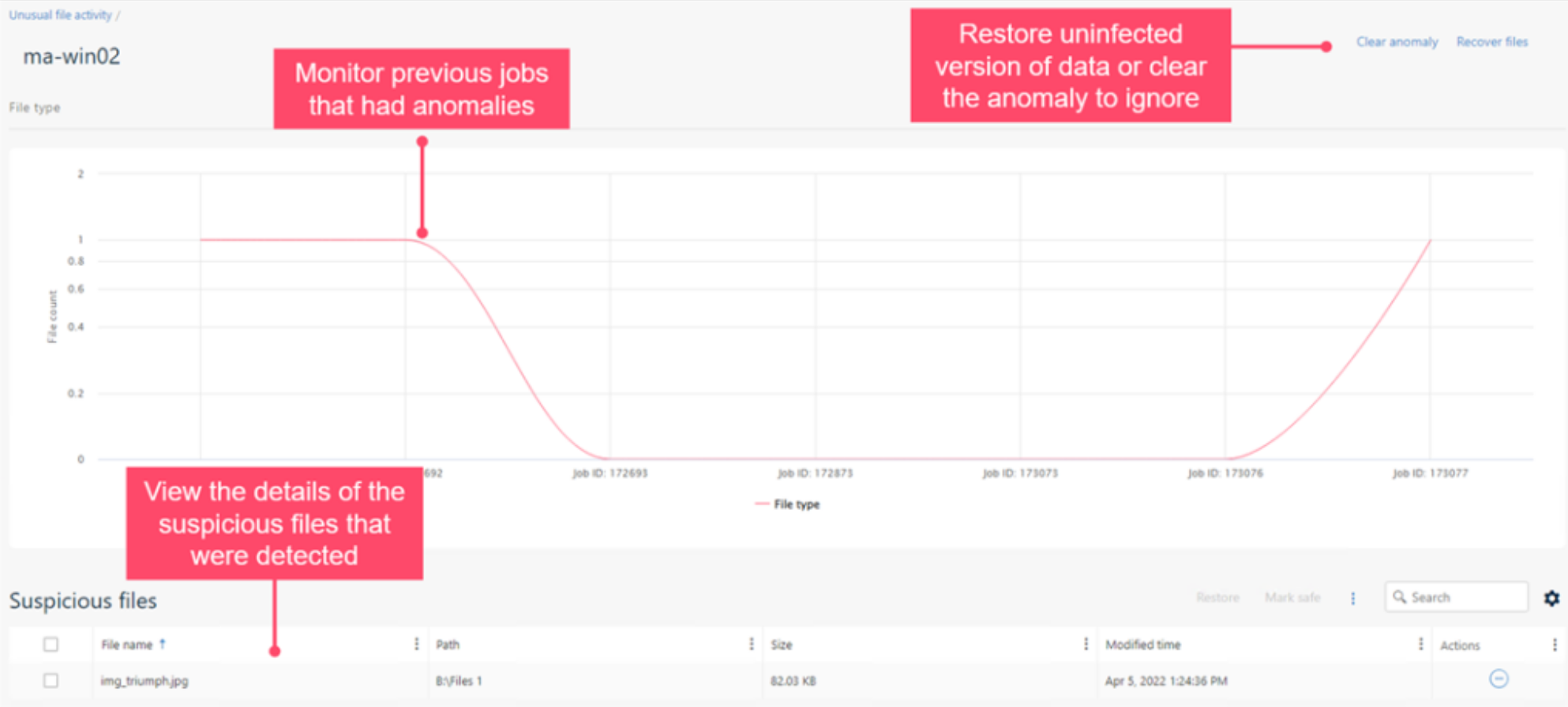
Un análisis más detallado de la actividad sospechosa de los archivos permite una mejor detección y respuestas más rápidas ante posibles amenazas a tus datos


This feature drives faster business response with immediate alerting of suspicious activity, along with automatic, efficient data recovery using clean versions from unaffected backups. Not just that – we’ve also expanded our data governance capabilities to now profile object storage for Azure, AWS and GCP, eliminating another common area of data leakage.

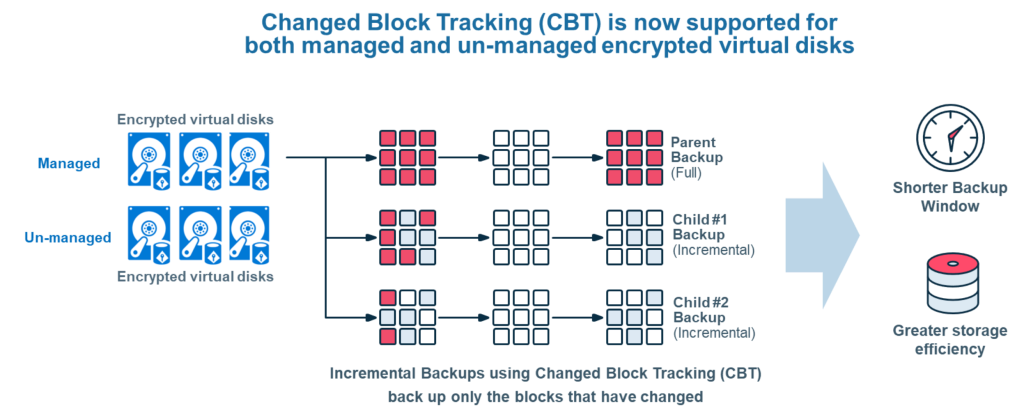
Another enhancement we’ve added is Changed Block Tracking (CBT) support for Azure Disk encryption. CBT improves backup performance while lowering backup costs, by consuming less storage and bandwidth for incremental backups. Historically, however, the ability to perform encryption while using CBT was limited, forcing a tough customer choice between security or cost savings. Working closely with Microsoft, we are excited to now introduce CBT efficiencies with Azure Disk encryption for managed and unmanaged encrypted disks. No longer do you need to make a choice between security, performance and cost efficiencies!

Por último, pero no por ello menos importante, me complace anunciar que ya hemos obtenido la certificación Sec17a, conforme a la norma WORM, para Commvault Grid, lo que se suma a nuestra ya amplia lista de certificaciones de seguridad —entre las que se incluyen FIPS 140-2, FedRAMP High In Process (en proceso de revisión por la Oficina de Gestión de Proyectos, PMO) y otras— y completa las capacidades del sistema de archivos inmutables de Commvault Grid.

These are just some of the new Data Security capabilities available in Commvault Platform Release 2022E, a release that’s packed with new features and innovation, reflecting on our continued investment in Intelligent Data Services.

Para obtener más información sobre esta versión, consulta estaPágina and stay tuned and we’ll be discussing more of the exciting new updates in Commvault Platform Release 2022E at our virtual event, Connections on Nov 2/3.


More related posts


Thumbnail_Blog-Architect-for-tomorrow-2026

Architect for Tomorrow: Unified Data Protection as the Foundation for Resilience

Read more about Architect for Tomorrow: Unified Data Protection as the Foundation for Resilience
Thumbnail_Blog-Dangerous-Silos-IDC-Resops-2026 (1)

The Importance of Recovery Point Objective (RPO) in Your Business Continuity Plan

Read more about The Importance of Recovery Point Objective (RPO) in Your Business Continuity Plan
Thumbnail_Blog-IDC-Resops-2026

Business Continuity Planning for the Cloud-Native Era

Read more about Business Continuity Planning for the Cloud-Native Era

On September 22, Commvault will be presenting live from San Jose, as part of Cloud Field Day 15. 

For the uninitiated, Cloud Field Day is part of the popular “Field day” series, which also includes Tech Field Day and Security Field Day. 

Hosted by Stephen Foskett, delegates from cutting edge companies, including Commvault, share their latest product news and innovations live with a group of hand-picked influencers.  A lively debate usually results, which also takes place across Social Media.

This Cloud Field Day, we’ll be taking the delegates through the very latest in data security technology including a first deep look at Metallic ThreatWise, a newly available data security service which provides customers with much needed early threat detection.  Highlights from Commvault’s recently released Platform release 2022E will also be included to showcase the breadth of Commvault’s Intelligent Data Services.

We’ll be live streaming the session right here on this blog as well as across Commvault’s LinkedIn Channels.

See you on Thursday, 22nd September at 1:30pm PT. Join in the Social Media conversation by using #CFD15.  You don’t want to miss it.

More related posts


Thumbnail_Blog-Architect-for-tomorrow-2026

Architect for Tomorrow: Unified Data Protection as the Foundation for Resilience

Read more about Architect for Tomorrow: Unified Data Protection as the Foundation for Resilience
Thumbnail_Blog-Dangerous-Silos-IDC-Resops-2026 (1)

The Importance of Recovery Point Objective (RPO) in Your Business Continuity Plan

Read more about The Importance of Recovery Point Objective (RPO) in Your Business Continuity Plan
Thumbnail_Blog-IDC-Resops-2026

Business Continuity Planning for the Cloud-Native Era

Read more about Business Continuity Planning for the Cloud-Native Era

Microsoft 365 is an essential component of today’s enterprise data environment. Still, many organizations fail to include it in their data protection plan. This is partly due to the misconception that cloud service providers are responsible for both administering the solution and protecting the data created and stored within it. However, this is not the case.

Your data, your responsibility

Microsoft provides a highly resilient platform and goes to great lengths to secure data residing within its application. However, like many cloud service providers, they follow what is known as the shared responsibility model, where they are responsible for maintaining the uptime, availability, and access to the solution, while the customer is responsible for protecting the data created and stored within that solution. And now, more than ever, your Microsoft 365 data must be protected and recoverable in the face of emerging threats.

It’s no secret that cyberattacks are on the rise, and SaaS applications are not immune. And there are other potential risks for the data beyond the risks of ransomware. Accidental deletion of data, network vulnerabilities, and internal breaches are all causes of data loss in SaaS applications.

Protection measures to prevent data loss go beyond understanding the shared responsibility model. They require purpose-built tools to help you safeguard your data from today’s threats.

You need dedicated data protection and recovery

While Microsoft offers native controls for data replication, today’s businesses need long-term retention, data separation, and tools for SLA compliance and recoverability. You need a dedicated third-party backup solution that offers the essential capabilities needed to protect and secure your data.

Here are just a few components where protection from third-party backup extends beyond native capabilities to provide advanced protection from today’s threats:

  • Aislamiento de datos
  • Retención prolongada
  • Restauración Flexible
  • Cumplimiento del SLA

Commvault enhances Microsoft 365 data protection

Tanto si ya eres cliente de Commvault como si estás pensando en utilizar Commvault en el futuro, te ofrecemos protección de datos para Microsoft 365 a través de Commvault Complete Data Protection y Metallic SaaS Backup, lo que significa que podrás elegir la solución que mejor se adapte a las necesidades específicas de tu empresa.

Are you looking for a SaaS-delivered solution with rapid deployments, unlimited storage and retention included, and no additional infrastructure required? Then Metallic para Microsoft 365 is the best fit.

Looking for on-premises data protection or want to leverage your own infrastructure? Do you have specific needs for long-term retention or migration between on-premises Exchange and Microsoft 365?  Then look to on-premises protection through Commvault Complete Data Protection for Microsoft 365.

Para obtener más información sobre cómo Commvault mejora la protección de datos de Microsoft 365, visitacommvault.com/microsoft-365.

Learn more about Microsoft’s Responsabilidad compartida.

More related posts


Thumbnail_Blog-Architect-for-tomorrow-2026

Architect for Tomorrow: Unified Data Protection as the Foundation for Resilience

Read more about Architect for Tomorrow: Unified Data Protection as the Foundation for Resilience
Thumbnail_Blog-Dangerous-Silos-IDC-Resops-2026 (1)

The Importance of Recovery Point Objective (RPO) in Your Business Continuity Plan

Read more about The Importance of Recovery Point Objective (RPO) in Your Business Continuity Plan
Thumbnail_Blog-IDC-Resops-2026

Business Continuity Planning for the Cloud-Native Era

Read more about Business Continuity Planning for the Cloud-Native Era

https://play.vidyard.com/HSrWMH7cRstsFT42QdpTua.jpg

¿Saben tus equipos cuáles son sus funciones y responsabilidades en caso de un ciberataque real?

¿Tienen tus equipos la autoridad necesaria para tomar decisiones sobre la marcha, o tienen que conectarse a reuniones por Zoom para obtener permiso para apagar los servidores?

¿Están coordinados tus equipos de operaciones de TI, redes y seguridad a la hora de saber qué equipo se encarga de qué, cuándo deben intervenir y cuándo no?

According to a recent Gartner report, multidisciplinary teams that blend technology or analytics and business domain expertise and share accountability for business and technology outcomes foster team fusion innovation for digital delivery. Fusion teams consist of business and IT staff: product owners, scrum masters, developers, and domain experts. Fusion teams help to remove friction and address companywide issues and requirements.1

A village

With so many ransomware factors, it is usually within the innocent context that someone simply clicks a link, infecting an organization’s entire network with malware. There are many considerations on how you will defend against this very prevalent threat. Defending against ransomware is a major challenge  – and no individual team can combat it on their own. It takes a well-equipped, prepared, and practiced village to deal with complex threats successfully – one that includes:

People

La coordinación con los equipos internos y externos antes, durante y después de un ataque de ransomware es fundamental para agilizar la Recovery, de modo que puedan reaccionar con mayor rapidez y mitigar los costes asociados al tiempo de inactividad.

Process

It is important that internal and external teams are aware of and in sync regarding their responsibilities and what processes they need to follow during a ransomware attack. Test, test, and test your process, as speed will be essential, and you don’t want to test out your process during an attack.

Technology

Sigue elMarco de Ciberseguridad del Instituto Nacional de Estándares y Tecnología (NIST)para facilitar tu preparación. La adopción de un marco de seguridad de múltiples capas contribuye a garantizar que tus datos estén listos para la Recovery y reduce el riesgo de pérdida.

Call To Action

La pérdida de datos y la imposibilidad de recuperarlos rápidamente supondrán un coste económico y una pérdida de tiempo para tu organización, además de poner en riesgo tu reputación y tu actividad.

  • Identificar a las partes interesadas clave: determinar quién debe intervenir en caso de ciberataque.
  • Identifica los activos clave: distingue lo que es importante de lo que no lo es.
  • Realiza un ejercicio de simulación: revisa y comunica de forma proactiva tus planes.
  • Análisis posterior y aplicación de cambios: identificar los aspectos que se pueden mejorar y poner en práctica dichos cambios.

Lee nuestroeBook Understanding Team Roles & Responsibilities in fighting ransomware to learn more.

This content has been derived from Commvault Connections 2021. Watch Dave Martin’s presentation aquí.


  1. Gartner, «I&O Forward: liderando la próxima fase de crecimiento», 2022

More related posts


Thumbnail_Blog-Architect-for-tomorrow-2026

Architect for Tomorrow: Unified Data Protection as the Foundation for Resilience

Read more about Architect for Tomorrow: Unified Data Protection as the Foundation for Resilience
Thumbnail_Blog-Dangerous-Silos-IDC-Resops-2026 (1)

The Importance of Recovery Point Objective (RPO) in Your Business Continuity Plan

Read more about The Importance of Recovery Point Objective (RPO) in Your Business Continuity Plan
Thumbnail_Blog-IDC-Resops-2026

Business Continuity Planning for the Cloud-Native Era

Read more about Business Continuity Planning for the Cloud-Native Era

Algunos ejemplos del «efecto Mandela»:

  • Aunque la mayoría de la gente recuerda al personaje infantil «Curious George» con una cola, en realidad no la tiene.
  • Many people believe there is a brand of peanut butter called “Jiffy” but there is not. There’s Jif, and there’s Skippy, but no Jiffy.
  • In the iconic scene in “Silence of the Lambs,” Hannibal Lecter does not say “Hello Clarice” as many people remember.  He says “good morning.”

El efecto Mandela en la nube

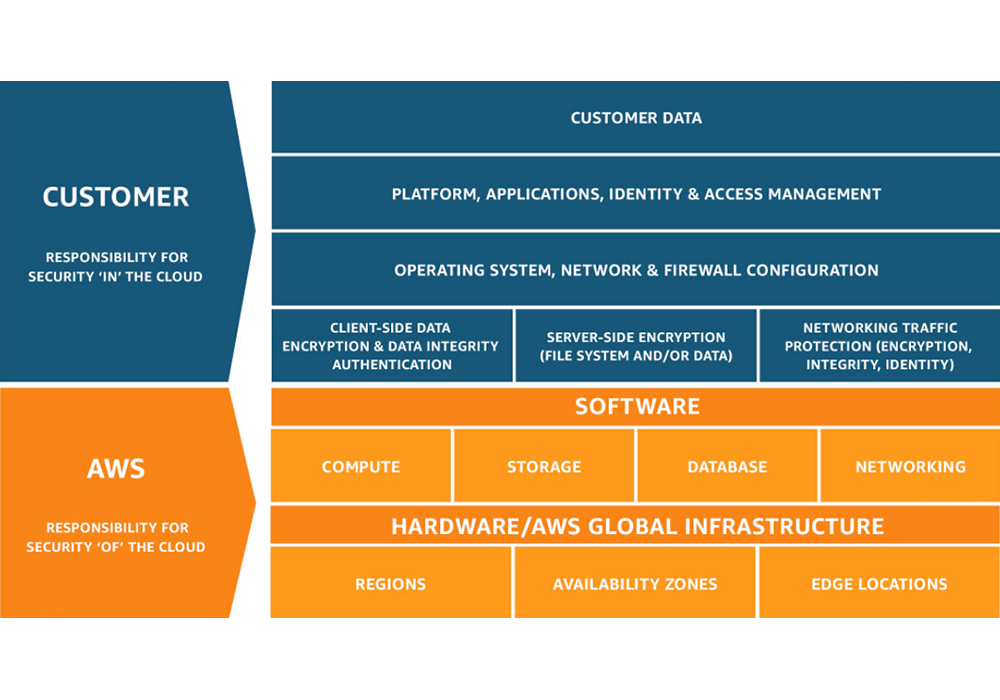
The Mandela effect is not just a pop culture phenomenon, it exists in the world of enterprise technology, too. It’s a common misconception that data stored in the cloud is automatically backed up.  The truth is that cloud providers operate on a shared responsibility model, in which the cloud provider is responsible for the security of the software, hardware and infrastructure, but not customers’ data.

Shared Responsibility Model from AWS

For example, when AWS refers to their highly durable Amazon S3 service, it’s true that the platform is incredibly durable, which means you’re unlikely to experience any trouble with their systems or infrastructure.  However, this has nothing to do with protecting your data from accidental deletions, ransomware attacks or insider threats. According to the shared responsibility model, that’s your job.

Medidas para proteger tus datos en la nube

A los clientes les encanta trabajar con Clumio porque obtienen una protección de datos inmutable y aislada físicamente, con un tiempo de retorno de la inversión increíblemente rápido, mientras que la simplicidad del modelo SaaS garantiza una importación, catalogación, búsqueda y Recovery rápidas y sencillas a cualquier escala. Clumio permite a los clientes automatizar la protección de sus datos de AWS y Microsoft 365, lo que les ahorra tiempo y recursos, permitiéndoles centrarse en iniciativas estratégicas y reduciendo el coste total de propiedad (TCO) en comparación con otras opciones.

Don’t let data protection misconceptions leave you vulnerable.

More related posts


Thumbnail_Blog-Architect-for-tomorrow-2026

Architect for Tomorrow: Unified Data Protection as the Foundation for Resilience

Read more about Architect for Tomorrow: Unified Data Protection as the Foundation for Resilience
Thumbnail_Blog-Dangerous-Silos-IDC-Resops-2026 (1)

The Importance of Recovery Point Objective (RPO) in Your Business Continuity Plan

Read more about The Importance of Recovery Point Objective (RPO) in Your Business Continuity Plan
Thumbnail_Blog-IDC-Resops-2026

Business Continuity Planning for the Cloud-Native Era

Read more about Business Continuity Planning for the Cloud-Native Era

En este blog analizaremos:

Containerization

What is a contenedor?

  • A Container is a basic software unit that packages up code and all its dependencies so an application can run smoothly in any environment. Each container is made up of a hardware, an operating system, a container engine, libraries, and dependency’s and finally the application. Everything the application needs to run is inside the container which means it can be created and deleted quickly using automation.
    • Para 2025, el 85 % de las empresas de todo el mundo ejecutarán aplicaciones en contenedores en entornos de producción1

Container Orchestration

  • La orquestación de contenedores consiste en la automatización de las cargas de trabajo en contenedores. Es fundamental a la hora de trabajar con contenedores, ya que permite implementar la misma aplicación en distintos entornos sin necesidad de rediseñarla.

Kubernetes

What is Kubernetes (aka K8s)?

  • Kubernetes is an open-source container orchestration software designed for deploying, managing, and scaling containers. So, what does that mean? Essentially it eliminates much of the manual processes that needs to be done during deploying and scaling containerized workloads, even across various types of physical, virtual, and cloud environments.
  • Según una encuesta reciente realizada por la Cloud Native Computing Foundation, de los 3.800 encuestados, el 96 % de las organizaciones están utilizando o evaluando Kubernetes2

Did you know?

  • The name Kubernetes comes Greek word κυβερνήτης (kubernḗtēs) which means pilot or helmsman therefore the Kubernetes logo is a ship’s steering wheel.  Kubernetes is often abbreviated as K8s because there are 8 letters in between ‘K’ and ‘S’
  • Kubernetes fue desarrollado y diseñado originalmente por ingenieros de Google y posteriormente fue cedido a la CNCF en 2015.

How does it work?

  • Kubernetes is a concept made up of several different components, and, while there are several elements and use-cases in the implementation of Kubernetes, the main concepts to understand are: the Control PlanePods, and Nodes.
    • The Control Plane consists of elements and API processes which coordinate workloads and communications, allowing for the smooth flow of information and resource allocation across the environment.
    • Pods are the base element in Kubernetes. A Pod consists of one or more containers and are co-located on the same node.
    • A Node (also known as a minion, or worker)is a machine on which containers are deployed. Each node must run a container runtime such as Docker, CoreOS rkt, Containerd, etc. Multiple Nodes can be grouped into Clusters.

Your IT environment and Kubernetes

  • Como consecuencia de los cambios en las prácticas informáticas actuales, los usuarios esperan que las aplicaciones estén disponibles las 24 horas del día, los 7 días de la semana, y a veces se espera que los desarrolladores sean capaces de implementar nuevas versiones de las aplicaciones varias veces al día. Además, los entornos de TI son cada vez más híbridos y se basan en enfoques multinube, integrando recursos locales con nubes públicas o privadas de diferentes proveedores. Aunque los sistemas de contenedores permitían a los desarrolladores hacer que el software fuera más portátil y albergar todos los paquetes necesarios para ejecutar un servicio, seguían estando limitados por la cantidad de trabajo manual que se requería para aprovisionar y modificar cada contenedor en todo el entorno.
  • Kubernetes puede ayudar a las organizaciones a gestionar mejor sus cargas de trabajo y a reducir los riesgos. Kubernetes es capaz de automatizar las operaciones de gestión de contenedores y optimizar el uso de los recursos informáticos. Incluso puede reiniciar contenedores huérfanos, apagar los que no se están utilizando y volver a crearlos. Kubernetes automatiza el despliegue de contenedores sin que el equipo de DevOps tenga que encargarse manualmente de todas las tareas. Esto permite a los desarrolladores implementar nuevas versiones de aplicaciones específicas con mayor frecuencia y hace posible su lanzamiento y actualización sin tiempo de inactividad, incluso en múltiples entornos (por ejemplo, desarrollo, pruebas y producción).

Benefits of Kubernetes

  • Las principales ventajas de Kubernetes pueden resumirse en: reducción de los plazos de desarrollo y lanzamiento de aplicaciones, optimización de los costes de TI, mayor escalabilidad y disponibilidad del software, flexibilidad en entornos multinube y portabilidad en la nube.
  • Cargas de trabajo portátiles
    • Because Kubernetes is an open source your workloads become portable take advantage of on-prem, hybrid, and multiple cloud environment— all while maintaining consistency across each environment.
  • Flexibilidad
    • Independientemente de dónde se ejecute Kubernetes, ofrece flexibilidad en entornos híbridos y multinube, lo que permite que cualquiera de nuestras aplicaciones funcione sin problemas en cualquier entorno público o privado.
  • Automatización
    • Kubernetes puede automatizar los entornos en contenedores actuando como su sistema operativo. Para ello, automatiza los requisitos operativos de las cargas de trabajo en contenedores.
  • Escalabilidad y disponibilidad
    • Kubernetes permite definir aplicaciones complejas en contenedores e implementarlas en clústeres de servidores. A medida que Kubernetes escala las aplicaciones según el estado deseado, supervisa y mantiene automáticamente el estado de los contenedores.

Kubernetes Architecture 

  • Kubernetes control plane: Also known as the master machine, is the container orchestration layer that exposes the API and interfaces to define, deploy, and manage the lifecycle of containers aswell as the nodes that hold the containerized applications. It ensures that every cluster is kept in its desired state.

The components of the Control Plane

  • API Server: The Application Programming Interface also know as API is the front end of Kubernetes. It is where clients make an initial request for an object or a collection and it determines if the request is valid and then it will process it. The API server also is what is used to transmit, create, and configure data within K8 clusters.
  • K8s scheduler: The scheduler is what watches and manages pods that are newly created and assigns them to a node so they can run on it smoothly.
  • Controller manager: Within the Control Plane there are multiple controllers, they are the control loops designed to watch the state of your cluster and make or request changes as they are needed.
  • Etcd: Is a data base where all your container storage is stored. It is a strongly consistent, distributed key-value store that holds and manages the critical information that systems need to run.
  • Cluster
    • NODE: (also known as a minion, or worker)is a machine on which containers are deployed. Each node must run a container runtime such as Docker, CoreOS rkt, Containerd, etc. Multiple Nodes can be grouped into Clusters.
    • Pod: are the base element in Kubernetes. A Pod consists of one or more containers and are co-located on  nodes.
      • Aquí es donde se guarda toda tu información importante

Modernize with Kubernetes

  • Kubernetes permite simplificar y acelerar la migración de aplicaciones desde un entorno local a nubes públicas o privadas, ofrecidas por cualquier proveedor. Las aplicaciones pueden migrarse a la nube mediante la adopción de diversas metodologías:
    • la simple transposición de la aplicación, sin ningún cambio en el código (Lift & Shift);
    • los cambios mínimos necesarios para que la aplicación funcione en nuevos entornos (migración a una nueva plataforma);
    • la reescritura exhaustiva de la estructura y la funcionalidad de la aplicación (refactorización).
  • Moderniza tu entorno con mayor facilidad que nunca gracias a la adopción de Kubernetes. Ya no tendrás que preguntarte dónde están tus datos, ya que todos ellos se almacenan en un único lugar. El almacenamiento de Kubernetes se basa en volúmenes. Los volúmenes pueden ser persistentes o no persistentes. Dentro de los pods, los contenedores solicitan más almacenamiento.
    • Kubernetes can be built once and then is able to be deployed anywhere. This means no matter where you build your cluster whether it is on prem or in the cloud you don’t need to rebuild the solution you just have to deploy a different cluster.

Challenge

  • Kubernetes clusters can be prone to ransomware attacks, like any other workload. In some cases, a hacker can gain access to what is inside of your pod –  potentially receiving critical information about your organization. Therefore, backing up and having data protection for your clusters is vital when it comes to moving your workloads around.

Kubernetes Backup

  • Se trata del proceso de realizar copias de seguridad de todos los componentes que se ejecutan en una plataforma de orquestación de Kubernetes, lo que incluye todas las aplicaciones en contenedores de la organización. Dado que un clúster de Kubernetes cuenta con tantos componentes —pods, nodos, plano de control y volúmenes—, cada uno de ellos requiere un nivel de protección. La protección es fundamental para un clúster, sobre todo porque las organizaciones dependen cada vez más de Kubernetes. Realizar una copia de seguridad de un clúster de Kubernetes garantizará que los datos, las configuraciones y los archivos estén protegidos frente a cualquier ataque. Por eso necesitas una solución capaz de realizar una copia de seguridad de todo tu clúster.
  • Las principales etapas de la copia de seguridad de Kubernetes incluyen:
    • El descubrimiento
    • Identificación de recursos
    • Backup
      • Según el informe «State of Kubernetes Security Report 2022» de Red Hat, el 93 % de los encuestados sufrió al menos un incidente de seguridad en sus entornos de Kubernetes en los últimos 12 meses, lo que en ocasiones provocó pérdidas de ingresos o de clientes³

Commvault and Metallic’s Kubernetes Backup

Commvault and Kubernetes Data Protection

  • Commvault has the ability to back up your entire cluster unlike most solutions that can only back up your containers. Commvault provides data protection for persistent storage in your stateful applications. Commvault’s solution automates back up of this data all from a single platform that increases the visibility and management capabilities of your entire environment. Our solution gives you the flexibility to migrate and deploy containers from on-prem to cloud, cloud to cloud and even back on- prem seamlessly with ease. It also offers broad support for VMs, data services and cloud services in a single platform. It is also compatible with all CNCF- certified distributions and integrated with CSI for snapshot-based backups.
  • Commvault has been recognized by the 2022 GigaOm report as a “leader and outperformer” in Kubernetes data protection for our flexible deployment architecture and single interface across multiple deployments. The report also states that our security and ransomware controls are extensive which makes it suitable for larger enterprises.

How Commvault does it

  • Commvault programa un grupo de trabajadores temporales para llevar a cabo el traslado de datos. La configuración especifica un registro de contenedores privado en el que se almacena una imagen que Commvault puede descargar. Esto permite consolidar clústeres, simplificar la migración entre clústeres y optimizar la gestión del ciclo de vida de los clústeres.

Challenges before Commvault

  • Antes de Commvault, las organizaciones tenían que hacer frente a la proliferación de clústeres, gestionar sus ciclos de vida y consolidarlos. Commvault ayuda a superar estos retos al permitirte migrar tus aplicaciones de Kubernetes a cualquier nube con facilidad.

Metallic and Kubernetes backup

  • Metallic ofrece VM & Kubernetes Backup. Se trata del único servicio SaaS de protección de datos que ofrece una cobertura completa de cargas de trabajo híbridas, lo que garantiza que tus contenedores estén siempre a salvo.
  • La solución VM & Kubernetes Backup de Metallic te permite ampliar fácilmente tu entorno a los contenedores para modernizar tus aplicaciones con total confianza, al tiempo que proteges las aplicaciones tradicionales. Tanto si tu entorno está en tus propias instalaciones como en la nube, Metallic es compatible con todas las distribuciones de Kubernetes certificadas por la Cloud Native Computing Foundation, como Azure Kubernetes Service (AKS), Amazon EKS, VMware, Rancher y muchas más.
  • Metallic puede proteger bases de datos en la nube o locales, sistemas de control de código fuente, registros de imágenes y almacenamiento de objetos nativo de la nube.
  • Gracias a la flexibilidad sin igual, la seguridad máxima y la gestión sin complicaciones de esta solución, todas tus cargas de trabajo estarán cubiertas.

Conclusion

Kubernetes es el futuro, y ahora es el momento de asegurarte de que todas tus cargas de trabajo estén protegidas y puedan migrarse de forma segura a la nube. Commvault es la opción más sencilla. Hemos sido nombrados líderes y «outperformer» en el informe de GigaOm de 2022 sobre protección de datos en Kubernetes gracias a nuestra amplia compatibilidad con cargas de trabajo, nuestra compatibilidad con distribuciones certificadas por la CNCF y nuestros exhaustivos controles contra el ransomware. Así que haz las maletas, porque hoy mismo zarpamos hacia la nube.

References

1. Best Practices for Running Containers and Kubernetes in Production – 4 Aug 2020 – Gartner ID G00730344 – 2. CNCF 2021, Annual Survey – 3. Red Hat 2022, State of Kubernetes Security Report

More related posts


Thumbnail_Blog-Architect-for-tomorrow-2026

Architect for Tomorrow: Unified Data Protection as the Foundation for Resilience

Read more about Architect for Tomorrow: Unified Data Protection as the Foundation for Resilience
Thumbnail_Blog-Dangerous-Silos-IDC-Resops-2026 (1)

The Importance of Recovery Point Objective (RPO) in Your Business Continuity Plan

Read more about The Importance of Recovery Point Objective (RPO) in Your Business Continuity Plan
Thumbnail_Blog-IDC-Resops-2026

Business Continuity Planning for the Cloud-Native Era

Read more about Business Continuity Planning for the Cloud-Native Era

Enterprises today are inherently heterogeneous, running applications and supporting workloads across on-prem, edge and multiple clouds. As businesses accelerate their IT transformation, this hybrid multi-cloud presence is set to further expand. It is imperative, then, that enterprise data protection and data management solutions excel in all of these areas – across on-prem, edge and multiple clouds.

Gartner Critical Capabilities report assesses these types of solutions on various key aspects such as security, efficiency, scalability and performance, Data Center ecosystem, and reporting and analytics across the key use cases of on-prem, edge and cloud. In my conversations with CIO’s, IT leaders, and architects, these are exactly the key aspects they are concerned with when architecting their data management strategy to protect their crown jewels.

This is why we are thrilled and honored that Commvault Backup & Recovery has scored the highest in all three use cases in the 2022 Gartner Critical Capabilities for Enterprise Backup and Recovery Software Solutions: Data Center Environments (4.23/5), Cloud Environments (4.18/5), and Edge Environments (4.22/5). With the highest scores in all three use cases – for the third time in a row – we believe this is yet another validation of our commitment to be a trusted partner to our customers in protecting their data and workloads – no matter where they reside.

Data Center Environments (4.23/5)
Cloud Environments (4.18/5)
Edge Environments (4.22/5)

Las empresas están en constante evolución y expansión para satisfacer las necesidades empresariales. Por lo tanto, otro factor clave que impulsa la transformación de las tecnologías de la información es una solución de gestión de datos capaz de evolucionar de forma flexible junto con el resto de las tecnologías de la información.

“Our continuous innovation is designed with ultimate flexibility when it comes to data management – offering not only an enterprise software solution but also the ability to manage and protect enterprise data with Commvault Grid as an integrated solution or via Metallic as a cloud-delivered DMaaS solution.”


Unfortunately, flexibility and breadth are often offered at the cost of simplicity in our industry.  In contrast, Commvault breaks this paradigm with our “infinitely scalable, radically simple” approach. We bring together all management – across our broad set of supported workloads, flexible form factors and array of Intelligent Data Services – through the single experience of Commvault Command Center. This simplicity – with no compromise to flexibility and breadth – empowers customers to fast-track their business transformation aligning their data management to their broader IT strategy. As businesses modernize and transform, transitioning applications and workloads from one form factor or location to another (from on-prem to cloud, for example), we ensure they remain protected no matter where they are in this journey.

As an eleven-time Leader in the Gartner Magic Quadrant and back-to-back years with the highest scores in all three use cases in the Gartner Critical Capabilities report, we are grateful to our customers for partnering with us in this journey of continuous customer-first innovation and to our partners in building a data ecosystem with no boundaries. Our journey to solve the hard data management problems with elegant solutions continues … together with our dear customers and partners!

Gartner®, Magic Quadrant™ para soluciones de software de Backup and Recovery para empresas, 28 de julio de 2022, Michael Hoeck y otros. Gartner®, «Capacidades críticas de las soluciones de software de Backup and Recovery para empresas», 22 de agosto de 2022, Nik Simpson y otros.

Gartner Disclaimer:

**Gartner does not endorse any vendor, product or service depicted in its research publications, and does not advise technology users to select only those vendors with the highest ratings or other designation. Gartner research publications consist of the opinions of Gartner’s research organization and should not be construed as statements of fact. Gartner disclaims all warranties, expressed or implied, with respect to this research, including any warranties of merchantability or fitness for a particular purpose.**

**GARTNER y Magic Quadrant son marcas comerciales registradas y marcas de servicio de Gartner, Inc. y/o sus filiales en Estados Unidos y a nivel internacional y se utilizan en este documento con permiso. Todos los derechos reservados.**

Consigue tu ejemplar del informe «Capacidades críticas de Gartner para soluciones de Backup and Recovery empresarial» de 2022

More related posts


Thumbnail_Blog-Architect-for-tomorrow-2026

Architect for Tomorrow: Unified Data Protection as the Foundation for Resilience

Read more about Architect for Tomorrow: Unified Data Protection as the Foundation for Resilience
Thumbnail_Blog-Dangerous-Silos-IDC-Resops-2026 (1)

The Importance of Recovery Point Objective (RPO) in Your Business Continuity Plan

Read more about The Importance of Recovery Point Objective (RPO) in Your Business Continuity Plan
Thumbnail_Blog-IDC-Resops-2026

Business Continuity Planning for the Cloud-Native Era

Read more about Business Continuity Planning for the Cloud-Native Era

Commvault’s long time partnership with Microsoft has once again given us the opportunity to offer our customers cutting edge features and functionality.  We are excited to have had the opportunity to develop this feature in lockstep with Microsoft allowing us to release our enhanced capabilities on Commvault Complete and Metallic® DMaaS simultaneously when Azure Restore Points became publicly available on July 19th 2022.

Commvault Protection for Azure Virtual Machines

Figura 1

Commvault has always offered options for protecting Azure Virtual Machines (VM) by using snapshots or even installing software on the VM to provide Application Awareness.   Each disk resource is individually snapped and protected.  The process is serial by nature as each resource request needed to be made in series. 

En la figura 1, una solicitud de copia de seguridad debería proteger primero el disco del sistema operativo, luego el disco «Datos 1» y, por último, el disco «Datos 2». Los tres forman la máquina virtual y se protegerían conjuntamente, pero es posible que sus instantáneas no se completen exactamente al mismo tiempo, por lo que podría ser necesaria una coordinación adicional con la capa de aplicación para garantizar la coherencia a nivel de aplicación.

New Restore Point Functionality

Figura 2

With Restore Points, Commvault will now have the ability to create collections of restore points across all volumes on a VM.  When doing so, the restore process is simplified, and the collection points are stored on cost efficient storage.  This is a major architectural change in data protection for Microsoft that Commvault Complete and Metallic enable with a click.

In the example in Figure 2, once a Restore Point Collection is created, the same VM would be protected as a single API call to create a Restore Point.  Every Restore Point is incremental and should complete in seconds.  All disks within the VM are consistent with the restore point automatically.  Every Restore Point will contain a Disk Restore Point for all managed disks.  The Disk Restore Point consists of a snapshot of that disk.  This reduces the restore process in this example from 3 steps to 1.  

How is it simplified? 

Leveraging the Commvault platform to orchestrate VM protection and more importantly, the recovery of VMs at enterprise scale is a critical need.  Getting away from point solutions and homebrew scripting naturally promotes growth and reduces downtime.  Being able to recover dozens or hundreds of instances with a few clicks keeps end user time from being sacrificed.

Improve resiliency while reducing tech waste

Commvault supports creating snapshots in cost audited resource groups already and automatically tags resources as they are created so that cost reporting is accurate.  Adding VM Restore Points to our portfolio now allows us to create the restore points in cost efficient and less redundant storage tiers.  It might be a minor cost difference, but at cloud scale, the billing is in the details and every improvement brings value to the solution.   There’s no tradeoff in taking advantage of Restore Points.  It simplifies and reduces cost while improving resiliency.  Azure Restore Points ensures that the applications and the operating system are consistent when creating these collections at the native instance level. 

A quick recap

Better cost efficiency, better performance, better resiliency, and a simplified design.  A resounding win!  We are excited to have had the opportunity to develop this feature in lockstep with Microsoft and prove yet again our commitment to making the latest enhancements in Azure readily available within the Commvault Intelligent Data Services portfolio of solutions.   

More related posts


Thumbnail_Blog-Architect-for-tomorrow-2026

Architect for Tomorrow: Unified Data Protection as the Foundation for Resilience

Read more about Architect for Tomorrow: Unified Data Protection as the Foundation for Resilience
Thumbnail_Blog-Dangerous-Silos-IDC-Resops-2026 (1)

The Importance of Recovery Point Objective (RPO) in Your Business Continuity Plan

Read more about The Importance of Recovery Point Objective (RPO) in Your Business Continuity Plan
Thumbnail_Blog-IDC-Resops-2026

Business Continuity Planning for the Cloud-Native Era

Read more about Business Continuity Planning for the Cloud-Native Era

En realidad, la hierba es más verde en la nube

Until very recently, many enterprises were limited by on-prem infrastructure, requiring huge data centers that had to be maintained, cooled, and secured. On top of that, the enterprise-owned server utilization rate is a measly 18%, with the majority of data centers operating at energy efficiency levels below 80%. This underutilization made on-prem ripe for disruption when the cloud came about. The cloud’s on-demand scalability provided companies the ability to optimize utilization rates without the hassle of managing, powering or cooling infrastructure. Considering the benefits, it’s not surprising that the average enterprise on-prem to cloud migration led to a 65% energy reduction and 84% carbon reduction (Accenture, «The Green Behind the Cloud). Moreover, AWS is set to power all operations with 100% renewable energy by 2025, with a commitment to achieve net-zero carbon emissions by 2040. They use reclaimed or recycled water for cooling and have embodied carbon in the construction of newer data centers across the globe. And as an AWS recommended partner, Clumio is pushing the boundaries of environmentally sustainable computing with its on-demand hyper-scalable architecture.

Las soluciones nativas en la nube son fundamentales para maximizar la sostenibilidad

whether you need help protecticting your data against ransomware, meeting compliance requirements, or recovering from data loss; data backups can take up a significant amount of storage space, and increase your infrastructure footprint if done on-prem. Companies must choose carefully if they are conscious of reducing their carbon footprint from their data. Some best practices include going with a cloud-native / SaaS data protection vendor if possible, implementing incremental backups vs full system snapshots, categorizing and auto-archiving data based on criticality and usage, and most importantly, investing in a platform that is architected to scale on demand. If these concerns sound like yours, Clumio can help.

Cómo puede ayudarte Clumio

Clumio is a cloud-native backup solution, architected with a container-based stateless data processing pipeline that leverages efficient Lambda functions. This allows adaptability and efficient scaling to optimize usage based on your exact policies. Having this scalable compute and increased utilization rates can ultimately lead to significant carbon reduction from your data estate, in addition to significantly lower TCO (save your wallet while saving the planet).

See for yourself how the industry’s first cloud-native backup and rapid recovery solution can optimize your business’s sustainability metrics. Schedule a demo and learn how your business can be up and running with Clumio in as few as 10 minutes — no need to wait for and install new infrastructure and software.

More related posts


Thumbnail_Blog-Architect-for-tomorrow-2026

Architect for Tomorrow: Unified Data Protection as the Foundation for Resilience

Read more about Architect for Tomorrow: Unified Data Protection as the Foundation for Resilience
Thumbnail_Blog-Dangerous-Silos-IDC-Resops-2026 (1)

The Importance of Recovery Point Objective (RPO) in Your Business Continuity Plan

Read more about The Importance of Recovery Point Objective (RPO) in Your Business Continuity Plan
Thumbnail_Blog-IDC-Resops-2026

Business Continuity Planning for the Cloud-Native Era

Read more about Business Continuity Planning for the Cloud-Native Era

In this blog, you’ll learn how Commvault Grid makes implementing an immutable architecture easy as an integrated appliance or reference design for an all-in-one solution. With cyber-attacks increasing it delivers comprehensive data management across workloads to protect your data through 5 security layers. Commvault offers a hybrid of controls that work together to harden data against ransomware, cyber threats, and bad actors. 

What is an Immutable Architecture and how do organization benefit?   

Immutability is defined as the ability of any data to be maintained in a non-fungible state for a specific duration of time. Data immutability can be attained via various methods working in conjunction with each other.  An immutable architecture is a model in which no updates, security patches, or configuration changes happen “in-place” on production systems.  If any change is needed, a new version of the architecture is built and deployed into production.  

Organizations need an immutable architecture to ensure their data is safe and secure and more importantly, ready whenever they need to restore it. Immutability is a proven technique used to reduce cyber-attacks on backup data and ensure that backup copies aren’t changed in any way. 

Commvault Grid for Greater Immutability  

Commvault Grid makes it easier to implement an immutable architecture as an integrated appliance or reference design for an all-in-one solution. It delivers comprehensive data management for all workloads from a single, extensible platform. Commvault employs a multi-layered approach to protect against various threat vectors and ensure data is safe. Commvault’s immutable architecture consists of 5 layers which are:   

  • Storage I/O Controls   
  • Zero Trust AAA Controls   
  • Infrastructure Hardening   
  • Zero trust isolation and air gap  
  • Data Validation  

Commvault Grid leverages the entire Commvault software portfolio providing access to all the features, functions, and industry-leading integrations with applications, databases, public cloud environments, hypervisors, operating systems, containers and NextGen workloads. Wherever your data resides, you have the ability to view it, use it, and confidently protect it. Commvault Grid accelerates hybrid cloud adoption with an integrated solution built on a deeply layered system of controls that work together to harden data against ransomware, cyber threats, and bad actors.   


More related posts


Thumbnail_Blog-Architect-for-tomorrow-2026

Architect for Tomorrow: Unified Data Protection as the Foundation for Resilience

Read more about Architect for Tomorrow: Unified Data Protection as the Foundation for Resilience
Thumbnail_Blog-Dangerous-Silos-IDC-Resops-2026 (1)

The Importance of Recovery Point Objective (RPO) in Your Business Continuity Plan

Read more about The Importance of Recovery Point Objective (RPO) in Your Business Continuity Plan
Thumbnail_Blog-IDC-Resops-2026

Business Continuity Planning for the Cloud-Native Era

Read more about Business Continuity Planning for the Cloud-Native Era

Ejemplos de costes ocultos y variables de las copias de seguridad en la nube

Tasas de salida

The majority of cloud providers will allow their users to place data into the cloud without any fees. However, this does not apply when their data is retrieved from the cloud. Cloud providers typically charge what’s known as egress fees any time data is retrieved.

If your enterprise is constantly pulling its data out of the cloud—such as migrating or recovering data— you can see how the fees can add up quickly and lead to inflated costs that are nearly impossible to predict. Egress fees are considered a hidden fee since they fluctuate based on usage and are tied to a common action (data retrieval).

Licencias

There may be a variety of licenses that are required, each with their own fee. These can snowball when cloud backup vendors require licenses for each of the data sources you back up or multiple licenses per user—something you may not realize until the bill comes.

Instantáneas y costes de almacenamiento

It is common for enterprises to create long-term storage for their production data if they need to recover it after an attack—such as ransomware. This could involve creating massive amounts of snapshots for each account in high-tier storage. Furthermore, each time a block or file is changed, a new snapshot is automatically created. These snapshots are replicated across accounts, effectively doubling backup storage costs that continue to pile up over time. Costs are further compounded when considering industry retention requirements that go beyond 35 days.

Adding to all the complexity is the fact that it’s difficult to gauge just how many of the backup snapshots in your AWS accounts are even needed. Sure, your bill can display how much you are spending in a particular region, but it doesn’t show the level of granularity regarding the age of the snapshots or assets they are associated with.

Achieve Predictable Costs and Lower TCO with the Industry’s Leading Cloud-Native Backup Solution

You can avoid excessive cloud spending and gain control over backup costs by choosing a cloud backup solution with a simple, straightforward pricing model that clearly spells out the ongoing charges.

Built natively in AWS, Clumio’s backup solution offers the scalability, performance, data protection, and faster access to innovation made possible by the cloud while avoiding the hidden costs, complexity, and limited flexibility of snapshot-based backup solutions.

Precios simplificados

Clumio’s Pay-As-You-Go consumption model with rollover credits provides enterprises with a simplified and clear backup-as-a-service solution that ensures cost predictability while lowering TCO:

  • Transparency – No hidden costs, no license fees, and no egress charges—plus full visibility into data consumption.
  • No Friction – Choose from on-demand or commitment contracts with no setup required.
  • 100% SaaS – No complex cloud infrastructure or software to install or manage.
  • Una herramienta integrada de análisis de costes que ofrece información útil para ayudar a reducir los gastos innecesarios en la nube

Reducción del gasto en almacenamiento

En lugar de conservar las instantáneas de Amazon EBS, Clumio reduce aún más los gastos al almacenar los datos en un formato comprimido y deduplicado en Amazon S3, lo que reduce de forma efectiva el coste de la retención a largo plazo de los datos de EBS. Esto permite a las empresas cumplir con los requisitos de cumplimiento normativo y desarrollar estrategias de retención basadas en las necesidades empresariales y normativas, en lugar de en los costes.

Primeros pasos con Clumio

Clumio ofrece mucho más que un simple ahorro de costes. En menos de 15 minutos, tu empresa podrá:

  • Realiza copias de seguridad instantáneas de los datos de AWS en toda tu organización con Clumio
  • Protege tus datos frente a los ataques de ransomware y otras amenazas maliciosas mediante el almacenamiento «air-gapped» con Clumio
  • Cumple los objetivos de cumplimiento normativo en materia de datos, tan variados como complejos, mediante políticas globales con Clumio
  • Reducir el RTO (tiempo objetivo de Recovery) y garantizar la continuidad del negocio en caso de interrupciones del servicio con Clumio

Experience firsthand why Clumio is the industry’s leading innovator for AWS cloud backup. Start your free trial, all without any pre-planning or the need to install new infrastructure or software.

More related posts


Thumbnail_Blog-Architect-for-tomorrow-2026

Architect for Tomorrow: Unified Data Protection as the Foundation for Resilience

Read more about Architect for Tomorrow: Unified Data Protection as the Foundation for Resilience
Thumbnail_Blog-Dangerous-Silos-IDC-Resops-2026 (1)

The Importance of Recovery Point Objective (RPO) in Your Business Continuity Plan

Read more about The Importance of Recovery Point Objective (RPO) in Your Business Continuity Plan
Thumbnail_Blog-IDC-Resops-2026

Business Continuity Planning for the Cloud-Native Era

Read more about Business Continuity Planning for the Cloud-Native Era