ON-DEMAND SESSION
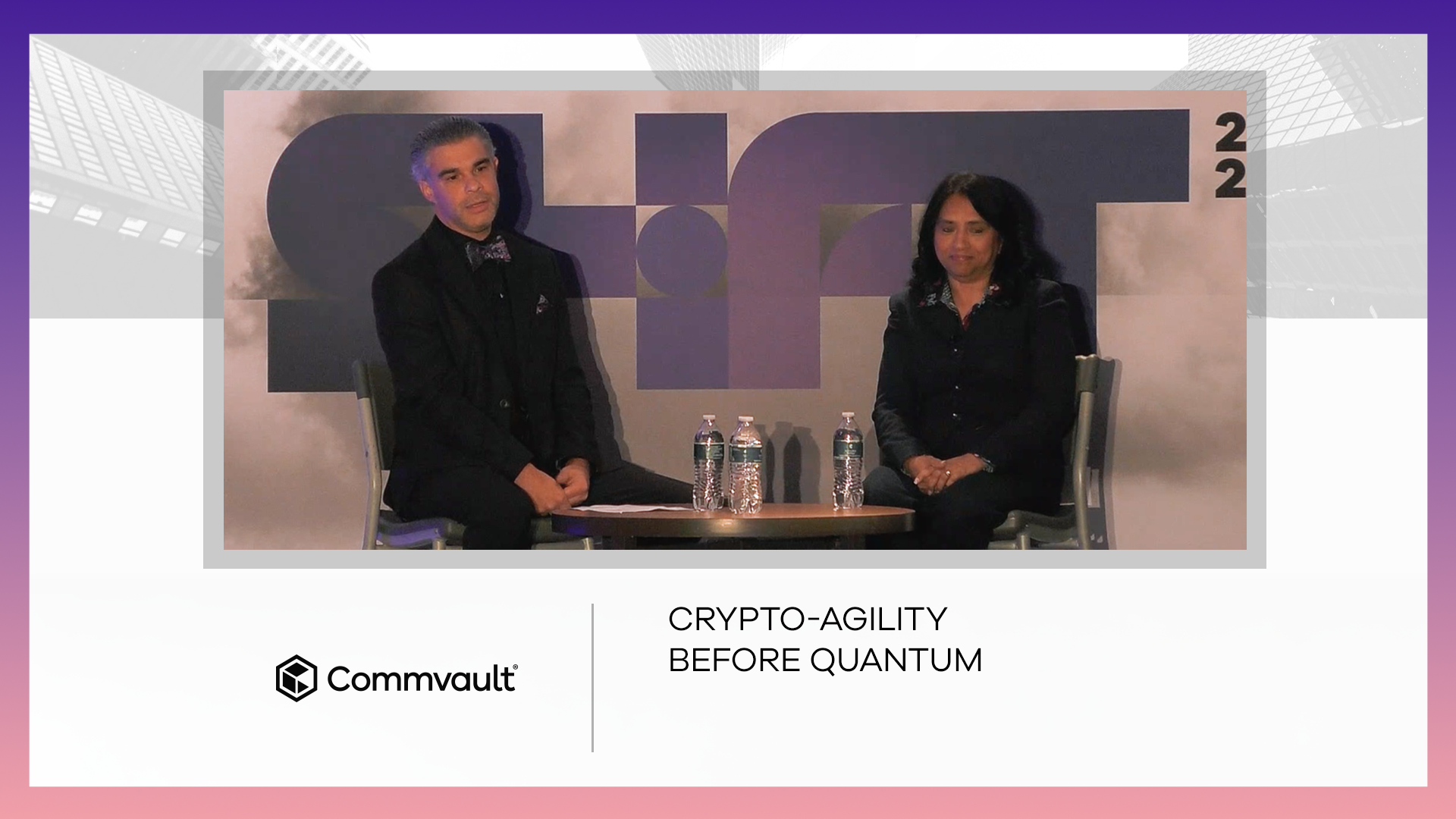
Crypto-Agility Before Quantum
Learn how to identify long-lived sensitive data, build a cryptographic inventory, and prepare your organization for post-quantum threats.
Key Takeaways
Inventory Sensitive Data First
Map where sensitive data lives, its dependencies, value, access, and required retention period.
Prioritize Long-Lived Data
Protect data that must remain sensitive for seven years or longer.
Prepare for Future Decryption
Harvest-now, decrypt-later attacks put today’s encrypted information at future risk.
Build Cryptographic Visibility
Identify algorithms, certificates, keys, identities, APIs, devices, and system dependencies.
Assess Third-Party Readiness
Ask vendors how they will update cryptography, authentication, certificates, and products.
Start, Then Improve
Create a practical inventory, quantify risk, and use findings to secure funding.
About This Session
Quantum risk starts before quantum computers can break today’s encryption because adversaries can collect sensitive data now. This session explains why organizations should evaluate data according to sensitivity, retention, business value, and dependencies. Long-lived research, healthcare, identity, biometric, and regulated data may remain valuable well into a post-quantum future.
Start With Discovery
Build an initial inventory of sensitive data, cryptographic assets, certificates, identities, APIs, applications, devices, and third parties. The goal is not immediate perfection. It is enough visibility to identify priorities, ownership, dependencies, and unacceptable exposure.
Prioritize data that must remain confidential for seven to ten years, or indefinitely, instead of applying one control everywhere. Post-quantum protections can add compute, network, and operational demands. A risk-based approach helps teams focus first on data whose useful life may outlast current encryption while planning for algorithm changes and ongoing testing.
Make Vendors Part of Planning
Add questions about post-quantum readiness, certificate rotation, patching, authentication, and upgrade paths to security and privacy reviews. Your protection is only as strong as the least-prepared technology in the data chain.
Recovery Remains Essential
Air-gapped, immutable backups and isolated recovery environments support trusted recovery when prevention or encryption controls fail.
Turn Risk Into Action
Quantify the data, dependencies, exposure, and business impact first. Then use that evidence to define scope, gain cross-functional support, and request funding for an organization-wide crypto-agility program.
Related Resources
Why PQC Matters
Understand how quantum computing threatens today’s data security infrastructure.
Prepare for PQC
See why organizations should prepare now for post-quantum cryptography.
The Quantum Clock
Learn why crypto inventory and early preparation cannot wait.
Frequently Asked Questions
What is crypto-agility?
Crypto-agility is the ability to identify and update cryptographic algorithms, keys, certificates, and related controls as standards, threats, and business requirements change.
Why should organizations prepare before quantum computers arrive?
Attackers can steal encrypted data today and retain it until future technology can decrypt it. Preparation now helps protect information that must remain sensitive for years.
What data should be prioritized for post-quantum protection?
Prioritize sensitive data with long retention periods, especially research, healthcare, identity, biometric, regulated, contractual, and national-security information that cannot be replaced or rotated.
How should a cryptographic inventory begin?
Start by mapping sensitive data, retention, value, owners, dependencies, identities, APIs, certificates, applications, devices, and vendors. Improve the inventory over time rather than waiting for perfection.
How should third-party vendors be evaluated?
Ask how vendors plan to support post-quantum algorithms, certificate rotation, authentication changes, patching, upgrades, and data governance. Include these questions in security, privacy, and procurement reviews.
Transcript
View full transcript
So today we’re going to talk about crypto agility before quantum. And we’re going to try to keep it organic. I met a couple of months ago during an event in Miami, and it immediately clicked that we had to talk about how quantum threats are starting to become something that people need to start to secure against.
So how about you introduce yourself? Yeah. So, Shefali, I’m the chief information security officer and chief privacy officer at the University of Illinois. Chicago. Time. Cecil, final is two. Oh, yeah. I’m Michael, senior director of portfolio marketing. I spent a long time in product where I started the Quantum Journey. So that’s why I kind of stayed with me as I moved across different teams.
So, let’s get into it. So, I think what we’ll do is start to frame some of the questions around like what you should consider. We’ll talk about some practical guidance associated to the quantum state today and provide you with just some things that one quantum is doing. Obviously, we’ll hear from Shefali on what Chicago is doing as a whole.
And then maybe if we have some time, we’ll certainly take some questions from the audience if there’s any questions or concerns. Everyone’s always heard about quantum. We see lots of quantum innovation. There are regulations and things. When you think about the confidentiality of the data that you have at your work, how about you give us some guidance on how you’re assessing your sensitive data and potentially how that gets impacted by quantum threats?
Yeah. You know, so at a university like mine, you know, we’re in our one Carnegie Mellon certified institution. So that’s over half $1 billion worth of research. And we work with every three-letter agency in the country and globally as well. And so, research data is also controlled by export control. Right. So, we have to go through certifications, licenses not only to be able to use the research data that we provide or we obtain.
So, research data is one thing but we’re a university. So, we have academic data. And so, we have student data. We have faculty data. So academic data right. And then we also have healthcare. I also have a hospital and outpatient clinics as well. And so based on that academic healthcare and research. So, anything any kind of data that you could imagine possible.
It is at the university. And think about when we think of like sensitivity it’s dealing with. Oh, let’s go test the water pollution in that military base over there, whether it’s in the US or whether it’s in another country somewhere. Where does all that data get stored? How do we protect it? Right. So, we have patient data, right.
So, with patients that have sensitive classifications, say like HIV as an example. Right. We treat all sorts of patients in the city of Chicago. And so, with that sensitivity, we have to really think through where people keep this information. You know, it’s it’s it’s interesting how that’s connected to what Sanjay was talking about on day one with discovery.
Right. Just even discovering where your sensitive data may live is, is critically important. And I think the second factor that is considered, especially when we think about quantum, because even though today quantum machines are are not currently capable of cracking encryption, the life cycle of how long that data is going to remain sensitive is critically important here.
So, you know, we talk about harvest now decrypt later where, you know, threat actors may be harvesting this information to later decrypt it. So, talk to us about how University of Chicago Hospital is the hospital specifically, is classifying the sensitivity of their data from a length of time. Yeah. So, when we think of quantum, we’re talking about decryption, right.
So, all the data sets that we have will outlive any kind of decryption. I have to keep it forever at times. Right. And so, you know, we have genomic data. Genomic data will outlive decryption as well. We have to keep it forever. Right. But you know when we think of contractual data we think of different types of health care data.
Do we have regulations that tell us how long we have to keep certain types of data sets. And but it gets a little bit more complicated because research contracts say either you have to keep it forever or someone else is going to use that same data set you had before for a different type of research study. And you also as a university partner with other higher education institutions or other types of organizations within the country or outside the country.
So, you know, we always look at export control when we think of quantum, because export control will tell us how long we have to keep information. And most of the time, you know, it is decentralized at universities, you know. And so, where I sit, it’s in central IT. And so, I have jurisdiction and purview wherever I need to go.
So, I have that flexibility and support from my leadership. But when we think of quantum, you know, it’s it’s all about how we look at cryptography, right. And authentication and APIs and digital footprint and who’s got access to what and how long we keep it. So, retention guidelines become an important part of all this as well. Yeah. And I was having a conversation with someone in the audience earlier today.
And we were talking about the maturity scale of just cryptography in general in the the lack of understanding. And of course, you know, we’re talking about PQC today and that’s kind of late stage. But even just cryptography was something that kind of just hit in the background. And we all just assumed that these things were going to work.
So, it was a really good conversation. And I think there’s a lot of education that we need to get to and advance people’s maturity toward this particular place, which is at least where we are today, is kind of on the right side of the of the fence. So tell me how, your organizations are doing cryptographic inventory.
I think that’s one of these bigger issues. And of course, vault. You know, we’ve been encrypting data and the networking pipelines for quite some time, and there’s reports and things, you know, within the product. And of course, we touch a lot of data so we can understand, encryption and some of the metadata that’s associated with data. But how are you doing a more holistic approach to cryptographic discovery.
Well, we have to start yet all in transparency with you. All right. But the thing is, is that I do know that we have to create an inventory, right? Because one of the things that I’m not looking to do is create the perfect inventory, right? I’m trying to just get the inventory started and say, okay, what do we have?
What are the dependencies that that data has? What’s the value of it? And then who does it impact? If we were able to, you know, not safeguard the data where the impact goes. Is it liability for the university? Is it liability for other research organizations? Is it national security? Right. Because sometimes, you know, we are building that fighter jet at times, right?
We’re working with third party organizations. We’re watching them go down a runway to see which is the thickest formula. Right. So, the research takes us into all different sides, all different parallels of what we look at from a university. We also do all the the Medicaid billing for the state of Illinois as well. Right. So, it’s not just academics as people think universities are.
We’re a state run organization. So, you know, at times I try to think of how do I create this inventory? Like everywhere there’s data, I turn to everywhere people are using it and cross transfer between, say, the university and the different the hospital. Right. Because we have different compliance reasons for the hospital side versus, say, the student side.
We have FERPA compliance for the student side and then for the hospital. It’s like hyper, right? Everybody knows about HIPAA. But what about student data? That’s that’s FERPA. And then we have contractual requirements based on research contracts and proposals and grants. And so based on that, all I know is that, you know, I look to my SIM, I look to my XDR, MDR, I look to all my security tools to figure out what does this footprint look like from a data governance, data management, and then something else called data tolerance.
Right? Data tolerance is something where I go back to and say, okay, you know, what’s our tolerance for if that data got breached? Who’s going to get impact, right. Because when we think of post-quantum, everything that it can do today, you know, like, you know Michael you were saying harvest today, decrypt tomorrow. It’s already happening now, right. Look at all the technical debt we have today.
Anyone can come into any of your organizations and go, oh, you know what? Oh, send that phishing emails, see who can bite, right? Something as simple as user behavior that will change that. So, when I think of the inventory, I have to rely on all the tools that I have and try to piece it together. Right. Because there’s identities, there’s dependencies, and then all the tools and systems applications.
The other thing that kind of complicates all this is we have development. We have innovation going on at the university. So, what does that really mean? I have students working with AI and creating their own products. And we give them a business plan. You know, go to market, plan a strategic plan. And then they come to me and go, oh, we have to do a security assessment.
We have to do a privacy assessment. Like, yes. So, we start to create some of the inventory through some of the assessments that we do as well. Again, a very complex, complicated environment. But I do rely on people to come tell me. And we kind of put in third party risk management processes. We put in, you know, whenever someone wants to buy hardware again, decentralized it so people are incentivized to pay for their own devices.
So, for example, I have 16 colleges within the university, right. But I have also 45 other edge units that are like specialized children’s care unit. That’s a lot of risk. Yes, that’s a lot of risk. Yes. And and with that risk, you know, we we think about not only having a discovery mechanism. So okay, now I know where my data is.
Now I need to know how long does it need to be retained. Right. So, we were just talking about that in the prior question. And at least where we are today with quantum and the unknowns, the guidance that we would provide is if you have long term sensitive data, that’s the data that you should right size protect today.
So, if there’s quantum advantage and all of a sudden these machines are able to crack encryption, protecting it today will save you down the road whenever that down the road may be. So, I think the guidance we’ve been talking about is like 7 to 10 years. If you have data that falls in that range and then obviously anything that’s going to be sensitive forever.
I talk about clear, right. Like we all went through the airport. You go to Clear, they have a face scan. I can’t change this face. It’s a great face, but you can’t change it. So, if that data was to leak, like, what’s going to happen? Someone can forge me. So, you know, we’ll talk about the, the, the forgery of things in a little bit.
But think about the sensitivity of some of these things, you know, even your fingerprints. So, there’s a lot of different data types that fall into these categories. And we always recommend, at least when I’m inviting customers about quantum threats. You want to right size it. This is not a silver bullet. This is not a one size fits all.
There are compute challenges with it. The packets are very that the packets are much bigger. There’s latency that you have to compensate for on the network. So, it’s not just turn this on and everything’s going to be good. So, you really want to start to right size these things. So, part of that inventory is how long is this. Is the data sensitive.
Great. That’s your first checkbox. How long is it going to be sensitive for. If it’s something that you could just rotate like a credit card number, I wouldn’t use PKI for this at least today. But again, kind of going through that and rightsizing it as is the right solution. I will absolutely help you with the inventory, but we won’t do it alone as Commvault.
It’s not really our jurisdiction to do that, but like our security integrations, we’re going to have partners. So. IBM has some good open-source software. And there’s many other organizations and companies that use CBOM as a way to do a cryptographic discovery within an environment. Right. Holistically, I’m not talking within the inside. We got that part covered.
There are partners like they’re not a partner yet, but there’s companies like Keyfactor that do cryptographic discovery. So, there are folks out there that are currently doing it and they’re on the bleeding edge. What I would advise that if this if you do have a data footprint that falls into this, start to watch this space. So, although there’s regulations, we’re starting to see investments and this is starting to continually look at other algorithms to protect us moving forward.
Because just because it’ll it’ll protect us today doesn’t mean it’s going to protect us tomorrow. And we saw that through the NIST trials for quantum resistant algorithms. Right. And we you know, if you saw I did a talk two years ago in London and I brought up a very specific example of a algorithm called SIKE. And SIKE was cracked three rounds into NIST testing.
And what that highlighted is that we can’t have a one size fits all approach to this. So, this continues to test other and new algorithms not only for the network pipeline, but also for certificates. And we’ll get into that in a bit. But at the end of the day, this is going to be something that’s going to be the chicken and the egg, right?
We’re going to keep going back and forth on this. So, we’ll talk about some of these concepts that are going to continually allow us to protect ourselves. So awesome cryptographic discovery. Very important. So again, Sanjay talked about discovered detect recover. This will be kind of the the discover piece. Yeah. And Michael I would just add that, you know, we think about inventory.
One of the things that you know, we have done is we’ve gotten a data security posture management tool, DSP tool. You know, they’re out there. They can help you discover some of the files that you have, some of the data types that are there. So, we have done that and we’re starting to see. But you know your kind of biased on product you know you start with your M3 65 first, then maybe you go to box and others.
Right. And it all is based on how much you can afford to discover. Right. And with the university, we have kept things for decades upon decades since the institution was born back at Navy Pier, you know, in Chicago. So awesome. So obviously we’ve worked together on on this particular attack vector. How about your other vendors? Right. Of course, we’re securing the Commvault side, but what about the other vendors, like what are you doing with the other vendors that maybe aren’t as mature as Commvault on securing that data, because your data is only going to be as strong as the weakest link in the chain.
So, tell me about some of the other vendors that you have. Yeah. So, you know, when we think about third party risk, right. These other vendors that we partner with and at the university, we have physicians, we have researchers, we have students that are creating their own products and applications to. Right. Or they will go and say, oh, this is a startup.
You know, we’re going to get this beta project going on and let’s put in it. Well, hold up, hold up. You know, no security, no nothing in place. How do we work with that vendor? So, I think there’s definitely things that we have had to modify in our security risk process, but also the privacy risk impact assessments too.
We do both of those, not just the security side. And so, when we think about, you know, privacy is like the why and security is the how, right. How do we comply with privacy for confidentiality? We put in all as an example. Right. We put in passwords. And so, when we think about working with vendors, it’s always like, you know, what do they have in in place.
As far as we have a questionnaire that we go through. And, you know, I don’t know if any of you have heard of a heck vet, it’s, you know, a very intense questionnaire that goes through everything security. But then on the privacy side, we also have a privacy question here, just in depth as well. And when I think of these vendors, you know, when we ask questions to them, we’re asking them also.
And I don’t know if any of you all do this, but we have started to where we’re like, well, okay, how are you getting ready for post-quantum. Right. How are you thinking of identities? How is authentic going to look like? What about certificates? Right. What is that going to look like. You know. And then how do we update upgrade patch.
How is all this going to be affected by what we’re looking at? I’ll tell you this from all the vendors we have looked at so far, none of them are ready. Like none of them have said that. Oh, you wanted us to think about QC. I’m like, yes, let’s talk about cryptography. What does that mean? Right. And then again, from a startup to someone who’s like a big name, I won’t name any names, but there are big names out there that are not ready either.
Right. Because we have asked and we have these big names at our organization and they just are not ready to answer some of these questions and we get to run around. So, then the decision is do we go with this vendor or do we not go with this vendor? What the startups, we most of the time don’t go with the vendor or we try to isolate them.
Right. Maybe it’s on prem instead. Right. And not in the cloud. Does that vendor selection process also apply to how you’re deploying AI in your organizations? I mean, I’d like to consider myself a a citizen developer now that I have these tools that could just generate code with a handful of prompts. And, you know, when you were talking about your users putting each I or I into these systems and making it really simple, you know, you start to wield these tools and you get very confident that you can go launch something like, how is the the balance of providing tools that accelerate work getting done with security?
And I know that’s not directly related to this, but, you know, the sensitivity of the data and citizen developers with AI, especially being that, you know, anthropic or any of these other vendors may use that data, like how are you securing an environment, from either preventing the data from going into these systems or like, how are you stopping that from the end users?
Yeah, yeah. So, it actually starts at the contracting phase. I’ll say some of these big ones, you know, they they will not do a business associate agreement with you. And so, I have been able to put my foot down sometimes with some of these big guys. If you don’t give us a BA, we can’t do business with you.
And so, then it’s like, okay, Shefali is a bad guy and she’s stopping all operations, and sometimes I have to do that. And then, you know, eight months later we have a BA, right? And so sometimes it happens in the contractual phase where they agree to govern the data based on what we need them to. Right, because we’re assessing them as much as they’re assessing us.
And many times now in the media, we’re seeing third party breaches more and more and more. Right. And so how many of you have received a letter in the mail many times, right, throughout the year? And so, I think this is where we end up talking through, what kind of controls you can put in place. Right. Awesome, awesome.
How did you get the budget to do this? I think this is one of these really big challenges that folks have. They think it’s a very futuristic problem. You know, there’s a lot of competing things. AI, cyber, like all of those things are still happening. How how did you approach your your C-suite or the board to start to prioritize this?
Or at least consider prioritizing it and getting funding for these types of things? Yeah. So there’s you know, as a CISO, I have a couple of tricks up my sleeve. Right. So, my number one go to is fear, right? Number two is influence. There’s about 10 to 11 tactics that I would use for influence. And sometimes they work sometimes they don’t.
It’s something as simple as this. I’m going to be meeting with the CFO to talk about, you know, he’s going to want to do 15% reduction in staff because he wants to say, how is AI going to be able to create this 15% reduction? I’m actually going to ignore that because my other colleagues are like, well, he’s asking for a 15% reduction.
I’m like, no, he’s not. Not to me. I’m ignoring it on purpose. Right. But what I’m coming to, you know, the CFO is with fear number one. Hey, something happens is ransomware. What are we going to do? Where’s my budget to stand up? I r team a doctor team. Go get forensics team. Go get, you know, some kind of other sources that I’m going to need, right.
And so, when I start asking these questions, you know, well, we have cybersecurity insurance. Well, yeah, but that’s not going to be enough, right? Because as large as we are, it’s a big target, right. You hear about all these other universities that are making the media now, right? Michigan State has one right. That came up. And so I think this is where, you know, I have to use what’s happening in the media.
I have to use, you know, the technical debt that we have and say, if this is going to happen today, this is what the estimated cost is going to be. And now, one of the things that I did when I first started at the university was, I tried to find all the unofficial leaders, people that don’t have any thing to do with security, but they influence other leaders.
And if I can get these unofficial leaders on my team, which I have done, I am going to get the money I need. So, you know, I have grown a team from five people to 26 people in three years, right? So, the tactics work if you are able to use those. And so, one of the examples I’ll give you is every Sunday night, I go through every meeting that I’ve got planned for the week.
And I look at my 10 to 11 ways of powers of influence, and I go, oh, you know what? That one meeting is about implementation. What’s the outcome I’m looking for from a CISO hat? Right. And so, I know the people on that call, the very combative with each other. Now I have the ability to go do I keep that fire lit by just participating in it, or do I be the mother of it all or or find someone who’s going to be the father of it all and talk it a little higher level?
Because as a C-suite, you can’t talk at a higher level or roll up your sleeves and do what you need to do as well, right? Absolutely. Absolutely. Have you thought about or used reputational damage as, as as a potential for this? I know a lot of folks don’t think about that particular facet. That would be one. And then as you were talking about, just like influencing the roles, I know, at least internally, the unpredictability of quantum threats and PK and these things was the initial blocker.
Do you use the the unpredictability of the space as kind of the, the, the further way to, to instill fear and influence? Oh, absolutely. Reputational risk is the biggest fear that organizations have. Right. It’s because what comes out of a reputational risk class actions litigation. Right. And so, if any of you have ever worked in a university environment, it’s very litigious.
I will share that. The expensive stuff. Yes, yes. And so, I think, you know, with the post quantum computing or just even when we look at cryptography, you know, in my mind I’m always thinking, okay, what are the dependencies? You know, if someone’s going to go do something like this? If someone were to harvest that data today, how am I going to protect it?
And if I can’t protect it, it goes back to that recovery, right discovery. Right detect and then recovery. And I’m always thinking in those three ways because if I don’t have the data backed up, what are we going to do? I mean, I can’t go to the Department of War and go, oh, whoops, we lost that fighter jet pilot.
Schema. Can’t say that. Right. So, it’s more so. Oh, yeah. It’s locked up over here. It’s limited access. It’s protected. It’s in a vault. Right. So, in that sense. So, but I think the key here is you have to break down each data set, understand where it’s located. How do we retain it or how long do we need to retain it.
Because one of the things that universities are not really good at is destroying data. They want to keep everything because there’s so much history in that and those data sets. Right. And people are always reusing data sets to create more research studies, and they’re all very relevant. But I’ll just say that, you know, besides seeing retention guidelines, you know, it’s the impact of if you’re keeping too much information.
Right? So, I think, you know, like we work with vault and, you know, they have saved us a couple of times now because we had that backup. If we didn’t have that backup, I don’t know what we would have done to be honest. You know, people would have come to me and said, like, what do we do? How do we get it back?
I’m like, oh, sorry, we can’t. Right. And so, when you have an answer where you can’t now, you look like the person, you don’t know what you’re doing. Right? So as a CSO, I have to have backup. I have to have the certification to say yes. That data is clean. It’s sitting in the clean room. Right. Or we are monitoring and scanning it for making sure that that data set is secure.
Right. The bad actors are not in there anymore, right? Awesome. Now let’s switch gears away from data and talk about, signatures, certificates and that communication stream and a secondary vector. Obviously, the hospital IoT. What is the inventory process look like for that? Because we’ll start to talk about the secondary threat vector in a second. Yeah. So, you know within the hospital itself.
So its own entity within the university. But it’s still part of the the overall entity. And so, it has like its own security team, it has its own inventory. Seemed right. They have their own processes, but a lot of it is dependent on what we provide through the university side as well. Right. And I think the key here is you’ve asked an interesting question, because I don’t think they’ve explored it yet, you know.
Wow. Yeah. Yeah. No, I mean healthcare I think is really far behind compared to some of the other industries, like banking as an example. Right. And so, I think this is where we, we have a challenge with that. And I think, you know, we’ve got some work to do there. Yeah, it’s a tough one. I was when we were in Miami, I was talking to Alex Levy, the time Cecil winner.
And obviously in raw they have lots of devices that have, you know, certificates baked into their hardware so they can’t be rotated. So, you know, when when we consider that scenario, trust now forged later becomes a massive problem for them. Because if the root of trust becomes compromised, you know, can you even trust those devices at all and who they are.
So I always try to give the the simple analogy of, you know, if I had a friend that worked for whoever generates passports and they make and forge me a passport and, and it passes all the checks, I can go and travel wherever I want, it would be the same type of thing where, you know, my identity is forged and I could use it simply wherever I need to.
So, if we think about how, that threat vector extends to, key stores, anything that uses a certificate as a, as a verification, a cryptographic verification process, you know, this becomes a much wider problem for us to have to solve. So, again, it still has the same humble beginnings. Like, what do I have? Can I rotate these things?
And if you don’t, there’s the the landscapes coming up with other mechanisms to protect that, whether they be like cryptographic gateways or some of these other substrates that have to protect these devices, because it’s simply not possible to just rotate the roots of trust. And there’s also a a time sensitivity problem there that even if that was to be breached, you know, even after the rotation cryptographically that certificate is still valid.
So, there’s a lot of things that have to get done. So, we have these two different competing threat vectors. When we think about quantum and the discovery process, understanding what you have doing the inventory is a problem that if you do have sensitivity, data sensitivity specifically and legacy devices, you should be thinking about doing these inventories today so that you could prepare for tomorrow.
And then from a perspective, obviously we have a crypto agility framework so that as algorithms are cracked and they need to change, you know, we can update the products, the product, to use those new algorithms. We can read the data; we can secure it in an air gapped immutable repository. So, there’s lots of different things that we could do.
But again, if we’re only the if we’re the strongest link in there, you have to still think about everything else. So, we’re running out of time unfortunately. But maybe give the audience like one practical thing they can do when they get back to the office to think about how to frame this to their organization and get started down that particular discovery part of the journey.
Yeah. You know, don’t start it as a hey, you know what? We need funding for a crypto project. It’s more so find your inventory. Like Michael was saying, understand where your value is and what the dependencies of those values are. You know and then make sure that you are able to protect those. And if you’re not able to, which sometimes you can’t because you’ve got a budget limitation, probably.
Right. And so based on that, understand what you have to ask for. Then go ask for the funding. Right? Like do your due care, do diligence on it and make sure you can quantify exactly what you need. And that’s kind of like, you know how I’ve I started at you. I say I quantified everything; I learned how to influence people.
Right. And then start to get what I needed for the university. And it’s not like a Shefali thing. It’s not a project. It’s a university organization wide project. Right? I love that. I love that from a Commvault standpoint, you know, being one of the, the, the brainchild of bringing PQC into into the product, I can tell you that it was very important for me to make sure that anyone who’s a customer can just turn these capabilities on.
So, these are like, no cost. You can turn them on. Obviously, we should have a conversation about the impact that’s going to have in the environment and how to discover some of this data. But, you know, an existing comp sale on a, on a modern version, probably 1132 or newer. If you’re you’re good to go. We can turn these capabilities on for you.
So, if, if you’re interested and you have a data footprint that, you know, it kind of falls into those guidelines that we talked about today. Feel free to reach out or, you know, hang by and we can have those conversations. So, I appreciate everyone kind of staying the entire time in a little bit over. And hopefully we can help you with your PQC journey.
Thank you, thank you, thank you.