ON-DEMAND SESSION
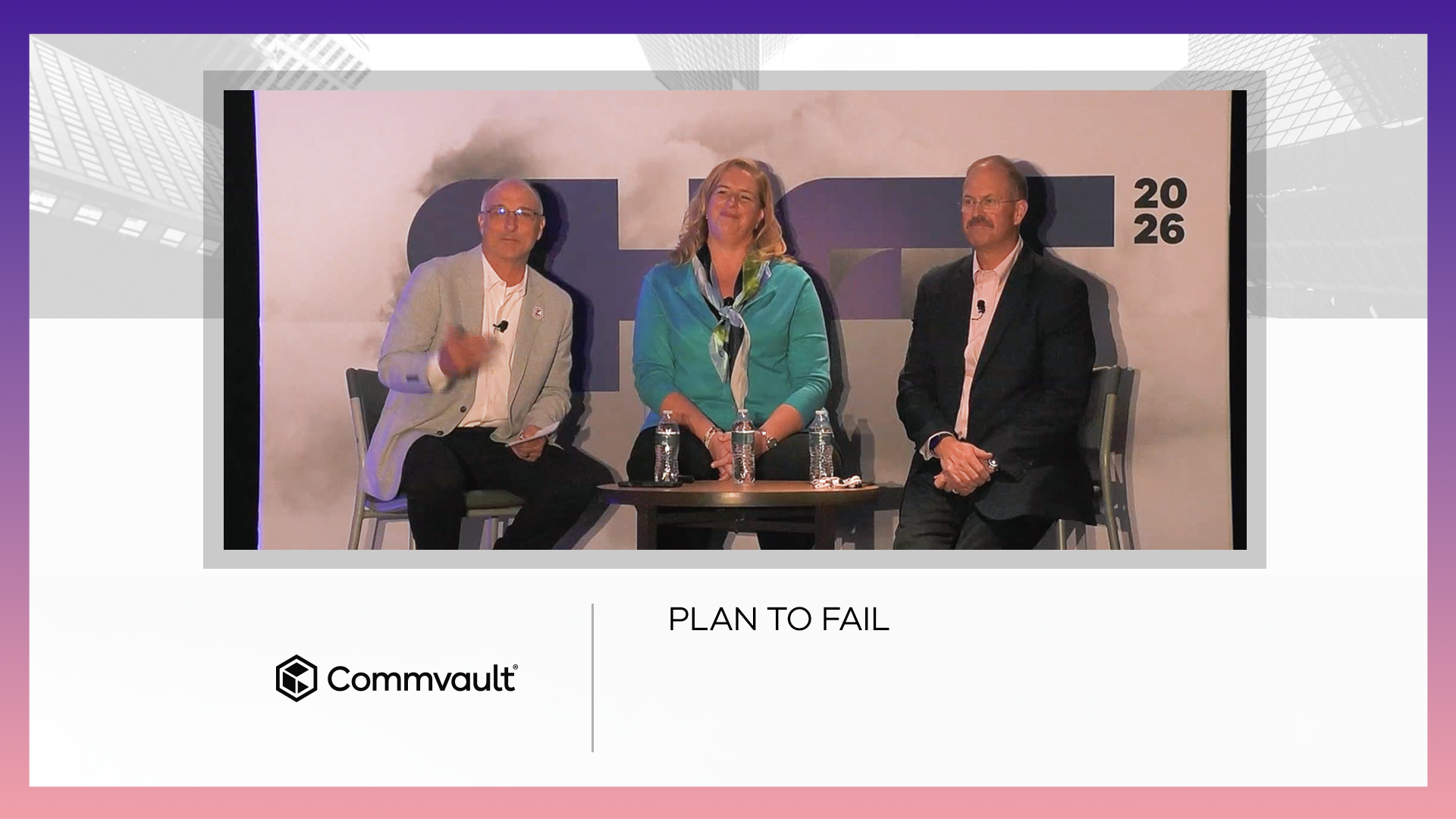
Plan to Fail
Learn how recovery leaders test plans, uncover dependencies, align priorities, and prepare the business to recover under pressure.
Key Takeaways
Test Beyond the Checklist
Validate recovery plans with realistic technical, executive, and full failover exercises.
Map Critical Dependencies
Identify identity, infrastructure, SaaS, third-party, and application dependencies before a crisis.
Set Business Priorities
Let business impact, acceptable downtime, and recovery cost guide restore order.
Prepare Offline Access
Keep response plans and communications available outside compromised corporate systems.
Protect Core Services
Build rapid recovery for Active Directory, Entra, identity, and other foundational services.
Continuously Validate Recovery
Use automation and AI-assisted testing to detect resilience gaps as environments change.
About This Session
A recovery plan is valuable only when the organization can access, follow, test, and adapt it under real pressure. Cyber resilience leaders from Commvault, Deloitte, and Ferguson Enterprises discuss how organizations can move beyond paper plans. The panel explores realistic testing, business ownership, system dependencies, tabletop design, third-party risk, and the investments required to meet recovery expectations.
Plans Must Meet Reality
Effective testing can range from restoring systems without going live to running the business from a secondary data center and failing back. Each exercise should expose undocumented changes, missing dependencies, unclear ownership, and unrealistic recovery assumptions.
Recovery plans need documented approval, clear ownership, current procedures, and evidence that restored systems function as expected. Business applications rarely recover alone. Identity, networking, SharePoint, SaaS platforms, acquired systems, suppliers, and other services can determine whether a priority application works after restoration.
Design for Business Outcomes
Technical teams test whether systems can recover. Executives test decisions, communications, risk, and how the business will operate. A useful tabletop starts with a specific business objective rather than a compliance checklist.
Make Plans Available
Store response plans, contact information, and prepared communications where authorized teams can reach them if corporate systems are unavailable. Avoid access models that depend on only a few people or one platform.
Align Cost and Expectations
Four-hour, eight-hour, and always-on recovery targets require different levels of investment. Business leaders should define acceptable downtime and fund recovery capabilities that match real operational needs.
Related Resources
Cyber Resilience Is The New Enterprise Mandate
Build a practical plan for testing, prioritizing, and recovering critical operations.
Cleanroom Recovery
Learn how isolated testing helps teams validate clean, repeatable cyber recovery.
Recovery Testing: The Missing Piece in Most Cyber Resilience Programs
Don’t overlook this critical component of recovery preparedness.
Frequently Asked Questions
Why should recovery plans be tested regularly?
Regular testing reveals missing dependencies, outdated procedures, access problems, and unrealistic assumptions before an incident. It also gives teams practical experience executing the plan under pressure.
What should a cyber recovery tabletop test?
A tabletop should test a defined business objective, such as restoring a critical service, making executive decisions, coordinating communications, or validating recovery after an acquisition or technology change.
How should organizations prioritize systems for recovery?
Business leaders should identify mission-critical services, acceptable downtime, financial impact, operational dependencies, and recovery costs. Those decisions should define the restore order before an incident occurs.
Why are identity services critical to recovery?
Active Directory, Entra, and related identity systems support authentication across applications and infrastructure. If identity is unavailable or compromised, many other services cannot be restored safely.
Where should incident response plans be stored?
Keep protected, current copies outside the primary corporate environment, with access available to multiple authorized responders. Plans should remain reachable if SharePoint, email, identity, or internal networks are unavailable.
Transcript
View full transcript
So good morning. We’re excited to be here today. Thanks for coming in. You know, questions are going to be open. If you want to ask them throughout, please feel free. Just to get us started before we get into it, I’ll take a few minutes and let us all introduce ourselves.
My name is Chris Bevil. I have no idea what my title shows up there, but I’m told I’m supposed to tell you I’m the Global Cyber Resilience and AI leader here at Commvault, what does that mean? I hadn’t figured it out yet, but at some point, we’ll probably figure it out. But no, my goal today is to really just be a facilitator with this awesome, amazing group of folks that are up on the stage and I’m just going to have them introduce themselves.
Awesome. Thank you so much. So, Sharon Chand, I’m a Principal with Deloitte Cyber team. I lead our defense and resilience team. So that’s where we focus on resilience incident and crisis response. Our SOC team all sits there as well as attack surface management. So, Mythos models, vulnerability management, offensive testing, all those kinds of things. Excited to be here today.
One of my personal clients I’ve spent the last two, three months with as they’ve been fighting off a series of seven discrete cyber events in just about six weeks. Different threat actors, different parts of the business targeted. So very fresh from some of those lessons learned and excited to talk to some of them today. Awesome. Kevin, I am Kevin McKenzie.
I am the Chief Information Security Officer for Ferguson Enterprises. I hope everybody is familiar with who we are. Of that, I’m also a faculty member at two universities. You probably heard of them, Harvard being the first one in Clemson University being the second one as well. Who’s Clemson? Yeah. They were only national championships. They’ve won three.
Oh, okay. So how many do Alabama win? I don’t know. I have to tell you. So Kevin and I go back a while. I’ve been fortunate to know Kevin for a while, and he’s a Clemson fan. He knows I’m a Tennessee fan, but I had to throw Alabama in there just because I have to keep these Clemson people on track.
So you also have another role that you do as well that I think is fun. Just to share with the audience, what else do you do in that big six-foot six frame on your fun time? Oh, so I’m a volunteer police officer for the state of South Carolina. I have been for 29 years.
So it’s been very interesting to sort of bring these roles together because when I was at the university. So in a prior life, if you go back, I was the CISO at Clemson University as well. But I got to do all of any of the white collar crimes, investigative crimes that were for, you know, that involved it because obviously local police department there couldn’t handle the IT portion of it.
So having a certified officer for them to rely on and to work with was kind of neat for them. And it was neat for me because I got to stay in the know. And being a university, you get to deal not only with the local law enforcement, but you get to deal with a lot of the three letter agencies because you’ve got intellectual property, you’ve got dignitaries, you’ve got kids of dignitaries on campus and things like that.
So it was really interesting to bring my cyber world along with my sort of love for law enforcement. So but it’s kind of fun. I still do it, you know, put the uniform and gun on and go out and, you know, I call it my community service. That’s the way I think about it. So obviously we’ve got a great panel for you today.
And one of the things we’re going to talk about is, as you saw, the title’s Plan to Fail. And what we’re really going to really talk about is the recovery and resiliency strategy that you have. We hear a lot about it. You know, we’ve heard the announcements that have been made over the last couple of days, and now we’re going to dig into it a little more.
And we’ve got two great folks here to talk about it. So what I really, kind of really wanted to start out with is Kevin, I’ll just, I’ll start with you with a question: let’s start with what happens when a recovery plan meets reality. And we might have been talking a little bit about that in the back, you know.
So what are your thoughts about that? Well, you would hope if that your recovery plan was created with a sound mind and judgment and fully thought out. What I always go back to is, did you test that recovery plan? Right. It’s good to have it on paper. And when’s the last time it was updated or revised or any of that nature?
Right. Those recovery plans are only good if they work. I’ll share two examples with, you know, the companies that I’ve been with, one and I won’t give attribution, but, you know, one, we will do the recovery. We’ll build the recovery plan. Not only the technical subject matter expert is responsible for building that recovery plan.
Their direct line of supervision is responsible for vetting it, signing off on it. And then we actually have to have executive leadership sign off and own that recovery plan. And we document all of this. And it has to be it’s more than just saying we do this, we do that. It has to be documented. And all the steps have to be, you know, completed.
And we actually put that away so that it’s vetted and there’s ownership and attribution and people are having to own it for that recovery plan. And when we go through testing of that, we’ll actually go through all the way up to the point of switching over to it. Right. So we’ll go through the restoration process, we’ll restore it, bring it up, make sure that it’s functional, but we don’t ever go live with it.
That was sort of the culture of that particular way we were set up. Contrast that with I’ve been part of another organization where we put all the it out. You’re talking about wanting to test it and making sure it works. We put it out in a local hotel for three days.
We were fortunate to have two data centers. One, we, you know, obviously we’re operating out of and then one, we sort of I want to say, you know, cold or hot, but sort of a warm data center. We would fail the entire company over to our secondary data center, and we would run the company on it on day two, and then we would spend day three failing it back to our primary data center.
So in that sense, you know, that was a full soup to nuts kind of testing and making sure that our recovery plan will sound and that it worked. And then obviously it’s just like any other tabletops at that point in time you’d run. Right. What changes did we make between last year and this year? You know, you’re going to find issues.
You’re going to find, you know, you didn’t document some firewall changes that occurred in the middle of the year somewhere like that. That sort of messed you up. But you go back and revise those documents and then, you know, put that away and take them off site to have for restoration later. So, Sharon, I want to come to you.
I mean, you know, we have Mr. Have it all buttoned up, you know, TIME CISO of the Year finalist telling us about all the great things. What are you seeing when you talk to customers? Are you seeing this amazing scenario across the board or are you seeing differences? I think like all things, it’s a hybrid. Certainly some clients and it’s very sector and industry specific are really advanced in their preparation, testing, documentation.
Others are still figuring it out as the business is changing. I think everything you said is spot on. One thing I’ll add is the key thing for me is scope, right? And maybe that’s not surprising coming from a consultant here, but it’s all about the scope of your planning for recovery. A lot of clients very focused on enterprise IT, enterprise finance systems.
What happens when one of those business systems is attacked? What happens if it’s a SaaS platform that goes down and there’s a lot of assumptions during that planning phase. While that SaaS platform, I don’t have to worry about it. That’s a business we acquired. I’m not expected to be able to recover that. That’s where the attack happens.
It just dealt with a client about a year ago, took that approach. Enterprise focused IT solid documented recovery plan. But they were in the business of industrial products and service and maintenance out in the field for their customers. And what was attacked was a company they had acquired maybe 2 or 3 years ago, hadn’t really integrated the work management systems, and it was some of their remote field maintenance systems that were attacked.
See. So didn’t know these existed. The Chief recovery Officer, the Risk Officer who had the resilience leadership role didn’t know they existed. And so here they’re taking an enterprise IT centric recovery plan and trying to figure out in the middle of a crisis how to apply that out into the field. That’s always fun. And trying to figure it out in the middle of a crisis.
But how many? I love being responsible for stuff I didn’t know about! Yeah, exactly. Happens quite often. Happens all the time. So as we talk about this, Kevin and we look at it. So when we think about the testing and we’re looking at it, what are some bottlenecks that we can potentially run in when we’re testing and looking at things?
Let me read the question, actually. So when recovery actually gets tested under pressure, what turns out to be the bottleneck? Is it the technology, the process or knowing what to prioritize first? So really kind of building on what Sharon just said. So I would say I mean, obviously you would love to have a priority list, right? I don’t know if you know, if you go through and you call it tiering, you call them critical systems, mission critical, whatever it would be is which ones are you going to recover first?
And do you know all the dependencies? Right. A lot of our systems today are very integrated and they need other things. It might be, you know, it might need identity and other things to make them work. Right. It’s not the system itself. You might have mass outage. And it’s do you know all of the sort of dependencies that make it work?
And so having that pre-planned and having that scheduled certainly will go a long way. And I think many times we miss some things in that. Right. Oh this is we need to restore this. But we’ve got to get over here and start working on this part to even make that work. So having that sort of laid out in your planning and understanding that and then making sure that the people know their role, I think as they’re going through this process, who’s going to be responsible, who’s sort of for this particular application, who’s taking the lead on making sure all these things are coming up in the way in which they’re supposed to come up, and then is it documented? And can you get to that documentation? Let’s dig in. We were talking back there before we came up. And feel free to jump in. Yeah, but let’s dig into the dependency a little bit because we use that word. We throw that word out a lot and they’re looking at me going, hey, this wasn’t on the cards, you know, but we use that word a lot.
And you kind of alluded to, you know, SSO now is a little bit what we were really excited about because it makes our life easier. And then now the challenges we’re seeing as a security leaders, you know, the dependencies are becoming such an important part of even what’s happening in the. So, elaborate on your thoughts there and what you’re seeing.
Well, what we were talking about was, you know, breaches that have been publicized here recently, if you keep up with those, and one of the exploits, one of the ways that the things that we took as granted in for convenience, guess what? It also the bad guys or the threat actors that make it convenient for us.
Right. And so we were one of the technologies we’re talking about was SSO and that, you know, we’d love to have SSO across all of our platforms. Right. It makes it convenient. It’s easy. It cut down on the number of logins. Our users and associates, they like it much better, but it also opens up an opportunity for if you’re compromised across one, there’s lateral movement that can now occur and the bad guys can exploit that.
And you know sort of the cat and mouse game. Now they’re doing it with this. How do we continue to evolve and move our associates into a more secure kind of state. So that’s where we were going with that conversation was, is that you have these other technologies that you bolt on for reasons that are good.
And at the same time, we’ve got to understand the security concerns that come with them as they evolve in their exploits. I think discovering these dependencies is always the challenge, though you discover them in the moment when you’re trying to recover your finance system and you realize that it actually has to pull password data from a spreadsheet that’s sitting on a SharePoint that wasn’t appropriately planned for recovery.
Right. So how do you discover those dependencies in advance of identifying them in the moment of recovery? I think historically there’s, you know, business impact assessments, there’s interviews. None of that works in sort of the modern pace of change that we have in the enterprise today. And so this is where I think there’s an opportunity in resilience, that the industry still has an opportunity to embrace.
Right. We’re all using AI in our daily lives and some of our go to business functions. But using AI in the assessment and execution of your resilience testing is relatively nascent. Still, it’s a great way to be able to crawl the environment, identify those dependencies, maintain them as that environment changes. And now I have a way to use an agent to test recoverability of all of the different dependencies of that critical business application.
Awesome. Hopefully that’s giving you some things to begin to think about, because what one of the words that kept coming up a lot yesterday and is still coming up is this tabletop thing. You know, we jump right into cyber recovery and we started talking about cyber recovery plans, but we don’t. Those just don’t come out of the air.
You don’t start sitting there. You got to kind of look and test it. And so Sharon, I’ll start with you on this one. So what does a tabletop, you know, test actually generally look like today. Not the ones of two years ago where it was the compliance check mark. But what are you seeing people doing, right?
Or what should they be doing from a tabletop perspective? In today’s environment? I think it’s all about the objective that you want to achieve with the tabletop, and the tabletops are going to take a lot of different forms. We’ll run very technical tabletops with the SOC team and some of the IT teams to be able to demonstrate particular detection and recovery scenarios in a technical way.
We’ll run global executive tabletops, with the board designed to be able to test some of their risk and control decisions, and if they’ve got their communication paths figured out and tabletops in all scenarios in between. So to me, the question really comes down, what’s the business objective you’re trying to accomplish with that tabletop? Is it training? Is it demonstrating recoverability of a newly integrated or perhaps a company that you’ve just acquired?
And actually on stage this morning, Keith Urban had a great quote that I loved talking about the music business and the it’s the music business, not the business of music, and applying that to resilience. Right. We need to figure out how we’re going to recover the business, not how we’re going to demonstrate recoverability. So what’s most important to the business?
Design your tabletop scenario around maintaining and recovering that. And many times when you think about it, we’re still many companies are still trying to figure out their tabletop exercises and how they’re doing it. And Kevin, you know, I know you guys are really well adapting doing that and doing, you know, your tabletops. Here’s a question for me.
When you’re running the tabletops, what’s actually one of the first signs you see that the tabletop is going the way that you want it to go. And, you know, it’s more participation people involved versus they’re just trying to get through the checklist. You know what? What are you looking for when you’re doing that tabletop? I’m looking for the communication that’s occurring.
And you’re exactly right. We run them in a very similar way. We’ve got we run more frequently. We run tabletops with our technical subject matter experts running through different scenarios. And for that one, it’s really about can we technically recover and do we find the problems that maybe dependencies or other things that might keep us from being able to restore?
We also run the executive tabletops, like you described. Right. With our executive leadership may include periodically include board members as well. So they can sort of see how the sausage is made and be part of that. And it’s also, you know, your level of trust between those two organizations. Well, because board has oversight responsibility as well.
So I want to see the communication. I want to see the interactivity. I want to see that we’re actually critically thinking about it. And there’s two objectives. You touched on this a little bit to the objective of my technical team is going to be completely different than the objective of my executive team, right. They’re thinking about that business as a whole, and they’re thinking about how can we restore the business and restore responsibly.
These guys are just trying to get a system back up. They’re trying to recover here, and they also want to find the actual technical flaw issue or things like that and resolve that along the way. But I want to see the story. I want to see the communication. I want to see people willing to challenge others. Right. I don’t want them just sitting there going through the motions.
Right. Can we actually challenge it? Can we think outside the box? Right. What can we do in the intermediate? You know, while we’re waiting to restore other things, processes that we could have built out or done differently, I, you know, I go back to some time ago, you know, corporate communications, you might not think it’s all that important.
I can tell you it’s vitally important when you’re in the middle of a system outage or you’re dealing with a breach or something like that. One of the things years ago that came out of that was already had this communication written. So you’re not writing them under duress. It’s almost like you’re filling.
And at that point in time, that’s when you got to you got to do things. Yeah. So Sharon, let me ask you, you do a lot of tabletops. I’ve done quite a few. Are you still finding that when you go in to do the tabletops, people are not coming in with their printed material. They’re not or they don’t even know where their printed material is.
You ask the question, it’s on SharePoint, you know, oh, it’s on SharePoint or oh, it’s here. Are you beginning to start to see maybe clients are now starting to think about we’ve got to have a third party place that we put that or you know, we have that ability to get to our information.
Yeah. I think a successful tabletop isn’t designed to like stump the chump, right? You don’t want to make somebody look bad in the tabletop. So preparation is key. Making sure that they’re going to come with the right materials. They’re working through what they need to be successful in that exercise. And then you can focus the learnings on the true kind of business objectives you’re trying to draw out of that.
Absolutely. Well, I bring it up. We just get one microphone. Yeah, that’s it. We want to make sure you guys can hear you know. But you know we just did a tabletop that I did. And it was interesting. They keep their printed material. They update it but they keep it in a safe now. Great idea. The only problem is only three people in this large county across the US had the code and the access to the keys or, you know, to the safe.
So how do you get to it if those three are on the flight to Australia or on the cruise or whatever, you know? So I’m stressing that because I see that quite a bit as make sure that you have alternatives that you teach folks how to get to that information. I think this is where the culture of the business really does matter, because in that scenario, and we certainly have clients in this scenario where when there’s incidents, they all gather physically in the executive conference room with their printouts and they work things out.
I have other clients where they’re distributed globally, and the responsibilities for recovery and response are rightfully so, distributed globally. So their focus is more on what is my out of bounds communications. I’m not going to get everybody on a plane in a common conference room. This is going to be a virtual response. So let’s make sure we have the right systems and tech lined up outside of our corporate infrastructure to be able to respond again, where some of these AI platforms and the kind of third party solutions can bring some value there to be able to plan for that recovery and that type of scenario.
Yeah. So if the audience sitting here is listening, I mean, we’re kind of hitting on tabletops right off the bat. But it doesn’t just stop there. What other recommendations and things that you guys do from a Ferguson perspective, Kevin. And then Sharon, what are you recommending that you do to begin to start thinking about it?
Because we always think about identify, detect, protect. So we’re that left of boom. And we’re just now here in the last two years or so, beginning to start thinking about respond and recover on a consistent basis. So Kevin, I’ll start with you. You know what? What other things are you doing to try to help Ferguson and really other organizations?
Because I know you do a lot of leadership as well to prep beyond the tabletop for when that disaster hits. Well, I mean, I think the tabletop is just one element of it, right? It’s the culmination of a lot of activities that are already occurring behind the scenes.
Right? Have you got do you have individual systems? Do you have your systems identified? Which ones are important? Which ones are not? Do you have a restore order? Like if these are down, you know, do you know which ones need to come up first? Which ones are business important? I haven’t shared this before, but I’ve worked in retail before and I can tell you when we had outages, regardless of whether it was, you know, self-inflicted or actually dealing with other issues.
CEO phone call from the CEO was, are the registers running? It’s all he cared about. You all solved the technical problems. He had business mindset. Right. We knew that if the registers weren’t running we’re going to lose that customer. They’ll walk right across the street to a competitor. They’ll buy that product. We’ll get the customer back another week, another month, whatever.
But he knew that sales were walking out the door every minute. The register wasn’t running. So he had different, you know, in his mind. These were more important systems than, say, some of the other technical systems. So have you done your homework prior to the tabletops? Right. Identify the systems that are mission critical, identified what it’s going to take to restore those.
Have you built business continuity or disaster recovery plans around those that are adequate for what you’re trying to do? Do you know your own mean time to recoveries or how long you can be without that system? And does the business understand that? Have you done the homework with the business? Because the business thinks y’all can just push a button and make it come back up and work, right?
May not work that way. I jokingly say, I’ve got no problem. Your checkbook can’t solve. And that’s rings true when you’re talking about designing or engineering a system for four hours of downtime, eight hours a down time, or, you know, needs to be up 24 over seven, that’s a different cost point. Have you communicated that with the business and made sure that they understand what you can do?
So I think for me the tabletop is the daily event culminating all of the activities together. But at that point you’re letting everyone know this is what we are capable of doing. This is how we’re going to do it, and making sure everybody’s on that same page. Yeah, I think that’s spot on. A couple of things I’d add.
One is around core infra services. I think investing in a strong recoverability of those core infra services is really going to give you that foundation across all of those priority business apps. This is one area, meaning, always the first thing attacked is likely to be your AD environment, your Entra environment, your identity infrastructure. So being able to really focus protection and recovery around some of those core services that regardless almost of the type of event and the business part that’s attacked, you’ve got to really have that rock solid near real time recovery of some of those core services.
I think the second key thing I focus on is almost real time testing, real time visibility in the resilience and recovery of what those priority systems are. It’s easy to write down a BIA that says, oh, I’ve got to recover in eight hours or eight days. It’s much harder to be able to actually demonstrate that this is recoverable or not to make the business case for investment in that period of time.
This is where AI is really giving us a huge opportunity where you don’t have to hire three testers in India to run constant tests of your critical business applications, your writing/running agents to be able to verify recoverability in near real time. So as cloud configurations change, as technology environments shift, you’re able to surface those, then disconnects and plan for okay, how does my resilience posture need to adapt?
Can I ask across your consulting, and you see a lot of different businesses on different verticals. Are these conversations comfortable? I mean, or, you know, because you’re telling a company or when they, when they go through this, they realize, okay, if we want to maintain this type of level of activity, this level of fault tolerance, so to speak. This is what it’s going to cost. This is what is going to take the investment.
Not in time, people, and physical resources, if you want that, right? And go back to the sort of the joke I made was, I have no problem. Your checkbook can’t solve, right? Sure. You know, you quote the cost difference between a four hour recovery and an eight hour recovery. Like, I like that eight hour recovery. You know, it changes their tune because they want 24 over seven, but they don’t want to pay for 24 over seven.
So what have you seen? One challenge I think here in this is actually be a good thing to get the audience perspective on to number one challenge is governance, right? Whose responsibility is it to make sure that the business can recover when there is an incident? What are the incidents that you care about? What is the data that you care about?
You said earlier how many CISOs are responsible for protecting systems you didn’t even know existed? Of course the CISO’s job is full security, information security, maybe all security over your entire environment. But there’s parts of the business that don’t even fall within that governance pattern. So I think that question on finance, and are you going to pay for a certain level of recoverability?
What’s acceptable downtime? What systems are most important? Those are not things that a CISO should be answering. That’s have to come from the business and what they need to keep the registers running. Yeah. How many? I mean, just can I go ahead? How many people in here are CISOs or responsible for your security in your area? Any? None. I want my hands up.
Yeah. How many? How many people have visibility into your purchasing? Like if and when is the path I’m going down. And again, in a prior life, another organization we had like we called them like I think we ended up identifying 52 different disparate IT support organizations within our organization, right from central IT, at central IT and 51 others that we’re doing support.
And what we had is exactly what you’re talking about. Everybody was optimizing to their own, and we had no visibility into knowing exactly what they were doing. And they’re out purchasing stuff. They’re buying stuff, their software, showing up, things like that, and they’re running it. They’re standing it up and running it. But yet at the end of the day, I’m ultimately responsible because I’m the top of the organization on the security.
The only advice I’d give there is get involved. And what I did was, I got involved in the workflow of procurement, and if it came through and it was an IT purchase, it had I had to have approval on it.
Not because I wanted to be a blocker, because I wanted to know what they were doing as they’re purchasing stuff that was coming through. They had p cards and other things, and that was a good way to get some visibility into what was being done on a distributed level, when you have ultimate responsibility for it. Yeah, no, it’s a key point.
I think I mentioned in the intro is this client I’ve been working with that had seven discrete incidents in like a six week period. We actually did a resilience assessment for that CSO two years ago because he was concerned, pointed out a bunch of things that needed to be remediated, wasn’t a priority for the organization. Right. You know, stock price was challenged trying to look at budget reductions, didn’t invest in remediating those gaps, didn’t really become an issue until the CEO had to call back one of his customers who had their data leaked and was frustrated about that situation.
Now, moving forward on the resilience plan, because there’s, you know, business criticality that’s been made apparent, that’s the never let a crisis go to waste mentality. That was all right. So here’s what we’re going to do before I ask the last final question. Any questions from the audience? Is there anything you want to ask these two up here?
Why you got the opportunity. And I’m, like, blocking the light so I can see you. Just speak up really loud if you can, because we don’t have a mic.
CISOs, CFOs, CMOs, revenue officers, why not resiliency? And the other question is you’re talking a lot about dependencies and suppliers. In Australia and other countries around the world, there is critical infrastructure legislation which requires you to validate your suppliers and their ability to maintain operations. How do you really prove that? Because that’s super problematic. So I can start on the resilience officer piece of it.
It’s interesting. And in financial services we’re starting to see like an operational resilience leadership role, chief resilience officer from that perspective. And I think that is becoming more all encompassing from both operational financial technical resilience bundled into that role. I think it is very sector specific and very culturally specific to the individual organization, the person in charge of resilience, I’ve certainly seen that as a seesaw in some cases.
But coming from more of that operational perspective, I think tends to be more successful. The one thing I might add is, and please feel free to disagree with me here. I think today you’ll probably find that function rolled up to someone who’s managing the enterprise risk management. Whoever’s got the responsibility for ERM is probably the most organizations today.
I’m not saying I agree with you. We ought to have somebody as charged as the CRO kind of deal as Chief Resilience Officer, but I would I’m willing to guess that today that function probably rolls up to whoever owns ERM for the organization. It’s funny you asked that question, though. During our TIME CISO of the Year finalist, we got together there in Florida, and that question actually came up and we talked about it quite a bit of where that’s going to go. And what are you seeing. And it was interesting because we had 20 of you guys in the room, and I think we were ten and ten about what we thought we were going to see or not.
And a lot of that came from Gartner saying that I think in projected in 2030, they think that position is going to become more and more relevant as we go forward. My apologies. Can you repeat the second portion of the second? I got the second part. The second part was talking about critical infrastructure and having to validate basically third party risk management of your critical infrastructure.
Am I right? Yeah. And if you won’t go first, if you want to, go ahead. Well, as soon as we solved the tabletop not being a paper exercise, we can solve the third party risk management. We are now dependent on so many others outside of our own ecosystem, right.
We’ve extended our security model into a lot of these third parties, and we’re relying on their critical infrastructure. And you’re starting to see other programs come out. You know, yes, we can go through the exercise of, hey, your SOC 2 reports or SOC Type 2 reports and things like that, and that validates it to a baseline to me, I always think of those as I’m just transferring some liability.
If something ever happens I can come back and say you were doing this, but oh, it turns out the bad guy says you weren’t doing that, you know, and hold them accountable. It’s got to get better. I mean, over time, it’s going to have to get better because we are so interdependent on those third parties. As we’ve spoken about here.
You’ve got other programs like CMMC and other things like that are coming along. That’s actually putting a little bit more teeth behind it and making you go in and validate some of that stuff and actually have it documented. And so it’s moving. It’s just not moving that fast. I don’t think as far as the forced requirement.
I mentioned CMMC. I think regulation is going to be a key part of trying to see more success in this space, right? Why do companies protect credit card data today? Because of PCI. Yeah, right. Why protected health information? HIPAA. Why is Europe further along on privacy? GDPR. Right. We went through the power utility industry, the bulk electric system and the transformation of their regulations in 2008 with the first CIP rules.
That is why they are as far along as they are today around security broadly. I think regulation is going to have to play a key part. Yeah, we know even in the gaming industry. So one of our, one of our time CSO finalists actually wrote the cyber resilience strategy across the board for third parties or whatever, even for the gaming industry.
All right. So we’re standing between them and lunch, you know, the great chicken or fish that we get to go off the buffet. Right. So one last question for you guys. So we’ll start Kevin with you and then we’ll let Sharon wrap this up. One test to run before the end of the year, something someone in here can take back to their leader.
If they’re a leader that they could put into motion this quarter, I would say, and I’m going to go back to something you said a little earlier here, leveraging AI. I think doing just for resiliency or just testing your system environment, you decide I am a big fan of this sort of persistent AI red team testing, you know, looking at your environment, I mean, the speed of which things are happening today.
The old, you know, just like we talk about a tabletop, we typically do it for compliance, and we do it once a year to check the box and make it happen. A lot of times we do penetration testing once a year, check the box and said, you know, whether we’re regulated environment, yep, we did it. Or something along those lines.
I’m more on the nature of now we got to have some level of persistent AI or persistent penetration testing, just because the rate of speed of which things are being discovered. So if you can latch on to one of them, there’s a lot of vendors out there now who offer this kind of service. I would say look into one of those and see if you can get sign off on allowing that to happen, at least from your publicly accessible things that can be reached outside of your organization.
I love that one. I’ll bring us home. I’ll go simpler. I’ll go human to close this out: go download a copy of your company’s incident response plan, send it to the CIO and ask her if that still is the right plan for the company today. Right? When was the last time it was updated? When was the last time we tested it?
Do you even know where the plan is? Is there a plan? Right. Go download the plan. Send it to the CIO and ask her if this still looks good. Mic drop, folks. I can’t top that. So thank you for coming in. We really appreciate it. We’ll be up here if you have any questions. We’re looking forward to it.
Have a great rest of the SHIFT. Thank you. Thank you.