Cloud-native Workload
Protect Amazon RDS and Aurora Databases
Recover Amazon RDS and Aurora databases to a precise point in time with immutable, air-gapped backups.
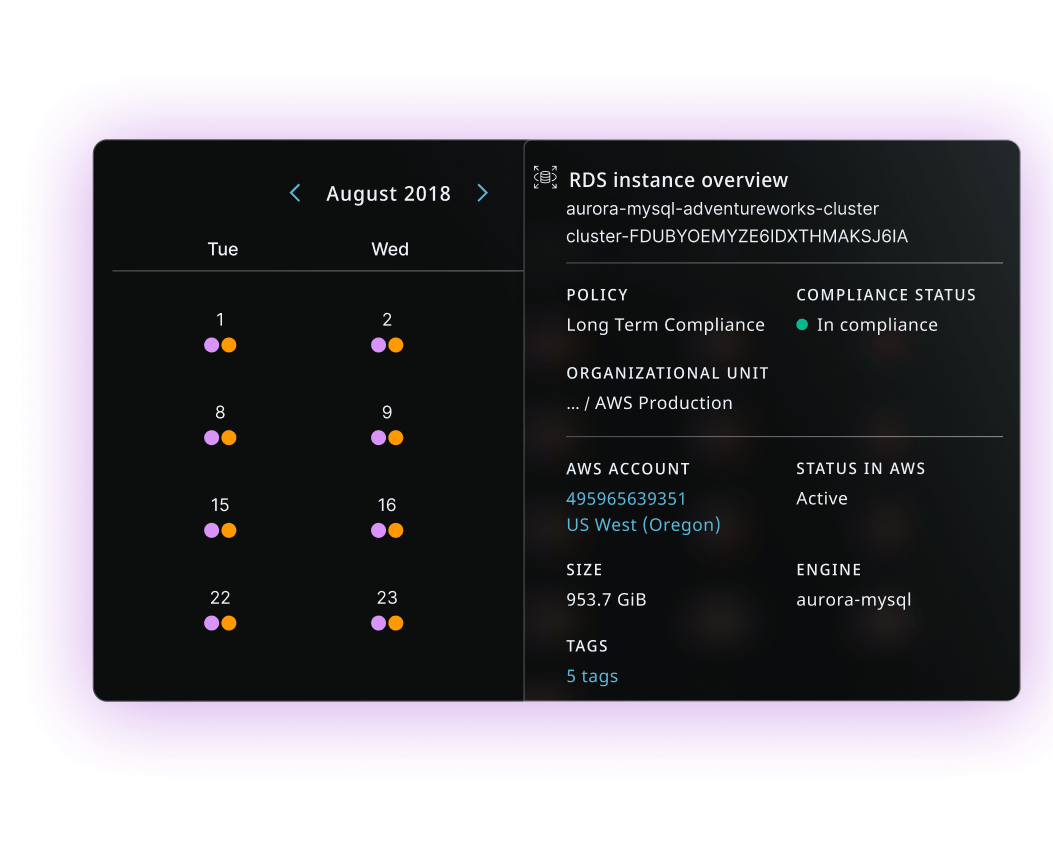
Snapshots don’t always equal recovery.
Up to 8x lower long-term retention costs
Versus native approaches for database retention
Can you recover the exact record—or the whole database?
Traditional recovery often requires restoring full snapshots
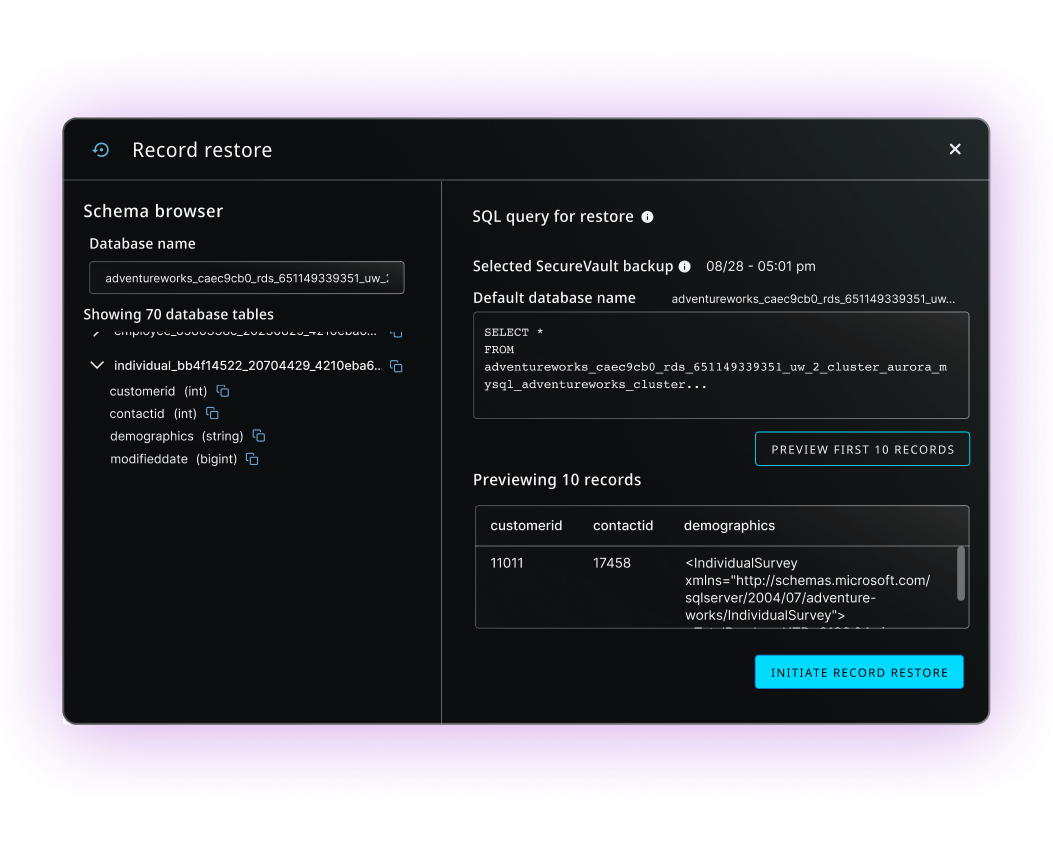
Query data directly from backups
Retrieve records without full database restores
What is Amazon RDS backup and recovery?
Amazon RDS backup and recovery is the practice of protecting managed relational database instances — Aurora, MySQL, PostgreSQL, SQL Server, MariaDB, Oracle — using immutable, point-in-time copies designed to survive ransomware, accidental deletion, and snapshot retention limits.

Why Amazon RDS Requires Dedicated Protection
While Amazon RDS and Aurora provide built-in backup capabilities, organizations often require stronger cyber resilience, longer retention, and more flexible recovery to protect business-critical databases.
Key Factors
-
Native backups may not provide the immutable, air-gapped protection needed to recover from ransomware or account compromise.
-
Long-term retention and compliance requirements can exceed the capabilities of native backup and snapshot management.
-
Database failures, accidental deletion, and application errors require flexible recovery options that minimize downtime and data loss.
Resulting Operational Impact
-
Increased risk of prolonged outages and data loss following cyberattacks or operational failures.
-
Greater administrative overhead managing backup policies, retention, and recovery across multiple databases and AWS accounts.
-
Higher storage costs and reduced operational efficiency for long-term database protection and compliance support.
How CloudRecovery supports RDS
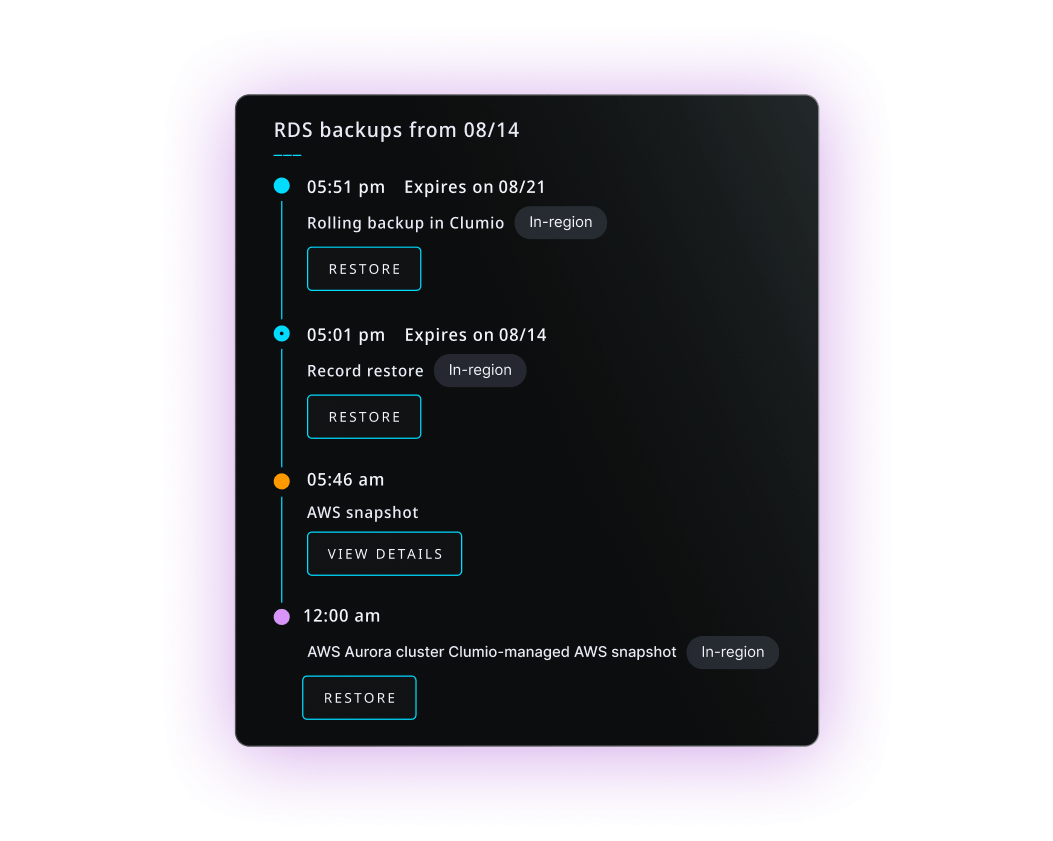
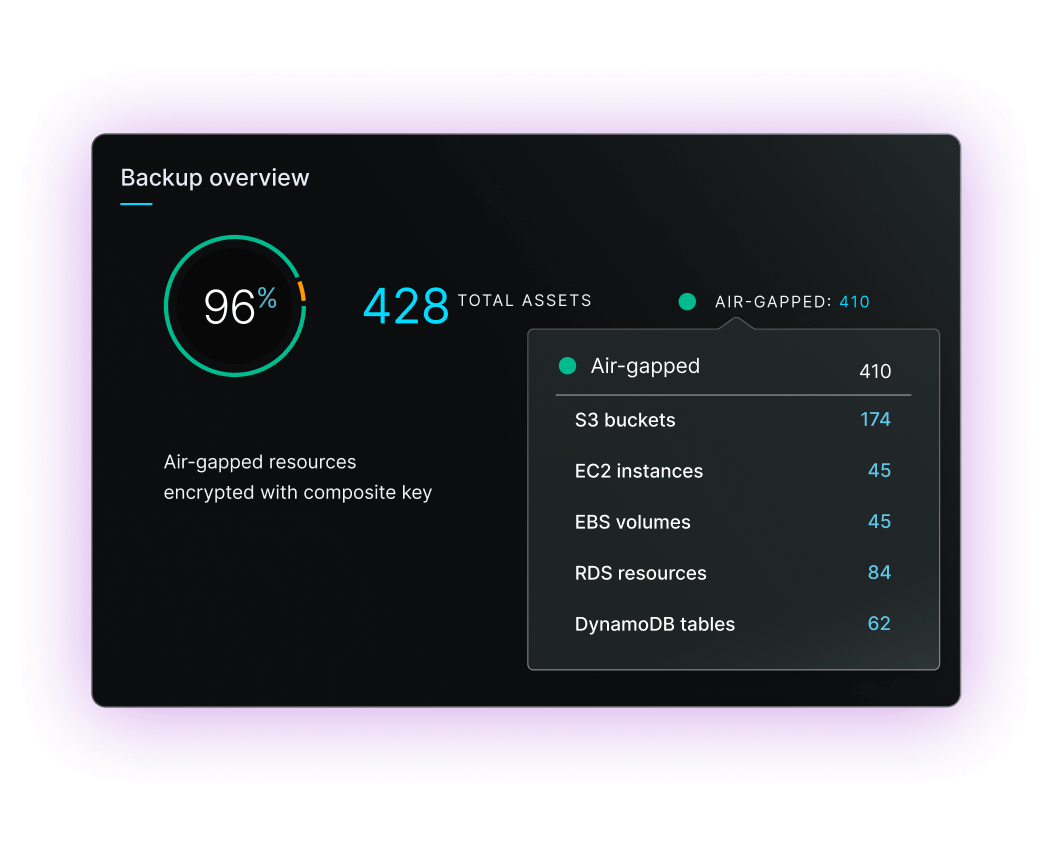
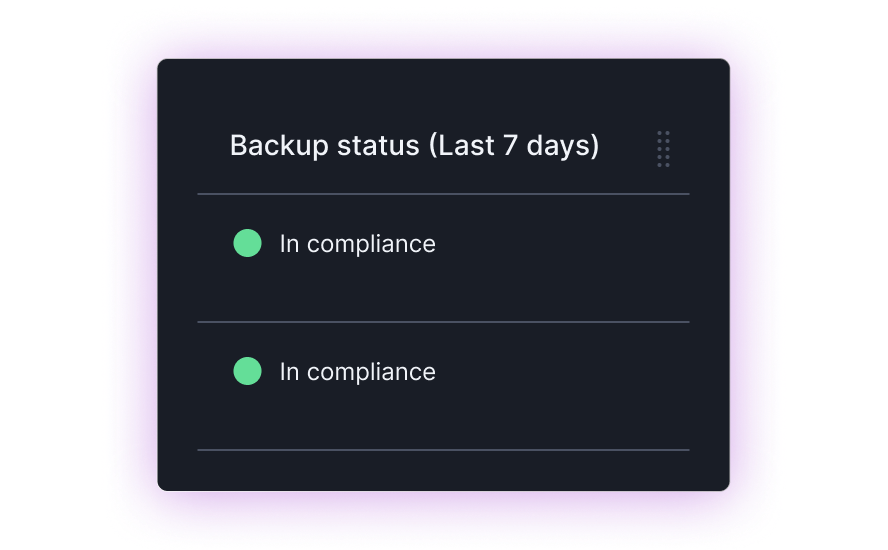
Cyber resilient businesses protect their cloud data with CloudRecover





Native Amazon RDS vs. Cloud-Native Protection
| Native RDS Protection | Cloud-Native Protection | |
|---|---|---|
Immutable, air-gapped storage outside the production account | No | Yes |
Query individual records directly from backups | No | Yes |
Cost-efficient long-term retention | No | Yes |
Native RDS Protection
Cloud-Native Protection
Immutable, air-gapped storage outside the production account
Query individual records directly from backups
Cost-efficient long-term retention
CloudRecover protection capabilities for Amazon RDS

Automated, policy-based RDS backups

Immutable, air-gapped backup storage

Cost-efficient long-term retention

Query-based record recovery
AI Recovery Solutions
Related to this workload
Recover Amazon RDS with the AI recovery solutions built for it.


CyberRecover
Clean, isolated recovery when trust in the production environment is gone.
Explore solution
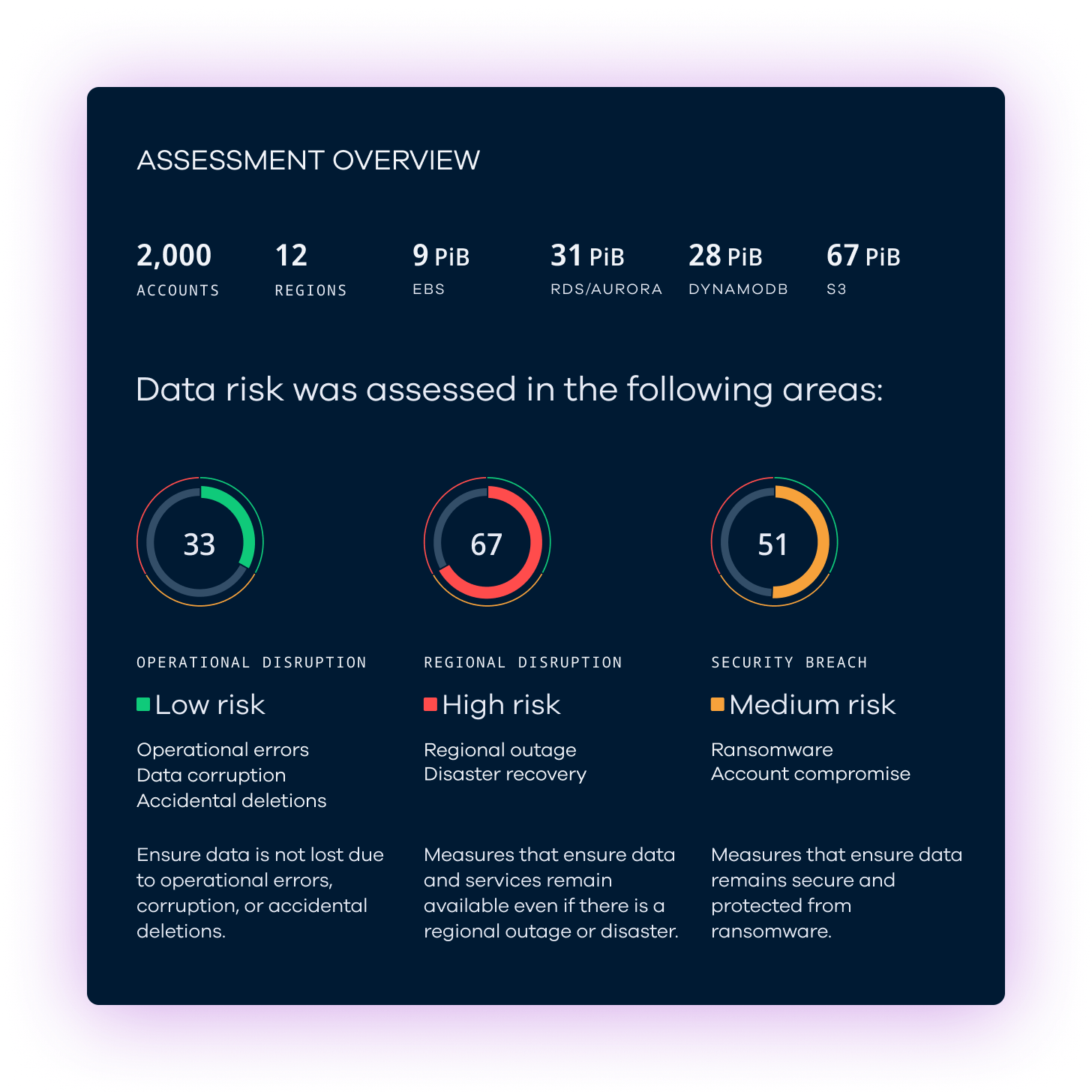
assess your risk
CloudRecover Data Risk Assessment
Get deeper visibility into the risk posture of your cloud data estate.
Frequently Asked Questions
Why should AWS customers protect Amazon RDS and Aurora databases?
Even with AWS’s built-in RDS capabilities, relational databases remain vulnerable to accidental deletion, data corruption, ransomware, and misconfigurations. Native RDS automated backups have limitations around retention and cross-account visibility and managing snapshots at scale can become complex without immutability, air-gapping, and centralized compliance controls.
How does CloudRecover protect Amazon RDS and Aurora databases?
CloudRecover protects Amazon RDS and Aurora with automated backups, point-in-time recovery, and immutable, air-gapped storage, enabling organizations to be able to recover from ransomware, accidental deletion, and data corruption without managing backup infrastructure.
How is CloudRecover used for long-term archival and compliance support in Amazon RDS?
For databases with long-term retention requirements, CloudRecover supports air-gapped, immutable backups that can be retained for compliance and audit purposes. These backups are queryable, enabling record-level retrieval during audits without requiring full database restores.
How does CloudRecover support ransomware recovery for Amazon RDS?
CloudRecover takes automated, incremental backups and stores protected copies in an isolated environment outside the production AWS account. This supports recovery workflows following ransomware or cyber incidents and provides centralized visibility and reporting.
How is CloudRecover used for short-term operational recovery in Amazon RDS?
CloudRecovercan orchestrate and manage in-account RDS automated backups to support recovery from accidental deletions or corruption. This allows teams to use existing AWS snapshots for short-term operational recovery while applying consistent policies and visibility.
Related Resources
Discover more resources for Amazon RDS

Removing Data Protection Roadblocks for Amazon RDS
Discover how Clumio CloudRecover can help you eliminate critical data protection challenges for Amazon RDS and protect your cloud databases.

Backup and Recovery as a Service for Amazon RDS and Aurora
Managed database backups, unified access across all your use cases.

The Total Economic Impact™ of Clumio CloudRecover
Learn about the cost savings and business benefits enabled by CloudRecover in the report from Forrester Consulting.
CloudRecover Documentation
Explore guides, FAQs, and developer resources to help you protect and manage your data with CloudRecover.


Knowledge Base
Find answers to frequently asked questions, see starting guides, and get troubleshooting tips.
Learn more
Try now
Protect your cloud data before the next incident
Gain control, visibility, and confidence across AWS and Google Cloud.
Be resilient. Be ready.