Key Takeaways
- Trust in the age of AI isn’t disappearing – it’s evolving.
- Organizations need to verify AI continuously rather than trust it by default.
- AI adoption should empower employees, not push them toward shadow AI.
- Zero trust isn’t about distrusting people. It’s about continuously validating identities, devices, and actions.
- Responsible AI adoption requires technology, governance, and people working together.
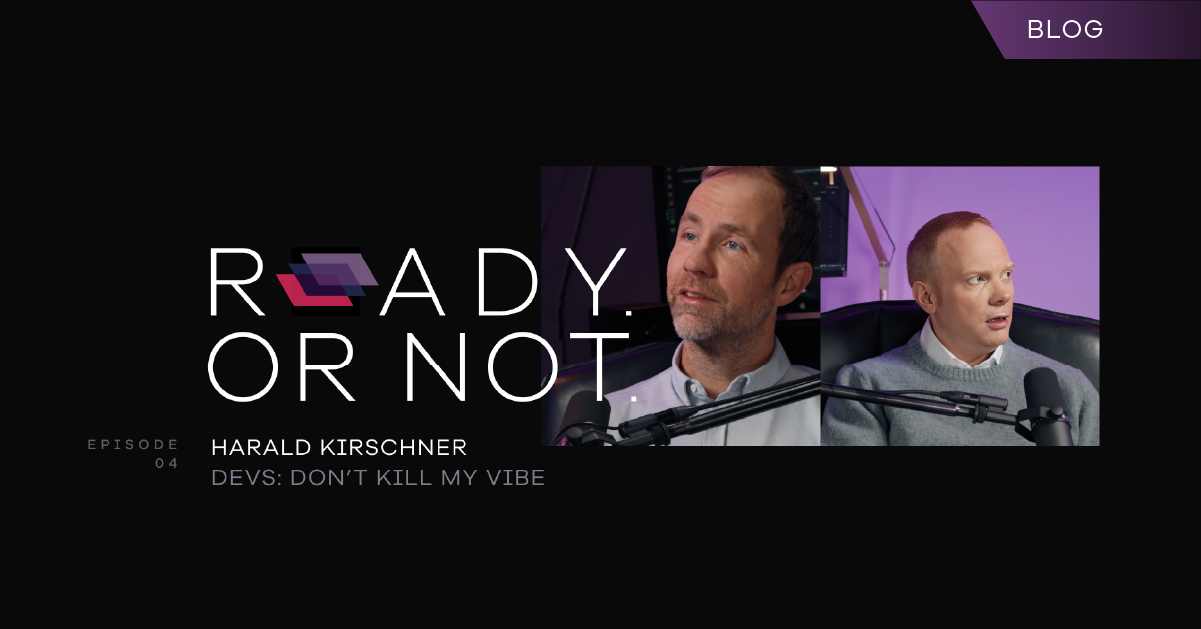
When we launched Ready. Or Not., we wanted to create a series that made some of today’s biggest AI conversations easier to understand. By pairing comedian Nathan Macintosh with industry experts, we’re exploring everything from agentic AI and cyber resilience to data management – and adding a little humor along the way.
If you caught our first episode on the opportunities and risks of agentic AI, I think you’ll enjoy this one as well. This time, we’re tackling a topic that’s at the center of every AI conversation: trust.
Nathan sits down with Diana Kelley, Chief Information Security Officer at Protect AI, for a conversation about what it means to trust technology when AI can generate convincing fake content, make decisions, and even imitate people. From deepfakes and hallucinations to zero trust and shadow AI, they explore how organizations can embrace AI without losing confidence in their people and systems.
Watch the full episode on Readiverse.
I walked away from this episode feeling more optimistic than I expected. Not because AI is suddenly more trustworthy, but because Diana shows us that trust grows when organizations put the right policies, guardrails, and technology in place. Here are some themes from the conversation that put AI in a new perspective.
Trust and Technology Can Co-Exist
Diana believes trust is possible in the AI era, but it’s going to look different. We’ve always built trust through relationships with people. Now, we’re learning how to extend that trust to systems.
That doesn’t mean trusting technology blindly. It means understanding how AI works, recognizing its limitations, and putting the right safeguards in place so people and technology can work together with confidence.
“Trust has to evolve for the new world.”
– Diana Kelley
What resonated with me was the idea that trust and technology don’t have to be at odds with one another. With the right approach, they can strengthen each other.
We’re Getting Smarter About AI
Deepfakes have become one of the most talked about AI risks, and it’s easy to understand why. AI can now generate convincing voices, images, and videos that make us question what’s real. But Diana pointed out that while AI is getting more sophisticated, people are getting smarter. We’re more likely to question an unexpected phone call, take a closer look at a social media post, or pause at something that doesn’t feel quite right.
Organizations are becoming savvier, too. As AI gets better at impersonation, businesses are investing in new ways to continuously verify identities and validate information. My takeaway is this: Technology will continue to improve, but so will our ability to recognize it and respond responsibly.
“Is today a good day to start a deepfake?”
– Nathan Macintosh
Responsible AI is Good for Business
Diana shared an example that will probably sound familiar to many organizations. An employee she calls “Karen in Finance” starts using AI because it helps her complete a task in minutes instead of hours. Karen isn’t trying to work around company policy – she’s trying to be more productive.
Employees use AI because they see real value in it, and that’s an opportunity for organizations. When employees have access to approved AI tools, supported by clear policies and practical guidance, they can work more efficiently while helping protect company data and systems.
Sneak Peek: Smarter AI Adoption
The goal isn’t to stop employees from using AI. It’s to make sure they’re using it the right way. Diana explains how organizations can encourage AI adoption without creating unnecessary risk.
Zero Trust Matters More Than Ever
“When you understand how things work, then you can start to understand how to manage them.”
– Diana Kelley
Zero trust is one of those concepts that’s much easier to understand with an analogy. Diana has a great one. She describes it as moving through a building. Just because you’ve been allowed through the front door doesn’t mean every other door automatically opens for you. Each time you access a new room, there’s another quick check to confirm you’re supposed to be there.
That’s essentially how zero trust works. Instead of assuming a person or device is trustworthy after a single login, organizations continuously verify identities, devices, and actions as technology becomes more connected. Most of those checks happen quietly behind the scenes.
One of the things I appreciated about Diana’s explanation is that zero trust doesn’t feel like another security buzzword. It feels like a practical way to think about trust in a world where AI and digital identities are becoming part of everyday business.
Trust Is About People
At the end of the day, technology doesn’t create trust – people do. People define the policies, processes, and ethical boundaries that guide how AI is used, while technology helps verify that those guardrails are working as intended. It’s that partnership between people and technology that makes responsible AI possible.
Trust extends beyond our own organizations. Businesses need confidence in the partners they work with, the systems they connect to, and the technologies they adopt. That’s why transparency, shared standards, and continuous verification are becoming just as important as innovation itself. The more AI becomes part of everyday business, the more trust becomes everyone’s responsibility.
Looking Ahead
AI will continue to evolve, and so will the way we interact with it. The organizations that succeed won’t be the ones that trust AI blindly or avoid it altogether. They’ll be the ones that build strong policies, adopt the right technologies, and continuously verify the systems they rely on.
Trust isn’t something we lose as technology advances. It’s something we intentionally build and evolve. That’s exactly the kind of conversation we hope to continue with every episode of Ready. Or Not.
Watch the full episode on Readiverse.
FAQs
Q: What is digital trust?
A: Digital trust is the confidence that people, systems, and organizations are who they claim to be and are acting in expected, secure ways. It combines technology, governance, and verification to help organizations interact safely.
Q: What are deepfakes?
A: Deepfakes are AI-generated images, videos, or audio recordings designed to closely imitate real people. While they have legitimate uses, they can also be used to impersonate individuals or commit fraud.
Q: What is zero trust?
A: Zero trust is a security model based on continuous verification rather than automatic trust. Instead of assuming a user or device is trustworthy after one login, organizations continuously validate identities and actions.
Q: What is shadow AI?
A: Shadow AI refers to employees using AI tools that haven’t been approved or governed by their organization. While often well-intentioned, it can introduce security, privacy, and compliance risks.
Q: Why shouldn’t organizations simply block AI tools?
A: Employees typically adopt AI because it helps them work more efficiently. Rather than banning AI outright, organizations should provide approved tools, establish clear policies, and educate employees on responsible use.
Q: What’s the biggest takeaway from this episode?
A: Trust isn’t disappearing because of AI – it’s evolving. Organizations that combine people, policies, and technology with continuous verification will be better positioned to adopt AI confidently and responsibly.
Katherine Demacopoulos is Senior Director of Global Content Strategy and Programs at Commvault.